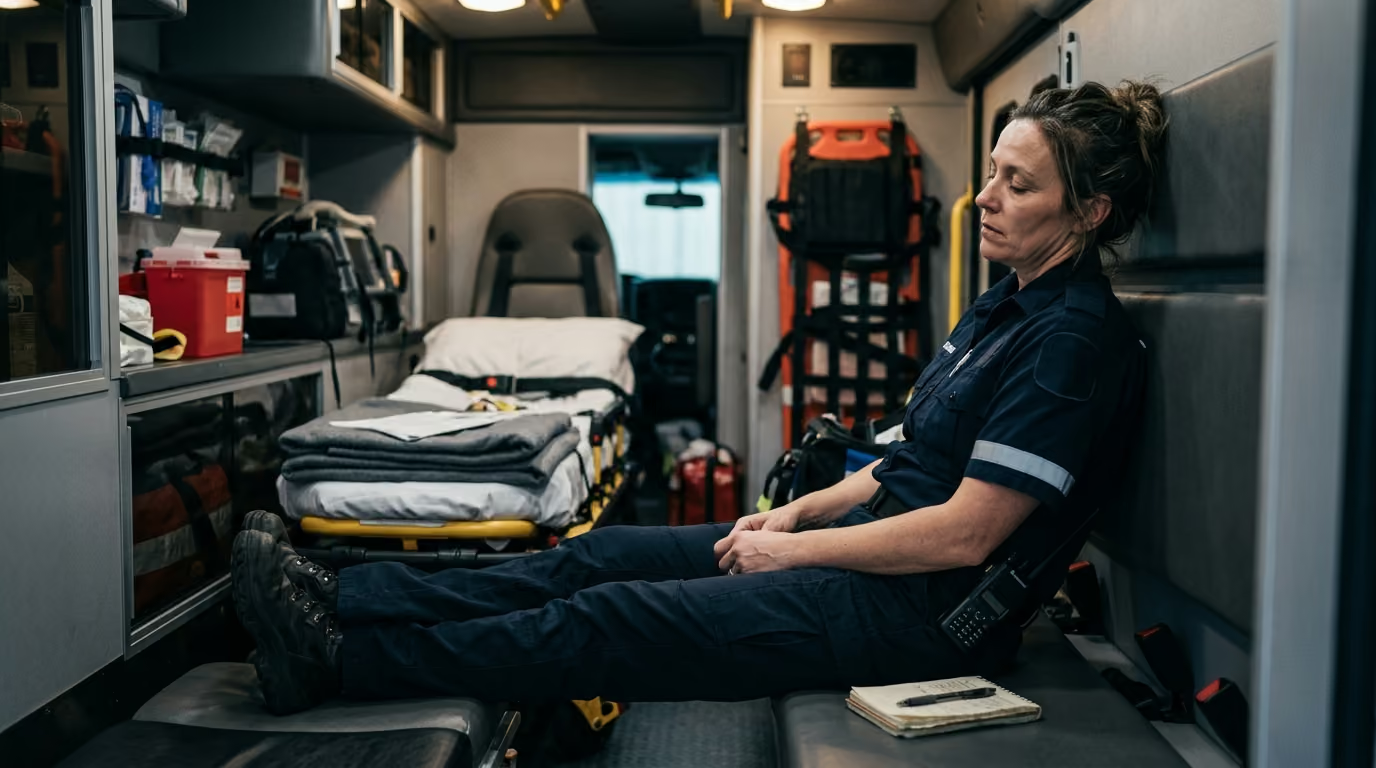

Post-incident trauma is often viewed as unavoidable damage, but structured operational protocols and timed follow-ups successfully protect responder mental health and career longevity.





If you or someone you know is in immediate distress or having thoughts of suicide, call 911 for immediate danger. You can also call or text 988 to reach the Suicide & Crisis Lifeline, press 1 for the Veterans Crisis Line, or text 838255. When working through acute safety concerns, securing personal safety and locking away potential means should be arranged together with a trusted colleague, family member, or clinician.
Post-incident recovery is a structured, phased process of stabilizing physical safety, nervous system arousal, sleep, and occupational functioning after high-impact events. It is not an immediate psychiatric diagnosis, a mandatory group interrogation, or a sign that an emergency responder is unfit for duty. This guide outlines the evidence behind acute stress trajectories, detailing how field personnel, peer teams, and supervisors can manage decompression, follow-up routines, and clinical escalation across a long career.
Post-incident recovery is the systematic management of acute stress, physical exhaustion, and cognitive strain following severe operational calls. It encompasses immediate scene decompression, peer-driven check-ins, sleep restoration, and ongoing symptom tracking over several weeks. It provides a structured pathway to return personnel to baseline operational capability while identifying those who need advanced care.
This process is not a one-time critical incident stress debriefing, nor is it an assumption that every difficult call causes permanent psychological damage. Many responders experience temporary physical and emotional reactions that resolve naturally when basic physiological needs, rest, and social support are met. Recovery is also not a fixed, linear timeline where every individual progresses at the identical pace.
Instead, recovery is an active operational discipline. Just as physical rehabilitation follows a musculoskeletal injury, post-incident recovery manages the neurological and physiological load imposed by catastrophic calls, pediatric deaths, violence, or prolonged rescue operations. Treating post-incident decompression as standard operational maintenance removes stigma and protects long-term career longevity.
Scientific research on traumatic stress among emergency personnel shows that acute physiological and psychological reactions are common after high-threat or high-distress calls. According to the National Institute for Occupational Safety and Health (NIOSH), intrusive thoughts, vivid dreams, heightened vigilance, irritability, and temporary sleep disruptions represent standard acute stress reactions. In most instances, these responses peak early and decrease over the following days and weeks as normal routines resume.
The presence of short-term stress symptoms does not automatically establish Post-Traumatic Stress Disorder (PTSD). Diagnostic guidelines separate normal transient reactions from Acute Stress Disorder, which occurs during the first month, and PTSD, which involves persistent symptoms causing functional impairment beyond four weeks. Systematic reviews demonstrate substantial variation in psychological distress across disciplines. Research published in systematic reviews indicates a pooled 12-month PTSD prevalence of roughly 20 percent among paramedics, while general rescue worker prevalence across international studies sits around 10 percent. Data across emergency services show wide ranges, including 6.4 to 57 percent among firefighters, 5.8 to 19.6 percent among police officers, and 17 to 24 percent among public-safety dispatchers.
Evidence regarding early intervention has shifted away from mandatory emotional debriefings. The World Health Organization (WHO) explicitly advises against routine, compulsory single-session psychological debriefing for trauma-exposed individuals. Cochrane systematic reviews established that forced psychological debriefing does not prevent PTSD, does not reduce distress, and can potentially increase symptom severity in some participants. Modern evidence supports modular, supportive frameworks such as Psychological First Aid (PFA), Stress First Aid (SFA), and Skills for Psychological Recovery (SPR).
For personnel who develop formal Acute Stress Disorder or PTSD, clinical evidence strongly favors manualized trauma-focused psychotherapies. The Department of Veterans Affairs and Department of Defense clinical practice guidelines recommend therapies such as Cognitive Processing Therapy (CPT), Prolonged Exposure (PE), and Eye Movement Desensitization and Reprocessing (EMDR). Research shows secondary traumatization also affects emergency personnel, with clinical-level secondary traumatic stress documented in 4 to 13 percent of rescue workers, dispatchers, and investigators.
Standard health advice assumes that an individual experiences a single stressful event and returns to a quiet environment to sleep for eight hours. Emergency responders operate under conditions that disrupt this biological recovery pathway. Shift schedules, night operations, mandatory overtime, and consecutive high-stress dispatches create a physiological environment where the nervous system rarely returns to baseline.
When a crew clears a fatal motor vehicle collision, they are frequently dispatched to another call within minutes. This rapid redeployment prevents the parasympathetic nervous system from downregulating elevated heart rates, blood pressure, and cortisol spikes. Understanding how to use active post-incident transition strategies helps clear immediate muscular tension and restore baseline focus before the next run. Continuous sympathetic arousal leaves the body in a prolonged state of hypervigilance, degrading cognitive bandwidth and reaction time.
Circadian disruption magnifies these recovery deficits. Night shifts and rotating schedules impair deep sleep stages and REM sleep, which are vital for processing emotional memories and clearing neurotoxic waste. Research on shift-specific sleep planning for first responders demonstrates that chronic sleep debt intensifies emotional reactivity and slows psychological decompression. When sleep is interrupted by station tones or operational demands, the brain struggles to integrate traumatic exposures, increasing the risk of persistent intrusive memories.
First responders also navigate heavy physical loads, extreme heat, hazardous materials, and occupational violence. Physical exhaustion depletes energy reserves needed for cognitive regulation, making responders more vulnerable to irritability and brain fog. Understanding the impact of circadian timing and shift length on responder fatigue explains why recovery cannot rely on willpower alone. Responders often mask stress behind humor or emotional detachment to complete the tour, which can delay necessary decompression.
The first operational period following a high-impact call must focus entirely on physical stabilization, safety, and basic physiological needs. Leaders and peer supporters should avoid demanding immediate emotional disclosure or asking responders to relive the event in detail. Forcing personnel to narrate their experiences while still physiologically activated can heighten distress and disrupt natural coping mechanisms.
The primary objective during the first operational window is establishing the five core recovery conditions: safety, calming, connectedness, self-efficacy, and hope. Field leaders should take immediate steps to reduce acute sensory overload and address basic biological requirements:
exhausted, shaken, or sleep-deprived to drive safely.
Communication during this phase should be simple, practical, and choice-preserving. Supervisors should ask closed, direct questions focused on immediate needs rather than emotional state. Inquiring about basic physical safety, medical requirements, hydration, and communication preferences allows responders to regain a sense of personal agency.
Once physical safety is established, the priority shifts to sleep protection and decompression. Responders should be encouraged to transition home using quiet routines, avoid alcohol, and minimize exposure to news reports or social media commentary regarding the incident. Strategic planning for managing caffeine intake around recovery windows prevents chemical sleep disruption during critical post-call sleep opportunities.
Recovery is rarely a linear progression, and relying on a single exit interview or post-shift check-in is insufficient. Delayed reactions can surface days or weeks after an incident, particularly after cumulative fatigue sets in or operational tempos change. A structured, predictable follow-up schedule provides safety rails without placing personnel under unnecessary clinical scrutiny.
A practical recovery tracking timeline operates across four specific operational milestones:
The initial follow-up should be a brief, private check-in conducted by a trained peer supporter or immediate supervisor. The focus remains on functional stabilization rather than psychological probing. Peer supporters should ask practical questions regarding sleep duration, appetite, physical pain, and current support at home. If the responder is experiencing initial nightmares or intrusive images, the peer should normalize these as common acute reactions while confirming the responder has safe support systems in place.
At this checkpoint, early acute stress reactions should begin to plateau or downregulate. The check-in evaluates whether the responder is successfully returning to regular work and personal routines. Inquiries should explore whether sleep patterns are stabilizing, irritability is decreasing, and on-duty concentration is returning. If a responder reports escalating anxiety, severe emotional withdrawal, or increasing reliance on alcohol to fall asleep, the peer supporter should offer voluntary connections to clinical resources.
NIOSH guidance advises that psychological distress lasting several weeks or interfering with daily life requires clinical assessment. At the one-month mark, persistent symptoms are no longer classified as standard acute responses. Supervisors and peer teams should privately review whether the responder is experiencing lingering hypervigilance, emotional numbness, work performance decline, or relationship strain. Responders exhibiting continuous distress should be guided toward evidence-based trauma professionals.
Reactions frequently resurface during specific operational events long after the initial incident has passed. Critical milestones include administrative investigation findings, grand jury or court proceedings, media releases, memorial services, and call anniversaries. Dispatching to a similar scene or returning to the same physical location can also trigger sudden physiological activation. Structured follow-up protocols should include scheduled check-ins around these predictable pressure points.
Monitoring does not mean conducting a formal psychiatric evaluation during every shift. Instead, it involves maintaining non-punitive, multi-dimensional awareness of a responder's health, behavior, and job performance. Tracking functioning across multiple domains prevents severe burnout, hidden substance misuse, and operational safety failures.
The following ten-point monitoring framework allows peer teams and supervisors to track post-incident adaptation objectively:
Using autoregulation principles helps personnel scale their daily physical output according to systemic stress levels. Applying training readiness autoregulation strategies for emergency personnel ensures responders do not compound traumatic neurological stress with excessive, exhausting physical training sessions during vulnerable recovery windows.
Peer support teams serve as an operational bridge between raw frontline stress and professional clinical intervention. Responders are often reluctant to speak with outside healthcare providers who do not understand emergency service culture or operational realities. Trained peer supporters provide immediate credibility, shared language, and psychological safety.
Effective peer support focuses on listening, validating normal human reactions to abnormal events, and assisting with immediate problem-solving. Peer supporters help demystify the recovery process by explaining what to expect physically and emotionally over the coming days. They also reinforce foundational health behaviors, encouraging balanced nutrition, movement, hydration, and sleep hygiene.
However, peer support programs must maintain strict operational and ethical boundaries to protect both the responder and the peer:
When supporting colleagues through post-incident recovery, peer supporters and company officers should incorporate practical, supportive communication habits while avoiding damaging statements:
While many acute stress reactions subside naturally, certain behavioral, emotional, and cognitive indicators point toward acute decompensation. The Substance Abuse and Mental Health Services Administration (SAMHSA) identifies specific red flags that require urgent intervention and professional clinical involvement.
Recognizing the distinction between a resolving stress reaction and an escalating crisis is vital for crew safety and personal survival:
Data from the Centers for Disease Control and Prevention (CDC) and NIOSH show that law enforcement officers and firefighters are more likely to die by suicide than in the line of duty. Emergency medical service personnel are 1.39 times more likely to die by suicide than the general population. These statistics highlight the necessity of immediate, decisive action when acute red flags appear.
If a responder displays active suicidal thinking, emergency procedures must be initiated immediately. Do not leave the individual alone. Contact designated agency mental health coordinators, mobile crisis teams, or call 988. Ensuring that potential personal means are secured in partnership with clinicians or supportive peers is a fundamental safety practice that protects responders during severe crisis windows.
Professional clinical evaluation should be pursued when post-incident symptoms fail to improve, worsen over time, or directly impair personal and professional functioning. Seeking professional treatment is a risk-management decision that preserves career capability, family stability, and long-term health.
A formal mental health evaluation is recommended under the following specific conditions:
When seeking care, first responders should prioritize clinicians who specialize in trauma and demonstrate cultural competence in emergency services. Responders should look for providers trained in evidence-based, trauma-focused psychotherapies recommended by the VA/DoD guidelines, including Cognitive Processing Therapy (CPT), Prolonged Exposure (PE), and Eye Movement Desensitization and Reprocessing (EMDR).
Responders can access care through multiple confidential pathways, including vetted Employee Assistance Programs (EAP), dedicated first responder peer networks, specialized occupational health clinics, or independent trauma clinicians. Taking steps to address psychological wear early prevents minor operational stress from calcifying into chronic, debilitating occupational illness.
Supervisors should focus entirely on objective, observable behaviors rather than arguing about internal feelings. Document and address concrete changes in punctuality, driving safety, report accuracy, task completion, or interpersonal friction. Offer private support, review available confidential resources, and adjust operational assignments or shift rotations if safety or clinical care is compromised.
A critical incident involves a single, highly acute event, such as a mass casualty incident or colleague line-of-duty death. Cumulative stress is the slow, continuous accumulation of hundreds of routine yet distressing calls, chronic sleep loss, administrative friction, and physical wear over years. Cumulative stress often produces insidious emotional numbing, cynicism, and exhaustion without a single identifiable trigger, requiring continuous monitoring and ongoing Stress First Aid.
Peer supporters can maintain strict privacy regarding personal struggles, emotional venting, and family stress. However, absolute confidentiality ends when there is an active risk of suicide, threats of violence toward others, child abuse, or acute physical impairment that endangers public or crew safety. Clear disclosure of these ethical and legal boundaries must occur before deep peer conversations take place.
Taking immediate leave is beneficial when a responder requires acute sleep restoration, medical attention, or crisis stabilization. However, prolonged, unstructured time off without social contact can sometimes increase isolation, rumination, and distress. A modified duty assignment, non-operational station work, or a structured, gradual return to the crew often provides the healthy routine and peer connection needed for sustainable recovery.
Post-incident recovery is not a sign of operational failure, but an essential performance discipline that protects nervous system capacity, tactical judgment, and family life. Treating acute decompression, peer monitoring, and timely clinical care as routine career maintenance ensures emergency personnel remain capable on shift and healthy throughout retirement.
Stay connected for research-led guidance on duty fitness, shift-work sleep, injury recovery, stress, nutrition and career longevity. Practical ideas for first responders who want to stay capable on the job, recover well and protect their health for the long run.



Read practical guidance on first responder fitness, recovery, sleep, nutrition and resilience for demanding work and a long, active career.
read the blog



