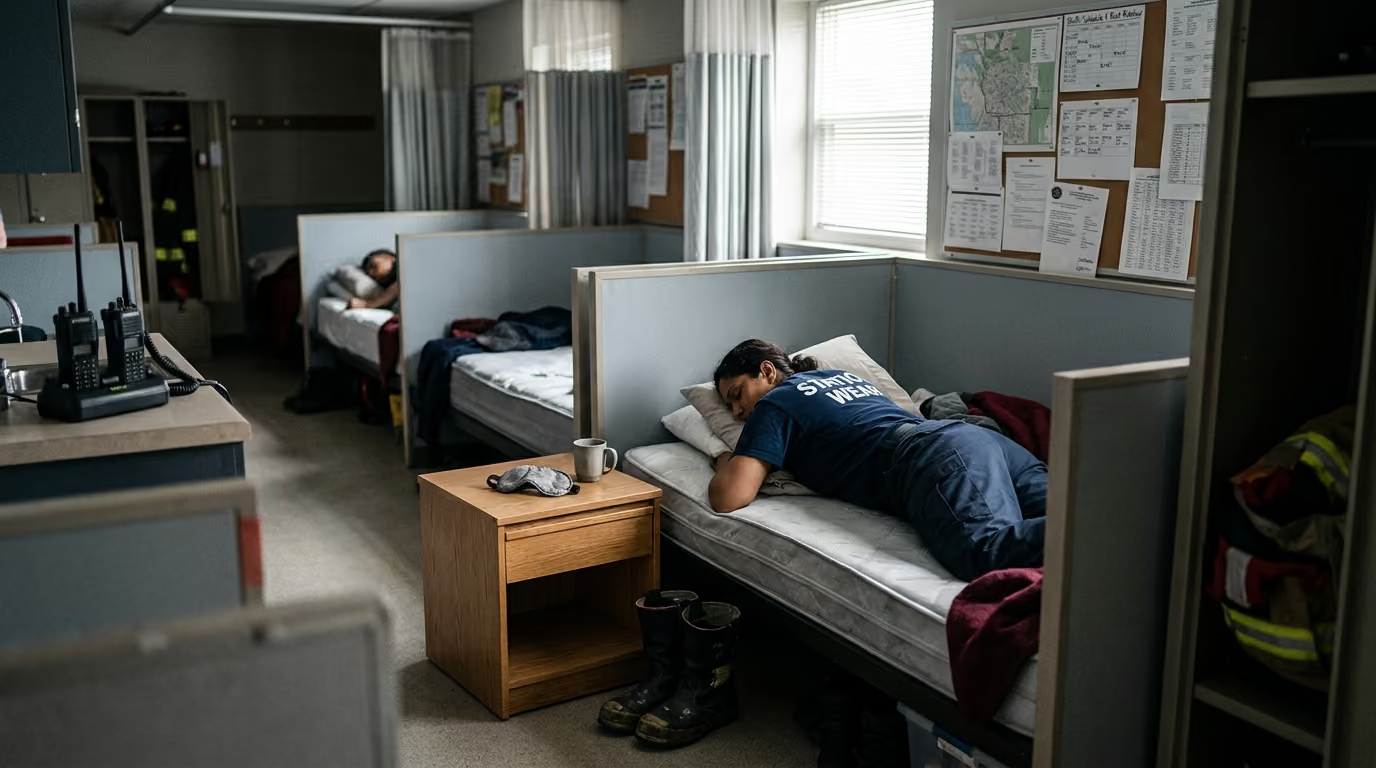

Emergency personnel struggling with broken rest after intense shifts can identify the root causes of their exhaustion using this specialized six-pattern sleep taxonomy.





A sleep problem taxonomy is a structured classification framework that separates sleep symptoms, schedule mismatches, and underlying sleep disorders into distinct, observable categories. It is not a generic collection of sleep hygiene tips, nor is it an assumption that every poor night on shift represents primary insomnia.
First responder sleep disruption is multifaceted. It represents the collision of biological circadian timing, restricted recovery windows, high operational stress, and undiagnosed medical conditions.
By categorizing sleep difficulties across specific dimensions, emergency personnel and clinicians can identify root causes. They can also select targeted strategies to restore physical readiness and long-term health.
The primary sleep patterns in emergency services fall into six operational phenotypes:
Understanding which specific pattern is present prevents misdirected interventions. It ensures that dangerous conditions receive prompt occupational and clinical attention.
Treating all sleep complaints as standard insomnia leads to ineffective solutions in emergency services. When a paramedic, firefighter, or police officer reports poor sleep, standard advice often focuses on maintaining a rigid bedtime.
For someone working rotating 12-hour shifts or 24-hour tours, that advice is impractical. It fails because it ignores the occupational realities of the job.
A clinically useful taxonomy must evaluate four distinct dimensions:
This multi-dimensional approach prevents diagnostic confusion. A firefighter unable to sleep after an emotionally intense call may experience acute sympathetic hyperarousal.
A police officer who sleeps poorly only after transitioning from night shift to day shift is dealing with circadian misalignment. An emergency medical technician who snores heavily and remains exhausted despite eight hours in bed likely requires assessment for obstructive sleep apnea.
Applying standard sleep advice across all three scenarios fails to address the actual physiological cause. A structured taxonomy creates clarity by identifying the exact nature of the breakdown.
To choose appropriate recovery protocols, responders must first pinpoint their primary symptom pattern. These six categories describe the most common presentations observed across emergency services.
Sleep-onset disruption occurs when a responder lies down with the intention to sleep but remains awake for a prolonged period. In standard clinical definitions, sleep latency extending beyond 30 minutes on a regular basis indicates sleep-onset insomnia.
In emergency personnel, this pattern frequently stems from acute operational factors rather than a chronic psychological inability to sleep.
Common operational triggers include:
Consider an illustrative model of a police officer completing a 12-hour night shift ending at 7:00 a.m. The officer drives home in full daylight, eats a heavy meal, checks administrative emails, and enters bed at 9:00 a.m.
Despite feeling physically exhausted, the officer remains awake until noon. This is not necessarily primary insomnia.
It is the biological result of daytime circadian alerting signals, retinal light exposure, and prolonged physiological arousal.
Sleep-maintenance disruption is characterized by sleep that initiates normally but is repeatedly interrupted by brief or extended periods of wakefulness. Responders with this phenotype often spend eight hours in bed but accumulate only a fraction of that time in consolidated, restorative sleep.
Fragmented sleep disproportionately impairs slow-wave sleep and rapid eye movement stages. Both stages are vital for physical tissue repair and emotional processing.
Frequent awakenings often result from:
Responders who experience fragmented sleep often report waking up feeling unrefreshed, irritable, and physically stiff. Because they believe they were in bed for a full night, they may not realize their sleep architecture was severely fractured.
Early waking occurs when a responder wakes hours before the planned end of the recovery window and cannot return to sleep. The person may fall asleep easily at 8:00 a.m. following a night shift, only to wake abruptly at 12:30 p.m. with an active, alert mind despite severe total sleep debt.
This pattern is exceptionally common during daytime sleep following overnight duty. The internal circadian pacemaker located in the suprachiasmatic nucleus promotes wakefulness and elevates core body temperature during the biological afternoon.
Even if the body carries high homeostatic sleep pressure, the biological clock overrides the drive to sleep. Research examining public safety personnel found that approximately 80 percent of police officers and 70 percent of firefighters reported difficulties with waking too early.
Early waking can also be a biological marker of chronic depressive symptoms, elevated baseline cortisol, or environmental noise that peaks during mid-day hours.
This category captures situations where sleep quality is poor or sleep opportunity is severely constrained by work systems. Responders in this category may sleep deeply when given the chance, but their operational schedule prevents them from obtaining adequate total sleep time.
The National Institute for Occupational Safety and Health notes that adults generally require at least seven hours of sleep per 24-hour cycle. When work systems compress off-duty windows, chronic sleep restriction is inevitable.
Primary systemic drivers include:
Responders experiencing insufficient sleep opportunity often accumulate substantial sleep debt. Over time, this leads to metabolic dysregulation, reduced immune function, and impaired reaction times.
Excessive daytime sleepiness is the inability to maintain wakefulness and alertness during required waking hours. It manifests as an irresistible urge to sleep, heavy eyelids, microsleeps, or unintended lapses into slumber during routine tasks.
It is critical to distinguish between subjective fatigue and physiological sleepiness:
A meta-analysis of first responders estimated the pooled prevalence of excessive daytime sleepiness at 28 percent. In occupational surveys of police and firefighters, approximately 60 percent of police officers and 40 percent of firefighters reported dozing off during duty hours.
Even more concerning, 8 percent of police officers and 10 percent of firefighters reported dozing while driving after having at least two consecutive days off.
This finding demonstrates that days off do not automatically clear accumulated sleep debt or resolve underlying sleep pathology.
Schedule-related sleep disruption occurs when insomnia symptoms and excessive sleepiness directly track with rotating, night, or irregular work rosters. When a responder works a daytime schedule or takes extended leave, sleep parameters normalize.
When the responder returns to night duty or irregular rotations, debilitating sleep disruption immediately returns.
Under clinical criteria from the American Academy of Sleep Medicine, Shift Work Disorder requires:
A meta-analysis of emergency responders identified a pooled Shift Work Disorder prevalence of 31 percent. This condition represents a severe, chronic failure of the circadian system to adapt to the required duty cycle.
The human body operates on a 24-hour internal clock that orchestrates hormone production, core body temperature, cardiovascular tone, and autonomic nervous system activity. Shift work directly conflicts with this internal timing system.
When an emergency responder attempts to sleep during the day, several physiological barriers arise:
These circadian dynamics explain why daytime sleep after night duty is typically one to four hours shorter than nighttime sleep. It is also significantly less restorative.
First responders working rotating rosters face even greater circadian strain. Rapid transitions between day shifts, night shifts, and 24-hour tours force the biological clock into a perpetual state of flux.
Understanding this biology helps responders recognize that poor daytime sleep is a predictable physiological response to circadian misalignment. Managing these shifts requires a dedicated approach, such as building a shift-specific sleep plan that coordinates recovery windows with biological constraints.
Furthermore, prolonged nighttime operations and exposure to artificial illumination can introduce additional health considerations. Responders can learn more about managing these variables by reviewing how nighttime light exposure affects cardiovascular health.
Not all sleep problems in emergency services originate from the shift roster. Several medical, psychological, and behavioral factors can mimic or exacerbate schedule-related sleep loss.
Obstructive sleep apnea is characterized by repetitive collapse of the upper airway during sleep. This leads to intermittent oxygen desaturation, surges in blood pressure, and frequent micro-arousals that shatter sleep architecture.
In a large meta-analysis of over 100,000 first responders, the pooled prevalence of OSA was 30 percent. In screening studies of career firefighters, approximately 28 percent screened positive for high OSA risk.
Key operational warning signs of OSA include:
OSA frequently masquerades as simple shift-work fatigue. When a responder remains exhausted despite getting adequate sleep opportunity, clinical screening for sleep apnea is essential.
First responders are routinely exposed to critical incidents, acute trauma, and high-stress environments. Chronic stress alters the autonomic nervous system, locking the body into a state of heightened sympathetic tone and hypervigilance.
Trauma-related sleep disruption presents unique clinical features:
In observational studies of emergency personnel, insomnia symptoms showed strong statistical associations with post-traumatic stress, anxiety, and depression. While these associations do not prove direct causation, they indicate that psychological stress and sleep fragmentation frequently reinforce one another.
Techniques that regulate acute autonomic arousal between calls can support nervous system down-regulation. Practical tools such as quick grounding reset skills help dampen sympathetic overdrive during active tours.
Operational habits often involve substances that directly degrade sleep quality. First responders frequently consume high quantities of caffeine to survive overnight shifts and use alcohol to wind down after intense tours.
Managing these substances is critical for maintaining sleep continuity. Responders seeking structured guidance on fueling and stimulant timing can review strategies for managing caffeine and energy on night duty.
Occupational health research demonstrates that sleep disorders are remarkably widespread among emergency personnel. A major meta-analysis analyzing 28 observational studies across 101,080 first responders provided comprehensive pooled prevalence estimates for major sleep categories.
The pooled findings across emergency services include:
When evaluating this research, statistical nuance is essential. Heterogeneity was exceptionally high across all pooled categories in the meta-analysis, with I-squared values exceeding 95 percent.
This statistical variation reflects substantial differences in study designs, screening questionnaires, diagnostic thresholds, and roster structures across departments.
The figures should not be used to predict an exact statistical risk for a specific agency. Instead, they demonstrate that sleep disorders are widespread occupational conditions that require formal organizational screening.
Agency-specific data further reinforces these findings:
These findings show that sleep problems are systemic occupational hazards. They arise directly from the structural design of emergency service schedules.
For a detailed analysis of how shift lengths interact with biological fatigue, see our guide on circadian timing, shift length, and fatigue.
To move from generic frustration to actionable recovery, responders can utilize a five-step classification method. This process separates external schedule constraints from internal physiological disruptions.
Begin by determining the primary breakdown occurring during rest windows. Select the statement that most accurately describes the current experience:
Next, quantify the structural constraints imposed by the work schedule. For a period of 14 days, record:
This step clarifies whether the primary issue is insufficient sleep opportunity or an inability to sleep when opportunity is provided.
A 14-day sleep diary provides critical diagnostic clarity. Track sleep duration, sleep latency, nighttime awakenings, and daytime alertness across both operational days and off-duty blocks.
Evaluate whether sleep disruption is producing immediate, dangerous consequences. High-risk indicators include:
Once the phenotype is identified, select targeted action steps:
Interventions must directly match the identified sleep problem. Applying sleep-onset techniques to an airway disorder or applying sleep-hygiene rules to an insufficient schedule will not yield results.
When physiological arousal or light exposure delays sleep onset, implement environmental and behavioral controls:
When sleep fragmentation reduces sleep quality, minimize environmental and physiological disruptions:
When navigating rapid roster shifts or night duty, use biological timing tools to support circadian adaptation:
The research literature on shift-work interventions emphasizes that single interventions rarely solve circadian strain. Systematic reviews show that combining scheduled napping, light management, and roster adjustments produces the most reliable improvements in sleep duration and operational alertness.
Fatigue in emergency services is a major operational risk. It impairs reaction time, degrades situational awareness, reduces physical coordination, and compromises critical decision-making during high-stakes incidents.
The National Institute for Occupational Safety and Health recommends clear operational boundaries when significant fatigue signs appear:
Individual discipline cannot overcome biological sleep debt or extreme circadian lows. When acute impairment is present, operational safety requires removing the fatigued individual from the risk environment until restorative rest is obtained.
While environmental modifications and shift planning improve sleep quality, certain conditions require formal medical evaluation. Professional clinical assessment is strongly recommended under the following circumstances:
Clinical evaluation by a board-certified sleep physician can provide access to objective diagnostic tools, including home sleep apnea testing and in-lab polysomnography. For chronic insomnia, Cognitive Behavioral Therapy for Insomnia represents the primary clinical standard.
When applied to shift workers, CBT-I must be tailored to irregular schedules, accounting for variable wake times and circadian shifts.
For personnel experiencing persistent sleep disruption accompanied by mental health strain, integrating sleep medicine with licensed mental health counseling ensures that trauma, anxiety, and sleep physiology are addressed together.
Standard shift fatigue occurs after extended duty or night work but improves significantly after standard off-duty rest. Shift Work Disorder is a chronic clinical condition where insomnia, severe sleepiness, and functional impairment persist for at least three months in direct connection with the work roster. If sleep problems cause severe distress and do not resolve during normal recovery windows, professional evaluation for Shift Work Disorder is warranted.
Falling asleep in less than five minutes is often a sign of severe, accumulated sleep deprivation rather than superior sleep health. Healthy sleep latency typically ranges between 10 and 20 minutes. Instantaneous sleep onset suggests that the body is carrying high homeostatic sleep pressure from chronic sleep restriction or untreated sleep disorders.
Yes. Co-occurring sleep disorders are common in emergency services. A responder can suffer from airway collapse during sleep while simultaneously experiencing circadian misalignment and conditioned insomnia from night shifts. Treating one condition, such as using positive airway pressure therapy for sleep apnea, often improves overall sleep architecture and makes behavioral insomnia interventions significantly more effective.
A single extended sleep period on an off-duty day helps reduce acute homeostatic sleep pressure, but it does not fully eliminate cumulative biological sleep debt. Research indicates that chronic sleep restriction creates cognitive and physiological deficits that can take several consecutive nights of sufficient, consolidated sleep to normalize. Relying solely on rest days to compensate for extreme weekly sleep deprivation leaves responders vulnerable to mid-week performance lapses.
First responder sleep challenges are not personal failures of willpower, but predictable physiological responses to circadian strain, high operational demands, and undiagnosed medical sleep disorders.
By categorizing sleep difficulties into clear phenotypes and addressing root causes, emergency personnel can protect their operational readiness, safeguard their physical health, and sustain long-term capability across an entire career.
Stay connected for research-led guidance on duty fitness, shift-work sleep, injury recovery, stress, nutrition and career longevity. Practical ideas for first responders who want to stay capable on the job, recover well and protect their health for the long run.



Read practical guidance on first responder fitness, recovery, sleep, nutrition and resilience for demanding work and a long, active career.
read the blog



