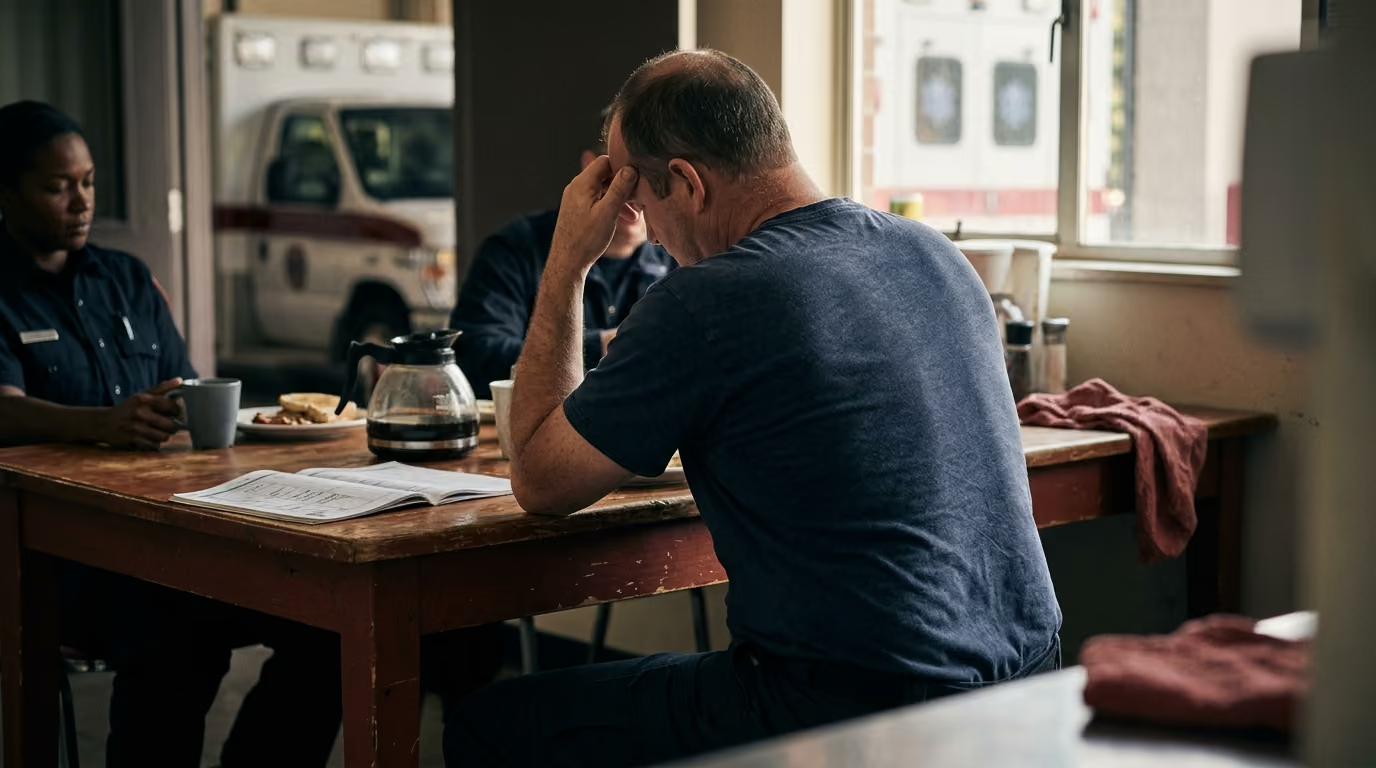

Sustainable recovery from years of shift work requires a staged protocol that stabilizes sleep schedules, manages light exposure, and repairs metabolic function.





Many former emergency personnel search online for why they cannot sleep normally months after leaving active duty. Years of working nights, rotating shifts, and extended callouts train the body to anticipate disruption. When service ends, the biological clock does not reset overnight. This guide breaks down the physical and neurological toll of irregular duty, separates normal readjustment from chronic disorders, and provides an actionable recovery plan for life after service.
Leaving shift work removes an acute operational stressor, but full physical and circadian recovery takes deliberate time. Decades of irregular duty alter sleep architecture, metabolic hormone secretion, autonomic balance, and cardiovascular function. While mild sleep disruption is common during the first several weeks after service, persistent fatigue, severe insomnia, or unrefreshing sleep lasting past three months requires clinical evaluation rather than passive waiting.
The human circadian system is an internal 24-hour clock coordinated by the suprachiasmatic nucleus in the hypothalamus. This master pacemaker synchronizes biological activities to the external solar day. It regulates core body temperature, alertness, autonomic tone, immune responses, and the timing of hormones such as melatonin and cortisol. When duty requires wakefulness during the biological night, this delicate alignment collapses.
Circadian misalignment occurs when physical activity, cognitive effort, and nutrition take place out of sync with the body's natural internal rhythms. Working overnight forces emergency personnel to suppress sleep pressure when the biological clock promotes rest. Conversely, daytime recovery sleep occurs when daylight, elevated core body temperature, and ambient environmental noise promote wakefulness. This fundamental conflict degrades sleep architecture, reducing slow-wave deep sleep and rapid eye movement phases.
Sleep duration and sleep timing represent two distinct physiological dimensions. An individual can remain in bed for eight continuous hours and still experience profound fatigue if that sleep occurs at an unfavorable circadian phase. Daytime sleep is biologically vulnerable to frequent awakenings and reduced sleep efficiency. Over years of service, this misalignment creates chronic sleep debt, where residual physiological deficits accumulate faster than single recovery sleep periods can resolve them.
This continuous mismatch also creates social jet lag. Emergency personnel frequently toggle between night schedules while on duty and standard daytime schedules on their days off. This oscillation forces the master pacemaker into a perpetual state of transition. Rather than adapting to one stable rhythm, the body clock experiences continuous, artificial jet lag that impairs cellular repair, brain waste clearance, and cardiovascular recovery.
The physiological strain of shift work extends far beyond feeling tired. Epidemiological research links long-term night work and irregular duty schedules to elevated risks of cardiovascular disease, metabolic syndrome, gastrointestinal dysfunction, and certain cancers. Understanding these associations requires distinguishing between established population risks and individual medical predictions.
Cardiovascular health is particularly vulnerable to chronic schedule disruption. Research shows an association between permanent night work and increased risks of ischemic heart disease, hypertension, and myocardial infarction. Chronic disruption of the autonomic nervous system keeps blood pressure and heart rate elevated during hours when the cardiovascular system normally experiences nocturnal dipping. This sustained hemodynamic load, combined with systemic inflammation and altered lipid metabolism, contributes to vascular stiffness over time.
Metabolic health faces similar long-term strain from non-standard schedules. Night duty disrupts the normal diurnal rhythm of insulin sensitivity and glucose tolerance. Digesting meals during the biological night leads to higher post-meal glucose and triglyceride levels compared to consuming identical meals during the daytime. Over a career, this metabolic friction increases the risk of type 2 diabetes, central adiposity, and non-alcoholic fatty liver changes.
The International Agency for Research on Cancer classifies night shift work as probably carcinogenic to humans. This classification relies primarily on strong mechanistic evidence from animal studies and limited human epidemiological data. Nighttime light exposure suppresses natural melatonin production, an essential antioxidant and oncostatic hormone. Rotating work schedules show associations with certain cancer risks, while fixed night work shows stronger links to cardiometabolic disorders. These epidemiological findings reflect statistical associations across broad cohorts rather than definitive causes for individual workers.
Different duty schedules impose distinct physiological burdens on the human body. No single operational pattern is universally harmless, but the specific structure of a schedule determines how the body accumulates stress. Emergency services use a wide variety of rotations that shape recovery timelines differently.
Fixed night work creates a stable but socially isolated schedule. While permanent night workers avoid the constant shock of shifting bedtimes, few achieve true circadian adaptation. Sunlight exposure during morning commutes and family obligations on off-duty days pull the master pacemaker back toward a daytime orientation. This creates permanent partial misalignment, which epidemiological studies associate with elevated blood pressure and cardiometabolic strain.
Rotating schedules produce severe sleep quality deficits. Rapid rotations between day shifts, evening shifts, and overnight duty prevent the master pacemaker from stabilizing in any single phase. Research indicates that rotating workers experience lower sleep efficiency, shorter total sleep duration, and higher rates of severe sleep fragmentation than fixed-shift workers. You can learn more about these physiological strains by reviewing our analysis of circadian timing and shift length.
Extended shifts and on-call rotations introduce acute sleep deprivation on top of circadian misalignment. Duty periods lasting 24 to 48 hours combine heavy physical workloads with interrupted rest and unpredictable adrenaline surges. Long shifts compound mental fatigue, degrade neuromuscular coordination, and elevate occupational accident risks. Understanding these baseline hazards is vital when applying structured occupational fatigue baselines to both active duty and retirement planning.
Chronic circadian disruption impairs higher-order cognitive processing and executive function. The prefrontal cortex, which governs decision-making, risk assessment, attention, and impulse control, is exceptionally vulnerable to sleep fragmentation. When sleep debt accumulates over years of service, baseline reaction times slow, short-term memory degrades, and vigilance declines.
Subjective perception of alertness often recovers faster than objective neurological performance. Emergency personnel frequently report feeling functional after a brief nap or an extra cup of coffee, even while objective testing shows persistent cognitive deficits. This discrepancy poses substantial safety risks during driving and high-stakes physical tasks. The brain compensates for sleep deprivation through brief, involuntary lapses known as microsleeps, which can last from one to several seconds.
Mood regulation and emotional stability depend heavily on consistent, restorative rapid eye movement sleep. Chronic sleep disruption alters amygdala reactivity, heightening emotional sensitivity while reducing top-down executive control. This biological shift manifests as increased irritability, anxiety, emotional blunting, and negative mood states. When operational stress, acute trauma, and chronic fatigue overlap, the nervous system remains locked in a heightened sympathetic state.
The transition to civilian routines often exposes hidden social friction. Former first responders may find that daytime social interactions feel exhausting, or they may struggle to remain awake during family events. Reintegrating into standard domestic rhythms requires psychological adjustment and biological synchronization. For additional reading on sustaining well-being across this transition, explore our dedicated resources on career longevity and life after service.
Leaving shift work removes the primary environmental trigger of circadian disruption, but sleep patterns do not always normalize immediately. Former personnel must differentiate between normal short-term readjustment and persistent clinical sleep disorders. Misattributing a medical condition to routine transition fatigue delays necessary care.
Normal short-term readjustment typically lasts from two to six weeks. During this window, an individual may experience mild sleep-onset difficulty, variable wake times, and daytime sluggishness as the body adapts to a consistent schedule. As environmental light cues, daytime physical activity, and consistent meal timing take effect, sleep quality steadily improves. Cognitive clarity returns, and daytime energy stabilizes without heavy reliance on stimulants.
Persistent circadian or sleep disruption extends beyond this initial transition period. If nonrestorative sleep, frequent nighttime awakenings, or severe daytime exhaustion continue past three months, the condition warrants formal clinical assessment. Shift work disorder criteria require recurring symptoms tied to non-standard hours, but once duty ends, ongoing problems may reflect chronic primary insomnia, phase delay syndromes, or conditioned arousal around sleep.
A separate or coexisting medical issue often explains unresolved symptoms. Obstructive sleep apnea is highly prevalent among veteran emergency responders, driven by occupational neck circumference changes, upper airway inflammation, or weight gain. Loud snoring, witnessed breathing pauses, and morning headaches indicate potential sleep apnea rather than simple shift work fatigue. Chronic pain, post-traumatic stress, depressive disorders, and prescription medications can also fragment sleep architecture, requiring comprehensive professional diagnosis.
Restoring circadian health after service requires a systematic, phased plan. Rather than attempting an abrupt, rigid overhaul of every habit simultaneously, former responders benefit from structured, incremental stabilization. The following operational phases provide a reliable roadmap for rebuilding sustainable sleep patterns.
The initial priority is establishing an immovable anchor for the master pacemaker. Pick a target wake time that aligns with daily obligations and commit to rising at that hour seven days a week. Variable weekend sleep-in periods preserve social jet lag and delay biological synchronization.
Create a recovery environment that protects the senses from intrusion:
Light is the most powerful zeitgeber, or time cue, for the human circadian clock. To advance a delayed biological clock and promote evening sleepiness, expose your eyes to natural outdoor light within thirty minutes of waking. Aim for fifteen to thirty minutes of direct outdoor exposure without sunglasses.
As evening approaches, reverse the light stimulus:
Napping is a valuable performance tool during active duty, but unstructured daytime sleeping can sabotage nighttime recovery after service. If daytime sleepiness is severe, restrict naps to twenty or thirty minutes in the early afternoon, before 2:00 PM. Short naps provide neurological refreshment without allowing the brain to enter slow-wave sleep.
Longer naps of ninety minutes cover a full sleep cycle but carry a risk of sleep inertia upon waking. Sleep inertia produces grogginess, impaired reaction time, and blunted cognition that can persist for thirty minutes. Always schedule a structured recovery buffer after waking before driving or handling complex tasks. You can examine structured approaches within our broader shift work sleep and recovery strategies.
Caffeine has an average elimination half-life of five to seven hours, meaning a significant percentage remains active in neural pathways long after consumption. Terminate all caffeine intake at least eight hours before your scheduled bedtime. Avoid using escalating doses of caffeine to overcome mid-afternoon energy troughs, as this directly suppresses nocturnal sleep depth.
Alcohol requires an equally rigorous boundary. While alcohol acts as a central nervous system depressant that shortens sleep onset latency, it severely fragments sleep architecture. It suppresses rapid eye movement sleep, elevates nocturnal heart rate, and worsens obstructive breathing events. Discontinue alcohol consumption at least three to four hours before sleep to protect natural recovery cycles.
The digestive system has its own peripheral circadian clocks that must synchronize with the master pacemaker. Avoid consuming large, calorie-dense meals within three hours of bedtime to prevent nocturnal gastroesophageal reflux and elevated core temperatures. Anchor digestive rhythms by consuming balanced meals at consistent times each day. For comprehensive details on meal scheduling, read our guide on timing meals around circadian rhythms.
Physical activity reinforces strong circadian amplitude. Schedule moderate-to-vigorous physical training during the morning or early afternoon to stimulate daytime alertness and promote nocturnal sleep pressure. Avoid high-intensity workouts late in the evening, as elevated core temperature and circulating catecholamines can delay sleep onset.
Examining typical post-service transition profiles helps clarify how recovery variables interact in the real world. These models demonstrate how different duty histories require tailored recovery strategies.
A veteran law enforcement officer retired after twenty years of working fixed graveyard shifts. Upon attempting a standard civilian schedule, the officer experienced severe sleep-onset insomnia, lying awake until 4:00 AM and sleeping past noon. Rather than suffering from intractable insomnia, the officer presented with a severely delayed circadian phase.
The recovery plan focused on advancing the master clock by thirty minutes every four days. Morning outdoor sunlight exposure, structured physical training at 9:00 AM, and strict light restriction after 8:00 PM gradually shifted the officer's natural sleep-onset window. Within eight weeks, the officer established a stable sleep schedule from 11:00 PM to 7:00 AM.
A retired fire captain anticipated that chronic exhaustion would disappear once 24-hour shift rotations ended. Six months into retirement, the captain continued to experience severe daytime sleepiness, morning brain fog, and unrefreshing sleep despite spending eight hours in bed each night.
A comprehensive clinical sleep study revealed moderate obstructive sleep apnea with an elevated apnea-hypopnea index. Continuous positive airway pressure therapy restored oxygen saturation and resolved sleep fragmentation. This case demonstrates why persistent fatigue must not be written off as lingering operational exhaustion.
A former paramedic left rotating emergency medical service duty and struggled with irregular eating habits, late-night snacking, and fluctuating energy. The individual gained weight during service and retained the habit of eating high-glycemic snacks at 2:00 AM.
The intervention prioritized metabolic rhythmicity. The former paramedic established a consistent twelve-hour daytime eating window, eliminated nighttime snacking, and initiated daily morning cardiovascular exercise. Over three months, metabolic markers stabilized, daytime alertness returned, and nocturnal sleep quality improved significantly.
Transitioning away from irregular duty requires managing safety risks and avoiding common recovery errors. When personnel leave active service, they often carry accumulated sleep debt and unhelpful coping mechanisms into civilian life. Recognizing these traps protects physical safety and accelerates long-term adaptation.
Drowsy driving remains one of the most severe threats during the transition phase. Decades of pushing through fatigue create a false sense of security behind the wheel. If you experience heavy eyelids, frequent blinking, lane drifting, or lapses in short-term recall while driving, pull over immediately to a safe location. A brief fifteen-minute nap paired with physical movement provides a temporary safety margin, but it does not replace adequate baseline sleep.
Another common pitfall is the belief that excessive time in bed can quickly erase years of chronic sleep debt. Spending ten or eleven hours in bed often leads to prolonged wakefulness, sleep fragmentation, and frustration. Sleep efficiency, which is the ratio of total sleep time to total time spent in bed, should ideally remain above 85 percent. If you cannot fall asleep after twenty minutes, leave the bedroom, engage in a quiet, low-light activity, and return only when genuine sleepiness emerges.
Relying on over-the-counter sleep aids or non-prescribed sedatives presents another major barrier to recovery. Antihistamine-based sleep aids induce drowsiness through anticholinergic mechanisms but degrade overall sleep architecture and cause lingering next-day sedation. Chemical sedation is not equivalent to physiological sleep. Recovery depends on natural circadian entrainment rather than pharmacologically forced unconsciousness.
Self-management has clear boundaries. When sleep difficulties persist despite consistent sleep hygiene, or when symptoms indicate an underlying medical condition, formal evaluation by a licensed healthcare provider or sleep medicine specialist is necessary.
Consult a physician if you experience any of the following clinical indicators:
To prepare for a clinical consultation, maintain a detailed sleep log for two consecutive weeks. Document bedtime, estimated sleep-onset latency, nighttime awakenings, final morning wake time, daily caffeine intake, alcohol use, and nap durations. Where available, actigraphy data from wearable monitors can provide objective context regarding rest-activity cycles. This documentation helps clinicians distinguish between circadian phase disorders, primary insomnia, sleep apnea, and mental health challenges.
The human body possesses remarkable resilience, but undoing the physiological footprint of a demanding first-responder career requires patience, structure, and biological respect. Leaving shift work provides the environmental freedom to heal, yet true recovery demands active participation. By anchoring wake times, leveraging natural light, aligning meal schedules, and seeking medical guidance when symptoms persist, former emergency personnel can safeguard their health, vitality, and longevity for decades to come.
Stay connected for research-led guidance on duty fitness, shift-work sleep, injury recovery, stress, nutrition and career longevity. Practical ideas for first responders who want to stay capable on the job, recover well and protect their health for the long run.



Read practical guidance on first responder fitness, recovery, sleep, nutrition and resilience for demanding work and a long, active career.
read the blog



