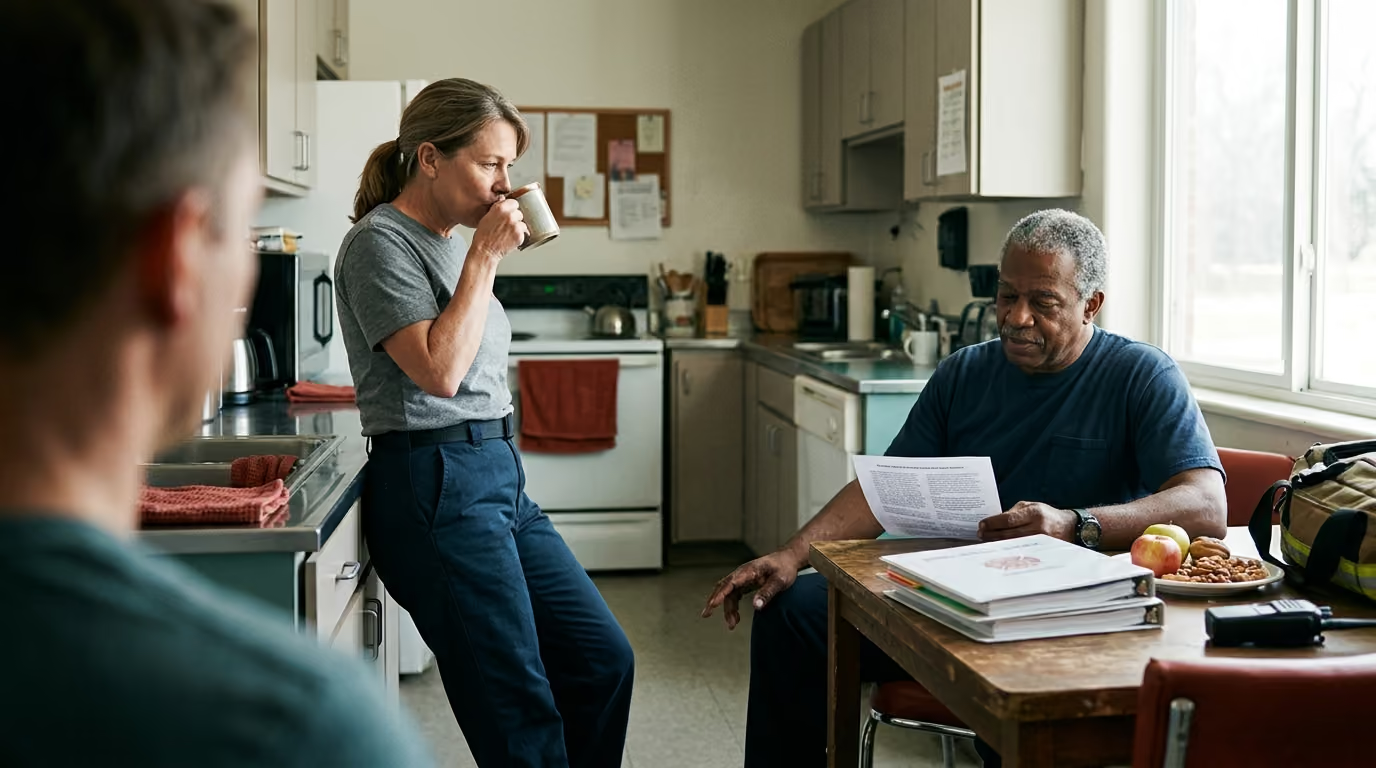

Traditional retirement promises passive rest instead of the active cancer surveillance, cardiovascular recovery, mental health support, and functional mobility retired responders truly need.





If you are in immediate danger, call 911. For 24/7 support, call or text 988 and press 1 for the Veterans Crisis Line, or text 838255.
Many retired first responders believe that surviving a thirty-year career in emergency services means the hardest physical work is behind them. That assumption is often incorrect. Stepping off the apparatus or leaving the patrol car does not erase decades of smoke exposure, interrupted sleep, chronic joint wear, or cumulative nervous system stress. The real challenge of retirement is not simply surviving the job, but preserving the physical and mental independence needed to enjoy the decades that follow.
A successful retirement plan measures success by functional capability rather than calendar years alone. True health in retirement means retaining the leg strength to get off the floor, the balance to avoid falls, the stamina to travel or work outdoors, and the cognitive clarity to manage complex life tasks without assistance. Converting hard-earned operational grit into sustainable daily capability requires an evidence-based plan tailored to the unique physiological profile of former emergency personnel.
Lifespan measures the total years a person lives. Healthspan measures the number of years lived free from chronic disability, cognitive decline, or loss of independence. For emergency service veterans, healthspan is the metric that matters.
(Note: Visual representation of functional reserve across aging domains).
Maintaining functional independence requires building what geriatric researchers call intrinsic capacity. Intrinsic capacity combines your mobility, cognitive function, sensory acuity, psychological vitality, and structural strength. Together, these domains establish your resilience reserve. This reserve represents the physical and neurological buffer you have when facing an unexpected illness, joint surgery, or family crisis.
When your physical capacity sits barely above the baseline demands of daily life, any minor infection or sprained ankle can push you into dependency. Maintaining a generous capability margin protects against this vulnerability. The objective is not setting personal records in the weight room. The objective is maintaining enough reserve capacity that ordinary daily tasks remain effortless well into your seventies, eighties, and beyond.
Global public health data confirms that structured physical activity provides powerful protection against functional decline. Guidelines from the World Health Organization establish that older adults need 150 to 300 minutes of moderate aerobic activity weekly, or 75 to 150 minutes of vigorous activity, combined with resistance training on at least two days each week. Furthermore, older adults benefit substantially from multicomponent training that integrates balance and functional strength on three or more days weekly.
Evidence from occupational and preventive medicine shows that meeting even a portion of these activity targets creates significant reductions in chronic disease and all-cause mortality. Research demonstrates that accumulating 83 to 166 minutes of moderate activity weekly produces meaningful longevity benefits. For retired responders managing chronic joint pain or past injuries, establishing consistency below the standard guideline is far more valuable than abandoning physical training altogether.
Emergency response work leaves a specific physiological signature. Firefighters, police officers, and paramedics spend decades operating under sudden catecholamine surges, irregular circadian rhythms, thermal stress, and environmental toxins. A safe longevity strategy begins with recognizing these specific occupational risks.
Cardiovascular disease remains a leading health threat for emergency responders. NIOSH data identifies police officers and firefighters as occupational groups with elevated heart disease risk. Research confirms that the combination of heavy gear, severe heat, acute psychological stress, and intense physical overexertion can trigger sudden cardiac events in vulnerable individuals.
After leaving active service, sudden unaccustomed exertion poses a distinct risk. A retired responder who has been sedentary for six months and suddenly attempts to clear heavy snow, fell a tree, or sprint during a recreational game places immense strain on the vascular system. Longevity training prioritizes progressive, structured conditioning over unpredictable, maximal physical spikes.
Firefighting involves exposure to combustion byproducts, particulate matter, and chemical carcinogens. The International Agency for Research on Cancer classifies occupational exposure as a firefighter as carcinogenic to humans. Large-scale health studies demonstrate elevated rates of digestive, oral, respiratory, and urinary cancers among career firefighters, along with heightened incidence of malignant mesothelioma. Additional cohort studies among professional firefighters show increased rates of prostate, colon, bladder, and skin malignancies.
Retirement does not eliminate the need for vigilance. Every retired responder should keep a comprehensive record of their operational assignments, significant fire grounds, hazmat responses, and toxic exposures. Share this exposure profile with your primary care physician to establish an individualized cancer screening schedule that accounts for your career history.
Decades of 24-hour shifts, night tours, and interrupted sleep disrupt metabolic and neurological health. Shift work disorder, obstructive sleep apnea, and conditioned insomnia frequently persist long after retirement. The sudden absence of night calls does not automatically restore healthy sleep architecture.
Chronic sleep deprivation impairs glucose metabolism, accelerates vascular aging, and compromises cognitive function. Treating sleep as an active recovery discipline is critical for long-term health. Retired responders experiencing loud snoring, morning headaches, or daytime fatigue should pursue clinical evaluation for sleep apnea rather than dismissing poor sleep as a normal sign of aging. You can review our guide on building a structured sleep plan across irregular schedules to understand how circadian biology affects physical recovery.
Trauma exposure accumulates across decades of responding to critical incidents. In rescue and recovery personnel, post-traumatic stress disorder occurs at substantial rates. When responders retire, the sudden loss of operational structure, dark humor, and daily camaraderie can cause latent trauma symptoms to surface.
Retirement can lead to isolation, depression, or increased alcohol consumption if left unmanaged. If you or someone you know is experiencing acute distress, call or text 988 to reach the Suicide and Crisis Lifeline, press 1 for the Veterans Crisis Line, or text 838255. For immediate life-threatening emergencies, call 911. Securing firearms and medication safely in partnership with a spouse, trusted peer, or healthcare provider is an essential step during periods of transition or emotional strain. Maintaining mental health is a vital component of total operational longevity.
Muscular strength is the single greatest predictor of physical autonomy in late adulthood. Muscle tissue functions as a metabolic sink for glucose, a protective armor for arthritic joints, and the mechanical engine that drives movement. Without targeted resistance training, age-related muscle loss accelerates rapidly.
Your training program should center on basic functional movements that directly translate to independent living:
Retired personnel can explore our resource on using minimum effective dose training principles to build sustainable strength routines without excessive joint inflammation.
Strength is the capacity to generate force, while power is the ability to generate force quickly. When an older adult stumbles over a curb or rug, slow maximum strength is not what prevents a catastrophic fall. Rapid power output in the hips and calves allows the foot to snap forward in time to regain balance.
Incorporate controlled power training into your weekly routine once you establish a solid strength foundation:
Always perform power exercises when your central nervous system is fully rested, ideally at the start of your training session following a thorough warm-up.
Aim for two dedicated full-body resistance sessions each week, separated by at least 48 hours of recovery:
Select weights that leave two to three clean repetitions in reserve on each set. Chasing muscular failure is unnecessary and increases recovery time for aging tendons and ligaments.
Falls represent one of the most severe threats to long-term independence. CDC data indicates that falls among adults aged 65 and older cause over 43,000 deaths annually and lead to roughly 4.5 million emergency department visits. Approximately 37 percent of older adults who fall sustain an injury that requires medical treatment or restricts their daily activity.
Balance is not an innate personality trait; it is a complex motor skill that deteriorates quickly without deliberate practice. Maintaining balance requires integrating sensory input from your eyes, your inner ear, and the proprioceptive nerve endings in your ankles, feet, and spine.
Practice balance drills three to five days per week in a safe environment near a sturdy wall or kitchen counter:
Begin at Level 1 and only progress to the next stage when you can perform the hold for the target duration without grabbing external support.
Emergency response work rarely occurs in a straight line. Responders spend their careers stepping over debris, moving laterally through tight hallways, and pivoting quickly. Retirement physical activity should mirror this multi-planar demand.
Incorporate agility drills into your warm-up routine:
Many retired first responders maintain high physical confidence and an occupational mindset that ignores environmental risks. That confidence can lead to poor decisions, such as climbing unstable ladders or navigating dark rooms without turning on lights.
Perform a thorough environmental audit of your living space:
Cognitive decline is not an inevitable consequence of aging. Extensive neurological research reveals that brain health is intimately linked to cardiovascular function, physical activity, sensory input, and ongoing mental stimulation.
The 2024 Lancet Standing Commission on Dementia identified fourteen modifiable risk factors that collectively account for a substantial percentage of dementia cases worldwide. Newly added factors in the updated report include high low-density lipoprotein cholesterol and untreated vision loss. The report estimates that high LDL cholesterol and untreated vision loss together account for roughly 9 percent of global dementia cases.
Addressing these factors offers retired responders a clear roadmap for protecting cognitive independence:
Hearing and vision are not isolated peripheral systems. They provide the critical sensory infrastructure that feeds data to your brain. When vision or hearing degrades, your brain must divert immense cognitive processing power simply to interpret garbled words or blurry objects, accelerating mental fatigue and social withdrawal.
Years of exposure to sirens, diesel pumps, air horns, radio traffic, and firearms cause widespread hearing loss among first responders. Many retired responders accept hearing loss as an inevitable souvenir of the job. Untreated hearing loss is one of the single largest midlife risk factors for dementia identified by the Lancet Commission.
Schedule regular audiogram evaluations and utilize modern hearing aids promptly if deficits appear. Similarly, undergo annual comprehensive eye examinations to treat cataracts, glaucoma, or refractive errors early. Protecting your sensory hardware directly protects your cognitive software.
Maintaining cognitive reserve requires more than passively solving repetitive newspaper puzzles. The brain thrives on novel challenges that require sustained attention, problem-solving, and emotional engagement.
Select activities that demand progressive learning:
Aim for activities that integrate physical movement with cognitive decision-making, such as orienteering, partner dancing, or pickleball.
Leaving the emergency services creates an acute social void. First responders spend their careers operating inside tight-knit teams characterized by shared dark humor, mutual reliance in dangerous situations, and a clear moral mission. Leaving this environment can produce profound feelings of purposelessness and social disconnection.
Data from the Centers for Disease Control and Prevention confirms that social isolation and loneliness are directly linked to cardiovascular disease, stroke, type 2 diabetes, depression, cognitive decline, and premature mortality. Conversely, strong social relationships lower chronic stress hormones, improve cardiovascular markers, and protect cognitive vitality into advanced age.
A fulfilling retirement requires intentionally replacing the operational ecosystem. Hoping that passive leisure activities will fill forty open hours per week is a recipe for boredom, depression, and creeping isolation.
Develop a structured calendar that includes scheduled commitments where other people depend on your presence and effort. Responders who maintain high social engagement and purposeful responsibilities experience significantly smoother transitions into civilian retirement. To better understand how managing stress supports career longevity, see our review on applying grounded stress regulation techniques.
Transitioning from active duty to retirement requires adjusting your physical and lifestyle priorities across multiple domains:
Managing your health in retirement requires proactive operational discipline. You would never run an emergency apparatus for ten years without performing scheduled fluid changes, brake inspections, and pump certifications. Your body requires the same rigorous preventive maintenance.
Create a comprehensive medical dossier that you can present to any new primary care clinician or medical specialist:
This health dashboard bridges the communication gap between hospital systems and ensures your occupational risk factors are taken seriously by civilian doctors. For additional insights on long-term wellness planning, browse our dedicated library on career longevity and life after emergency service.
Work with your physician to complete these evaluations on an annual basis:
Retired personnel who notice sudden performance changes during workouts can review our guide on autoregulating training intensity based on physical fatigue to ensure their routines remain safe and effective.
Longevity planning includes preparing for unexpected medical events before a crisis occurs. Establishing clear medical directives preserves your personal autonomy if an accident or severe illness leaves you temporarily unable to speak for yourself:
A longevity blueprint is not a license to train recklessly or ignore warning signs. Pushing through acute joint pain or exertional distress is a common habit among emergency veterans, but in retirement, that mindset leads to preventable injuries and medical emergencies.
Cease exercise immediately and seek emergency medical care if you experience any of the following symptoms during physical training:
Modify your training program immediately when encountering these orthopedic signals:
Never return to high-intensity training or heavy resistance loads while managing active musculoskeletal inflammation or unresolved neurological symptoms.
Navigating health in retirement often requires consulting qualified healthcare professionals who understand the physiological demands of aging. You do not need to diagnose or manage complex medical conditions on your own.
Schedule an appointment with a licensed specialist under the following circumstances:
A professional evaluation provides objective baseline data, identifies hidden vulnerabilities, and ensures your longevity plan remains safe, effective, and tailored to your specific needs.
Retirement from the emergency services is not the end of physical capability. It is the beginning of a deliberate, long-term project to protect the physical strength, mental sharpness, and social purpose that make life fulfilling.
Preserving independence across the later decades requires applying the same discipline, preparation, and operational mindset you brought to active duty. By prioritizing functional movement, maintaining vigilant health surveillance, and staying deeply connected to your community, you can ensure that your retirement years are defined by autonomous capability rather than progressive decline.
Converting occupational toughness into lifelong capability ensures you remain strong, clear-headed, and independent across every stage of retirement.
Stay connected for research-led guidance on duty fitness, shift-work sleep, injury recovery, stress, nutrition and career longevity. Practical ideas for first responders who want to stay capable on the job, recover well and protect their health for the long run.



Read practical guidance on first responder fitness, recovery, sleep, nutrition and resilience for demanding work and a long, active career.
read the blog



