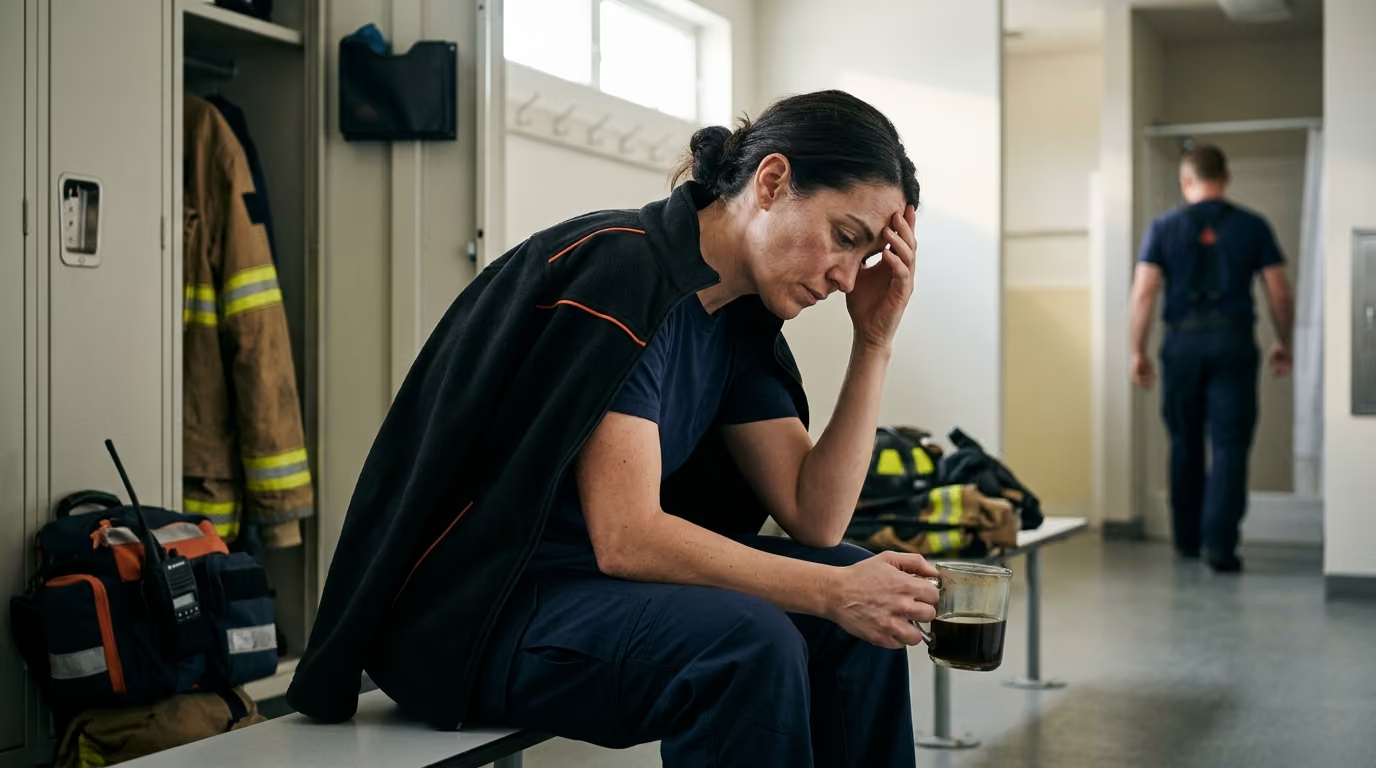

Three recovery tiers help shift workers manage acute sleep debt, commute safely, and rebuild physical capacity after exhausting operational shifts.





How to function after working all night with zero sleep is a question almost every first responder searches eventually. Extended incidents, complex overnight calls, and relentless tone drops can leave you physically drained and mentally foggy by sunrise. This guide provides a definitive operational protocol for managing the day after severe sleep disruption, protecting your safety, and restoring physical readiness.
A difficult overnight call or fragmented night is an acute impairment event, not a test of personal resilience. Recovery requires treating the following day as a reduced-capacity period until your body restores its baseline. The primary sequence is straightforward: eliminate transit hazards, protect a dedicated sleep opportunity, reduce physiological and cognitive loads, and align nutrition and caffeine with recovery rather than stimulation.
Current evidence from the National Institute for Occupational Safety and Health (NIOSH) and the American Academy of Sleep Medicine (AASM) indicates that acute sleep deprivation severely compromises reaction time, vigilance, motor control, and emotional stability. NIOSH data demonstrates that staying awake for 17 to 24 consecutive hours produces cognitive deficits equivalent to a blood alcohol concentration of 0.05% to 0.10%. Stimulants cannot replace restorative sleep stages, and adrenaline frequently masks profound functional deficits.
In emergency services, operational realities often make sleep loss unavoidable. Extended structure fires, critical care transports, protracted tactical incidents, and late-shift arrests demand sustained focus during biological circadian troughs. These demands make structured post-call protocols essential for career longevity and immediate survival.
Understanding what occurs during acute sleep loss helps establish realistic boundaries for post-shift recovery. Sleep loss is not a single physiological state. It presents in distinct forms that affect the body differently.
Total sleep deprivation occurs when you receive little or no sleep during the biological night. Partial sleep restriction happens when you sleep for significantly fewer hours than your baseline requirement. Sleep fragmentation involves repeated awakenings from emergency tones or radio traffic, which shatters sleep architecture even if total bed time appears adequate. Circadian misalignment occurs when your schedule forces you to work during the biological night and sleep during the day. Extended wakefulness describes the cumulative hours awake since your previous restorative rest.
The distinction between fatigue and sleepiness is critical on the fireground or patrol route. Sleepiness is the biological drive to fall asleep. Fatigue is a reduced capacity for sustained physical or cognitive work. After an intense call, high circulating adrenaline, cortisol, and dopamine can suppress the sensation of sleepiness. You might feel alert, energetic, or keyed up despite being substantially impaired.
Adrenaline masks your underlying deficits without fixing reaction time or judgment. When the adrenaline clears, profound exhaustion often sets in rapidly. Objective circumstance and total hours awake must dictate your choices rather than subjective confidence.
Recovery debt cannot be cleared in a single session. When you accumulate a severe sleep deficit over a twenty-four-hour shift, one seven-hour sleep block improves alertness but may leave subtle reaction time and metabolic deficits behind. You must also distinguish sleep opportunity from actual sleep obtained. Lying in a bunk for six hours with continuous station interruptions, street noise, and light does not equal six hours of continuous rest. Tracking true recovery requires assessing both environmental protection and uninterrupted sleep duration.
The drive home after a demanding night shift is frequently the most dangerous task of the entire tour. National Highway Traffic Safety Administration (NHTSA) data indicates that drowsy-driving crashes concentrate heavily between midnight and 6:00 a.m. with a secondary peak during the late afternoon. NHTSA recorded 644 drowsy-driving fatalities in 2024, though safety officials widely agree that fatigue-related crashes are substantially underreported.
Fatigue impairs driving performance in ways identical to intoxication. It slows your brake reaction time, degrades lane tracking, and induces involuntary microsleeps lasting from one to ten seconds. A vehicle traveling at highway speed covers significant distance during a three-second microsleep. Relying on willpower to stay awake while operating a motor vehicle is an unacceptable operational risk.
You should not operate a vehicle if you experience any of the following warning signs:
When warning signs appear, follow a strict hierarchy of transport safety. The preferred option is securing a ride with a well-rested colleague, spouse, or family member. The second option is utilizing rideshare or public transit to remove yourself from the driver seat entirely. The third option is utilizing a quiet station bunk or department quiet room to sleep before attempting travel.
If driving is unavoidable and signs of sleepiness emerge, pull into a safe, well-lit parking area for a targeted countermeasure. A structured fatigue mitigation strategy combines a rapid caffeine dose with a short nap.
Consume roughly 100 to 200 milligrams of caffeine, recline your seat, set an alarm for twenty minutes, and close your eyes immediately. Caffeine requires approximately 20 to 30 minutes to absorb and exert an alerting effect in the central nervous system. Combining caffeine with a brief nap clears adenosine while allowing the stimulant to activate precisely as you wake. This caffeine nap serves strictly as an emergency bridge to reach home safely, not as permission to embark on long road trips.
Managing the post-call period requires an objective method to assess physical and cognitive capacity. A practical traffic-light triage model classifies your current status and dictates appropriate actions for the day.
Red status indicates severe operational impairment. You enter Red status if you experienced near-total sleep deprivation over a 24-hour window, notice microsleeps, or exhibit confusion and disorientation. Physical markers include dizziness, stumbling, extreme clumsiness, or an inability to sustain attention during simple conversations.
When in Red status, cancel all high-consequence tasks immediately. Do not drive long distances, operate power equipment, perform complex home repairs, or care for dependents without support. Arrange safe transportation home, enter a dark bedroom, and sleep immediately. Postpone all workouts, nonessential errands, and major personal or financial discussions until you complete a primary recovery sleep.
Amber status applies when you obtained fragmented, low-quality sleep or worked an extended call that leaves you physically drained but mentally coherent. You can function in low-risk settings, but your physical output, patience, and processing speed are noticeably degraded. You might notice heavy limbs, mild irritability, slowed reading speed, and high cravings for sugar or caffeine.
Amber status calls for a defensive approach to the day. Maintain essential household and family commitments, but eliminate optional demands. Postpone high-intensity resistance training, interval running, and technical skill sessions. Protect a dedicated three-to-four-hour rest window, hydrate steadily, and consume balanced, easily digested meals while avoiding escalating doses of stimulants.
Green status occurs when an overnight call caused brief disruption, but you secured adequate total sleep and wake with clear cognitive function. You feel steady, alert, and capable of executing daily routines without heavy reliance on stimulants.
Green status permits resuming normal activities, but with structured boundaries. You may complete moderate-intensity physical training, provided you warm up thoroughly and avoid maximal attempts. Continue monitoring your energy across the afternoon, as delayed fatigue can surface during standard circadian low points.
The transition from station bay to your home bedroom sets the trajectory for total recovery. Chaotic post-shift routines prolong sympathetic nervous system activation and destroy the opportunity for daytime rest.
Manage morning light exposure carefully. Bright sunlight striking the retina signals the suprachiasmatic nucleus in the brain to suppress endogenous melatonin production and promote wakefulness. When leaving the station in bright daylight, put on dark sunglasses during the walk to your car and the commute home, provided they do not impair driving visibility. Minimize time spent running morning errands in brightly lit grocery stores or commercial centers.
Hydrate systematically rather than aggressively. Dehydration exacerbates post-shift headaches, muscular aches, and cognitive fog, especially after working in protective equipment or warm environments. Drink water according to natural thirst upon waking from shift. Avoid consuming excessive volumes of fluid right before lying down, as a full bladder will interrupt sleep cycles.
Post-shift nutrition requires careful selection. The body metabolizes nutrients differently when circadian rhythms are misaligned. Consuming heavy, high-fat, or heavily spiced meals before bed triggers gastrointestinal discomfort, acid reflux, and elevated core body temperature, all of which disrupt restorative slow-wave sleep.
If you are hungry before daytime sleep, eat a light, tolerable meal composed of complex carbohydrates and lean protein. Suitable options include:
If stress or fatigue completely suppresses your appetite, do not force a massive meal. Drink a small glass of milk, a simple protein smoothie, or eat half a banana to stabilize blood glucose before bed. For an in-depth breakdown of meal timing, review our guide on eating for circadian rhythm support.
De-escalate your nervous system before entering the bedroom. High-stress emergency scenes flood the bloodstream with catecholamines. Moving straight from an adrenaline-charged incident to bed without a buffer often results in restless tossing and turning. Dedicate fifteen minutes to a warm shower, gentle mobility work, or reading physical print material in dim lighting. Keep phones, tablets, and computers out of the sleep environment to eliminate stimulating blue light and stress-inducing notifications.
Sleep remains the only biological mechanism capable of reversing neurobehavioral impairment and cellular fatigue. Designing a protected daytime sleep environment is essential for first responders who must sleep while the rest of the world is active.
Eliminate light and sound completely. Daytime sleep is fragile because it conflicts with your internal circadian drive for wakefulness. Fit your bedroom with high-grade blackout curtains or use a contoured sleep mask that seals out all peripheral light. Mask environmental street noise, lawnmowers, and family activity using a mechanical fan or continuous white-noise machine. Set your phone to emergency bypass mode for immediate family while silencing all other calls, texts, and app alerts.
Coordinate with your household. Communicate clearly with spouses, partners, roommates, and children about the operational necessity of uninterrupted sleep. Treat your post-shift rest as an essential occupational safety measure rather than optional downtime.
Strategic napping protocols depend on whether you work again that evening or need to transition back to a daytime schedule:
If you are off duty and returning to a standard diurnal rhythm, avoid sleeping through the entire day. Sleeping until 4:00 p.m. eliminates the homeostatic sleep pressure required to fall asleep that night, creating a vicious cycle of insomnia and exhaustion. Aim for a ninety-minute to three-hour sleep block in the morning. Wake up by early afternoon, get outdoors into natural sunlight, engage in light physical movement, and retire for a full night of sleep at a standard evening hour.
If you are scheduled for another consecutive night shift, protect a continuous anchor sleep block of five to seven hours during the day. Supplement this rest with a brief twenty-minute nap in the late afternoon before reporting for roll call.
Manage sleep inertia systematically upon waking. Sleep inertia is the grogginess, disorientation, and reduced motor skill that occurs immediately after transitioning from sleep to wakefulness. It commonly lasts 30 to 60 minutes, though it can extend to two hours following profound sleep deprivation.
Do not wake up and immediately step into a vehicle or make critical decisions. Build a mandatory buffer into your schedule. Wash your face with cold water, expose your eyes to ambient daylight, drink a large glass of water, and move your body lightly before taking on high-consequence tasks. To establish comprehensive long-term shift patterns, explore our detailed resource on building a shift-specific sleep plan.
Caffeine is a valuable operational tool when used strategically, but it becomes a liability when used as a blunt instrument to override severe fatigue. It functions by binding to adenosine receptors in the brain, blocking the chemical signal that tracks homeostatic sleep pressure. Caffeine does not eliminate adenosine; it simply delays your perception of fatigue.
The pharmacokinetics of caffeine require disciplined management. Caffeine reaches peak plasma concentration approximately 30 to 60 minutes after ingestion, with an average elimination half-life of four to six hours. In some individuals, clearance takes up to ten hours. Consuming large doses of caffeine during the latter half of a shift or immediately upon returning home will severely compromise your daytime sleep architecture, reducing deep slow-wave and REM sleep.
Follow strict rules for post-call caffeine application:
For tactical fueling recommendations during shift work, read our field guide on managing caffeine and energy across night duty.
Post-call nutrition should stabilize energy levels without overloading the digestive tract. Shift work and acute sleep loss alter hunger-regulating hormones, increasing ghrelin (appetite stimulation) and reducing leptin (satiety signaling). This hormonal shift creates intense cravings for hyper-palatable, calorie-dense foods loaded with simple sugars and saturated fats.
Avoid the post-shift reward binge. Sitting down to a heavy meal of fried fast food or sugary baked goods produces rapid blood glucose spikes followed by sharp reactive hypoglycemia. This volatility amplifies brain fog, worsens systemic inflammation, and disrupts digestive comfort during recovery sleep.
Structure your nutrition around predictable, nutrient-dense meals once you wake from daytime rest:
Maintaining duty fitness is essential for operational longevity, but attempting to execute high-intensity or technically demanding workouts after severe sleep loss is counterproductive and dangerous.
Research published in sports medicine reviews demonstrates that acute sleep deprivation impairs aerobic endurance, peak muscular force, sprinting speed, and reaction time while increasing your rate of perceived exertion (RPE). A submaximal weight will feel significantly heavier, your coordination will degrade, and your risk of acute musculoskeletal injury increases substantially.
Training modifications after a bad night should be governed by a clear hierarchy of exercise safety:
High-risk activities must be canceled when in Red or Amber status. Cancel one-rep-maximum testing, heavy spinal-loading movements like maximal squats and deadlifts, complex Olympic lifts (snatches, cleans), sparring, outdoor road cycling, and open-water swimming. A split-second lapse in attention or balance during these movements can lead to severe injury.
If you are in Amber status and feel a strong psychological need to move, modify the session to prioritize safety. Substitute free-weight barbell movements with supported resistance machines, cable stations, or bodyweight exercises. Reduce working volume by 30% to 50%, keep repetitions far from failure (leaving three to four reps in reserve), and avoid high-intensity cardiovascular intervals.
Low-intensity movement often accelerates physical and mental recovery far better than complete immobility. A thirty-minute brisk walk outdoors in natural daylight, an easy recovery spin on a stationary bicycle, or a gentle mobility and foam-rolling session enhances blood circulation, eases joint stiffness, and reinforces normal circadian alertness without stressing the central nervous system.
Timing matters when scheduling post-call exercise. Vigorous physical activity elevates your core body temperature and stimulates sympathetic nervous output. Complete all workouts at least four to five hours before your intended primary sleep episode to allow body temperature and heart rate to return to baseline. You can learn more about duty-specific programming in our duty fitness category.
Fatigue management must extend beyond individual coping mechanisms. In high-consequence occupations, fatigue is an institutional safety hazard that demands structured operational protocols.
First responders frequently operate within a cultural framework that valorizes working through profound exhaustion. While emergency services require occasional extraordinary efforts, treating severe fatigue as a personal virtue compromises crew safety, increases clinical errors in emergency medical care, and elevates vehicle collision rates. Operational longevity requires recognizing physiological limits and utilizing institutional support mechanisms.
Apply the capacity budget model to structure your non-duty hours:
Within the station environment, implement structured fatigue countermeasures. Use mandatory secondary-checker policies for drug calculations, patient transfer protocols, and technical rigging setups after midnight or during extended operations. Rotate drivers during protracted incidents, ensure crews have access to quiet rehabilitation sectors, and encourage honest reporting of severe impairment.
If you are a parent or caregiver returning home after a brutal night, coordinate coverage with your support network. Sleeping while supervising young children in hazardous environments or holding an infant while severely sleep-deprived presents extreme risks. Communicate your fatigue level honestly with your partner or family members to establish protected rest windows.
While occasional sleep loss is an inherent part of emergency services, persistent inability to recover warrants formal investigation. Chronic fatigue should not be accepted as an inevitable baseline of the profession.
Certain symptoms indicate that post-shift struggles have progressed beyond normal tiredness into clinical territory. Consult a qualified medical provider or board-certified sleep medicine specialist if you experience:
Never use alcohol as a recovery tool. Alcohol acts as a central nervous system depressant that may accelerate sleep onset, but it aggressively fragments sleep architecture, suppresses restorative REM stages, worsens sleep-disordered breathing, and induces early-morning awakenings. The outcome is light, unrefreshing rest and heightened dehydration.
Be cautious when using medications that cause drowsiness. Antihistamines, muscle relaxants, prescription pain medications, and certain psychiatric drugs compound shift-related fatigue and severely impair motor performance. Review all prescriptions with your physician to establish optimal timing that protects both operational capability and restorative sleep. You can find more evidence-based guidance in our shift work, sleep, and recovery resources.
Apply this sequential checklist to manage your recovery during the 24 hours following a difficult shift.
Sustainable capability across a decades-long emergency services career depends on how intelligently you recover from acute demands. Treating post-call fatigue as a biological reality rather than a personal failure protects your crew, your family, and your long-term health.
Stay connected for research-led guidance on duty fitness, shift-work sleep, injury recovery, stress, nutrition and career longevity. Practical ideas for first responders who want to stay capable on the job, recover well and protect their health for the long run.



Read practical guidance on first responder fitness, recovery, sleep, nutrition and resilience for demanding work and a long, active career.
read the blog



