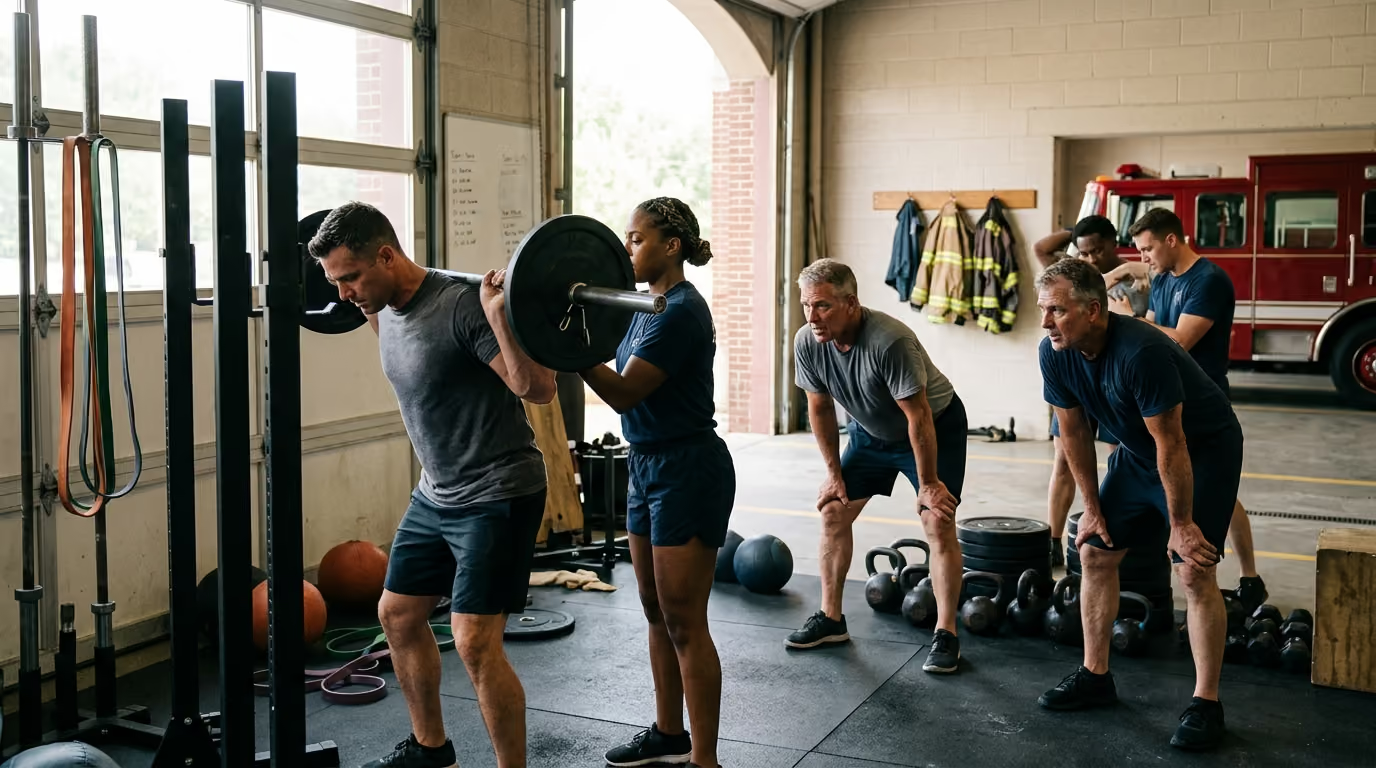

Sustainable endocrine health and athletic performance improve when you design strength and conditioning programs around workload management, recovery, and smart conditioning protocols.





Many people search for ways to design workouts that boost testosterone. They often wonder whether heavy squats, short rest periods, or high-intensity intervals will raise their resting hormone levels and accelerate muscle growth.
The short answer is straightforward. Heavy lifting and high-intensity conditioning can produce a sharp, temporary rise in circulating testosterone immediately following a session. However, this acute spike returns to baseline within hours and does not drive long-term strength or muscle growth. Furthermore, several months of consistent training rarely increases resting testosterone levels. Long-term hormonal health depends far more on total recovery, sufficient energy intake, and balanced fatigue management than on designing workouts around short-lived hormonal surges.
To understand how physical training interacts with hormones, one must distinguish between acute hormonal fluctuations and chronic resting baselines. An acute response is the temporary change in circulating hormone levels during and immediately after an exercise bout. In men, heavy resistance exercise often triggers a rapid release of testosterone into the bloodstream. In women, this acute response is far more variable, with research demonstrating either modest transient elevations or no significant changes.
The biological pathway behind this immediate release involves the hypothalamic-pituitary-gonadal axis, commonly known as the HPG axis. Exercise acts as an acute stressor that stimulates the hypothalamus to release gonadotropin-releasing hormone. This signal prompts the anterior pituitary gland to secrete luteinizing hormone, which then stimulates the Leydig cells in the testes to produce testosterone. At the same time, physical exertion alters plasma volume and sympathetic nervous system activity, concentrating circulating hormones in the blood.
Despite the biological reality of this post-exercise spike, its role in tissue remodeling is often misunderstood. Decades of research show that the magnitude of an acute testosterone spike does not correlate with long-term gains in strength or muscle size. Skeletal muscle adaptations unfold over weeks and months through mechanical tension, muscle protein synthesis, and neuromuscular coordination. An acute hormonal spike lasts only a few hours.
A more meaningful physiological adaptation occurs at the cellular level within skeletal muscle tissue itself. Resistance training upregulates androgen receptor expression and receptor content within trained muscle fibers. This local upregulation can persist for one to two days after a demanding session. It allows muscle tissue to utilize available circulating androgens more effectively, regardless of whether resting blood levels change.
Resting testosterone refers to baseline circulating concentrations measured when the body is fully recovered from recent exertion. The vast majority of exercise science literature indicates that long-term resistance training does not produce sustained increases in resting baseline testosterone. Athletes frequently build substantial amounts of muscle and double their strength while maintaining identical resting testosterone levels.
The specific structure of a resistance training session directly influences the magnitude of the acute endocrine response. Research from the European College of Sport Science and the National Strength and Conditioning Association identifies four primary programming variables that shape post-exercise hormone dynamics:
Sessions that combine multi-joint movements, moderate-to-high relative intensities, higher total set volume, and shorter rest periods produce the largest acute testosterone increases. For example, a workout consisting of heavy barbell back squats and Romanian deadlifts with 60-second rest intervals creates substantial metabolic stress. This combination drives a sharp post-workout rise in circulating testosterone, growth hormone, and cortisol.
Conversely, traditional maximal strength training produces a much smaller acute endocrine spike. A powerlifter performing low-repetition sets of heavy squats with four minutes of rest between sets exposes the body to high mechanical tension with minimal metabolic waste accumulation. The systemic hormonal spike from this session is modest. Yet, this protocol produces exceptional gains in absolute muscular strength and neuromuscular efficiency.
This contrast demonstrates why programming should never prioritize post-workout hormone spikes over mechanical overload. Selecting an exercise solely because it triggers a short-term testosterone increase is an ineffective programming strategy. The primary drivers of physical adaptation remain mechanical tension, progressive overload, volume within recoverable limits, and movement quality.
When designing a resistance training routine for hormonal stability, the focus must be on sustainable workload distribution. Excessively dense sessions with high volume and minimal rest create immense systemic fatigue. If repeated too frequently without adequate recovery, these demanding protocols elevate baseline cortisol and depress overall endocrine function over time. You can explore structured approaches to physical development within our guide to strength, fitness, and duty performance.
Conditioning is an essential component of comprehensive physical readiness, but different energy systems place distinct demands on the endocrine system. Conditioning cannot be evaluated as a single, uniform training category. Its hormonal impact depends heavily on duration, intensity distribution, frequency, and nutritional support.
Low-intensity steady-state aerobic work places minimal strain on the HPG axis. Sustained aerobic exercise in lower heart rate zones generally sees testosterone return to baseline within approximately one hour after completion. Because this work carries a low neuromuscular recovery cost, it supports cardiovascular health and parasympathetic nervous system tone without compromising hormonal stability.
High-intensity interval training, such as repeated sprint protocols or hard interval circuits, triggers a sharp acute stress response. These brief, high-output efforts cause a transient stimulation of the HPG axis, accompanied by a rapid release of catecholamines and cortisol. While useful for building work capacity, repeated high-intensity conditioning sessions require substantial recovery resources. Stacking multiple high-intensity interval sessions into a single week can lead to sustained endocrine suppression.
Prolonged, high-volume endurance training presents the greatest risk for chronic testosterone reduction. When athletes perform long-duration running or cycling for multiple hours each week, resting testosterone often declines. This suppression is frequently mediated by high total energy expenditure and accumulated physical wear. The HPG axis responds to prolonged metabolic demand by conserving energy, downregulating gonadal hormone production.
To balance conditioning with hormonal health, athletes should clearly separate their energy system sessions into distinct physiological categories:
This category involves conversational-pace cardio performed at a steady heart rate for 30 to 60 minutes. It builds mitochondrial density, improves capillary networks, and creates minimal systemic fatigue. It poses virtually zero threat to testosterone levels when energy needs are met.
This involves sustained efforts near the lactate threshold for 15 to 30 minutes. It carries a moderate systemic cost and requires planned placement within the weekly training schedule to prevent fatigue accumulation.
These are short bursts of maximal or near-maximal effort lasting between 10 and 60 seconds, followed by complete rest. They impose high neuromuscular and autonomic demands. They should be used sparingly, typically once or twice per week at most.
These are continuous aerobic sessions lasting 90 minutes or longer. They require deliberate nutritional planning and substantial carbohydrate intake to prevent prolonged suppression of the HPG axis.
Physical exercise is an external stressor that disrupts bodily homeostasis. When training stress is followed by adequate rest and nutrition, the body adapts by building stronger tissues and greater work capacity. However, when total stress exceeds the body's capacity to repair itself, the endocrine system begins to deteriorate.
A foundational concept in sports science is the adaptation equation:
> Adaptation = Training Stimulus − Unrecovered Systemic Stress
The stress side of this equation includes far more than the sets and reps logged in the gym. It encompasses sleep restriction, work pressure, psychological tension, environmental heat, poor nutrition, and illness. The body does not possess separate recovery reserves for emotional stress and physical training. All stressors draw from the same biological capacity.
When training loads temporarily outpace recovery, athletes enter a state of functional overreaching. Functional overreaching is a planned, short-term performance decline lasting up to two weeks. When followed by a scheduled deload period, the body recovers and supercompensates, leading to higher performance. Hormonal function may dip briefly during this phase, but it rebounds quickly once volume is reduced.
If an athlete ignores fatigue and continues to increase training volume, they enter nonfunctional overreaching. In this state, performance drops for three to four weeks or longer and fails to rebound after a simple rest day. Baseline cortisol levels often rise, resting testosterone drops, sleep quality deteriorates, and resting heart rate becomes unstable.
The most severe outcome of unresolved stress accumulation is overtraining syndrome. Overtraining syndrome is a complex, multisystem maladaptive condition characterized by persistent performance decline lasting several months. Athletes suffering from overtraining syndrome experience profound autonomic nervous system dysregulation, chronic fatigue, mood disturbances, and altered endocrine profiles.
In clinical evaluations of overtrained athletes, testosterone levels are frequently depressed, but they can occasionally appear within normal sedentary ranges. For this reason, sports science consensus statements explicitly state that testosterone alone cannot diagnose overtraining syndrome. Furthermore, the testosterone-to-cortisol ratio, once widely promoted as a definitive marker of overtraining, simply reflects acute physiological strain. It cannot serve as a stand-alone diagnostic test for chronic maladaptation.
One of the most common causes of low testosterone in dedicated athletes is not poor exercise selection, but inadequate nutrition. The body requires a baseline amount of dietary energy to support fundamental physiological functions, including cellular repair, thermoregulation, immune defense, and reproductive health.
Energy availability refers to the amount of dietary energy remaining for biological functions after subtracting the energy expended during structured exercise. When dietary caloric intake is too low to support these baseline functions, the athlete enters a state of Low Energy Availability. Chronic Low Energy Availability leads directly to Relative Energy Deficiency in Sport, commonly abbreviated as RED-S.
Although RED-S was historically studied primarily in female athletes, extensive research confirms that male athletes are equally susceptible. In men, severe energy deficiency suppresses the pulsatile release of gonadotropin-releasing hormone from the hypothalamus. This disruption cascades through the pituitary gland, leading to secondary hypogonadism and profoundly suppressed testosterone levels.
Athletes vulnerable to RED-S include endurance runners, weight-class competitors, individuals in aggressive fat-loss phases, and those who chronically under-consume carbohydrates. Carbohydrates are especially critical for hormonal health. Low carbohydrate availability accelerates central nervous system fatigue, elevates resting cortisol, and suppresses thyroid hormone conversion, further downregulating testosterone production.
The most important clinical finding regarding exercise-induced hypogonadism is that it is often completely reversible without hormone replacement therapy. Clinical studies demonstrate that when under-fueled athletes increase their daily caloric intake, restore carbohydrate consumption, and temporarily reduce training volume, resting testosterone levels normalize. Before seeking medical hormone interventions, athletes experiencing low testosterone must evaluate their caloric balance, body composition goals, and nutritional habits. You can learn more about baseline dietary strategies within our dedicated section on nutrition and body composition.
For emergency service workers, firefighters, law enforcement officers, and paramedics, maintaining hormonal health presents unique challenges. Unlike traditional athletes who operate on predictable schedules, first responders face irregular shift timing, chronic sleep disruption, heavy gear loads, and unpredictable calls. These occupational demands alter the body's recovery capacity and influence training tolerance.
Circadian disruption from rotating night shifts directly interferes with natural endocrine rhythms. Testosterone production follows a daily pattern, reaching its highest concentrations in the early morning during uninterrupted sleep. When sleep is repeatedly fragmented by emergency alarms, total REM and deep slow-wave sleep stages are severely curtailed. This disruption inhibits the normal nocturnal release of luteinizing hormone and reduces daily testosterone output.
Carrying 40 to 60 pounds of tactical gear or protective equipment creates substantial baseline physical fatigue. Long hours spent sitting in patrol vehicles or standing on scene generate spinal compression and postural strain. When high-stress structural fires or critical medical calls occur, the body experiences massive surges of adrenaline and cortisol. Stacking an intense, high-volume gym session on top of a demanding night shift often pushes the body past its recovery threshold.
To maintain physical readiness and hormonal stability under these conditions, first responders must adjust their training volume to match their current recovery state. A structured plan for first responder training around shift work should use flexible scheduling rather than rigid, unyielding routines. On days following severe sleep deprivation, high-intensity training should be replaced with light active recovery, mobility work, or low-intensity aerobic conditioning.
Applying the shift-work training decision tree helps personnel determine whether to push hard, modify volume, or focus purely on rest. Attempting to force a maximal lifting session after a chaotic 24-hour shift increases injury risk and exacerbates endocrine suppression. Long-term career longevity requires balancing physical preparedness with tactical fatigue management.
Structuring a training plan that builds strength, increases muscle mass, and protects hormonal balance requires deliberate programming. Rather than designing workouts to chase temporary hormone spikes, athletes should structure their training blocks around sustainable volume, proper intensity distribution, and adequate recovery windows.
The following programming frameworks illustrate how to balance resistance work, conditioning, and recovery for different athletic goals.
This framework prioritizes maximal neural drive and mechanical tension while keeping metabolic fatigue low.
This structure accumulates the necessary volume for muscle growth while managing central nervous system fatigue.
Designed for individuals who must maintain both physical strength and exceptional cardiovascular endurance.
When work stress or sleep deprivation spikes unexpectedly, you can maintain long-term progression by applying minimum effective dose training. Cutting session volume by half while maintaining intensity preserves strength and muscle mass without overwhelming the endocrine system.
While optimizing training and lifestyle variables supports natural hormone production, physical training has definitive limits. Exercise programming cannot overcome underlying medical pathology, structural endocrine damage, or severe clinical hypogonadism.
Athletes must recognize the boundary between normal training-induced fatigue and clinical endocrine dysfunction. A temporary drop in energy or mild muscle soreness following a heavy training block is normal. However, persistent symptoms warrant deeper investigation.
Warning signs that suggest a significant endocrine or systemic issue include:
When these symptoms appear, self-diagnosing through single commercial blood tests or online hormone calculators is ineffective. Circadian fluctuations, recent exercise, dietary changes, and acute stress cause wide swings in daily testosterone levels. A single blood draw taken in the afternoon or after a grueling workout does not reflect true baseline endocrine function.
Clinical evaluation requires comprehensive laboratory testing supervised by a qualified physician or endocrinologist. Proper diagnostic protocol involves multiple morning blood draws taken between 7:00 AM and 10:00 AM in a rested, fasted state. A thorough assessment includes total testosterone, free testosterone, sex hormone-binding globulin, luteinizing hormone, follicle-stimulating hormone, thyroid panel, prolactin, and morning cortisol.
Hormone replacement therapy should never be viewed as a quick fix for poor sleep, excessive training volume, or chronic under-eating. For athletes dealing with stress-induced hypogonadism, addressing the underlying root causes is the safest and most effective initial step. You can read more about evidence-based hormonal health in our full archive on testosterone and hormonal optimization.
Balancing rigorous physical preparation with sustainable hormonal health requires a structured, long-term approach. You can implement these practical steps this week to evaluate your current training load, manage fatigue, and protect your endocrine system.
Sustainable physical capability is built on the balance between productive training stress and complete systemic recovery. By prioritizing sleep, adequate nutrition, and intelligent workload management over short-lived hormone spikes, you build resilient strength and protect your health across a long career.
Stay connected for research-led guidance on duty fitness, shift-work sleep, injury recovery, stress, nutrition and career longevity. Practical ideas for first responders who want to stay capable on the job, recover well and protect their health for the long run.



Read practical guidance on first responder fitness, recovery, sleep, nutrition and resilience for demanding work and a long, active career.
read the blog



