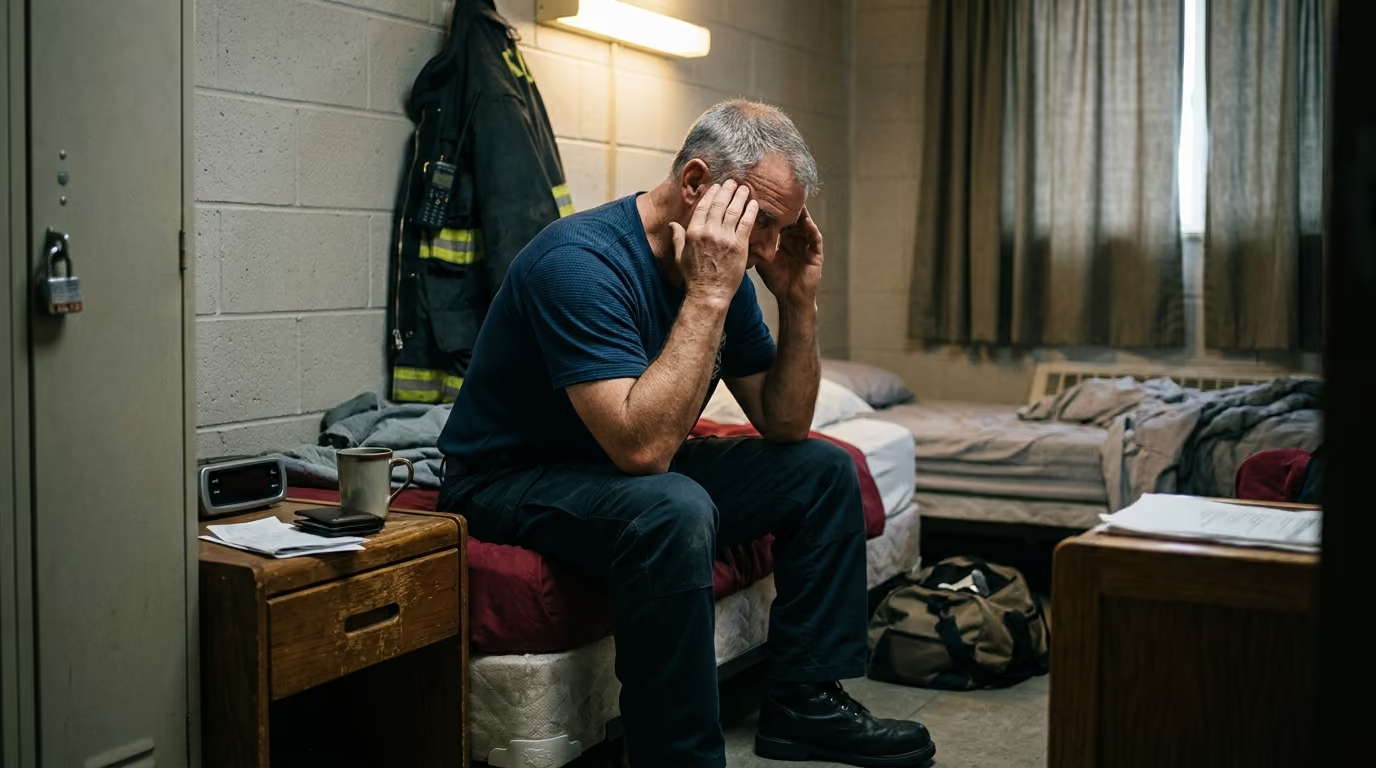

Three months of persistent sleep problems on irregular schedules signal shift work disorder and warrant a comprehensive clinical evaluation for underlying medical conditions.





Sleep disruption during irregular shifts is an expected biological reaction to working against your natural body clock. It is not, however, a mandatory badge of honor that must be tolerated without medical support. When nonstandard work hours cause persistent, impairing exhaustion that outlasts your rest days, the problem moves beyond standard fatigue.
Professional evaluation is warranted when sleepiness impairs safe driving or duty performance, when sleep remains unrefreshing despite adequate time in bed, or when symptoms last for three months or longer. A clinical assessment separates schedule-driven circadian strain from treatable medical disorders such as obstructive sleep apnea, chronic insomnia, or restless legs syndrome. Understanding this distinction allows first responders and shift workers to protect both operational readiness and long-term health.
Working outside standard daytime hours forces the body to operate against its circadian timing system. The human circadian system regulates sleep propensity, core temperature, digestive efficiency, and hormone release across a roughly 24-hour cycle. When work requires nighttime alertness and daytime sleep, biological drives for wakefulness and rest collide.
This mismatch creates a fundamental difference between temporary fatigue and a formal sleep disorder. Understanding where your symptoms fall within this spectrum requires clear definitions.
Expected disruption is the acute, temporary difficulty of sleeping at irregular hours. When an emergency responder rotates from day shifts to night shifts, day-one daytime sleep is often fragmented. The worker might wake up after five hours because daylight and internal temperature curves promote wakefulness.
This response is physiologically typical. It generally improves as the circadian phase partially shifts or when the worker returns to rest days. It does not cause severe functional impairment during off-duty recovery periods.
Chronic insufficient sleep occurs when a worker does not allocate enough time for sleep. Commuting long distances, managing household tasks, caring for family members, or working a second job often compresses the rest window.
In this scenario, the sleep mechanism itself functions normally. If given eight undisturbed hours in a quiet room, the individual falls asleep quickly and sleeps deeply. The primary issue is lack of opportunity rather than a biological disorder.
Shift Work Disorder is a recognized circadian rhythm sleep-wake disorder. The condition is characterized by clinically significant insomnia, excessive daytime sleepiness, or both. These symptoms must link directly to a recurring work schedule that overlaps the conventional sleep window.
The disorder involves a persistent inability to sleep restfully during allotted rest times, paired with overwhelming sleepiness during waking hours. Crucially, the problem continues even when adequate time in bed is provided.
A shift schedule can also unmask or worsen independent medical conditions. Obstructive sleep apnea, restless legs syndrome, mood disorders, or thyroid abnormalities frequently masquerade as shift fatigue.
Attributing all exhaustion to the uniform or the schedule can cause treatable conditions to be missed. A complete clinical review looks beyond work hours to examine physiological and psychological causes of sleep disturbance.
Clinical evaluations clearly separate sleepiness from fatigue. Sleepiness is the physiological drive to fall asleep, characterized by heavy eyelids, nodding off, and microsleeps.
Fatigue is a broader state of physical exhaustion, low energy, and mental depletion that sleep does not immediately resolve. An individual can be deeply fatigued while remaining completely unable to sleep due to heightened nervous system arousal.
Epidemiological research demonstrates that nonstandard schedules affect a major portion of the global workforce. Diagnostic data compiled by the American Academy of Sleep Medicine indicates that approximately 20 to 30 percent of workers in industrialized nations work nonstandard shifts. Earlier occupational estimates indicated that around 20 percent of the United States workforce engages in shift work.
Exposure to irregular hours does not automatically mean a worker has a diagnosable medical condition. Clinical studies indicate that Shift Work Disorder affects a distinct subset of the shift-working population. Research published in the Journal of Clinical Sleep Medicine suggests that the disorder affects approximately 10 percent of night and rotating workers.
Other observational reviews report higher symptom rates depending on the diagnostic criteria applied. One review highlighted that 37.6 percent of night workers and 26.1 percent of rotating workers met baseline symptom criteria. The variability in these figures stems from whether studies measured general sleep complaints or applied strict clinical criteria.
The International Classification of Sleep Disorders, Third Edition, establishes four core criteria for diagnosing Shift Work Disorder:
The three-month duration standard helps clinicians differentiate temporary adaptation challenges from long-term medical disorders. It prevents diagnosing a disorder during an acute transition while ensuring chronic issues receive formal care.
Data from the National Institute for Occupational Safety and Health highlights the widespread impact of nonstandard shifts. NIOSH surveillance found that 37.6 percent of surveyed workers reported short sleep duration, representing over 54 million individuals across the United States.
Sleep quality differences between schedule types are substantial:
Systematic reviews demonstrate consistent statistical associations between chronic shift work, circadian misalignment, and long-term health conditions. Published risk analyses show elevated relative risks for several major conditions:
Expert consensus panels from the Working Time Society confirm strong links between long-term shift work and cardiovascular, metabolic, and gastrointestinal diseases. These statistical associations highlight the importance of treating persistent sleep disruption early. Addressing sleep problems promptly can help reduce long-term cardiovascular and metabolic risks.
First responders face operational realities that complicate sleep beyond standard industrial shift work. Firefighters, emergency medical technicians, paramedics, and law enforcement officers rarely work predictable, calm night shifts. Their work involves unpredictable emergency calls, acute psychological stress, and varying shift lengths that disrupt sleep architecture.
Understanding these operational demands helps explain why generic sleep advice often fails in emergency services.
Many fire and emergency medical services utilize 24-hour, 48-hour, or Kelly schedule rotations. While these shifts offer extended stretches of days off, they create severe sleep fragmentation while on duty. Nighttime emergency dispatches trigger immediate spikes in heart rate, blood pressure, and cortisol.
Waking suddenly from deep slow-wave sleep to handle a critical incident produces severe sleep inertia. This sudden transition strains cardiovascular function and fragments sleep architecture. Even if a crew gets six hours in bed, that rest is often broken into brief, non-restorative intervals. You can review our analysis on circadian strain across shift lengths to see how extended tours compound this strain.
Law enforcement and hospital-based paramedics often work rapidly rotating schedules. A schedule might require two day shifts, two swing shifts, and two overnight shifts within a single week.
This rapid rotation prevents the circadian pacemaker from adjusting to any single sleep window. The body clock remains in permanent misalignment, leaving the responder struggling with insomnia on rest days and severe sleepiness while on patrol.
Emergency response requires sustained vigilance. Officers on patrol and paramedics managing complex medical calls maintain elevated sympathetic nervous system tone throughout their shifts.
When the shift ends, this physiological arousal does not instantly turn off. Responders often experience an alert mind paired with an exhausted body, a state called autonomic hyperarousal. This makes it difficult to fall asleep quickly, even after an exhausting shift.
The physical requirements of first responder roles further complicate restorative rest. Operating in structural turnouts, carrying heavy tactical gear, and exposure to intense heat create muscular fatigue and fluid loss.
Conversely, long periods of sedentary patrol driving can cause lower-back stiffness and physical discomfort that disrupt subsequent sleep. When combined with station noise, daylight exposure on the morning commute, and family obligations, obtaining restorative sleep becomes exceptionally challenging. Implementing structured shift-specific sleep planning provides practical strategies to protect your daytime recovery windows.
Knowing when to transition from self-management to professional medical evaluation is critical for personal safety and operational reliability. A practical three-level decision model helps identify when sleep issues require clinical intervention.
Self-management and lifestyle modifications are reasonable when:
At this level, improving sleep hygiene, managing light exposure, and tracking your sleep patterns often resolve the disruption.
A formal evaluation with a primary care provider or sleep specialist is appropriate when:
The American Academy of Sleep Medicine identifies unrefreshing sleep, persistent insomnia, and concentration problems as key indicators that require professional clinical evaluation.
Immediate medical and occupational action is necessary when sleepiness creates severe safety risks:
near-misses, procedural errors, or critical oversights caused by exhaustion.
Guidance from the Centers for Disease Control and Prevention notes that frequent yawning, missing exits, and drifting lanes are warning signs of dangerous drowsy driving. These symptoms represent an active safety hazard that demands immediate management rather than attempting to push through with willpower.
A common pitfall among shift workers is assuming that all fatigue stems entirely from their schedule. Shift work can easily mask independent, treatable sleep and medical disorders.
A clinician must evaluate several alternative conditions during a diagnostic workup.
Obstructive sleep apnea is widespread among first responders, partly due to physical neck circumference, age, and systemic inflammation. The National Heart, Lung, and Blood Institute lists witnessed breathing pauses, loud snoring, gasping, and morning dry mouth as classic symptoms.
When a responder works nights, they may attribute morning headaches, brain fog, and chronic exhaustion entirely to their hours. If your bed partner notices heavy snoring, choking sounds, or breathing pauses, you should be evaluated for sleep apnea regardless of your current shift rotation.
Restless legs syndrome involves an uncomfortable crawling or tingling sensation in the legs that creates an irresistible urge to move them. These symptoms typically worsen during periods of rest and are partially relieved by movement.
Because symptoms peak during the evening and night, they can severely interfere with sleep onset. Responders often misinterpret this discomfort as general physical restlessness or standard muscle soreness from duty demands.
Narcolepsy and related hypersomnolence disorders involve severe, dysregulated daytime sleepiness that occurs despite adequate sleep duration. Warning signs include sudden muscle weakness triggered by strong emotions, sleep paralysis, and vivid, dreamlike hallucinations while falling asleep.
These symptoms require specialized evaluation by a board-certified sleep specialist to distinguish them from schedule-induced circadian disruption.
Occupational stress, cumulative trauma exposure, post-traumatic stress, and clinical depression significantly alter sleep architecture. Symptoms such as frequent nightmares, waking up sweating, nocturnal panic, or racing thoughts indicate nervous system hyperarousal rather than a simple circadian mismatch.
Comprehensive medical evaluations explore these mental health factors to ensure emotional well-being is addressed alongside sleep health.
A thorough evaluation requires an honest review of all medications, supplements, and substance use patterns:
Scheduling an appointment with a primary care physician or sleep specialist is a critical step toward recovery. Maximizing the value of that visit requires preparation and objective tracking. Arriving with documented data transforms a vague discussion into a targeted clinical assessment.
The American Academy of Sleep Medicine recommends keeping a daily sleep log for at least 14 consecutive days. This log should capture both workdays and days off to give the clinician a complete picture of your sleep patterns.
Your diary should include:
If your department works a complex rotation longer than two weeks, extend your tracking to capture a full schedule cycle.
Clinicians evaluate sleep disorders based on their functional consequences in daily life. Record specific examples of how fatigue affects your performance, including:
Because individuals are unconscious while sleeping, they are often unaware of their own sleep behaviors. Ask your spouse, partner, or station crew members about their observations.
Do you snore loudly or gasp for air while sleeping? Do you kick your legs, toss and turn violently, or act out dreams? Bringing these third-party observations to your appointment provides valuable diagnostic clues.
Depending on your history, a physician may recommend specific objective tests:
While waiting for your clinical evaluation, practical sleep strategies can help stabilize your rest patterns. These behavioral adjustments support natural recovery mechanisms without replacing necessary medical care.
Daytime sleep requires extra protection against environmental noise, daylight, and temperature spikes:
Light is the primary environmental signal that sets your internal circadian clock:
If you work irregular or rotating shifts, establishing an anchor sleep routine can provide baseline stability. An anchor sleep schedule involves keeping a consistent three- to four-hour sleep window across all days, regardless of shift timing.
For example, sleeping consistently between 0800 and 1200 provides a reliable daily foundation. You can then supplement this base with flexible pre-shift naps to meet your total sleep needs.
Nutritional habits and stimulant use directly influence how easily you fall asleep after a shift:
Exploring broader shift-work sleep strategies can provide additional structured habits to protect your health across demanding rotations.
Fatigue management in emergency services is an operational safety issue, not just a matter of personal comfort. Severe sleep deprivation produces cognitive and physical impairments comparable to alcohol intoxication.
Recognizing non-negotiable safety limits helps protect yourself, your crew, and the public.
The post-shift commute is one of the most hazardous periods for any shift worker. Research from NIOSH confirms that fatigue significantly increases the risk of motor vehicle crashes.
If you notice warning signs of drowsy driving, take immediate action:
Reviewing evidence-based occupational fatigue protocols offers clear guidelines for managing post-shift travel risks safely.
Emergency response culture historically celebrated working through severe exhaustion as a demonstration of dedication. However, the underlying biology of sleep is non-negotiable.
Chronic sleep loss impairs executive decision-making, situational awareness, emotional regulation, and physical coordination. Pushing through severe fatigue increases the likelihood of training injuries, driving collisions, and clinical treatment errors. Prioritizing timely sleep evaluation is a core element of professional readiness and career longevity.
A comprehensive medical assessment for persistent sleep issues should be collaborative, practical, and tailored to your work realities.
Working with a primary care doctor or sleep medicine physician generally follows a clear diagnostic path.
Your physician will begin by taking a detailed occupational and sleep history. They will review your shift rotations, years spent working nonstandard hours, commute times, and bedroom environment.
They will also evaluate your cardiovascular health, metabolic markers, mental health history, and current medications. This step ensures that all contributors to fatigue are identified early.
Your doctor will determine whether objective testing is necessary based on your clinical presentation:
Management for shift-related sleep problems emphasizes behavioral, environmental, and schedule-based strategies:
Working with an informed healthcare provider helps you build a realistic, sustainable sleep plan that supports your career over the long term.
Shift work presents real biological challenges, but persistent, impairing sleep loss should never be accepted as unavoidable. Differentiating expected schedule fatigue from medical disorders such as Shift Work Disorder or sleep apnea protects both your current safety and long-term health.
Seeking a formal clinical evaluation gives you the objective data and specialized care needed to maintain operational readiness throughout your career and into retirement.
Permanent night shifts can allow for more consistent sleep timing than rapid rotations, but they rarely eliminate circadian disruption entirely. Most permanent night workers transition back to daytime hours on their days off to spend time with family or manage personal responsibilities.
This weekly schedule shift keeps the body clock in continuous flux. Even workers who maintain a permanent night schedule on their off days face challenges from daytime noise, sunlight exposure, and social obligations. If fatigue, unrefreshing sleep, or insomnia persist on a permanent night rotation, seeking a medical evaluation is recommended.
Shifts starting between 0400 and 0600 can cause significant sleep deprivation that is often overlooked. To obtain eight hours of rest before an early shift, a worker must fall asleep between 1900 and 2000.
However, the internal circadian system promotes wakefulness during the late afternoon and early evening, a window known as the wake-maintenance zone. This makes falling asleep early very difficult, resulting in early-morning workers routinely getting only four to five hours of sleep. If you experience persistent morning exhaustion or difficulty focusing, a clinical assessment can help evaluate this advanced sleep-phase disruption.
Holding a second job or moonlighting substantially reduces the time available for restorative sleep. During a medical evaluation, a clinician will differentiate between a circadian rhythm disorder and chronic insufficient sleep opportunity.
If you sleep well when given a full, uninterrupted eight-hour rest window on vacation, your primary issue may be a lack of sleep opportunity rather than an intrinsic sleep disorder. In these situations, balancing work hours and protecting recovery time is necessary to resolve the sleep deficit.
Consumer smartwatches and fitness trackers provide helpful general insight into sleep timing, total time in bed, and resting heart rate trends. However, they are not cleared diagnostic medical devices.
Wearable algorithms often misclassify lying quietly awake as light sleep, which can lead to overestimating total sleep time. They also cannot reliably measure sleep stages or detect subtle respiratory events like hypopneas.
Wearable data can serve as a helpful supplementary log to share with your doctor, but it cannot replace formal clinical evaluation, medical actigraphy, or a polysomnogram.
Stay connected for research-led guidance on duty fitness, shift-work sleep, injury recovery, stress, nutrition and career longevity. Practical ideas for first responders who want to stay capable on the job, recover well and protect their health for the long run.



Read practical guidance on first responder fitness, recovery, sleep, nutrition and resilience for demanding work and a long, active career.
read the blog



