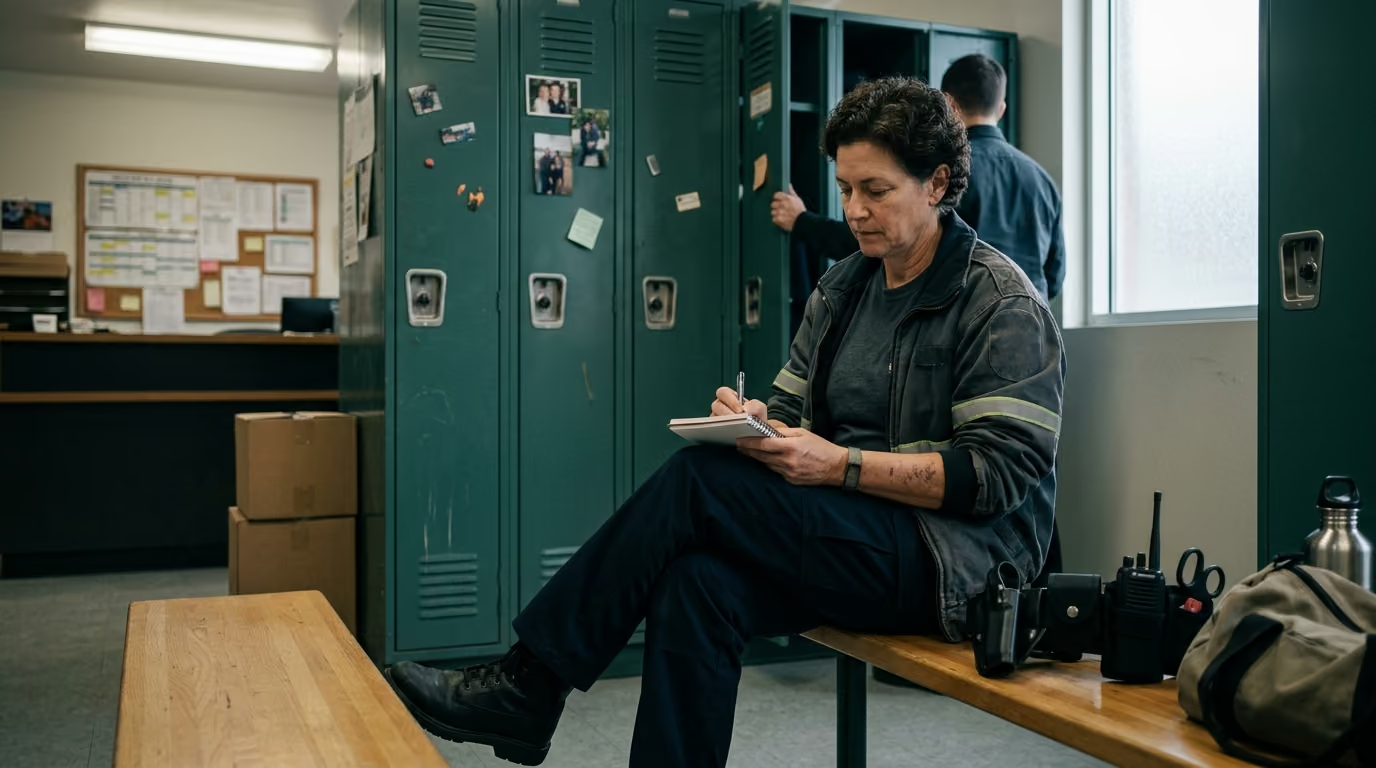

Leaving public safety looks like a standard professional transition on paper, but former responders must actively rebuild their identity, purpose, and nervous system.





If you or a colleague are experiencing a mental health crisis, immediate confidential support is available. Call 911 for immediate operational emergency assistance. Call or text 988 and press 1 for the Veterans and Military Crisis Line, or text 838255 to connect directly with trained crisis responders.
Many emergency responders search for answers when the end of their career approaches or after their final shift has passed. They type questions into search bars late at night: "Why do I feel lost after retiring from the fire department?" or "Who am I after leaving law enforcement?"
Leaving emergency service is rarely a simple change in daily employment. When you step away from the station, the patrol vehicle, or the communications center, you leave behind an entire social ecosystem. You leave an authority structure, a daily mission, a peer group, and a deeply physical way of living.
Identity reconstruction requires keeping your core strengths while changing where you apply them. The goal is never to erase your service history. The goal is to build a wider life where your competence, courage, discipline, and desire to serve continue to operate in a sustainable way.
Occupational identity is the portion of your self-concept built through professional roles, specialized skills, rank, and organizational membership. In emergency services, this identity becomes unusually deep. The job combines high stakes, public trust, distinct terminology, strong cultural rituals, and mutual dependence during dangerous incidents.
You do not simply work as a paramedic, police officer, firefighter, or dispatcher. You experience yourself as that role. When you introduce yourself, the profession serves as your primary descriptor. This makes retirement or departure feel like losing the answer to who you are.
Social identity is closely tied to occupational identity. Your social circle often consists entirely of people who wear the same uniform, share the same dark humor, and understand operational pressure without explanation. Research on transition shows that leaving an agency removes you from that primary group, requiring you to navigate social settings without an established shared code.
Role residual occurs when a person continues to identify with a former professional role long after formal duties end. A retired responder might organize daily routines around shift patterns, continuously scan emergency radio traffic, or introduce themselves by former rank. Role residual is not inherently bad because it maintains pride and continuity. It becomes an obstacle only when it prevents you from investing in new activities and relationships.
Identity narrowing happens when emergency work becomes the singular source of status, belonging, competence, daily structure, physical challenge, and moral purpose. When all your psychological needs depend on one uniform, taking off that uniform creates an immediate deficit across every area of life.
Liminality describes the disorienting middle period when you have left your old operational role but have not yet formed a stable new life. You may feel culturally distant from civilians while simultaneously feeling detached from active-duty crews. Recognizing this phase as a predictable developmental step helps reduce the anxiety of feeling unanchored.
The scientific literature on emergency service departure combines occupational health studies, veteran transition research, and agency reports. This evidence base consists of observational studies, qualitative surveys, and cross-sectional analyses across different public safety sectors.
Substance Abuse and Mental Health Services Administration data indicates that approximately 30 percent of first responders develop behavioral health conditions, such as depression or post-traumatic stress, compared to roughly 20 percent in the general population. Research from the National Institute for Occupational Safety and Health notes that law enforcement officers and firefighters face significant behavioral health pressures, with emergency medical personnel experiencing elevated suicide risks compared to the general public. NIOSH data also identifies substantial post-traumatic stress and depressive symptoms among public safety telecommunicators.
Research on emergency service retirement shows that leaving the job can increase vulnerability to depressive symptoms, alcohol misuse, and social isolation if transition planning is neglected. Qualitative investigations from the National Fire Academy show that personnel frequently experience immediate and sharp feelings of disconnection upon leaving the department.
Veteran transition studies offer valuable parallels for emergency responders. Research demonstrates that strong identification with a service branch can protect health during active service, but can complicate adjustment when leaving. A sudden disruption in personal meaning and daily purpose correlates with lower subjective wellbeing following service departure.
The evidence confirms that adjustment difficulties do not stem from individual weakness or personal failure. They reflect the magnitude of the social and psychological shift. The research underscores the need for structured transition practices that address identity, physical health, and social connection simultaneously.
A uniform is not just clothing. It represents seven distinct psychological and functional assets that govern daily life. Rebuilding your identity requires identifying alternative sources for each separate function rather than expecting a single civilian job to replace them all.
During your service, belonging comes from crew life, station routines, shared danger, and mutual reliance under pressure.
In life after service, belonging can be rebuilt through:
During your service, status comes from formal rank, professional title, operational credibility, and visible public trust.
In life after service, status can be rebuilt through:
During your service, competence comes from operational mastery, scene assessment, technical rescue skills, and rapid decision-making under stress.
In life after service, competence can be rebuilt through:
During your service, purpose comes from immediate lifesaving calls, crisis containment, and defending community safety.
In life after service, purpose can be rebuilt through:
During your service, structure comes from shift calendars, morning briefings, apparatus checks, callouts, and department policy.
In life after service, structure can be rebuilt through:
During your service, physical activation comes from heavy gear, live fire drills, patient carries, physical altercations, and sudden adrenaline surges.
In life after service, physical activation can be rebuilt through:
During your service, authority comes from legal mandates, command hierarchy, scene control, and immediate situational direction.
In life after service, authority can be rebuilt through:
First responder identity is physically recorded in the nervous system. Years of shift work, loud alarms, heavy equipment, extreme temperatures, and unexpected operational spikes shape how your body processes stress.
Emergency medical personnel and firefighters frequently experience cumulative physical wear from the job. Research shows that critical incident stress correlates with changes in appetite, digestive issues, and musculoskeletal injuries. High operational stress levels correlate with reductions in self-reported physical fitness and overall health.
When duty calls end, your nervous system does not automatically downshift into calm rest. The body often retains chronic hyperarousal, making quiet civilian environments feel unnerving or uncomfortable. Many responders misinterpret this physiological restlessness as a sign that they belong only on active duty.
Physical training remains essential after leaving service, but the intent of the training must shift. You no longer need to train exclusively for structural firefighting, physical restraint, or heavy patient extraction. You are training to preserve joint integrity, maintain cardiovascular capability, manage metabolic health, and calm the autonomic nervous system.
You can learn more by reading about career longevity and life after service resources. Pairing structured movement with sustainable sleep and nutrition allows your physiology to adapt gradually to a lower-threat daily rhythm.
Leaving an emergency response agency triggers complex psychological reactions that are frequently misunderstood by the individual, their family, and their community. Recognizing these common patterns prevents unneeded self-criticism.
Retirement often brings a profound form of non-death loss. You may grieve the loss of daily camaraderie, the feeling of being essential during emergencies, the end of physical peak performance, and the loss of shared humor.
Many retirees feel guilty about experiencing sadness, believing that retirement should feel like an uninterrupted celebration. Acknowledging occupational grief validates the reality of your professional loss without turning it into a clinical disorder.
Civilian life can initially feel painfully slow and trivial. When you have spent decades managing high-stakes incidents, ordinary conversations about home renovations, office politics, or schedule delays may seem pointless.
This dynamic can cause irritability, impatience, social withdrawal, or constant scanning of news and scanner feeds. The solution is not to seek artificial drama. The solution is to allow your nervous system time to adapt to lower baseline stimulation while constructing meaningful personal goals.
Emergency personnel are trained to assess situations rapidly, issue direct commands, and enforce safety protocols without hesitation. In family life or civilian workplaces, this communication style often creates unnecessary tension.
Civilian settings operate primarily through negotiation, consensus, and relational trust rather than formal operational authority. Learning to shift from directive command to collaborative facilitation is a crucial developmental task during post-service life.
Post-service emotional challenges can stem from different sources that require distinct approaches:
These three experiences can coexist, but they are not identical. Addressing them requires precision rather than assuming that all post-service distress is post-traumatic stress.
Several persistent cultural myths complicate the transition out of emergency services:
Not every responder leaves their career through a planned, celebratory retirement ceremony. A person's exit circumstances significantly shape the identity rebuilding process.
Leaving service due to occupational injury or medical disqualification represents one of the most challenging
transitions. It brings a simultaneous loss of employment, physical capability, health security, and personal autonomy.
When injury prevents you from engaging in familiar physical outlets, emotional distress can intensify rapidly. In these situations, identity reconstruction must happen alongside structured physical rehabilitation, adaptive strength training, and specialized vocational counseling.
Leaving an agency due to administrative conflict, performance disputes, or disciplinary action adds layers of anger, betrayal, and shame to the transition. The absence of a formal departure ceremony can leave the individual feeling socially erased.
Rebuilding self-worth after an involuntary departure requires deliberate separation between your personal character and the organizational conflict. Processing the exit with objective mental health professionals or trusted advisors outside the agency is essential.
Moving from frontline field operations into executive or administrative leadership often serves as a partial retirement while still wearing the uniform. The officer retains rank and salary but loses the daily camaraderie, physical engagement, and immediate tactical mission of the crew.
Leaders experiencing this shift must manage the loss of frontline identity while still serving the department. Developing personal interests and identities outside the organization before final retirement makes the ultimate exit far smoother.
Emergency dispatchers and communications personnel carry immense cognitive and emotional loads without the public visibility or physical movement granted to field responders. NIOSH data confirms substantial rates of depression and post-traumatic stress among telecommunicators.
When dispatchers leave the console, they often experience severe identity loss combined with chronic physical fatigue from sedentary shift patterns. Transition support must actively include telecommunicators, recognizing their operational service and unique health needs.
A responder's departure impacts the entire household. Spouses and children often develop their own routines around the responder's shift patterns, callouts, and absences.
When the responder suddenly remains home full-time, roles must be renegotiated. Spouses may feel micromanaged if the former responder applies incident command principles to domestic routines. Successful adjustment requires clear communication, shared expectations, and mutual respect for established family boundaries.
Rebuilding your life beyond the uniform is an active, structured process. The following eight phases provide a clear path for translating your strengths into meaningful new roles.
Take an honest, written inventory of what emergency service provided and what it cost you.
Write down answers to these foundational questions:
Divide your answers into two clear categories: qualities to preserve, such as integrity, courage, calmness under pressure, and teamwork, and operational habits to release, such as constant cynicism, sleep deprivation, and relational distance.
Review the seven core functions of the uniform: belonging, status, competence, purpose, structure, activation, and authority. For each category, establish at least two distinct civilian activities that fulfill that specific need.
Do not rely on a single new job or a single hobby to meet all seven requirements. Spreading these functions across varied pursuits creates a resilient lifestyle that is not vulnerable to a single point of failure.
Begin transition planning well before your anticipated final shift whenever possible. Guidance from emergency service leadership groups recommends initiating transition education at least six to twelve months prior to departure.
Transition planning should include:
A healthy post-service social circle should consist of three distinct groups:
Maintaining connection with trusted former crew members provides valuable continuity. However, spending time with people outside the emergency response world helps broaden your perspective and integrates you into the wider community. Discover how shared support systems across emergency response agencies build sustainable operational networks.
Your operational capabilities have tremendous value outside emergency response, but they must be translated into civilian terminology to be understood.
Translate your experience using practical terms:
Apply these translated skills in non-emergency environments, such as corporate risk management, vocational education, youth athletics, civic leadership, or non-profit administration.
Create a predictable daily routine that stabilizes your circadian rhythm, supports recovery, and preserves physical capability.
Focus on sustainable health habits:
Reframe the way you describe yourself to others and to yourself. Instead of defining your entire existence by past service, integrate your career into a broader life story.
Practice adopting expansive identity statements:
Continuously monitor your physical, emotional, and relational wellbeing. Establish clear agreements with your spouse, close friends, or trusted former partners to speak up if they observe warning signs of withdrawal, chronic anger, or depression. For deeper strategies on cognitive readiness, review our stress and mental performance guidance.
Identity reconstruction requires honest recognition of personal limits. Pushing through severe physical pain or ignoring chronic emotional distress does not demonstrate resilience. It compromises safety and delays recovery.
Certain symptoms require immediate attention and structured professional intervention:
If you or a colleague notice severe transition distress, establish a structured safety plan immediately. Safety planning involves identifying personal warning signs, writing down coping strategies, listing trusted personal contacts, and saving emergency crisis numbers.
Means safety is a vital component of responsible transition management. Storing personal firearms securely through gun safes, lock boxes, or temporary off-site storage during acute crisis periods significantly reduces tragic outcomes. Secure storage of medications should be arranged in collaboration with a spouse, trusted partner, or clinical provider.
Peer support and alumni groups provide invaluable cultural understanding, but they do not replace clinical treatment for serious medical or psychological conditions. Seeking professional evaluation is strongly indicated when emotional or physical symptoms interfere with daily functioning, sleep, employment, or personal safety.
When selecting a healthcare professional, seek out clinicians who are culturally competent in first responder and military populations. A culturally competent provider understands the terminology, operational realities, and institutional pressures of public safety work. They can deliver evidence-based therapies for trauma, depression, chronic pain, and sleep disorders without requiring you to explain basic emergency service culture.
Your value as a human being was never defined solely by the badge on your chest, the rank on your collar, or the apparatus you operated. The courage, discipline, technical insight, and compassion you developed during your service belong to you, not to the uniform.
By methodically rebuilding your belonging, purpose, physical health, and daily structure, you secure sustainable capability for decades to come. Life after service is not a retreat from meaningful contribution. It is an opportunity to deploy your strengths in new, enduring ways.
To begin rebuilding your post-service trajectory, complete these five practical steps this week:
Stay connected for research-led guidance on duty fitness, shift-work sleep, injury recovery, stress, nutrition and career longevity. Practical ideas for first responders who want to stay capable on the job, recover well and protect their health for the long run.



Read practical guidance on first responder fitness, recovery, sleep, nutrition and resilience for demanding work and a long, active career.
read the blog



