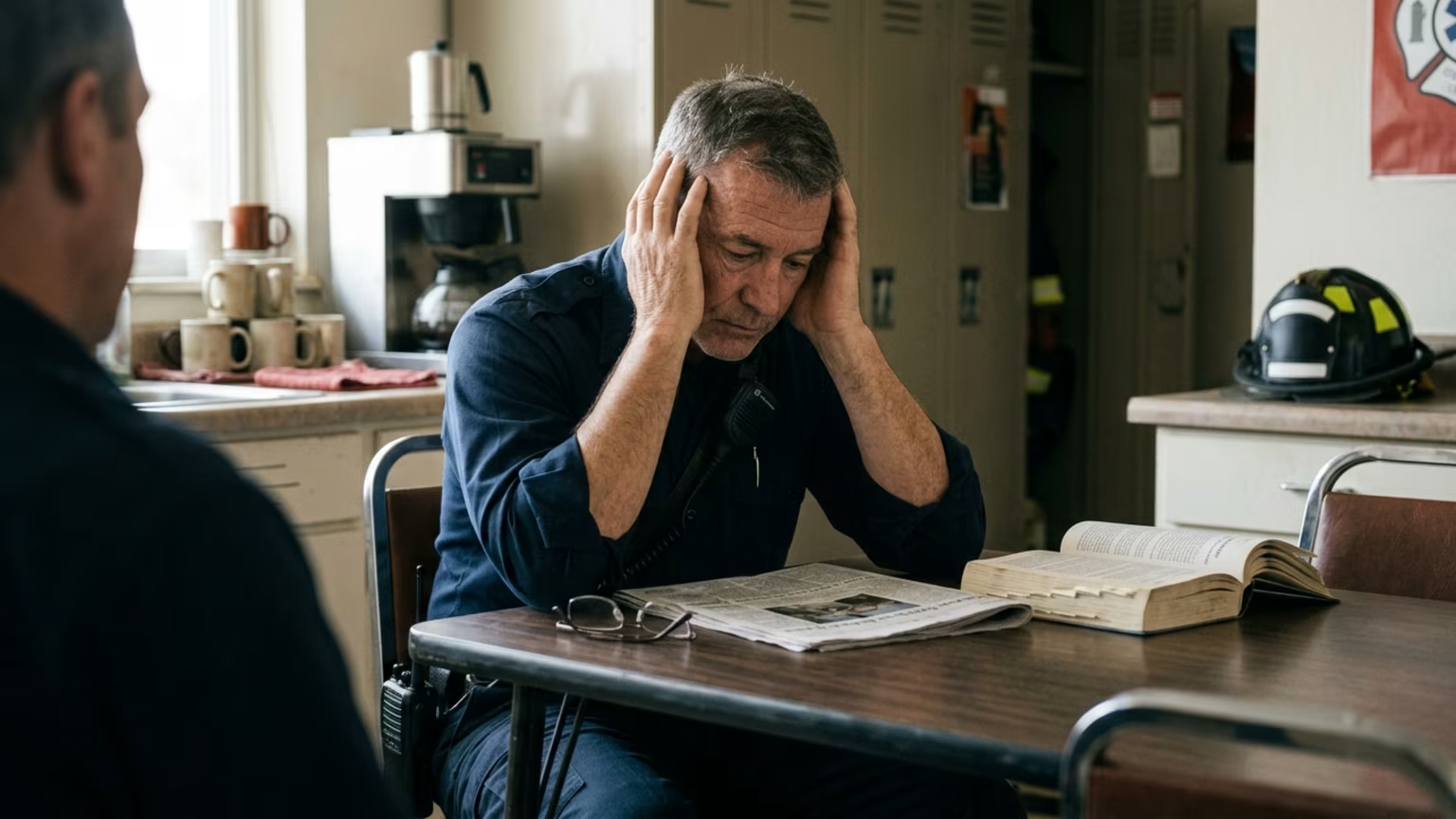

A new Nature Communications study links everyday heat and air pollution to higher frailty, PTSD and depression scores among New York City 9/11 responders.





If you or someone you know is in crisis call 911 for immediate danger. You can also call 988 and press 1 for the Veterans Crisis Line or text 838255.
On September 11 2026, researchers published a Nature Communications study analyzing 18,734 World Trade Center Health Program responders living in New York City. The Mount Sinai led analysis found that later life exposure to temperature and fine particulate air pollution is associated with higher frailty, PTSD and depression scores decades after the attacks.
The research examined how current urban environments interact with past extreme disaster exposures. Maayan Yitshak Sade is an associate professor of environmental medicine at Mount Sinai and the study's senior author. She noted that the researchers wanted to understand how extreme exposures from 25 years earlier interact with the environments responders encounter today. To do this, the team analyzed temperature, fine particulate matter known as PM2.5 and neighborhood greenery.
In the study's exposure mixture model, temperature emerged as the dominant contributor to specific health declines. It accounted for 98 percent of the overall association with frailty and 73 percent of the association with PTSD scores. Air quality also showed consistent statistical associations with responder health metrics. The study reported that for each 2.48 microgram per cubic meter increase in annual PM2.5 exposure, responders had approximately 2.3 percent higher frailty scores.
That same PM2.5 increase corresponded to 2.1 percent higher PTSD symptom scores and 3.9 percent higher depression symptom scores. Across the cohort, approximately 39 percent of responders met the study's criteria for probable PTSD. Approximately 35 percent met the criteria for probable depression. These numbers highlight the substantial disaster related health burdens this population already carries.
Neighborhood greenery offered some protective associations, though it did not fully offset the other factors. The researchers used a metric called the Green View Index to measure residential vegetation. Each 6.67 point increase in the study's Green View Index corresponded to approximately 1.4 percent lower frailty scores. It also corresponded to 1.9 percent lower PTSD scores and 3.8 percent lower depression scores.
However, the study reported that greener surroundings did not eliminate the associations observed with heat and PM2.5 exposure. Helena Furman Krasnov is a Mount Sinai postdoctoral researcher and the study's first author. She explained that everyday exposures like heat and air pollution may contribute to long term physical and psychological well being. Because this was an observational analysis, the results show statistical associations rather than proof that heat or PM2.5 directly caused the conditions.
The mixture percentages describe a modeled contribution rather than an individual clinical prognosis. This means temperature's large contribution does not imply that heat alone explains 98 percent of an individual responder's frailty. It simply identifies temperature as the strongest contributor within the specific environmental mixture examined by the researchers. The PM2.5 estimates describe average score differences associated with a specified increase in annual exposure.
They do not mean that every responder exposed to that increase will experience exactly those physiological changes. The greenery findings are also associative and do not prove that adding vegetation would independently reduce PTSD or depression. The most responsible interpretation is that environmental stressors may be relevant factors for an aging population. These stressors are potentially modifiable elements that agencies can address through better scheduling and recovery practices.
These findings change how emergency professionals should evaluate environmental conditions during their daily routines. Heat and air pollution act as physiological stressors, meaning they must be managed as specific recovery variables rather than mere comfort issues. This is especially relevant for older personnel or those managing chronic respiratory or mobility related conditions. Adapting cardiovascular training routines over a long career requires factoring in this external strain.
When personnel train or work in extreme heat, their bodies redirect blood flow to the skin for cooling. This limits the resources available to working muscles and increases cardiovascular strain. For older responders, this compounded physiological stress can delay recovery windows significantly. Agencies must acknowledge that high temperatures create a physical load equivalent to carrying additional protective gear.
Fine particulate matter like PM2.5 passes deeply into the respiratory system and creates systemic inflammation. This forces the body to expend additional energy on basic baseline recovery. When responders exercise outdoors during poor air quality days, they accelerate this inflammatory response through heavier breathing. By identifying heat and pollution as potential aggravators, the Mount Sinai study reinforces the need to manage these variables aggressively.
Agencies must adapt their physical training protocols to better track accumulated daily stress and respect these everyday exposures. Training in high heat or poor air quality adds a compounding layer of stress. This creates an unnecessary operational burden on a population already carrying substantial occupational health risks. Operational translation means shifting from generic fitness advice to environmentally aware capability planning.
Historically, occupational health models often treated disaster recovery as a closed event defined entirely by the initial exposure. This study challenges that assumption by highlighting how everyday urban environments continue to interact with past trauma. Responder recovery is a long duration occupational health issue rather than a static historical condition. The extreme exposures from decades earlier continue to shape physiological responses today.
The researchers reported generally larger environmental associations among responders with greater World Trade Center exposure or earlier arrival at the site. They also observed larger associations for those exposed to horrific scenes. Most of these interaction findings were not statistically significant, but the overall data points to an ongoing, dynamic vulnerability. Recognizing this dynamic relationship means shifting focus toward actively managing present environmental risks.
Responders and retirees can implement practical adjustments to their schedules to mitigate everyday environmental stress. During hot periods, personnel should check heat conditions before outdoor training and reduce unnecessary exertion during peak temperatures. Demanding exercise should be scheduled for cooler periods, and individuals must allow longer recovery windows between physical efforts. Maintaining consistent hydration habits on extended shifts remains a fundamental practice to manage physiological strain.
Air quality requires similar operational awareness when planning physical conditioning. Personnel should avoid traffic corridors, industrial areas or stagnant summer air whenever possible. Shifting conditioning indoors during high PM2.5 periods is a critical risk management strategy rather than a training compromise. Movement and strength work can be preserved through controlled aerobic exercise, resistance training or mobility sessions in filtered environments.
Individuals must also monitor their bodies for signs of compounded stress after working in difficult conditions. Personnel should pay close attention to sudden changes in sleep quality or irritability after intense heat exposure. They should also monitor for intrusive memories, low mood, unusual fatigue or difficulty recovering. Persistent symptoms should always be discussed with a qualified clinician rather than ignored as normal job fatigue.
Treat residential green spaces as useful settings for low intensity activity and decompression. The study found lower scores associated with greater residential greenery, but it did not prove that greenery caused those improvements. Green spaces should not be presented as a standalone treatment for clinical PTSD or depression. They simply offer a potentially supportive environment for basic physical movement and baseline recovery.
Departments and responder organizations should begin integrating environmental conditions into their broader wellness planning immediately. This operational shift includes implementing heat aware scheduling, clear air quality communication and shaded recovery areas. Agencies must also provide clear access to behavioral health support and referral pathways that do not stigmatize help seeking. The most defensible performance message is that sleep protection and environmental awareness help personnel maintain capability safely.
None of these practical measures should be presented as guaranteed protection from PTSD, depression or frailty. They are risk management tools designed to reduce unnecessary physiological strain. Physical training and early clinical support are foundational elements of a long career in emergency services. By managing environmental factors, agencies give their personnel a better chance at sustaining that foundational health over time.
Moving forward, occupational health professionals will need to track how environmental awareness alters long term responder outcomes. The Mount Sinai analysis was limited to responders living in New York City. This geographic focus means housing, occupation, healthcare access and socioeconomic conditions could influence the results. These unmeasured factors may limit how broadly the findings can be generalized to responders living in other environments.
Future studies will need to track how climate variables affect responders who have relocated to rural areas or different geographic regions. The interaction between aging, environmental stress and past disaster exposure requires ongoing, detailed clinical research. For 9/11 responders and other eligible members, the World Trade Center Health Program remains an important route to medical monitoring. As researchers continue to monitor this aging cohort, the primary goal must remain focused on practical, evidence led strategies to support their longevity.
Managing long-term occupational health for aging emergency personnel often falls to agency medical officers and wellness coordinators. Planning for physical capability and an active life after retirement or leaving service requires evaluating everyday environmental stressors alongside past duty demands, and Rescuris delivers the evidence led physiological framework to support sustainable recovery. Explore Resources
Rescuris publishes evidence-aware guidance for firefighters, police officers, paramedics and other first responders on fitness, recovery, sleep, nutrition, stress resilience and long-term capability.






Read practical guidance on first responder fitness, recovery, sleep, nutrition and resilience for demanding work and a long, active career.
read the blog
