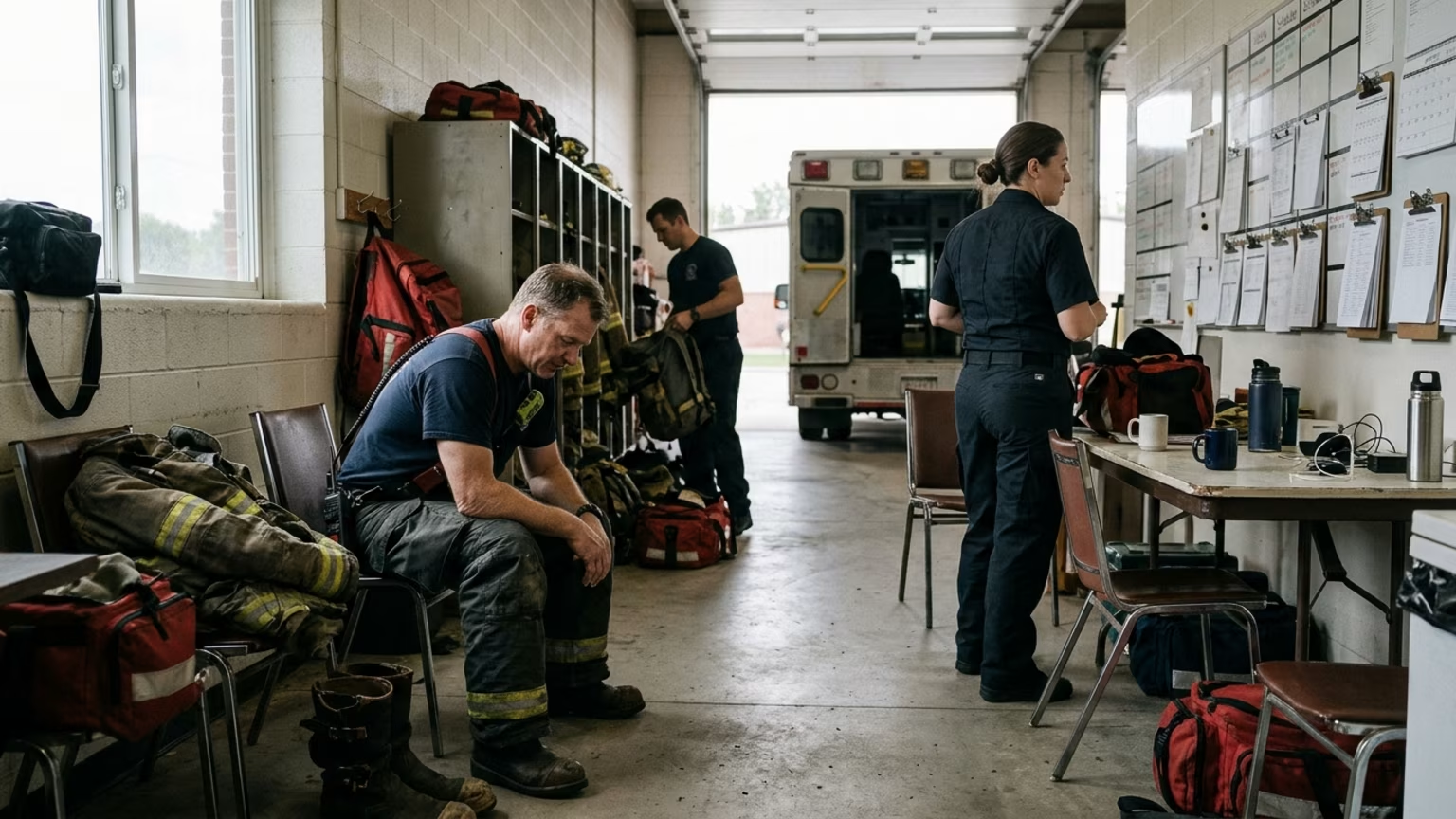

Map recurring duty tasks, training and recovery opportunities without turning cumulative load into an unsupported injury-risk score.





Cumulative load is the work that builds up across repeated tasks, training sessions and shifts, considered alongside the recovery available between them. For first responders, the concept brings equipment carriage and physically demanding tasks into the same picture as training and recovery opportunities.
A cumulative-load map is a descriptive record of those demands. It captures what work involved rather than reducing the shift to a call total. Its purpose is to make recurring patterns visible enough for individuals and teams to discuss equipment, task setup, staffing and physical preparation.
A call tally records activity, but it does not describe every demand within that activity. A useful workload discussion also asks what tasks occurred and under what conditions. It asks whether demanding work was repeated and what recovery was available afterward.
The law-enforcement chapter in Tactical Strength and Conditioning describes unpredictable transitions from sedentary activity to intense work. Examples include sprinting and defensive tactics alongside lifting and carrying. That is a different description of work from a count of incidents attended.
The chapter Workforce Challenges and Operational Realities in the Era of Extreme Wildfire describes another combination: long hours and intense physical work alongside heat, rugged terrain and heavy gear. These are overlapping demands rather than interchangeable units of activity.
For readiness and fatigue management, the practical question is therefore broader than whether a shift was busy. What did the work ask of the person, and what happened around it? Considering duty and training demands together provides a more useful starting point for that conversation than treating them as separate records.
The supplied research supports an account of physical effort and working conditions. It does not provide a detailed biological model of cumulative injury. The clearest breakdown stays close to the mechanisms of effort described in the sources:
The evidence has clear limits. A 2026 study in Soft Computing applied a structured model to expert ratings of 25 firefighting risk scenarios. Its authors said external validation with organization-specific data remained necessary. Ranking hazards is therefore different from establishing who will be injured.
The wildland-firefighting chapter also describes gaps in continuous physiological and environmental exposure data. It calls for long-term monitoring while leaving cumulative exposure thresholds unresolved. These sources do not establish a universal recovery interval or a validated personal injury score.
The practical map below is consequently an unvalidated descriptive exposure log. It is a prompt for review rather than a medical assessment. Personal questions about symptoms or physical capability belong with a qualified clinician.
A defensible starting point is to record recurring tasks and their context. The research-supported approach includes approximate frequency or duration alongside load, posture and transitions between tasks. Training demands and recovery opportunities belong in the same record.
The format can remain simple. Short written entries are enough to organize the discussion described here. The important distinction is between documenting what happened and assigning an unsupported meaning to it.
Entries can identify patient handling or equipment carriage rather than using a broad label such as “busy shift.” Other relevant categories include awkward positions and repeated high-effort work. The aim is to retain the features that someone reviewing the record would need to understand the demand.
Approximate frequency or duration can add context without creating a false impression of precision. An entry can also note whether a task happened repeatedly within the shift. These are descriptions of exposure, not ratings of how well someone coped.
This task-first approach connects naturally with conditioning built around actual duty demands. Before discussing training priorities, the team needs a clear account of the work those priorities are meant to address.
The next layer records what was carried or handled and the positions involved. Where the information is available, the entry can distinguish equipment load from the task itself. It can also identify awkward positioning without turning that description into a diagnosis.
Transitions deserve their own note. A record of intense work after sedentary activity tells a different story from a record that names only the intense task. The law-enforcement chapter makes that change in demand relevant to the description of work.
The purpose is to preserve context for later review. It is not to declare that a particular posture or transition caused an injury.
The practical approach supported by the research includes training demands rather than leaving them outside the map. A duty-only record cannot describe the training that occurred around the shift. A training-only record leaves out the work performed on duty.
The log can identify the type of training and its place relative to demanding work. There is no need to convert every activity into a common numerical value. Keeping the descriptions separate allows a review of which demands repeatedly occur close together.
Discussion can then address whether training demands deserve reconsideration within the wider workload. Related guidance on adjusting training to readiness and workload provides a separate framework for that topic. The exposure record supplies context rather than making the decision automatically.
Recovery opportunities should describe what was available rather than what the schedule appeared to promise. The research-supported map asks whether meaningful recovery occurred. It also treats reported fatigue and impaired sleep as prompts for discussion and review.
Those reports can sit beside the task record without becoming a test result. For example, the review can ask whether demanding work repeatedly coincided with limited recovery opportunities. The aim is to identify a question worth examining rather than assign a personal label.
Keeping recovery in view also prevents the record from becoming a catalogue of effort alone. A useful map includes both the demands encountered and the opportunities available around them.
The research supports review at team or department level alongside individual reflection. Recurring patterns can prompt questions about equipment and staffing. They can also guide discussion of task setup, training demands and recovery opportunities.
A practical review can ask:
The response need not begin with a harder workout or a judgment about motivation. It can begin with a review of how the work is organized. That keeps equipment and operational decisions in the conversation rather than placing every concern on the individual responder.
For the next review of work and training, the useful comparison is between the record you currently keep and the demands this map describes. A call total may answer an administrative question. A training diary may answer a programming question. Neither automatically supplies the task and recovery context discussed here.
Looking at your current habits, which recurring duty demand or missing recovery opportunity would remain invisible unless you deliberately recorded it?
A cumulative-load map loses its purpose when every concern becomes a demand for harder training, a framing Rescuris avoids through evidence-based coverage of performance and recovery. Its guidance supports emergency-service professionals balancing strength and endurance with mobility and body-composition goals within the realities of irregular work and a demanding career.
Rescuris publishes evidence-aware guidance for firefighters, police officers, paramedics and other first responders on fitness, recovery, sleep, nutrition, stress resilience and long-term capability.



Read practical guidance on first responder fitness, recovery, sleep, nutrition and resilience for demanding work and a long, active career.
read the blog
