

A Pennsylvania transport report frames a careful review of crew communication, personnel and equipment readiness, and voluntary post-call support.





On 2026-10-26, EMS1 republished reporting from the Republican & Herald about an alleged assault on an EMT during an ambulance trip in Pottsville, Pennsylvania. Citing Pennsylvania State Police and court papers, the report said a man being transported for a voluntary mental-health evaluation was accused of striking the EMT. The EMT was not injured.
The case brings a specific operational question into focus: what deserves attention after a difficult transport, beyond whether anyone was physically injured? For agencies reviewing stressful calls, the useful discussion concerns communication, personnel readiness and access to support. It does not require a judgment about the patient's diagnosis or the crew's decisions.
According to the account cited by EMS1, the EMT described screaming followed by apparent calming and then kicking. The report says the EMT deflected two kicks before being struck in the chest. Court papers also described the man lunging at the EMT, who restrained him and secured him again in the seat.
EMS1 also reported that a kick damaged the ambulance's bio-waste drawer and left it unusable. The estimated damage was $500. That equipment damage is a separate operational issue from the EMT's reported lack of injury.
The report described charges, not a finding of guilt, and said further court action was pending at publication. Its verified contribution is an account of an alleged incident and its immediate consequences. It does not establish a successful prevention strategy or a change in department policy.
The evidence boundary is narrow: this is a single report based on police statements and court records. It does not establish a diagnosis or precipitating cause, and it does not describe crew size, agency procedures or communications. It cannot establish how common assaults are during these transports or whether a particular behavior predicts aggression.
Those limits keep the review focused on reported actions rather than assumptions about people seeking mental-health care. They also leave room to discuss crew support without attempting to reconstruct decisions that the reporting does not document.
In the reported sequence, apparent calming did not mark the end of the behavior described to police. As a practical interpretation, that makes changes in behavior a useful subject for a communication review. The question is how a crew shares changing information and works within its existing procedures, rather than whether a news account reveals a missed warning.
A separate FireRescue1 article, titled “Clear does not necessarily mean ready,” supplies broader operational context. It says the IAFC/NFFF Crew Resource Management manual identifies stress, time pressure and lack of rest among potential operational distractions. FireRescue1 also reports that a 2024 study of 491 firefighters identified leader and team-member behavior among important teamwork-related stressors.
That team-level perspective matters because the review need not focus only on an individual's emotional response. It can also examine the working conditions and interactions surrounding a difficult call. Rescuris's discussion of how calls and shifts fit into total workload provides a related framework for considering overlapping demands.
FireRescue1 also describes an observational study involving 14 firefighter crews across 19 emergency operations. Stronger closed-loop communication and positive emotional interaction were associated with better team effectiveness, as was adaptation. Both studies concern firefighters rather than ambulance mental-health transports. The crew observations show an association, not proof that those behaviors prevent assaults.
The operational relevance is therefore specific: communication deserves attention alongside individual readiness. An agency can consider both without treating either as a guarantee of safety or asking a responder to demonstrate resilience through silence.
The practical considerations below draw on the reported transport sequence and FireRescue1's commentary. They are review topics for agencies and crews, not a reconstruction of what happened in Pennsylvania or a replacement for an agency's established procedures.
The Pennsylvania account offers a chronology that can structure a case discussion: reported screaming, apparent calming and later physical aggression. An agency review can use that sequence to ask what information its existing protocol expects crews to consider as circumstances change.
Useful questions concern the information available at each stage and the communications expected under current procedures. They can also address what contingencies the agency already expects crews to consider. Keeping the discussion tied to those expectations avoids turning hindsight into an explanation of patient intent or crew performance.
The distinction is between reviewing a process and assigning a cause. The first can identify matters for an agency to examine. The second requires evidence beyond the sequence in a news report.
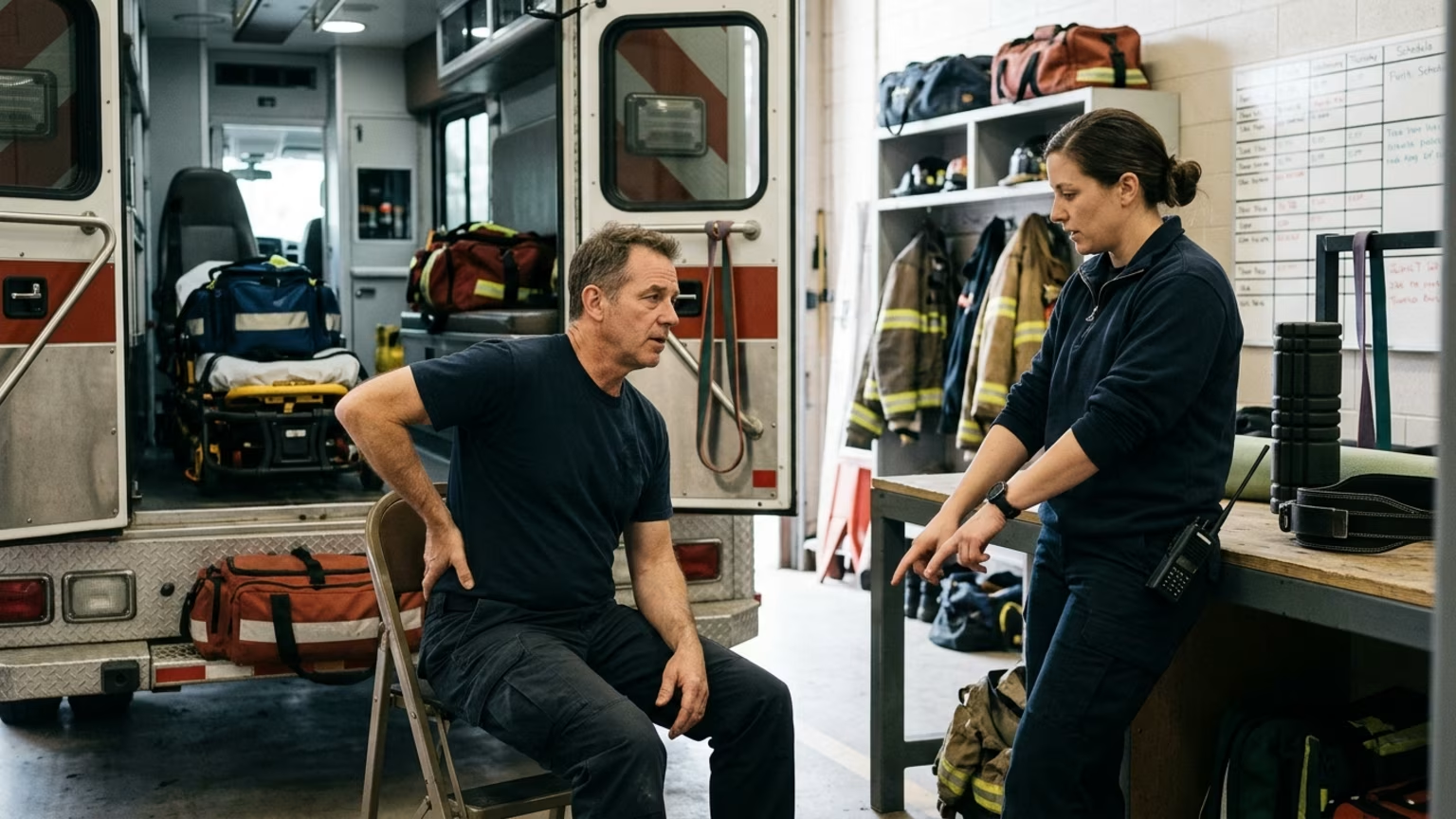
FireRescue1's discussion supports making teamwork an explicit topic rather than treating it as background. A review can consider whether important information was communicated clearly and acknowledged. It can also examine how the team responded when circumstances changed.
Closed-loop communication is relevant here as a subject for review because it appears in the firefighter observations described by FireRescue1. It should sit within the agency's own communication expectations rather than become an improvised transport protocol.
A useful discussion stays specific to communication: what needed to be shared, how it was understood and what happened next. That keeps attention on an observable part of teamwork instead of labeling a colleague as calm enough or tough enough for the work.
FireRescue1 recommends considering both personnel and equipment after high-impact incidents. The Pennsylvania report gives the equipment side a concrete basis: an ambulance component was reportedly left unusable. The personnel side requires its own attention rather than being inferred from the vehicle's availability.
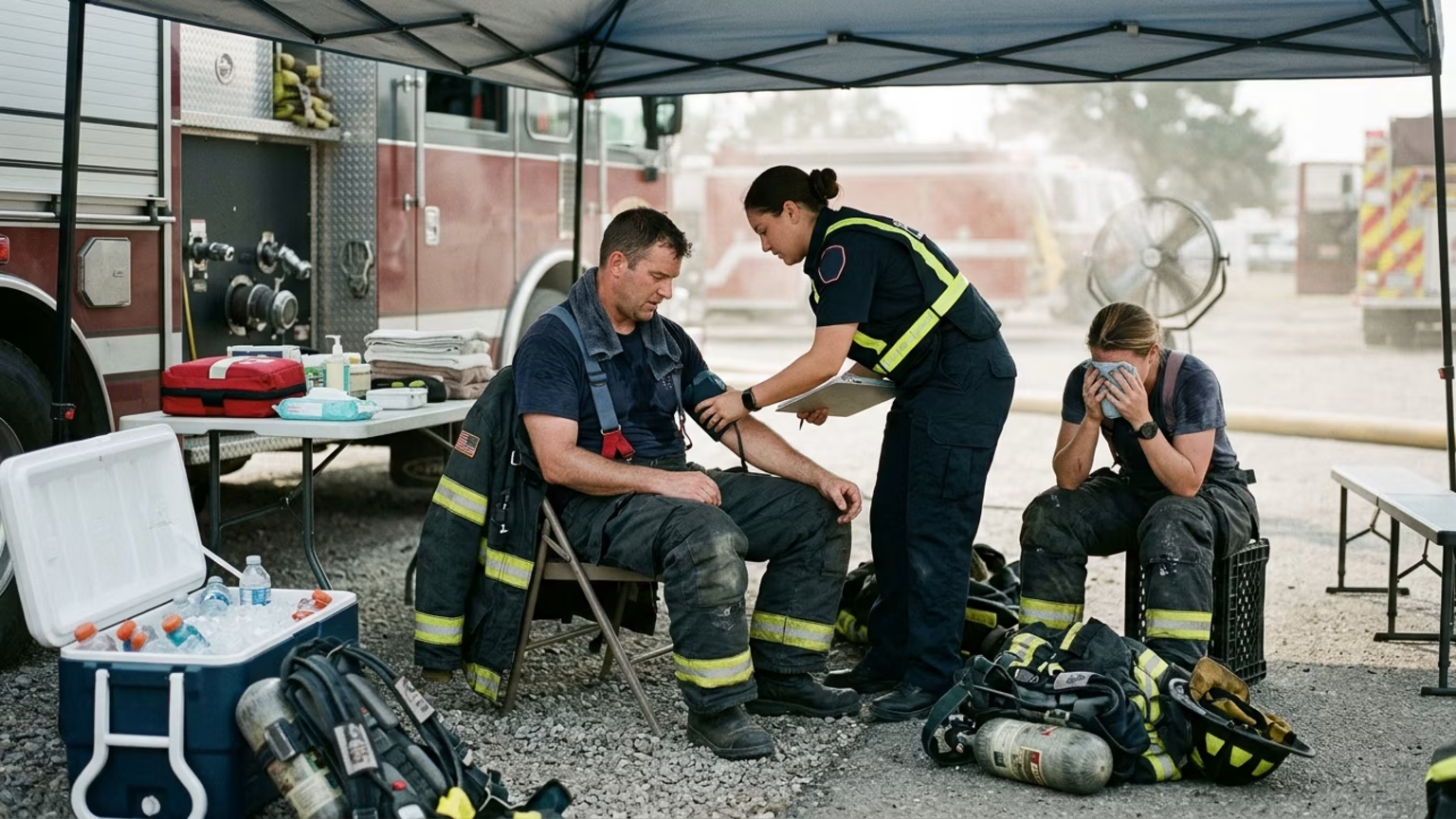
For personnel, FireRescue1 suggests noticing changes in attention, voice or behavior and making room for a private conversation. These are prompts for checking in, not diagnostic signs for an officer to interpret clinically.
The practical distinction is straightforward: equipment readiness and personnel readiness answer different questions. A review can address what needs attention in the ambulance while separately considering what support the crew needs. Neither discussion has to substitute for the other.
This approach also avoids making visible physical injury the only reason to offer follow-up. The relevant question is readiness and support after the encounter, consistent with FireRescue1's broader focus.
FireRescue1 recommends private follow-up and access to appropriate support. Its examples include peer support and chaplaincy, employee assistance or a clinician when appropriate. It cautions officers against diagnosing coworkers, forcing emotional disclosure or conducting improvised treatment.
That gives leaders a practical boundary. They can discuss operational readiness and available help without requiring someone to give a personal account of their emotions. Offering support is different from asking a coworker to prove that an incident affected them.
Personal mental-health decisions belong with qualified care rather than informal diagnosis by colleagues. Related Rescuris guidance on winding down after demanding incidents addresses the recovery side of this discussion.
The purpose of follow-up is to make a conversation and suitable resources available. It is not to turn a workplace check-in into treatment or to make disclosure a test of professionalism.
The next useful questions concern what these review practices accomplish in ambulance work. A list of resources or a completed discussion is not the same as evidence that personnel received useful support.
For agencies considering their own approach, several questions remain open:
These are questions for evaluation rather than claims about an existing program. Answering them would help distinguish a well-intended recommendation from a process that works under the constraints of emergency-service schedules.
The Pennsylvania report makes a narrow incident visible. The broader editorial task is to keep the legal allegation separate from clinical assumptions while asking concrete questions about communication and support. The central evidence question remains whether those review practices lead to meaningful help and better operational readiness for ambulance crews.
A difficult transport can leave questions about readiness and support that a demand for toughness does not answer. Rescuris helps first responders assess stress-resilience advice through research-led editorial coverage that separates evidence from motivational slogans and mental-health stigma while taking irregular schedules and long-term health seriously.
Rescuris publishes evidence-aware guidance for firefighters, police officers, paramedics and other first responders on fitness, recovery, sleep, nutrition, stress resilience and long-term capability.



Read practical guidance on first responder fitness, recovery, sleep, nutrition and resilience for demanding work and a long, active career.
read the blog
