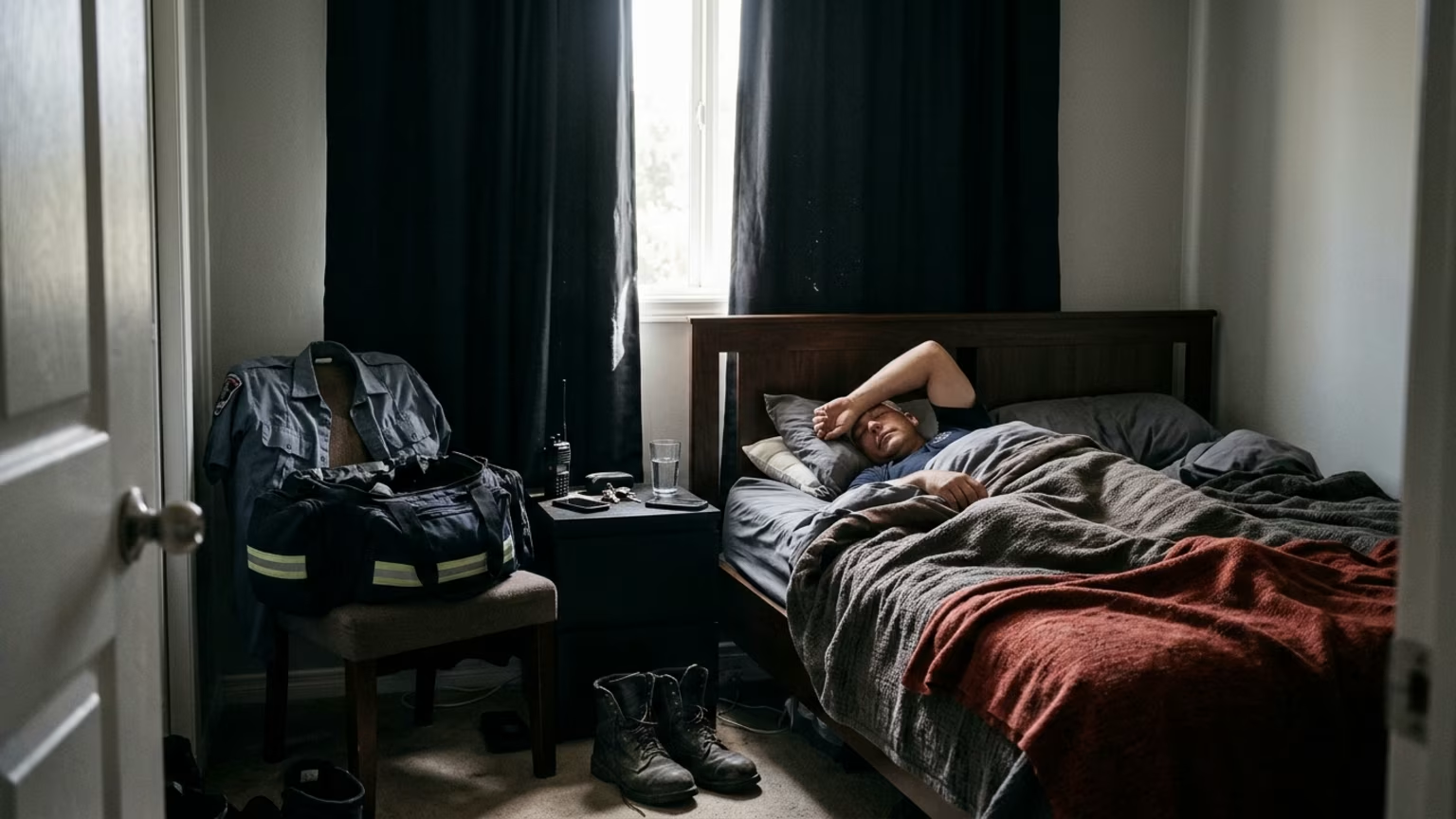

Protect a realistic daytime sleep opportunity after night duty with flexible timing, household boundaries and evidence-aware recovery planning.





A protected recovery window is time set aside for sleep after duty, with avoidable interruptions kept out of it. After a night shift, that window may fall during the day and move when duty hours change. It describes an opportunity to sleep, not a promise that every minute will be spent asleep.
A bedtime is a point on a schedule. A recovery window also includes the space and the expectations around it. A dark, quiet and comfortable room belongs in that plan alongside clear household agreements about when interruptions can wait.
For a first responder, the relevant question is not simply whether sleep appears somewhere on the calendar. It is whether there is a usable recovery opportunity between the end of duty and the next set of demands.
JEMS places fatigue within that broader readiness discussion. Its article on EMS fatigue management describes guidance that includes fatigue monitoring and limits on shift duration. It also includes access to caffeine, on-duty naps and fatigue education.
The article discusses arranging protected nap opportunities during lower-demand periods. That places some responsibility with the organization rather than making fatigue management entirely a matter of personal discipline.
The same distinction is useful when considering sleep after duty. A responder can plan a recovery period, but the plan also needs to account for work expectations and household commitments. Readiness planning should therefore ask what makes the window usable, not merely whether someone has selected a bedtime.
This is a practical planning principle: the opportunity to recover deserves a place in the schedule rather than whatever time remains after everything else.
A randomized trial involving emergency-department physicians and nurses provides a useful starting point. A personalized recovery program was associated with 37 more minutes of nocturnal time in bed and 23 more minutes of total sleep time compared with controls.
The REST program combined psychological and behavioral components that offer a framework for thinking about recovery:
These findings concern a combined program in emergency-department clinicians, not a tested daytime-sleep arrangement across every first-responder role. The trial does not isolate biological pathways or establish the contribution of each program component. The room and household ideas below are practical editorial options rather than interventions validated by that trial. JEMS describes EMS guidance, not proof that every agency provides protected sleep or that naps replace a sufficient recovery period.
The useful direction is to consider the recovery opportunity as a whole. Timing, surroundings and expectations can all be included in the planning discussion without turning any single element into a universal prescription.
Start with the duty pattern that actually exists. A flexible approach can identify the intended sleep period after each type of shift without making one fixed clock time the measure of success.
The starting point is the period between the actual end of duty and the next obligation. Within that period, distinguish the time intended for sleep from the time already committed to other responsibilities.
This is not an argument for fitting more tasks into the same gap. It is a way to make the trade-offs visible. If the proposed sleep period overlaps with a recurring obligation, that conflict belongs in the plan rather than being treated as an unexpected failure each time.
That distinction also matters when planning sleep around changing duty hours. The intended window may change with the roster while the principle stays consistent: sleep needs an identifiable place in the available recovery period.
A practical room review can stay focused on those three categories. Is the space dark during the intended sleep period? Is avoidable noise expected? Does the space feel comfortable enough for the planned rest opportunity?
The purpose is not to create a perfect bedroom or turn recovery into an equipment project. It is to identify which aspects of the available space deserve attention. A room that works for one duty pattern may need to be reconsidered when the planned sleep period moves.
Keep the room discussion connected to the schedule. Preparing a suitable space and reserving access to it are separate parts of the same recovery plan. Neither needs to become a test of how seriously someone takes their health.
“Sleeping after work” can mean different things to different people. A clearer agreement identifies the intended recovery period and distinguishes urgent interruptions from matters that can wait.
The practical discussion is about expectations rather than blame. Which commitments are fixed? Which can move? What contact genuinely needs a response during the planned sleep period?
This does not require pretending that household responsibilities disappear after a night shift. It means deciding which arrangements are realistic before those responsibilities compete with the recovery window. The goal is an agreement that fits the household, not a rule borrowed from someone with a different schedule or support system.
A boundary should also be understandable to the people expected to respect it. The intended sleep period needs to be clear enough to discuss and revise when duty hours change.
The REST program included stress management alongside feedback and education. A practical recovery discussion can preserve that distinction: preparing a room is one task, while addressing difficulty settling after duty is another.
Someone considering their current habits can ask whether the main planning problem is access to a sleep opportunity or what happens once that opportunity begins. Those are different questions and may call for different conversations.
That distinction is also relevant when considering the tired-but-wired experience after duty. A room checklist should not become an explanation for every sleep concern. Questions about persistent sleep difficulty or individual care belong with a qualified clinician.
Household boundaries address only part of the recovery window. Work-related expectations and duty arrangements also belong in the conversation when they compete with the intended sleep period.
The organizational measures described by JEMS provide useful context here. Fatigue monitoring and shift-duration limits sit alongside individual countermeasures in its account of EMS guidance. A personal bedroom plan should not be used to remove workplace arrangements from consideration.
For planning purposes, distinguish between an avoidable interruption within personal control and a demand that requires an organizational discussion. That separation keeps the proposed solution connected to the actual source of the problem. It also avoids treating every lost recovery opportunity as evidence of poor personal discipline.
The trial's use of personalized feedback makes review a relevant part of the discussion. A recovery plan should not be judged only by how reasonable it looked before the shift began.
A practical review can compare the intended window with what happened. Was the time available? Were interruptions expected or avoidable? Did household and work expectations match the plan?
The purpose is to identify the next useful adjustment rather than assign a score to the responder. If the same conflict keeps appearing, that conflict deserves attention. If the duty pattern changes, the window can be reconsidered without treating the previous plan as a failure.
A flexible plan is still a deliberate plan. It allows the timing to change while keeping the recovery opportunity visible.
Assess the next recovery window in concrete terms: the time available, the room available and the expectations attached to that period. Consider which parts are already workable and which need a conversation rather than another personal rule.
The aim is not a flawless routine. It is a realistic sleep opportunity that reflects the duty pattern and gives avoidable interruptions less room in the plan.
Before your next night shift, which part of your intended recovery window most needs attention: its timing, its surroundings or the expectations of other people?
Daytime recovery must fit around changing duty hours, and Rescuris addresses that constraint through practical coverage of shift-work sleep. For responders whose sleep is interrupted by rotating shifts or unpredictable calls, its research-led editorial guidance puts recovery choices alongside long-term physical capability without assuming a predictable working day or romanticising exhaustion.
Rescuris publishes evidence-aware guidance for firefighters, police officers, paramedics and other first responders on fitness, recovery, sleep, nutrition, stress resilience and long-term capability.


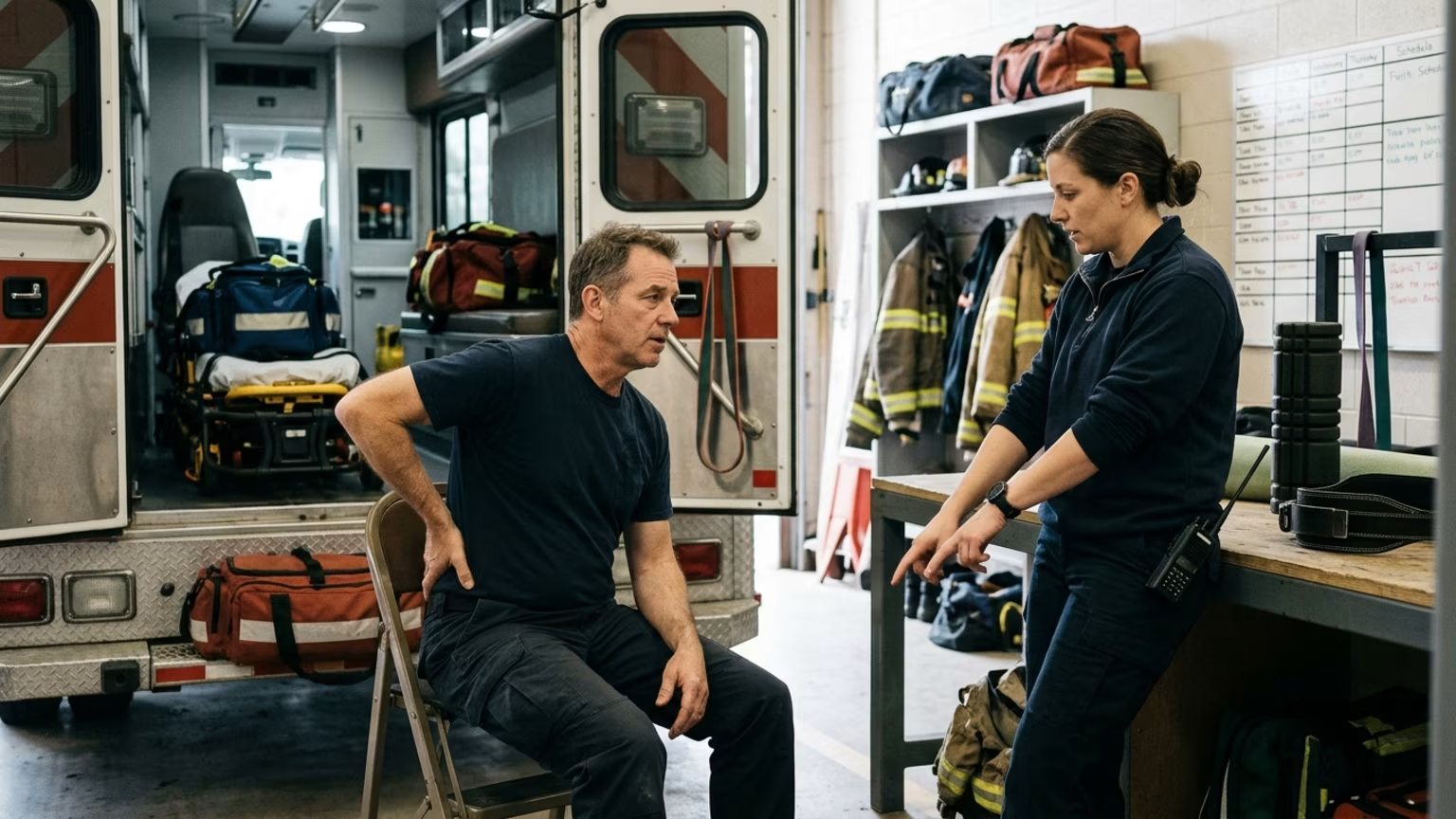



Read practical guidance on first responder fitness, recovery, sleep, nutrition and resilience for demanding work and a long, active career.
read the blog
