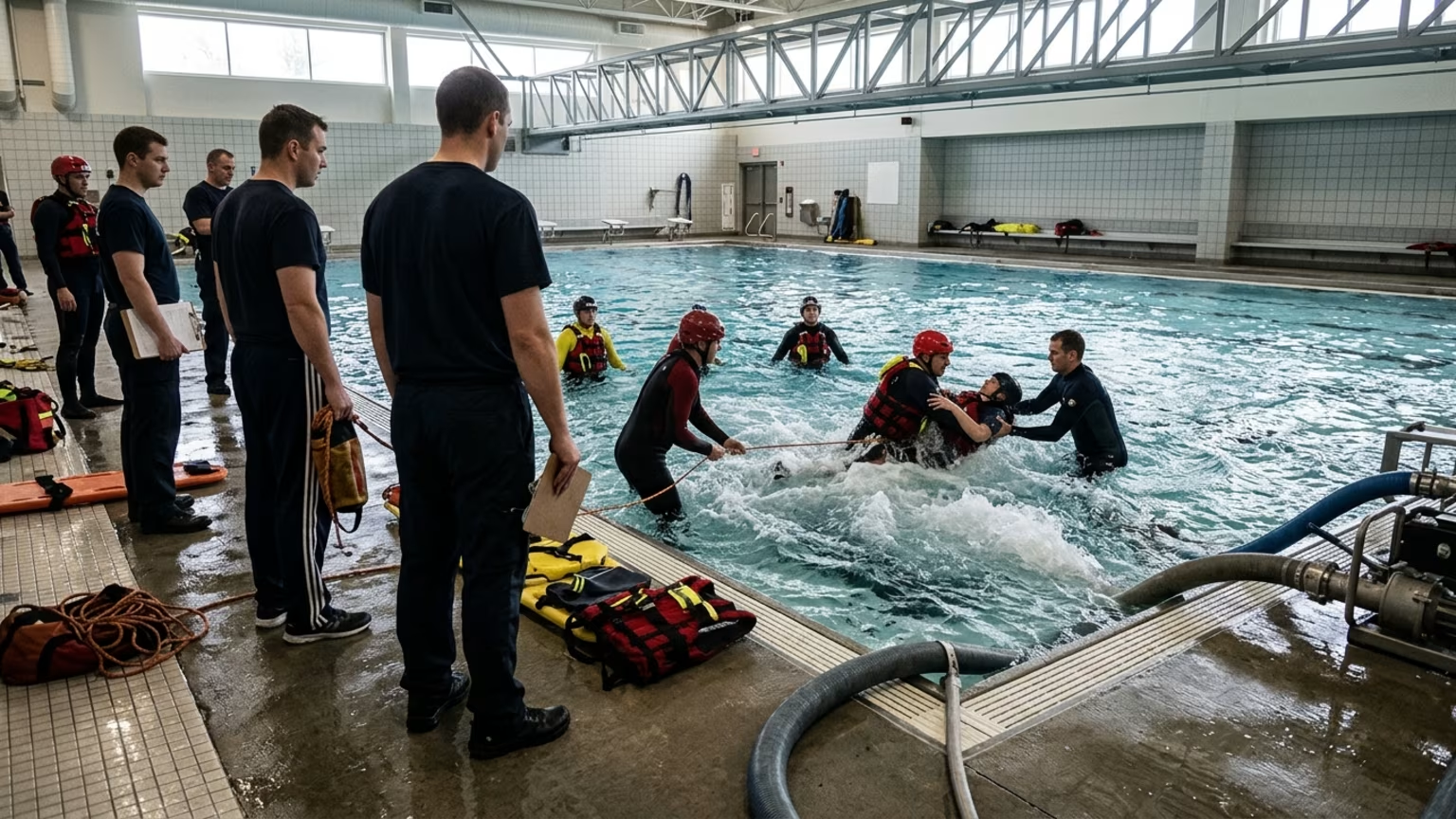

JFRD’s pool-based rip-current simulator supports controlled rescue practice. Read the reported facts and the open questions about readiness.





On September 18, 2026, News4JAX reported that Jacksonville Fire and Rescue Department (JFRD) was using a new Slip Stream rip-current simulator to train rescuers. The report coincided with forecasts of high rip-current risk that weekend. Separate News4JAX weather coverage also warned of dangerous rip currents.
The equipment connects to a standard pool and produces an adjustable current. JFRD had acquired it within the month before the report. Personnel used it to practise swimming into and out of the current while performing rescue techniques.
For first responders, the announcement raises a question about preparation: which demands can a controlled training setting bring into practice? The answer begins with the task being rehearsed, rather than with broad claims about resilience or mental performance.
According to News4JAX, the simulator can move about 3,000 gallons of water per minute. That figure describes the equipment’s reported water flow. It gives readers a concrete feature of the device without needing to turn the training session into a claim about operational results.
JFRD personnel who tried the simulator rated the experience 8 out of 10 compared with a real rip current, the outlet reported. Their assessment adds a practitioner perspective to the account. It describes how the experience felt to the personnel who took part.
JFRD Division Chief of Rescue M. Dallas Cooke described the pool setting as a way to provide realistic experience that firefighters cannot get in a classroom. His stated rationale was about bringing a physical rescue demand into a controlled training environment.
The intended users described in the report included ocean rescue personnel and swiftwater rescue responders. Special-operations responders were also among those expected to use it. The common feature was water-rescue practice against a current, not a general wellness exercise for every employee.
This was local reporting on a training tool, not a controlled research study. The reported 8 out of 10 assessment was subjective. It was not an objective measure of simulator accuracy or evidence that the training transfers to actual rescues.
The coverage did not provide participant counts, training duration, assessment criteria or a comparison group. It also did not report measured improvements in decision-making or communication. Psychological readiness and real-world rescue performance were not formally evaluated in the account.
The documented activity was swimming and rescue practice in an adjustable pool current. The report did not establish how completely that setting represented the wider demands of an ocean rescue. Its evidence supports describing the training method rather than declaring the simulator a proven stress-inoculation intervention.
These distinctions preserve the value of the announcement. A department can adopt equipment for a clear training purpose before its effectiveness has been measured. Reporting that adoption accurately means keeping the purpose separate from the result.
For responder wellness, the useful connection is between the demand being practised and the capability expected on duty. In this account, personnel were performing rescue techniques while moving through water against a current. That gives the discussion a specific physical task rather than an abstract call to become more resilient.
The adjustable current is also central to the training concept. It makes current intensity a feature of the exercise that can be changed. The editorial question is what that adjustment is meant to teach or assess, rather than whether a harder setting automatically represents better preparation.
That is a task-focused way to discuss performance. It keeps attention on the work crews are preparing to do instead of treating difficulty as an achievement by itself. Readers considering broader fitness preparation can apply the same lens when judging training against occupational demands.
A wellness-focused interpretation also leaves room for recovery. Completing a demanding session should not become the sole standard by which physical capability is discussed. Keeping recovery alongside full-duty capability gives the conversation a wider purpose than producing a strong performance during one exercise.
None of that requires turning the simulator into a mental-health tool. The relevant connection is narrower: preparation for demanding work deserves a clear purpose and an honest account of what the exercise asks of participants. Physical challenge should not become shorthand for psychological fitness.
For departments considering similar equipment, the JFRD report supports asking precise questions about training design. These are editorial questions prompted by the account, not documented JFRD evaluation criteria or proposed changes to its procedures. They offer a way to examine a claim before adopting its language.
A useful review would separate several issues that are easy to combine under the word “realistic”:
These questions do not prescribe a current setting or a training schedule. The reporting supplies neither. Personal training decisions and operational requirements belong with qualified instructors and the relevant department, not with a general-interest account of a new device.
For individual responders, the practical distinction is between receiving feedback on a defined skill and being labelled broadly as ready or unready. A task-specific exercise should be discussed in task-specific terms. That keeps the conversation useful without making one session stand in for a person’s overall capability.
The same reasoning applies to communication and composure. If those are training objectives, they need their own definitions and assessment. They should not be treated as automatic products of exposure to a physically demanding current.
The hazardous surf forecast explained the timing of the coverage. It did not mean the simulator changed the conditions awaiting crews or the public. Training capability and the level of environmental danger are separate parts of the story.
News4JAX reported that officials urged beachgoers to stay out of the water during an active warning. They also advised people who are not strong swimmers to avoid entering. That public guidance should remain distinct from the report’s description of professional rescue training.
For readers outside specialist water-rescue roles, the pool session is not a template for independent practice in dangerous surf. The relevant public message in the coverage was to heed the warning. The existence of new rescue equipment does not replace that advice.
The most useful continuing analysis would connect the equipment’s training purpose with observable performance. Rather than asking only whether the current feels convincing, a follow-up could ask how the chosen rescue task is assessed and how feedback is used.
Several questions would sharpen that picture:
Those questions do not announce a future study or assume a particular answer. They identify the evidence that would make the story more informative for responders and training leaders. They also keep cognitive performance from becoming a vague label attached to any demanding drill.
A further question concerns how the exercise fits within the wider demands placed on personnel. From a wellness perspective, training value is worth discussing alongside recovery and sustained capability. The useful endpoint is preparation for the work, not simply the ability to tolerate a difficult session.
JFRD’s announcement offers a concrete example of task practice in a controlled pool setting. The continuing question is how that practice is evaluated. Clear answers would help distinguish a convincing training experience from a documented improvement in the work crews must perform.
Mistaking a difficult simulator session for proof of lasting readiness puts the focus on immediate output; Rescuris keeps performance claims tied to credible evidence. For emergency-service professionals weighing conflicting advice, its reporting connects duty fitness with recovery and career longevity while keeping long-term health part of the discussion.
Rescuris publishes evidence-aware guidance for firefighters, police officers, paramedics and other first responders on fitness, recovery, sleep, nutrition, stress resilience and long-term capability.


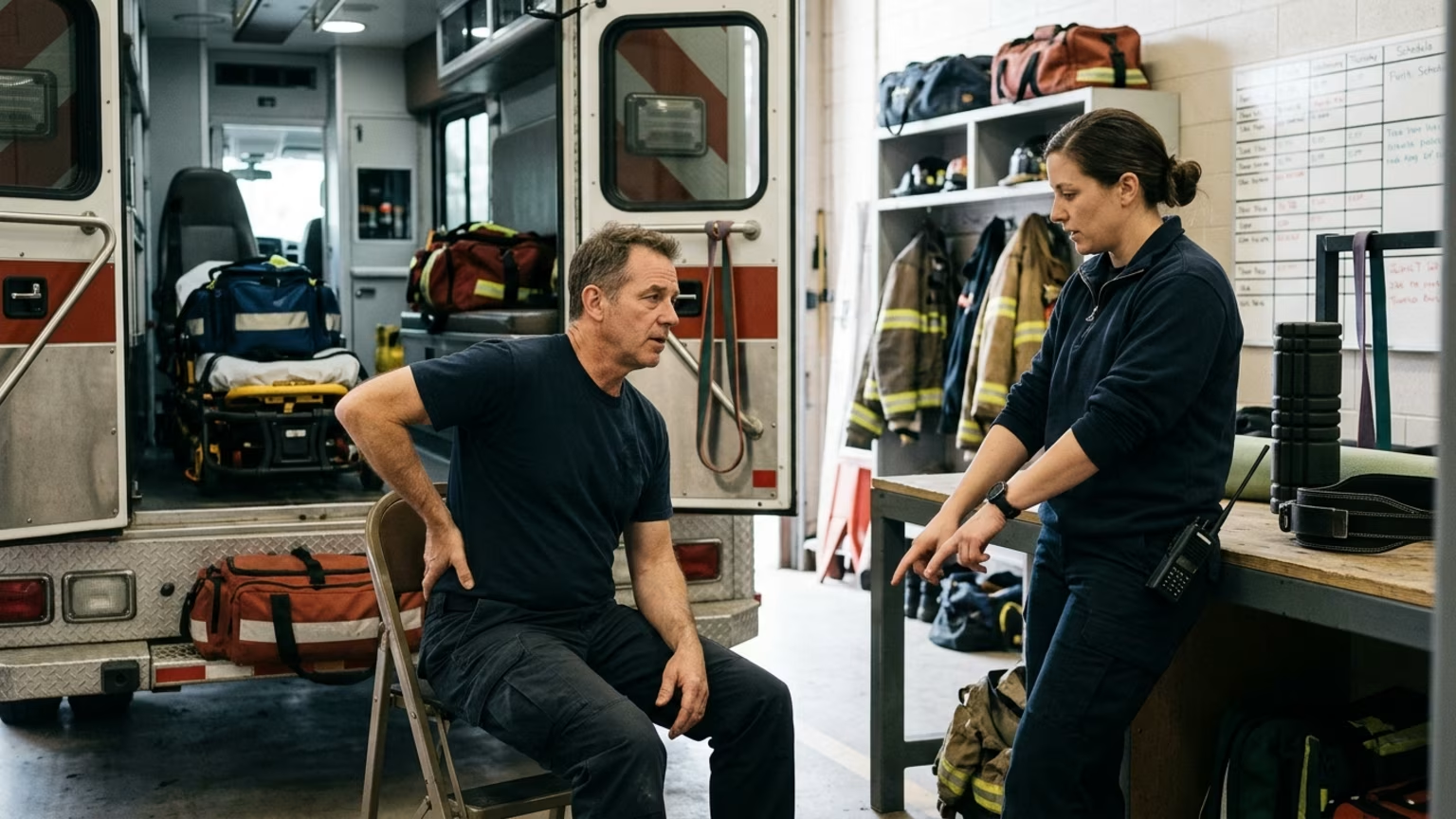



Read practical guidance on first responder fitness, recovery, sleep, nutrition and resilience for demanding work and a long, active career.
read the blog
