
A firefighter’s reported return to full duty offers perspective on crew connection, recovery decisions and future fire and EMS health research.





Cleveland.com reported on October 12, 2026, that Shaker Heights Firefighter Paramedic Frank Gromosky had received the Rotary Club of the Heights of Greater Cleveland’s Firefighter of the Year Award and returned to unrestricted duty after a serious fall.
According to Cleveland.com, Gromosky fell nearly a full story from Shaker Heights Fire Station 2 to the pavement in May 2025. The report described severe injuries and an initial prognosis that raised questions about whether he would walk normally again or return to active firefighting.
The reported endpoint was unrestricted duty. Cleveland.com also said he resumed work as an EDGE SWAT team medic serving communities in the Heights area. Shaker Fire Lt. Kyle Nelson described returning to full duty as Gromosky’s goal and said he had achieved it.
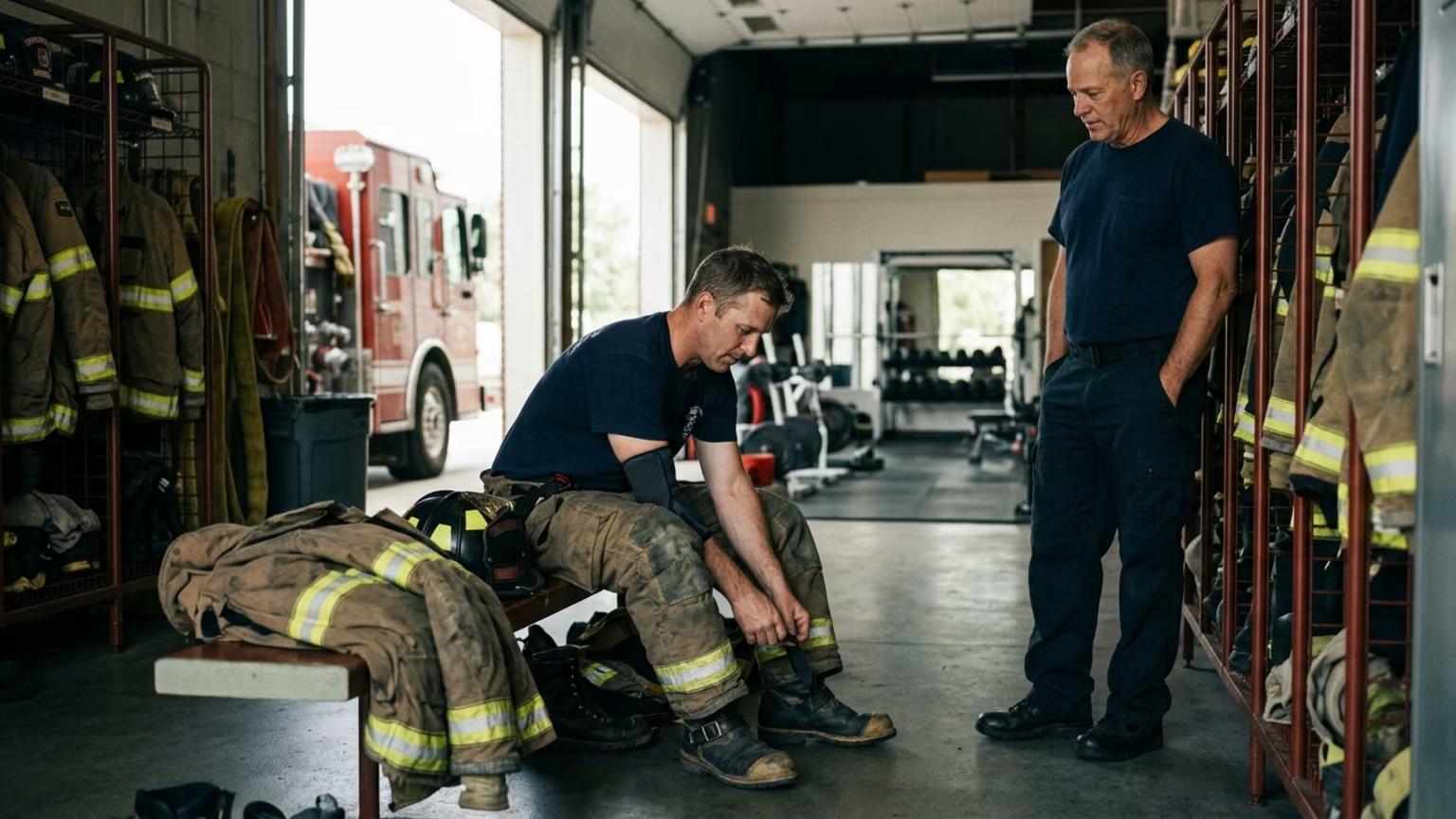
Crew contact was another documented feature of his recovery. According to the account, Gromosky returned to the station for meals and maintained relationships with fellow firefighters. That detail gives the story a practical dimension beyond the final work status: being away from operational duties did not mean ending contact with his team.
The award was not solely a recognition of his return. Nelson’s account also pointed to Gromosky’s service before the accident and his contributions as a teammate and mentor. Cleveland.com described him as a Russell Township Fire Department lieutenant and training officer, a CrossFit competitor and a coach who helps others pursue fitness goals.
A separate development places the story in a broader research context. In September 2026, the National Registry of Emergency Medical Technicians, or NREMT, announced the LIFE Study. The project is intended to follow firefighters and EMS clinicians over time and examine occupational exposures and injuries alongside workplace violence and physical and psychological stress.
The NREMT’s stated rationale is that the combined and cumulative effects of those risks remain poorly understood. Its focus shifts the question from whether one person returns to work to how health develops across a fire or EMS career.
This is a single-person news profile, not a clinical case report. It provides no injury diagnoses, treatment details or independent medical assessment. It also gives no rehabilitation duration, graded work schedule, accommodations or clearance criteria. No measured fitness outcomes are reported.
The account does not establish that station meals, CrossFit or coaching caused or accelerated recovery. It does not show that Gromosky’s outcome is typical or reproducible. The LIFE Study announcement contains no results on injury rates, rehabilitation outcomes or effective interventions.
The immediate operational takeaway is a boundary, not a new workout. This report gives no basis for changing exercise loads or shortening recovery time. Its useful contribution is to separate an achieved work status from the individual decisions that precede it.
For a responder returning after serious injury, personal decisions about activity belong with qualified clinical care. A news profile is useful context for that conversation rather than a substitute for it. The question is how the person’s current situation relates to the activity being considered.
The same distinction matters when discussing fatigue. A return to the station for a meal is not the same event as a return to operational work. Treating those activities as interchangeable would turn a documented social connection into an unsupported assessment of readiness.
For training planning, the sensible editorial approach is to keep duty requirements separate from someone else’s competition history. A job-specific view of the capacities emergency work calls for helps frame the discussion around work rather than comparison with a high-performing individual. Gromosky’s coaching and CrossFit roles are part of his story, not targets every injured responder needs to match.
That approach also fits Rescuris’s focus on irregular schedules and long-term capability. A recovery plan should not become a test of whether someone can reproduce another person’s return. The aim is a useful connection between duty fitness and recovery, with room for the realities of demanding work.
The useful adjustments are about how recovery is discussed and how daily choices are framed. They are not a replacement rehabilitation program. The following options draw on the reported crew contact and Rescuris’s positioning around sustainable capability.
These distinctions matter for colleagues as well as the injured responder. Maintaining a relationship does not require turning every visit into a progress check. A station meal can remain a meal, with room for ordinary conversation rather than expectations about a return date.
The practical point is to leave social connection available without assigning it a medical purpose. Gromosky’s example supports that separation: contact with the crew was reported during recovery, while unrestricted duty was reported as the eventual outcome. Neither detail needs to be converted into a universal routine.
The next development to track is what the LIFE Study produces over time. The NREMT says the project is intended to inform future policies and safety practices as well as interventions. For readers, the useful editorial question is how later findings connect accumulated occupational experiences with health outcomes across a career.
Follow-up reporting on individual returns would also become more useful if it described relevant work demands and ongoing function after duty resumes. Those details would help distinguish the milestone of coming back from the longer question of maintaining capability. Private medical records do not need to become public for reporting to ask better questions about sustained participation.
The outcomes worth following extend beyond an initial duty status. Future coverage should ask about continued work capacity and physical activity after service. That longer view connects this story with staying active as work circumstances change rather than ending the discussion at the first return.
For now, Gromosky’s return stands as a reported individual achievement alongside his wider service. The editorial lesson is to recognize that outcome without making it a demand placed on someone else. The research story to follow is whether longitudinal evidence gives fire and EMS professionals a clearer account of health over the course of their working lives.
Sustained physical capability after a serious injury is the outcome at stake, and Rescuris connects duty fitness with recovery and career longevity through research-led editorial guidance. When short-term performance advice conflicts with long-term health, its coverage helps first responders assess their options within the realities of irregular work rather than treating an individual return to duty as a universal plan.
Rescuris publishes evidence-aware guidance for firefighters, police officers, paramedics and other first responders on fitness, recovery, sleep, nutrition, stress resilience and long-term capability.





Read practical guidance on first responder fitness, recovery, sleep, nutrition and resilience for demanding work and a long, active career.
read the blog
