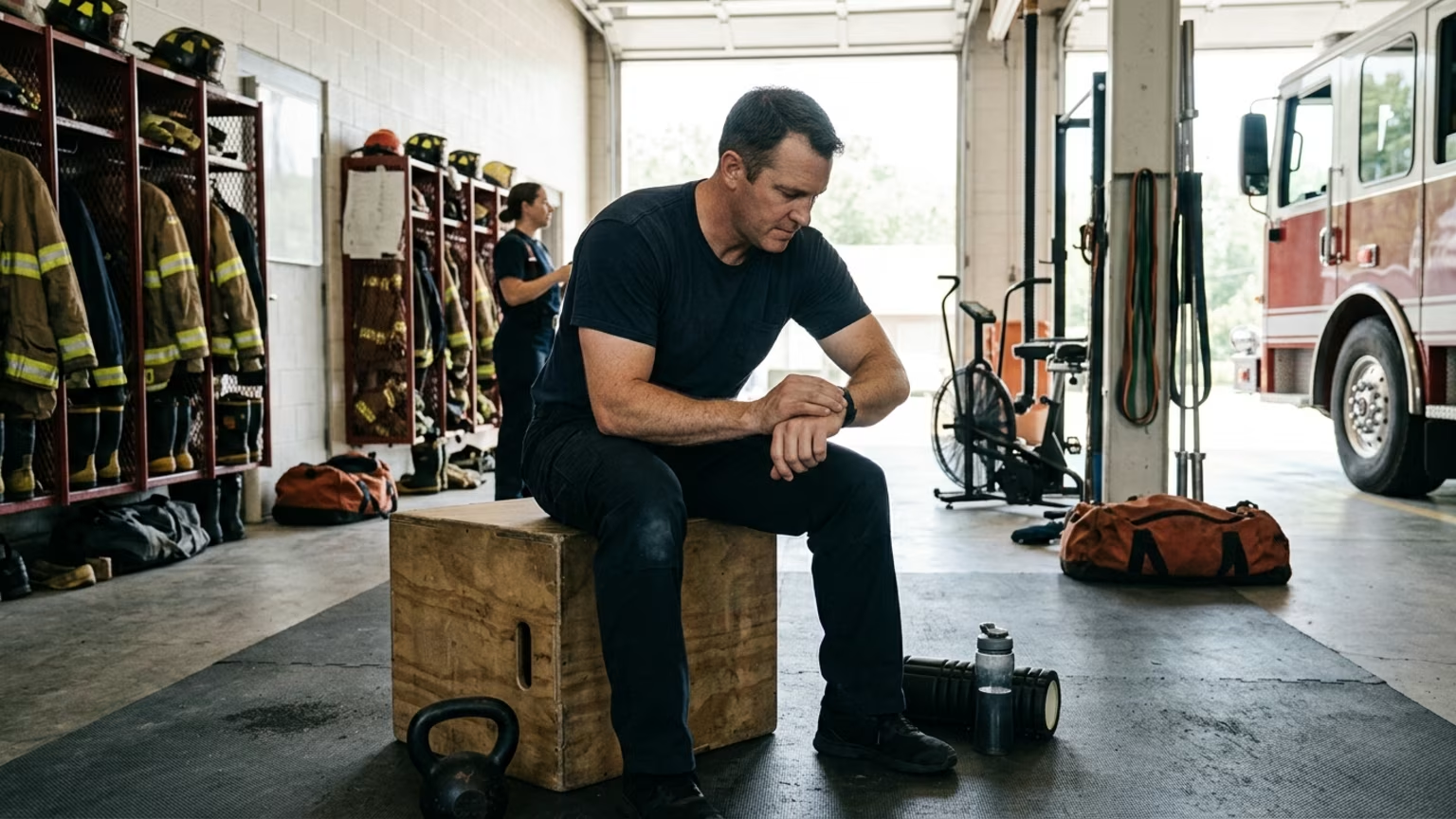

Learn how first responders can balance demanding occupational fatigue and physical training by adjusting workout volume to preserve long-term duty readiness.





Emergency personnel must choose between executing a static physical training program regardless of accumulated occupational fatigue or actively adjusting workout volume to accommodate unpredictable duty strain.
Consistent physical training builds the baseline strength and aerobic capacity required for physically punishing occupational tasks. A static approach to exercise focuses on increasing weight, repetitions or running distance every week regardless of external factors. This methodology produces predictable physical adaptations when recovery conditions remain stable and sleep is largely uninterrupted. Civilian fitness templates frequently rely on this rigid progression to drive continuous athletic improvement under predictable conditions.
However, first responders rarely operate in environments with perfect recovery conditions. AHA/ACC guidance notes that tactical athletes may face unpredictable strenuous activity, equipment loads, environmental extremes and psychological stress that can increase cardiac workload. When a standardized gym routine meets heavy occupational stress, the physiological cost multiplies rapidly. Pushing through a planned high-volume session after consecutive overnight calls compounds central nervous system fatigue rather than stimulating useful strength gains. The human body does not distinguish between a heavy barbell squat and the physical toll of a prolonged patient extraction.
Furthermore, rigid programming often relies on progressive overload models that assume linear recovery. A civilian athlete might experience minor variations in sleep, but their baseline rest remains intact. For a first responder, a single catastrophic call or a mandated overtime shift completely derails this linear recovery timeline. Attempting to force the body back onto that rigid progression track the following day places undue stress on ligaments and tendons. The resulting physical wear eventually forces the responder out of training entirely, negating the original purpose of the exercise routine.
A 2026 scoping review evaluated cardiorespiratory fitness testing in fire services and identified the 20-m shuttle run as a practical and relatively valid option for department-wide monitoring, while noting the need for local validation. This type of repeatable field assessment helps departments track true physical capability over a long career. While standardized fitness testing establishes an objective baseline, rigidly applying maximum-effort training protocols between exhausting shifts severely limits the body's ability to repair tissue. Forcing heavy progressive overload during periods of high duty strain increases systemic inflammation and degrades movement mechanics.
Load management treats recovery capacity as a finite resource shared across duty demands, life stressors and physical training. Instead of following a predetermined schedule without question, this approach requires adjusting daily exercise based on accumulated strain. If a responder spent the night working consecutive medical calls, the next day's training volume is scaled back to match their current physical state. When dealing with the challenge of managing physical wear from accumulated duty fatigue, intelligent volume reduction preserves long-term health.
This methodology prioritizes preserving movement quality and neurological readiness over chasing muscular exhaustion. When a responder faces elevated occupational strain, they can preserve their lifting patterns by reducing total sets by roughly one-third to one-half. Replacing failure sets with easier aerobic work or mobility practice keeps the body active without overwhelming critical recovery pathways. This flexibility keeps emergency personnel moving consistently without accumulating a dangerous fatigue debt.
Life load plays a surprisingly large role in this strain equation. A long commute, childcare disruptions or an emotionally difficult event all draw from the body's systemic energy reserves. By objectively acknowledging these external factors, responders prevent themselves from treating a chaotic week at home as a true physical recovery period. This broad view of stress acknowledges that the central nervous system cannot differentiate between a heavy deadlift and high-stakes psychological pressure.
This adjustment becomes absolutely critical during extended deployments or severe schedule disruptions. Wildland deployments, for example, involve relentless multiday exposure to heat, smoke and austere field-camp sleep conditions. Attempting a heavy maximum-effort lift under those punishing conditions invites acute injury and prolongs necessary recovery. An autoregulated approach accommodates these realities by prioritizing physical maintenance over peak performance.
By adjusting intensity based on current fatigue levels, responders can practice essential movement patterns safely. Implementing strategies for adjusting training based on current readiness helps joints and soft tissues receive adequate stimulation without exceeding their tolerance limits. This strategy supports long-term physical capability without demanding constant athletic progress during chaotic weeks.
A simple self-management tool helps determine when to push physical limits and when to pull back volume. Responders can track their daily strain across duty load, training load, life load and recovery status using a zero-to-three scale. This scoring method makes hidden workload visible and provides a rational basis for daily workout decisions.
Use complete, challenging workouts during quiet off-duty blocks with minimal sleep disruption. A routine shift with low call volume leaves the nervous system ready for heavy resistance training or intense cardiovascular conditioning. Adequate rest provides the necessary foundation for these demanding physiological adaptations. If your sleep stabilizes at a higher duration and physical soreness remains low, executing your normal training volume is entirely appropriate.
Scale back your overall workload following a major incident, extended extrication or prolonged patient carry. This reduction also applies after poor-sleep blocks or significant overtime stretches. Maintaining the technical quality of a few strength sets while cutting overall volume helps your body manage cumulative allostatic load effectively. Avoid introducing new exercises or maximum-effort tests immediately after a demanding shift or a long field deployment.
Shift entirely to light movement, stretching or rest when multiple severe stressors overlap at once. An exceptionally demanding shift combined with illness, pain or severe sleep deprivation requires a complete halt to heavy physical stress. The primary objective is protecting your physical capability for the next emergency response. Pushing through exhaustion in these scenarios offers no physiological benefit and drastically increases the risk of an on-duty injury.
Choosing active recovery is a strategic decision, not a sign of weakness. Walking, light cycling or dedicated mobility work facilitates blood flow to recovering tissues without adding structural damage. These low-intensity sessions maintain the habit of physical training while actively clearing metabolic waste from the muscles. The discipline required to step back and execute a light session often exceeds the discipline required to blindly push through a heavy workout.
Many professionals misinterpret a lighter training week as an automatic loss of physical fitness. A temporary reduction in workout volume actively manages fatigue, preserving long-term performance while mitigating injury risk. First responders can maintain their technical execution and training frequency while temporarily adjusting output during a demanding duty cycle. Consistency always outpaces short bursts of severe overtraining.
Another common error involves using a single organizational schedule as proof of adequate recovery. While schedule changes can shift average sleep durations, they do not eliminate operational fatigue or unpredictable night calls. True recovery is a complex operational issue rather than a simple scheduling fix. Expecting an administrative change to completely resolve shift-work sleep disruption ignores the physical realities of the job.
Relying on individual exercise discipline to fix systemic fatigue sets up responders for physical failure. When emergency personnel lack sufficient organizational time for training and rest, simply advising them to work out more often is counterproductive. Without dedicated recovery windows, stacking more gym sessions on top of physical duty only accelerates joint degradation and metabolic burnout.
Finally, attempting to self-manage severe physical symptoms through volume reduction is a dangerous operational oversight. Self-adjustment is never an appropriate response to chest pain, unusual shortness of breath, repeated near-misses or persistent sleep disturbance. The AHA/ACC guidance regarding the unpredictable cardiac workload of tactical occupations reinforces the absolute necessity of seeking qualified medical evaluation for concerning symptoms. Interpreting cardiac distress as ordinary muscle fatigue is a critical error.
Your physical fitness exists to support your operational capability, but training stress and occupational strain draw from the exact same recovery pool. Balancing concurrent strength and conditioning routines alongside inevitable sleep disruption and demanding physical duty requires continuous daily adjustment. Start today by assigning a simple zero-to-three score to your current duty load, life load and sleep quality before you pick up a single weight.
Adjusting daily workout volume based on subjective strain tracking is a vital operational decision, and turning those short-term adjustments into sustainable career-long routines is where our work begins. When emergency professionals face the complex challenge of recovering from accumulated physical wear without losing duty readiness, Rescuris translates credible evidence into practical guidance built around the realities of demanding work. Explore Resources
Rescuris publishes evidence-aware guidance for firefighters, police officers, paramedics and other first responders on fitness, recovery, sleep, nutrition, stress resilience and long-term capability.






Read practical guidance on first responder fitness, recovery, sleep, nutrition and resilience for demanding work and a long, active career.
read the blog
