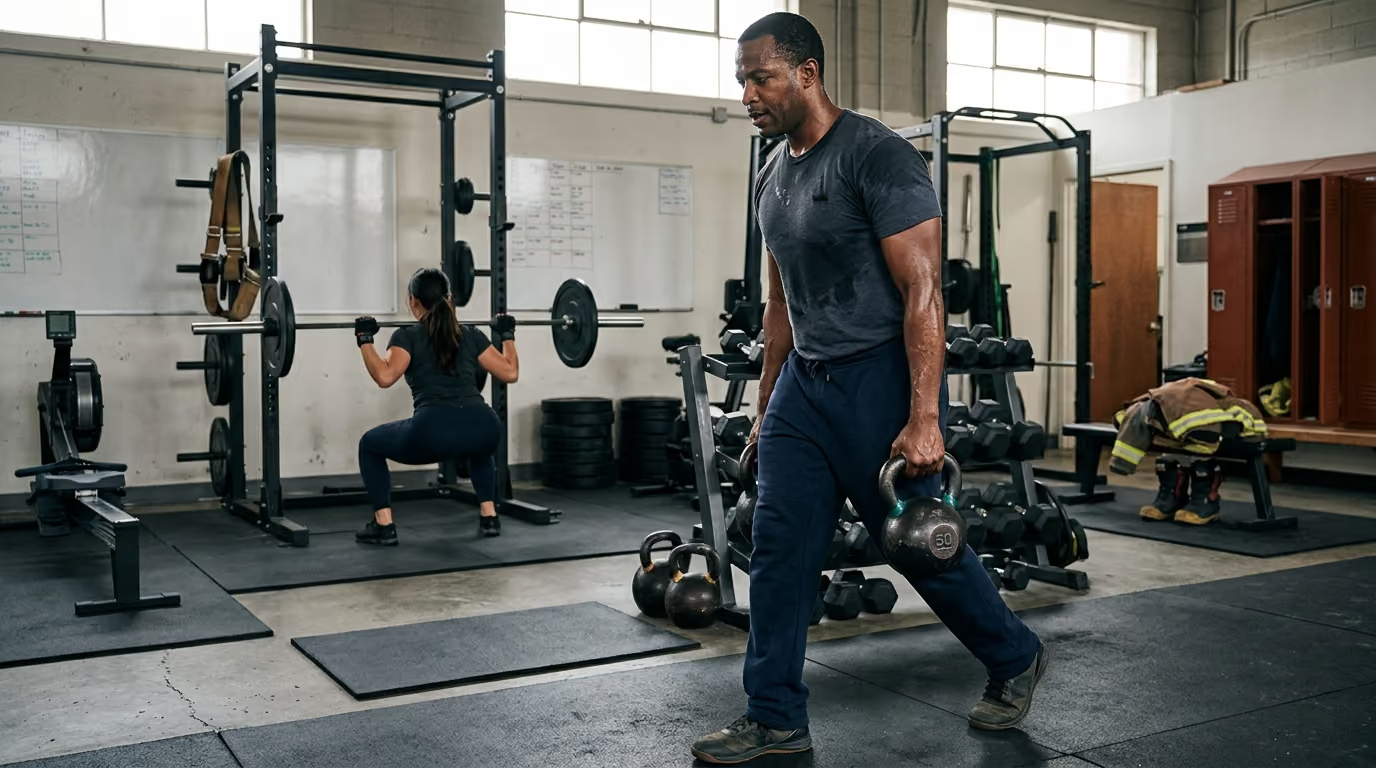

Facing unpredictable shift rotations and intense emergency calls demands a structured concurrent training framework that balances maximal strength, conditioning, and daily recovery.





How to build strength and endurance at the same time without breaking down on shift is one of the most common problems emergency personnel search for. Most fitness advice forces a choice between lifting heavy or running long distances, but emergency calls demand both qualities on short notice. This guide provides a definitive, research-led framework for concurrent training that builds usable strength, power, and conditioning while protecting your ability to recover from demanding duty.
Concurrent training is the deliberate integration of resistance training and cardiovascular conditioning within a single weekly plan. For firefighters, law enforcement officers, and emergency medical personnel, training cannot focus on a single isolated athletic quality. Tactical duty requires a wide physical reserve. Responders must drag heavy casualties, force entry, climb stairwells in protective gear, sprint short distances, and endure prolonged physical labor under thermal and psychological strain.
The primary objective of concurrent training in emergency services is building broad functional capability rather than setting personal records in a single lift or distance. Developing one physical quality to its absolute peak often compromises other essential attributes. A powerlifter may struggle with sustained stair climbs in structural turnout gear. A marathon runner may lack the force production needed to lift a bariatric patient from a confined bathroom floor.
The fundamental rule of sustainable concurrent programming is simple. Train every necessary physical quality across the training cycle, but do not attempt to develop every quality to its absolute maximum in the same week. When total stress is properly distributed, lifting performance and cardiovascular capacity can improve simultaneously without compromising occupational readiness.
Balancing these demands requires viewing the training program through the lens of total weekly stress. Physical exertion in the gym does not occur in a vacuum. It interacts directly with shift rotations, disrupted sleep, thermal load, and unpredictable emergency calls. Successful programming uses the minimum effective dose required to drive adaptation, preserving physical and mental energy for the demands of the job.
The primary scientific concern with concurrent training is the interference effect. This phenomenon describes the potential for endurance exercise to blunt adaptations in muscle strength, power, or hypertrophy when both modalities are trained simultaneously. Early exercise science literature suggested that cellular signaling pathways for endurance and strength were inherently incompatible.
Modern research provides a much more nuanced perspective. Systematic reviews and meta-analyses demonstrate that concurrent training does not automatically impair strength development or cardiovascular improvement. Research analyzing concurrent protocols shows that combining resistance and endurance exercise produces significant improvements in both aerobic fitness and muscular strength compared to single-mode training alone. A small blunting effect on lower-body maximal strength has been observed in some male populations, but this effect is minimal and highly dependent on program design.
The interference effect is primarily an issue of dose, volume, intensity, and inadequate recovery rather than an unavoidable molecular conflict. Acute interference occurs when fatigue from a preceding conditioning session reduces force production, movement speed, or technique during a subsequent lifting session. Chronic interference occurs over weeks or months when cumulative training volume exceeds systemic recovery capacity.
The severity of interference depends heavily on specific programming variables:
Meta-analyses examining sprint interval training combined with resistance exercise show that high-intensity intervals can improve maximal oxygen uptake without compromising lower-body strength, jumping power, or sprint speed. Concurrent training is highly effective when volume is managed intelligently. Interference becomes a problem only when programs demand more recovery than the individual can supply.
Standard athletic programming assumes predictable sleep, scheduled meals, and low background stress. Emergency service work breaks every one of these assumptions. First responders operate under irregular shift patterns, mandatory overtime, sudden adrenaline spikes, extreme thermal environments, and prolonged physical strain.
Training stress and occupational stress draw from the exact same physiological reserve. When a responder completes a heavy lower-body workout, works a busy twelve-hour night shift, and responds to multiple demanding calls, the biological cost is cumulative. The body does not distinguish between the physical strain of heavy squats and the physical strain of carrying equipment up four flights of stairs.
External load represents the measurable work performed during training and duty. This includes barbell weight, total repetitions, running mileage, flights of stairs climbed, equipment weight carried, and hours spent wearing protective gear. Measuring external load is straightforward, but it tells only part of the story.
Internal load represents the actual physiological and perceptual cost of that work on the responder's body. Heart rate response, perceived exertion, muscle soreness, joint irritation, mental fatigue, and sleep quality define the internal load. Two identical lifting sessions can produce completely different internal loads depending on whether the responder slept eight hours or spent the night running calls.
Ignoring internal load leads directly to overtraining, persistent systemic inflammation, and elevated injury risk. When occupational demands spike, training volume must adjust downward to maintain balance. Following a rigid, unyielding workout plan during periods of severe operational stress is a direct path to physical burnout and compromised job performance. Responders who balance their workloads effectively use a minimum effective dose approach to keep making progress without exhausting their reserves.
A comprehensive tactical physical preparation model must address several distinct physical qualities. Each quality serves a specific operational purpose, and each requires a precise training dose to develop and maintain.
Maximal strength forms the foundation of all tactical physical performance. Higher levels of baseline strength make submaximal occupational tasks feel easier and less fatiguing. Lifting a seventy-pound equipment kit requires a much smaller percentage of maximal capability for a stronger individual, leaving greater reserve capacity.
Strength programming for emergency personnel should focus on compound multi-joint movements that mirror occupational movement patterns:
The goal for emergency responders is not chasing maximal one-repetition lifts at all costs. The goal is building robust strength reserves through clean technique, moderate loads, and zero excessive joint strain.
Power is the ability to express force rapidly. In emergency situations, power is required when initiating a sprint, clearing an obstacle, swinging an axe, breaking through a door, or quickly hoisting heavy equipment. Systematic reviews of firefighter task performance show strong associations between anaerobic power and the completion speed of critical operational simulations.
Power training should be performed when the nervous system is fresh, using low repetitions and complete rest between sets to ensure high movement velocity. Effective methods include:
Volume should remain low. Three to five sets of three to five explosive repetitions provide an optimal neuromuscular stimulus without causing lingering muscle damage.
The aerobic energy system is the physiological engine that powers long-term recovery and sustained work capacity. A well-developed aerobic base allows responders to work longer at submaximal intensities, improves heat tolerance, and accelerates recovery between high-intensity bursts of work. Cardiovascular research in fire service populations frequently cites an aerobic capacity between 33.6 and 49 mL/kg/min as an operational reference range for meeting fireground demands safely.
Aerobic development should emphasize low-intensity, steady-state exercise performed at a conversational pace. This intensity builds mitochondrial density, expands capillary networks, and improves cardiac stroke volume with minimal orthopedic stress. Suitable training modes include:
Keeping this work genuinely easy prevents it from competing with strength training or worsening duty-related fatigue.
Emergency scenes frequently require repeated bursts of near-maximal effort separated by short, incomplete rest periods. Dragging a victim out of a structure, moving hose lines, or pursuing a suspect demands high anaerobic power and the ability to buffer muscular acidosis.
Anaerobic conditioning protocols should be dosed conservatively to avoid excessive systemic stress:
One well-designed anaerobic session per week is generally sufficient to maintain high-intensity work capacity without creating chronic fatigue.
Mobility for first responders is about maintaining functional joint ranges of motion under load and inside restrictive equipment. Responders do not need the passive flexibility of a gymnast. They need active control through deep hip flexion, ankle dorsiflexion, thoracic extension, and shoulder rotation.
Integrating mobility into daily movement prep and warm-ups is far more effective than long, exhausting stretching sessions. Priority areas include:
Targeted mobility work prepares the body for unpredictable physical demands while protecting joint structures from repetitive wear.
Organizing concurrent training across a weekly schedule requires clear prioritization. Attempting to fit high-volume lifting, hard interval work, and long endurance sessions into the same week creates conflicting adaptations and deep fatigue. Responders need structured frameworks that separate competing demands.
The high-low model organizes training days by neurological and systemic demand. High-stress days combine demanding neural and metabolic sessions, followed by low-stress days focused on active recovery, light aerobic conditioning, and mobility. This approach ensures hard days are truly hard and easy days allow genuine physiological recovery.
A typical high-low distribution includes two to three high days and two to three low days per week:
This structure prevents the common trap of making every workout moderately hard, which leaves the responder in a state of constant, low-grade fatigue.
When strength training and cardiovascular conditioning must be performed on the same calendar day, session sequencing matters. Research examining exercise order demonstrates that the modality performed first receives the greatest neuromuscular adaptation.
For shift workers balancing irregular duty hours, separating sessions across the day is not always realistic. When training time is limited to a single daily window, lifting first followed immediately by easy aerobic work provides the cleanest balance with minimal interference. Detailed strategies for programming around shift work can help you structure these training blocks effectively.
This template distributes physical qualities across four distinct sessions, easily adapted to a shift rotation or standard weekly calendar.
This structure ensures all critical physical qualities receive regular, focused attention without overloading any single movement pattern or energy system.
A rigid training plan is the enemy of career longevity in emergency services. Training programs built on fixed percentages and mandatory weekly volume fail because they cannot account for a night with zero sleep, a prolonged structure fire, or an emotionally exhausting call. Responders need clear rules for autoregulating training based on daily biological readiness.
Autoregulation is the systematic adjustment of training intensity, volume, or exercise selection based on current physiological and psychological status. It allows you to train hard when readiness is high and dial back stress when systemic recovery is compromised. You can consult a shift-work training decision tree to decide whether to push, modify, or recover on any given day.
A practical way to implement autoregulation is categorizing daily training into three distinct tiers:
Autoregulation preserves the training habit without forcing high-risk physical exertion on an exhausted body. Learning how to manage autoregulation and duty fatigue ensures that physical training supports occupational longevity rather than causing sudden injury.
Using Repetitions in Reserve (RIR) or Rating of Perceived Exertion (RPE) ensures lifting loads match daily capacity. Instead of attempting a predetermined weight on the barbell, select loads based on proximity to failure.
For first responders, working with two to three repetitions in reserve on main compound lifts delivers virtually identical strength and muscle gains compared to training to absolute failure, with significantly less fatigue and joint strain. Leaving two reps in the tank protects movement mechanics and prevents the debilitating soreness that makes basic occupational duties painful the following morning.
Training provides the biological stimulus, but adaptation and performance gains occur entirely during recovery. When recovery systems are neglected, concurrent training rapidly leads to chronic under-recovery, hormonal disruption, and declining physical capacity.
Sleep is the most potent recovery mechanism available. Chronic sleep restriction reduces cognitive function, impairs glucose metabolism, elevates injury rates, and blunts muscle protein synthesis.
When night shifts and late calls disrupt normal sleep architecture, responders must protect sleep windows proactively:
Fueling concurrent training requires sufficient energy availability to support both muscular repair and aerobic adaptation. Severe caloric deficits combined with heavy concurrent training accelerate lean tissue loss, degrade power output, and elevate injury risk.
Deloading is the deliberate reduction of training stress to dissipate accumulated fatigue and restore physiological readiness. Responders should incorporate a planned deload every four to six weeks, or reactively when indicators of chronic fatigue emerge.
During a deload week:
Deloading allows connective tissues to repair, resets neurological readiness, and prepares the body for the next productive training block. Additional resources on this topic are available in our strength, fitness and duty performance resources section.
Concurrent physical preparation carries distinct trade-offs and safety considerations. Pushing physical limits in the gym becomes counterproductive if it creates acute operational hazards on duty.
Delayed-onset muscle soreness is not a badge of honor for tactical athletes. Heavy eccentric loading, novel exercises, or lifting to absolute failure can cause severe muscular soreness and stiffness lasting several days.
A responder with extreme quadriceps or lower-back soreness will experience impaired reaction time, reduced sprint velocity, compromised jumping mechanics, and diminished lifting capacity during an emergency. Training must be dosed to stimulate adaptation while keeping muscle damage low enough that operational capability remains intact.
Training through sharp joint pain, progressive tendon pain, or movement compensation is dangerous. High-stress training under extreme fatigue significantly increases the risk of acute muscle tears, ligament sprains, and spinal disc injuries.
Responders should establish firm safety boundaries:
Physical fitness exists to protect your life and the lives of those you serve. Compromising duty readiness for personal gym numbers undermines the entire purpose of tactical physical preparation.
Self-directed programming and training adjustments solve most performance and fatigue challenges. However, certain symptoms indicate underlying physiological, hormonal, or orthopedic issues that require evaluation by qualified medical professionals.
Schedule an appointment with a licensed physician, physical therapist, or specialized occupational healthcare provider if you experience:
A thorough medical or physical therapy evaluation ensures underlying injuries or health conditions are addressed safely before they threaten your career.
Sustainable physical capability requires balancing high-output strength and conditioning with the unpredictable reality of emergency service work. Long-term durability is built by respecting recovery limits, applying intelligent training structures, and consistently showing up for repeatable, high-quality sessions.
Use this practical checklist to audit and adjust your concurrent training plan this week:
Stay connected for research-led guidance on duty fitness, shift-work sleep, injury recovery, stress, nutrition and career longevity. Practical ideas for first responders who want to stay capable on the job, recover well and protect their health for the long run.



Read practical guidance on first responder fitness, recovery, sleep, nutrition and resilience for demanding work and a long, active career.
read the blog



