

Palm Beach Gardens Fire Rescue's symposium connected job-specific conditioning with cardiovascular awareness, realistic shift routines and shared wellness support.





Palm Beach Gardens Fire Rescue held its second annual Health & Wellness Symposium on October 7, 2026, according to the event listing. In a recap published by CRACKYL Magazine on October 26, the department described a program connecting job-specific conditioning with cardiovascular health and the realities of life around shifts.
The department reported attendance of 174 first responders representing more than 55 fire departments and organizations across the United States. Its central fitness message was straightforward: training should reflect firefighting's unpredictable, high-intensity demands rather than generic fitness goals. The wider message deserves equal attention: readiness was discussed alongside recovery and relationships rather than as a separate gym project.
According to the department's recap, Dr. Jay Dawes addressed conditioning and operational performance. Annette Zapp discussed realistic routines amid rotating shifts and disrupted sleep. Dr. Ben Stone covered cardiovascular risk and preventive screening. Kristal DeSantis addressed occupational stress and family relationships.
Those subjects give the event a broader purpose than promoting harder workouts. The organizer's account places physical preparation within a wider discussion of prevention and sustainable habits. It also calls for peer support and leadership openness rather than making wellness solely an individual responsibility.
For first responders, the useful editorial takeaway is that fitness goals deserve an occupational purpose. But that purpose should sit alongside health outside work and across a career. A discussion about becoming more capable is incomplete if recovery and personal relationships disappear from it.
The account establishes what organizers reported about the gathering and its speakers. It is department-authored material published by CRACKYL Magazine rather than an independent evaluation of the presentations. Attendance describes the gathering's scale; it does not demonstrate improved health or operational performance.
The recap also provides no detailed exercise protocol, screening schedule or quantified recovery plan. Its messages are reported priorities rather than a validated program or a documented change in department policy. That distinction matters when translating an event summary into guidance for a station or an individual firefighter.
Separate research illustrates why advice also needs boundaries when moving between occupations. A 2026 systematic review of nutrition interventions for shift workers included only one firefighter study, involving 137 firefighters. That limited subgroup is a reason not to turn broad shift-work nutrition findings into established firefighter-specific rules. It is a limitation of that review's evidence base, not a finding that every wellness approach lacks value.
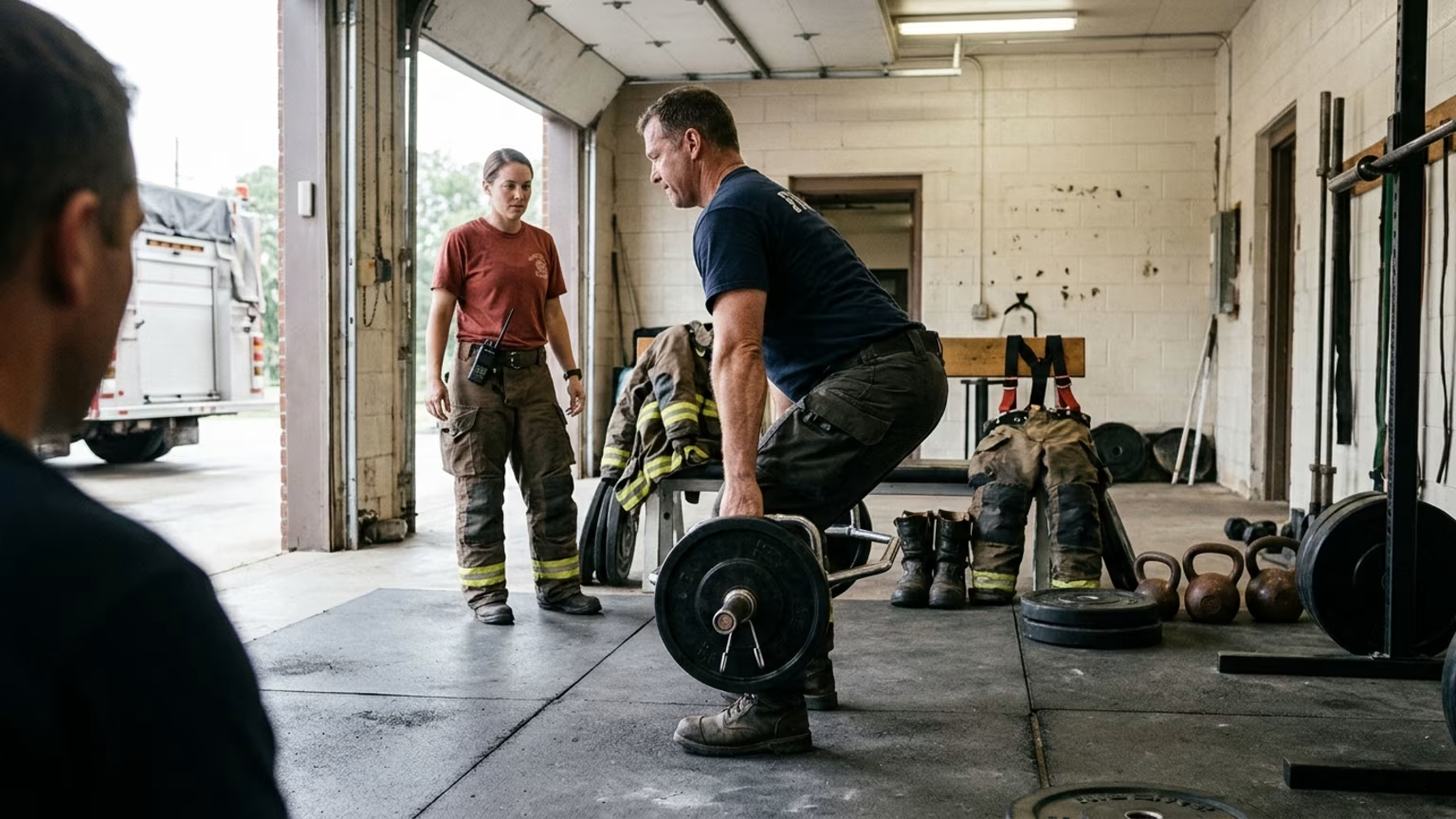
Dawes's reported message puts the demands of firefighting at the center of training design. The question is not simply whether a workout is difficult. It is what occupational purpose the training is meant to serve.
The 2026 academic review Tactical Strength and Conditioning provides relevant context. It describes firefighting as involving heavy protective equipment and intense physical demands. It also reports that studies have observed structural firefighters reaching high heart rates during fire-suppression tasks.
A separate 2026 academic article, Limitations of spirometry in firefighter hiring, discusses an association between cardiorespiratory fitness and occupational task performance. Together, these sources support taking occupational demands seriously when discussing fitness. They do not make a generic gym result synonymous with readiness.
For a wellness conversation, that shifts attention from collecting impressive training numbers to explaining why a goal matters. A department can discuss the connection between conditioning and its work without turning every session into a demonstration of toughness. Describing firefighting as high intensity is not itself a reason to treat exhaustion as the measure of a useful workout.
Rescuris's discussion of matching conditioning to work demands offers a related editorial perspective. The relevant question remains the same: what capability is the training intended to support?
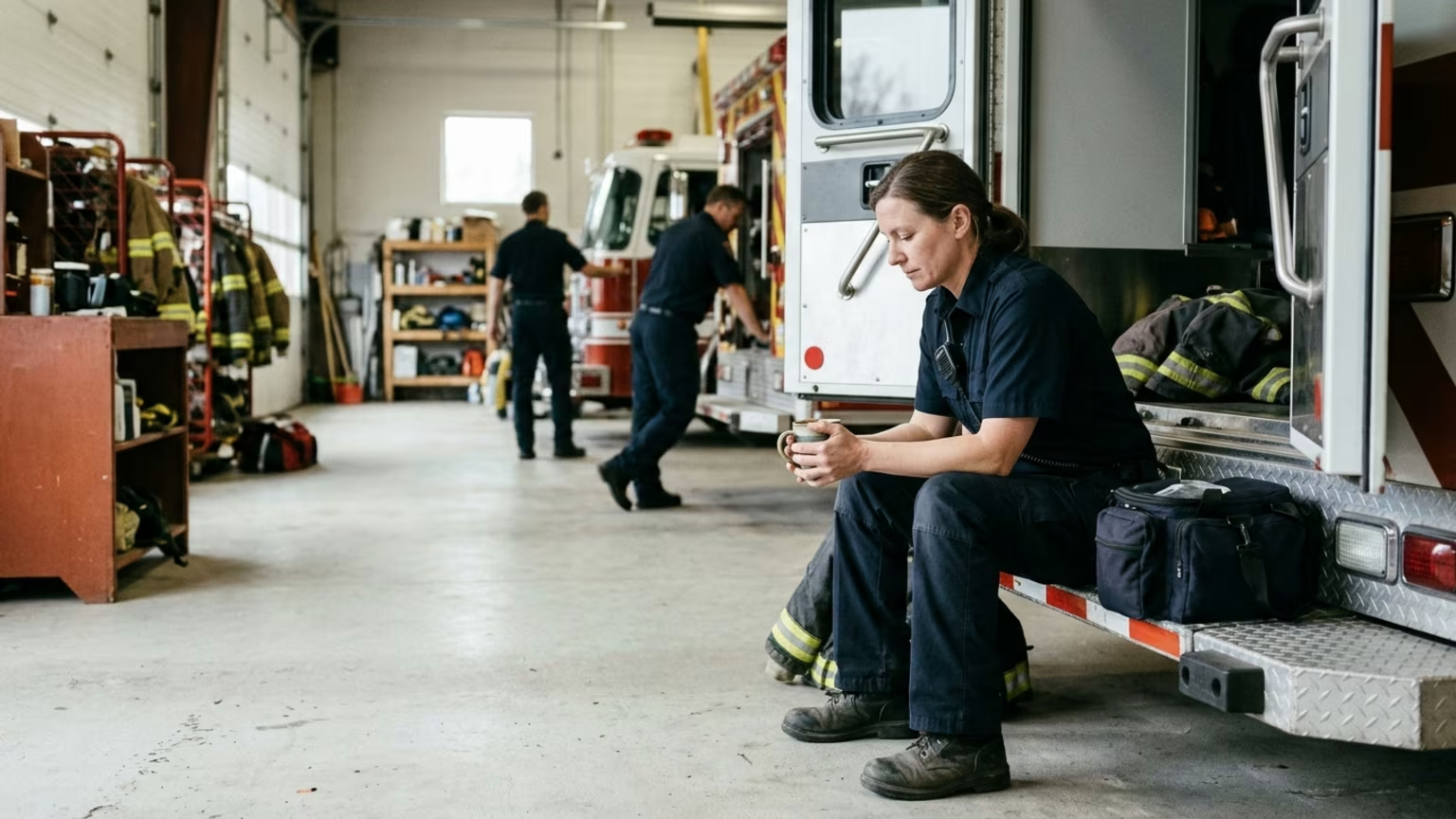
Zapp's contribution addressed a different challenge: keeping routines realistic when shifts rotate and sleep is disrupted. According to the recap, her message favored consistent habits that could last through a firefighting career over the pursuit of perfect routines.
That is a meaningful distinction for an audience whose work does not follow a predictable daily schedule. In the symposium's framing, an ideal routine is not automatically a useful routine. Feasibility belongs in the discussion from the start rather than appearing only after a plan becomes difficult to follow.
The practical translation is a standard for judging advice, not a demand for greater discipline. Does the proposed routine acknowledge rotating shifts? Does it account for disrupted sleep? Can its purpose be explained without assuming every day offers the same opportunity for training and recovery?
These questions stay close to the speaker's reported message. They also leave room to discuss the work schedule itself rather than treating every obstacle as a personal failure. Rescuris's coverage of team approaches to fatigue keeps that organizational perspective within the wider recovery conversation.
Stone's reported session brought cardiovascular health into the discussion as an individual risk-management issue. The recap describes attention to personal risk factors and possible warning signs. It also reports a focus on identifying underlying conditions before they lead to life-threatening events.
For readers, questions about personal risk factors or possible warning signs belong with qualified healthcare professionals. Fitness goals and personal medical questions should remain distinct parts of a wellness conversation. Treating both seriously is more useful than assuming a demanding training routine answers every question about health.
DeSantis addressed another part of life around the job. According to the department's account, she highlighted intentional communication and emotional awareness alongside meaningful connection. These were presented as ways to support firefighters' relationships and stability outside work.
The editorial implication is not that family life should become another performance target. It is that a broad view of wellness should leave room for relationships and occupational stress. The people and responsibilities outside the station belong in the discussion without being reduced to tools for getting more work done.
The department's recap explicitly argues that wellness cannot rest on individuals alone. It calls for peer support and leaders who welcome honest conversations. It also calls for department investment in prevention.
That framing changes the question from whether a firefighter is trying hard enough to what support surrounds the effort. An individual may own personal goals while an organization still has responsibilities within its wellness culture. Those are complementary ideas rather than competing explanations.
For supervisors and wellness leads, the event offers a basis for discussing how prevention and peer support fit together. For firefighters, it provides language for raising recovery concerns without making toughness the standard for participation. Rescuris's writing on supportive crew relationships addresses that broader team context.
The distinction is worth preserving: encouraging personal responsibility need not mean assigning every wellness problem to the individual.
The most defensible practical response is to use the symposium's themes to improve the questions asked about wellness. These are discussion prompts drawn from the organizer's reported priorities, not a new exercise or medical protocol.
For departments, these prompts can organize a conversation about priorities without implying that every crew needs the same routine. For individuals, they offer a way to assess whether advice fits the purpose it claims to serve. Neither response requires turning the event into a universal program.
The next useful questions concern how these priorities translate into everyday experience. How should a department assess whether its conditioning goals reflect its actual occupational demands? What would show that routines remain workable across rotating shifts over the course of a career?
There are organizational questions too. Do firefighters find it easier to discuss recovery when leaders invite honest conversations? How should a wellness effort account for cardiovascular health and relationships alongside physical capability?
These are questions for continuing evaluation rather than assumed benefits of attending a symposium. Palm Beach Gardens Fire Rescue's account offers a clear set of priorities: prepare for the work while taking the person beyond the work seriously. The value of that framing will depend on how thoughtfully those priorities are carried into practice and assessed over time.
Firefighters and shift supervisors face the daily task of fitting wellness around broken sleep, and Rescuris addresses that tension through research-led editorial guidance. Its coverage connects duty fitness with recovery while helping emergency-service professionals assess advice that assumes predictable schedules rather than nights and unpredictable calls.
Rescuris publishes evidence-aware guidance for firefighters, police officers, paramedics and other first responders on fitness, recovery, sleep, nutrition, stress resilience and long-term capability.




Read practical guidance on first responder fitness, recovery, sleep, nutrition and resilience for demanding work and a long, active career.
read the blog
