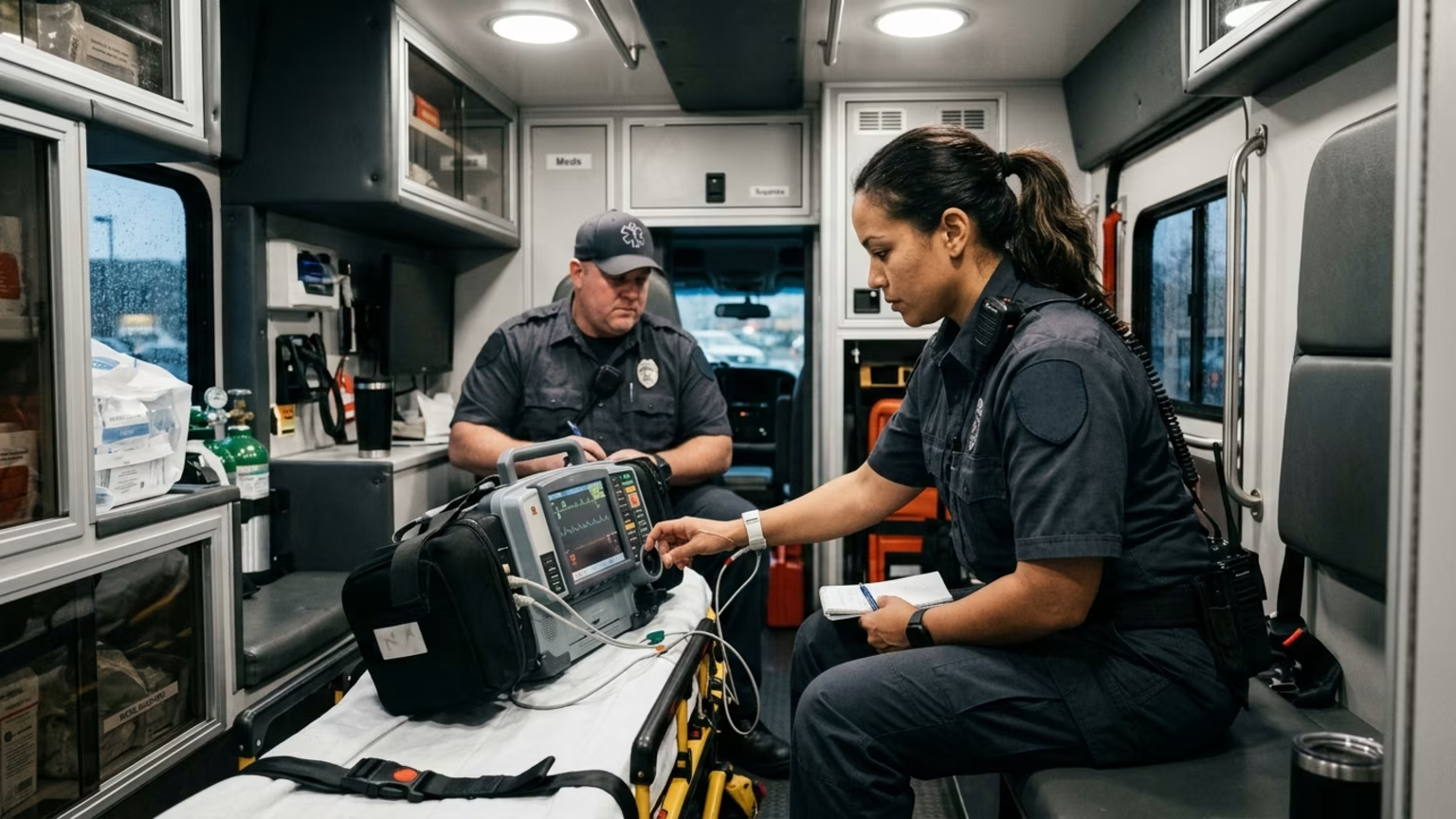

A short, repeatable warm-up routine helps first responders safely transition from station rest to extreme physical exertion while monitoring daily readiness.





Recent cardiovascular guidance addresses how clinicians should evaluate tactical athletes. This operational category includes firefighters, paramedics, and police officers who face unique physical demands. Unlike recreational exercisers, these professionals often transition from resting states directly into maximal physical effort. They typically lack the predictable preparation time available to conventional athletes.
The daily reality often involves performing at a high level immediately. This demanding work frequently occurs in life-threatening conditions with heavy equipment. Occupational stressors such as extreme heat, psychological stress, and irregular schedules compound these demands. Medical professionals recognize cardiovascular disease as the leading duty-related cause of death within this population.
The shift from rest to high-intensity action leaves very little room for physical error. Tactical personnel often respond to calls while carrying heavy gear that restricts natural movement. This added external load increases the demand on the cardiovascular system exponentially. Preparing the body for this sudden burden requires a realistic approach that acknowledges these occupational limitations.
Passing an initial medical screening as a recruit does not guarantee the same physical capacity years later. Cardiovascular fitness and risk levels can change significantly over the span of a career. Risk increases as responders age, and accumulated fatigue can mask underlying health changes. Fire-service organizations are now placing greater focus on continuous health monitoring over generic fitness standards.
The National Fire Protection Association provides standards to guide this necessary health monitoring. NFPA 1582 is an occupational-medical standard intended to help departments evaluate physical capability. It provides a framework for assessing whether personnel can safely perform required duties. However, this standard is a comprehensive medical-evaluation framework rather than a prescription for a universal warm-up.
A daily preparation routine is not a universal injury-prevention tool. It cannot compensate for an untreated cardiovascular condition or severe sleep debt. However, a practical movement system helps personnel assess their physical state before demanding work begins. This realistic approach acknowledges that tactical personnel require targeted routines rather than rigid athletic warm-ups.
The cardiovascular demand on a first responder can begin the exact moment an alarm sounds. The physiological stress response rises sharply before a crew member even reaches the incident scene. This sudden autonomic shift forces the body to mobilize energy rapidly under extreme psychological pressure. Heart rates spike as personnel move through travel, gear up, and begin initial operations.
This rapid physiological escalation requires the heart and lungs to operate at peak capacity instantly. Blood vessels must dilate rapidly to supply working muscles with adequate oxygen. When the body is forced into this state without preparation, the risk of cardiovascular strain increases. Small movement practices help prime this internal delivery system before extreme effort is demanded.
These immediate transitions place an immense load on the nervous system and musculoskeletal structure. Operating on high alert without physical preparation leaves muscles and joints vulnerable to sudden strain. When responders exit a cruiser or lift a patient abruptly, their soft tissues lack optimal blood flow. This sudden requirement for force production explains why joint stiffness feels worse during unpredictable shifts.
Repeated autonomic spikes without adequate recovery disrupt normal regulatory functions. Personnel may experience prolonged elevated heart rates well after a call concludes. This constant state of physiological tension contributes to chronic wear on the body across a career. Implementing active movement strategies for sudden transitions bridges the gap between rest and intense action.
Different roles dictate completely different immediate physical demands upon arrival. A firefighter carrying a charged hose operates under a different mechanical load than a tactical planning officer. A paramedic lifting a patient requires immediate spinal stability and strong grip strength. A patrol officer exiting a cruiser rapidly requires sudden hip mobility and rotational power.
A preparation system acts as a deliberate transition mechanism for the body. Moving through controlled patterns signals the nervous system to increase blood flow and joint lubrication. This gradual adjustment prepares the cardiovascular system for sudden force generation. Such routines help mitigate the shock of moving directly from a seated position into maximal physical exertion.
Monitoring physical capacity requires methods that fit the actual constraints of emergency service. A 2026 PubMed-indexed study argues that fire services need practical methods for monitoring cardiorespiratory fitness. The research points out the necessity of detecting physical decline before it compromises occupational safety. Relying solely on recruit-level evaluations leaves veteran personnel without an accurate baseline.
The study identifies the 20-metre shuttle run as a practical field test for monitoring aerobic capacity. This specific assessment allows departments to measure fitness without requiring expensive laboratory equipment. However, the researchers caution that fitness estimates near employment-related cut points can be misclassified. They recommend confirmatory testing when individual employment decisions depend on these initial results.
This research demonstrates that cardiovascular capacity should be monitored over time rather than assumed. Aerobic conditioning is built through consistent training and cannot be created minutes before an emergency call. Evaluating shift schedules for first responder sleep and recovery is a critical component of maintaining this long-term fitness. A pre-shift routine serves as a daily check-in rather than a replacement for this ongoing conditioning.
Even when field tests accurately measure baseline capacity, they cannot predict daily fluctuations in physical readiness. A responder might pass a shuttle run perfectly but report to a shift with extreme muscular fatigue. Environmental factors like poor hydration can drastically reduce operational capability. This reality explains why continuous self-assessment matters just as much as formal departmental testing.
Firefighter heat research further complicates the application of these fitness standards. Current projects are examining work-to-rest cycles, cooling opportunities, and possible heat training before the firefighting season. These environmental variables mean that a passing score on a shuttle run does not guarantee heat tolerance during a summer fireground operation. Departments must consider physical readiness as a combination of cardiovascular capacity and environmental acclimation.
Routinely checking physical readiness helps responders identify when their baseline capacity feels compromised. Field tests provide objective data, but daily movement offers immediate subjective feedback. Recognizing acute fatigue during a routine allows personnel to adjust their physical approach for the remainder of the shift. This awareness prevents minor issues from escalating into severe occupational limitations.
A defensible preparation routine focuses on raising body temperature, rehearsing relevant movements, and checking daily readiness. It must work within the spatial limits of a station, a patrol environment, or an ambulance bay. The routine should never interfere with driving, patient care, or departmental procedures.
Start with easy marching, brisk walking, or low-impact step-ups. The primary goal is to transition from inactivity toward readiness without creating unnecessary fatigue. This steady movement increases circulation and signals the autonomic nervous system to adjust safely. Keep the intensity low enough that you finish feeling prepared rather than depleted.
For a station-based routine, this might involve several minutes of continuous movement across the apparatus floor. In a patrol or ambulance setting, responders can utilize standing marches or ankle movements beside the vehicle. The precise duration should remain adjustable based on the immediate time available before dispatch. Personnel may have very little warning before urgent work begins.
Include controlled versions of squatting, hinging, and stepping. Personnel should also practice pushing, pulling, reaching, and rotating. Choose movements that closely resemble the specific assignment and fit the available environment. Programming maintenance sessions helps support these functional patterns over time.
Responders should prioritize unloaded bodyweight movements that rehearse the angles they will use on duty. Controlled hip hinges and step-backs prepare the lower body for heavy lifting and sudden changes in direction. Unloaded reaches and trunk rotations help mobilize the upper back for carrying gear. The evidence supports a flexible model based on the day's specific tasks.
Pay close attention to unusual stiffness, dizziness, and breathlessness. Personnel must also monitor the body for sudden weakness or joint pain. A preparation routine helps identify warning signs that the body is not responding normally to movement. Personnel should reduce their speed and volume or seek medical assessment if concerning symptoms appear.
A brief movement routine cannot replace hydration, rest, or comprehensive medical screening. Heat-management practices and assembling interchangeable food components must accompany physical preparation. The routine should scale to the current day and the responder's overall fatigue level. After poor sleep or a demanding previous shift, responders should reduce their range of motion accordingly.
A station routine cannot eliminate the inherent unpredictability of emergency work. Responders will still face situations where they are forced into intense work with zero preparation time. The practical goal is to improve tissue readiness whenever the schedule permits. When time is unavailable, personnel must rely on their baseline conditioning and occupational experience to operate safely.
Flexibility remains the most important component of any duty-day routine. If an unexpected call interrupts a preparation sequence, the responder must transition immediately into their professional role. Completing a mobility circuit is never an excuse to delay response times or compromise scene safety. The routine serves the mission rather than competing with it.
A practical preparation routine bridges the dangerous gap between sudden alerts and intense physical exertion, helping emergency personnel maintain operational readiness while monitoring their daily physical state.
Planning for physical capability and an active life after retirement or leaving service is difficult when emergency calls require extreme effort without adequate physical preparation, but Rescuris helps first responders build sustainable daily routines that bridge this gap. We translate clinical cardiovascular and fitness data into practical movement frameworks that maintain active-duty capability and protect long-term health.
Rescuris publishes evidence-aware guidance for firefighters, police officers, paramedics and other first responders on fitness, recovery, sleep, nutrition, stress resilience and long-term capability.






Read practical guidance on first responder fitness, recovery, sleep, nutrition and resilience for demanding work and a long, active career.
read the blog
