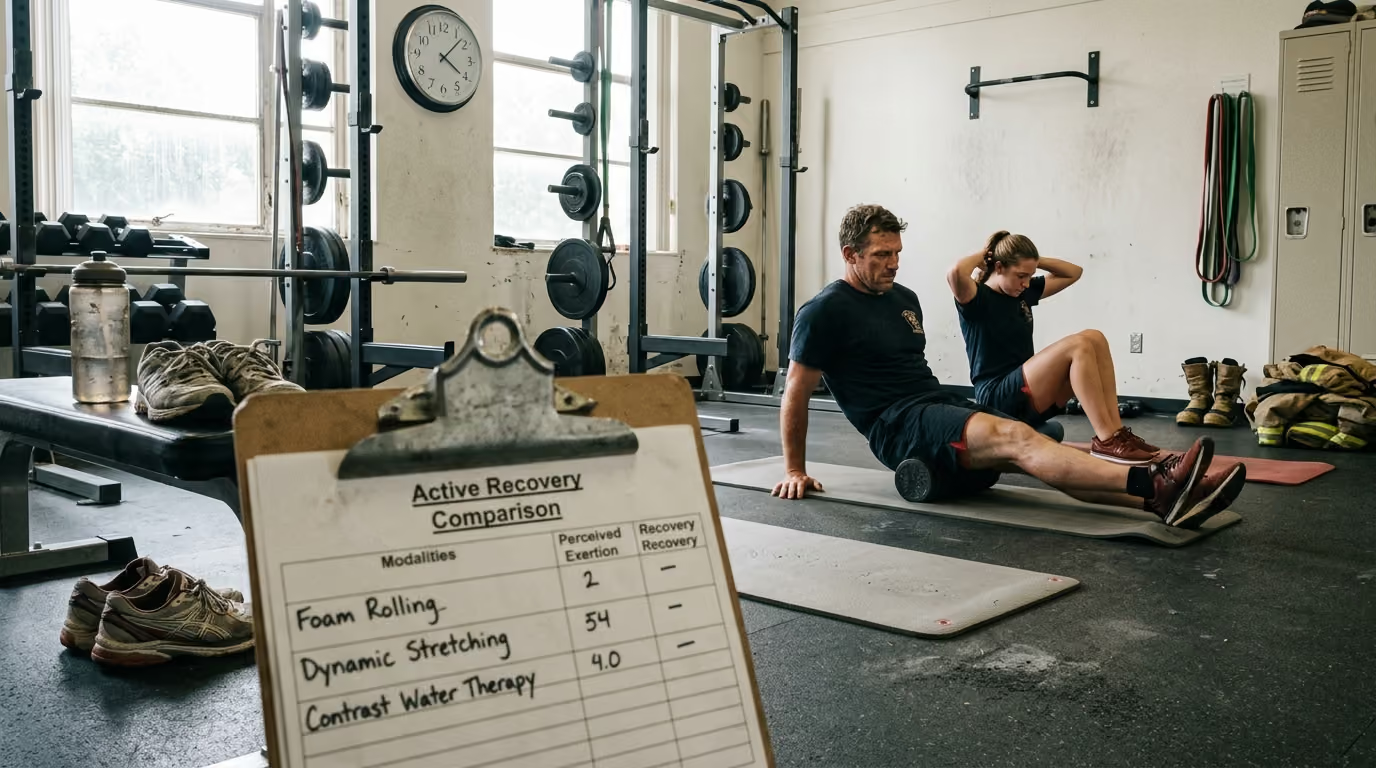

Many first responders rely on passive rest after intense shifts, but structured active recovery protocols restore operational readiness and reduce fatigue far better.





You finish a grueling shift or a heavy training session, your muscles are stiff, and you wonder whether an easy workout will loosen you up or just dig a deeper hole of fatigue. Many first responders search for ways to speed up recovery between calls and shifts, often wondering whether active movement, passive rest, stretching, or massage works best. This guide provides a definitive comparison of recovery modalities to help you match the right method to your soreness, fatigue levels, and operational demands.
Active recovery is a decision process rather than a single fixed routine. Low-intensity movement helps reduce mild, bilateral muscle soreness and temporary joint stiffness without adding neurological fatigue. However, active recovery cannot replace sleep or repair structural tissue damage. When fatigue is systemic, sleep debt is severe, or acute joint pain appears, passive rest, targeted sleep protection, and clinical evaluation must take precedence over extra exercise.
Scientific literature distinguishes between physiological recovery and operational recovery. Physiological recovery involves restoring muscular energy stores, reducing inflammation, and returning tissues to baseline function after mechanical or thermal strain. Operational recovery involves restoring reaction time, cognitive clarity, emotional regulation, and physical readiness for unpredictable calls.
Research from sports science consensus statements defines active recovery as low- to moderate-intensity physical activity performed after strenuous exertion. Passive recovery includes total rest, sleep, and external interventions such as massage, cold water immersion, or heat therapy. Evidence shows that active recovery offers clear but specific benefits. A systematic review published in the Strength and Conditioning Journal established that active recovery protocols can reduce subjective soreness and improve temporary range of motion across various movements.
A comprehensive network meta-analysis examining post-exercise recovery strategies found that active recovery ranked favorably for short-term restoration of explosive muscular performance. The same meta-analysis revealed that massage provided immediate soreness relief, while cold water immersion showed favorable outcomes for reducing delayed-onset muscle soreness and markers like creatine kinase. The research also noted that the physiological differences between active recovery and passive rest diminish significantly after 48 hours. Natural biological repair processes take over as the primary driver of tissue normalization.
Evidence evaluating post-exercise stretching shows distinct limitations. A systematic review and meta-analysis published in the Journal of Sports Sciences found that post-exercise stretching was no more effective than passive rest for reducing soreness or restoring muscular strength. Stretching did not accelerate the clearance of muscle damage markers or improve subsequent exercise output. While stretching can provide temporary sensory relief and promote relaxation, the evidence does not support it as a tool for accelerated tissue healing.
Research on self-myofascial release, including foam rolling and massage guns, demonstrates consistent short-term changes in range of motion. Meta-analyses demonstrate an acute range-of-motion improvement with foam rolling without corresponding drops in muscular power. However, long-term studies show uncertain effects on athletic performance, injury prevention, and accelerated structural repair.
Understanding these scientific findings helps first responders select recovery tools based on objective physiological outcomes rather than marketing trends.
Recovery in emergency services differs fundamentally from recovery in civilian athletic environments. First responders operate under unpredictable schedules, disrupted circadian rhythms, thermal extremes, and substantial physical loads. Firefighters carry heavy gear in extreme temperatures, while police officers wear duty belts that alter hip and lumbar mechanics during long driving shifts. Paramedics and emergency medical technicians perform heavy lifts in confined spaces under acute cognitive pressure.
A systematic review on work-related fatigue in emergency responders identified sleep deficiency, shift rotation, and inadequate rest periods as major drivers of occupational fatigue. The study found that chronic fatigue directly degrades cognitive processing, situational awareness, motor coordination, and safety-compromising behaviors. A broader occupational review by the Centers for Disease Control and Prevention confirmed that poor sleep and extended working hours significantly increase injury rates and chronic health risks across emergency services.
Duty-related fatigue is rarely just localized muscular tiredness. It is a systemic neurological and metabolic state driven by sympathetic nervous system activation, elevated core body temperature, and cumulative sleep debt. Attempting to perform active recovery workouts while suffering from severe sleep deprivation can backfire. Adding physical volume to an exhausted nervous system elevates cardiovascular strain and impairs the immune system.
Occupational recovery requires responders to separate muscular stiffness from systemic exhaustion. When a firefighter exits a multi-alarm structure fire, the priority is active cooling, aggressive rehydration, metabolic refueling, and neurological down-regulation. Performing low-intensity cycling or running under such conditions would only compound thermal and cardiovascular stress. Conversely, after a shift spent mostly in a patrol vehicle, low-intensity movement can restore circulation and alleviate positional hip and spinal stiffness.
Responders must also balance the demands of rotating shift schedules. Shifting between day and night tours creates circadian misalignment that disrupts hormone production and natural cellular repair. Understanding how shift-work sleep disruptions compound fatigue is essential for programming recovery. When sleep debt is high, extra training sessions masquerading as recovery will impair operational readiness.
Active recovery involves submaximal, steady movement performed at an easy cardiovascular pace. Activities include light walking, easy stationary cycling, flat water rowing, or relaxed swimming. The mechanical pumping action of contracting muscles increases local blood circulation without inducing further structural micro-trauma.
This increased blood flow assists in clearing metabolic byproducts, delivering oxygenated blood, and maintaining joint lubrication. Active recovery is most effective when you experience mild, diffuse muscle soreness after structured strength work or physically demanding duties. It provides psychological benefits by promoting parasympathetic tone when performed at a conversational pace.
The primary limitation of active recovery is intensity creep. Responders often push easy recovery sessions into moderate conditioning workouts. A recovery session that raises heart rates into high aerobic zones increases systemic stress and depletes remaining glycogen stores. To remain restorative, the work must stay light enough that you can speak in complete sentences without gasping.
Prescription parameters for active recovery:
Passive rest involves complete physical disengagement from structured exercise, prioritizing sleep, quiet relaxation, and minimal metabolic expenditure. While modern fitness culture often stigmatizes total rest, passive recovery remains the most potent biological restorative available.
During deep slow-wave sleep, the body releases growth hormone, repairs micro-tears in skeletal muscle, and clears neurotoxic waste from the brain through the glymphatic system. Inadequate sleep diminishes executive function, slows visual reaction time, and blunts immune response. For a first responder navigating back-to-back night shifts, protected sleep is vastly superior to any physical recovery modality.
Passive rest is indicated when fatigue is systemic, cognitive sharpness is degraded, or general physical illness is present. It is also required when a responder shows signs of overreaching, including persistent resting tachycardia, mood volatility, or lingering joint inflammation.
Maximizing passive rest requires deliberate sleep hygiene and protected sleep windows. Utilizing a structured shift sleep plan helps emergency personnel protect their sleep periods from household noise, light exposure, and operational interruptions.
Mobility training involves active, controlled movements designed to take joints through their full usable range of motion under muscular control. It differs from passive flexibility by focusing on motor control, end-range strength, and joint capsule health rather than tissue elongation.
Mobility work is ideal for addressing the occupational restrictions common in emergency services. Long hours wearing heavy body armor restrict thoracic spine extension and rotation. Prolonged sitting in vehicles shortens hip flexors, while heavy boots reduce ankle dorsiflexion. Mobility drills improve fluid dynamics within joint capsules and restore functional movement patterns without creating tissue fatigue.
Mobility training must be symptom-guided and controlled. Forcing a joint into painful ranges can irritate sensitive bursae, tendons, or nerve roots. Mobility drills should focus on smooth, fluid rotations and positional stability.
Key mobility targets for first responders:
Stretching involves lengthening muscle-tendon units to improve temporary tolerance to stretch or increase resting muscle length. Dynamic stretching uses momentum and controlled movement through full ranges, while static stretching holds a lengthened position for an extended duration.
Systematic reviews show that static stretching performed after workouts does not accelerate recovery, reduce muscle soreness, or speed up strength restoration. However, static stretching can down-regulate the central nervous system after high-stress calls by activating parasympathetic pathways through slow, deep diaphragmatic breathing. Dynamic stretching is exceptionally valuable during pre-shift preparation to warm up joints and prepare neuromuscular pathways for emergency calls.
Stretching should not be applied to acute muscle strains, joint sprains, or nerve entrapments. Aggressively stretching a strained muscle can worsen micro-tearing and delay healing. Responders should view stretching as a tool for temporary relaxation and long-term flexibility maintenance rather than an acute recovery accelerator.
Massage therapy and self-myofascial release, including foam rolling and percussive therapy, apply mechanical pressure to skin, fascia, and underlying muscular layers. These techniques alter neural tone, reduce perceived muscle tension, and modulate pain sensation through mechanoreceptor stimulation.
Meta-analyses confirm that massage and foam rolling reliably reduce perceived muscle soreness and improve short-term range of motion without impairing muscular power. The pressure applied temporarily alters the sensitivity of pain receptors and stimulates local blood flow. This makes soft-tissue work an excellent modality when preparing for a shift with tight, stiff muscles or when winding down before sleep.
However, foam rolling does not break down scar tissue, lengthen fascia permanently, or repair damaged muscle fibers. Responders must avoid applying heavy mechanical pressure to bony prominences, swollen joints, acute bruises, or inflamed tendons. Soft-tissue work should provide sensory relief, not cause bruising or guarding.
Thermal recovery involves altering tissue temperature through cold water immersion, ice packs, saunas, hot baths, or contrast therapy. Cold water immersion constricts blood vessels, blunts local inflammation, and reduces subjective muscle soreness after high-intensity bouts. Heat therapy promotes vasodilation, increases tissue compliance, and facilitates systemic relaxation.
Cold water immersion can help restore short-term muscular performance when back-to-back operational events occur within 24 to 48 hours. However, regular use of post-exercise cold immersion can blunt muscular hypertrophy and strength adaptations by dampening natural cellular signaling pathways. Cold immersion must never be applied to a responder suffering from hypothermia, shock, or severe cardiovascular instability.
Heat applications, such as saunas or hot showers, are excellent for soothing chronic stiffness and promoting sleep on off-duty days. However, heat modalities must be avoided immediately following structural firefighting, wildland deployment, or any incident involving heat exhaustion or dehydration. In those situations, active cooling is the only safe thermal intervention.
To select the most effective recovery strategy, first responders should follow a two-step decision process based on symptom classification and operational time horizons.
Before choosing a recovery modality, categorize your primary physical state:
Once you understand your physiological state, apply recovery interventions based on available time:
Focus on down-regulating the nervous system and preparing for immediate tasks. Avoid prolonged static stretching or exhausting conditioning. Use five minutes of box breathing, perform light joint mobility drills, and consume water with electrolytes.
Emphasize metabolic restoration and cellular recovery. Consume a balanced meal with quality protein and complex carbohydrates. If physical stiffness is high but systemic energy is stable, perform a 15-minute easy walk. If working a night shift, use this window for dark, quiet, protected sleep.
Focus on normalizing systemic physiology. Prioritize an extended sleep window of seven to nine hours. Include a 20-minute low-intensity spin on a stationary bike, followed by gentle thoracic and hip mobility work. Keep all physical work well below fatigue thresholds.
Address accumulated operational fatigue and maintain physical capability. Integrate structured aerobic base training, dedicated mobility routines, and targeted strength maintenance. When chronic wear and tear accumulates, explore minimum effective dose training strategies to maintain duty readiness without creating excessive residual fatigue.
A firefighter completes heavy stair climbs and hose-advancement drills on shift, developing significant quad and glute soreness 24 hours later. The responder has normal joint range of motion, no focal knee pain, and no swelling.
The optimal protocol is 20 minutes of easy spinning on an upright stationary bike at a light resistance, maintaining a heart rate below 120 beats per minute. This should be followed by five minutes of half-kneeling hip flexor mobility and ankle dorsiflexion drills. Aggressive heavy lifting or high-intensity interval training should be avoided until soreness abates.
An emergency medical technician finishes an extended shift with high call volume, interrupted sleep, and heavy patient lifts. The clinician feels mentally drained, unfocused, and physically sluggish, but has no focal muscular injuries.
The responder must prioritize passive recovery and sleep above all physical exercise. Attempting an active recovery run or gym workout will add systemic strain to an already exhausted central nervous system. The individual should consume a nutrient-dense meal, hydrate, and complete a dedicated sleep block in a cool, dark room. Gentle stretching or mobility can be performed later in the day if physical stiffness impairs comfort.
A patrol officer feels a sudden, sharp twinge in the lumbar spine while lifting heavy equipment out of a patrol vehicle trunk. The pain is unilateral, sharp with flexion, and does not improve with walking.
This is an acute mechanical injury, not delayed-onset muscle soreness. The officer should not perform active recovery jogging, deep lumbar stretching, or aggressive foam rolling on the lower back. The correct action is to modify duty demands, avoid aggravating loaded movements, and report the incident for formal occupational medical assessment through specialized injury recovery pathways.
A wildland firefighter completes a 14-hour shift on the fireline in hot, dry conditions, carrying heavy packs and tools. The firefighter displays mild headache, flushed skin, elevated resting pulse, and total physical depletion.
Active recovery exercise is contraindicated in this scenario. The responder requires immediate passive cooling in the shade, removal of heavy gear, gradual rehydration with electrolyte solutions, and balanced food intake. Vital signs should be monitored to rule out heat illness. Physical recovery methods should be restricted to total rest until hydration, temperature, and cardiovascular baselines return to normal.
A SWAT officer notes increasing hip tightness and reduced ankle range of motion after days of tactical vehicle operations and range training in full kit. The officer feels physically alert and has no acute joint pain.
The appropriate method is targeted mobility training rather than passive rest or general cardio. The officer should perform ten minutes of multi-planar hip mobility, including 90-90 hip transitions, coupled with banded ankle mobilizations. Light foam rolling on the quads and adductors can serve as an adjunct to improve short-term movement comfort before the next training block.
First responders often fall into predictable traps when attempting to manage fatigue. Avoiding these common pitfalls ensures that recovery practices support long-term career longevity rather than accelerating burnout.
A primary pitfall is assuming that because a modality reduces perceived muscle soreness, the underlying tissue has completely healed. Massage, foam rolling, and cold water immersion alter pain perception via neural pathways. However, microscopic muscle damage, tendon strain, and reduced glycogen stores may persist. Returning prematurely to maximal lifting or sprinting based solely on reduced soreness increases the risk of acute muscle strains.
Responders often possess a driven mindset that makes slow, easy movement feel unproductive. This frequently causes low-intensity active recovery sessions to devolve into moderate-intensity aerobic or anaerobic conditioning.
A recovery session must never leave you feeling drained, breathing heavily, or muscularly exhausted. If you finish an active recovery session feeling worse than when you started, you have performed a training session, not a recovery protocol. When managing fluctuating shift readiness, applying autoregulation principles to training workload ensures that session intensity matches your daily physiological state.
Relying on daily foam rolling, massage guns, or pain-relieving rubs to get through a shift can mask underlying structural problems. If a specific muscle group or joint becomes excessively tight or painful after every shift, the issue is likely rooted in poor ergonomics, deficient baseline strength, or inadequate movement mechanics. Passive modalities provide temporary symptomatic relief, but they do not solve progressive load management problems.
Waking up early from a shortened sleep window to perform a recovery workout is physiologically counterproductive. No combination of cycling, mobility drills, stretching, or massage can offset the metabolic, endocrine, and neurological consequences of chronic sleep deprivation. Sleep remains the primary driver of physical and cognitive restoration.
While mild muscle soreness and generalized shift fatigue can be managed through self-directed recovery, certain symptoms demand immediate medical evaluation. First responders must recognize the boundary between normal post-exertional fatigue and conditions requiring clinical intervention.
Consult an occupational physician, physical therapist, or licensed healthcare provider if you experience:
Self-directed recovery methods must never be used to self-treat acute trauma, progressive neurological deficits, or suspected exertional illnesses like rhabdomyolysis.
Selecting the correct recovery method is about preserving duty capability, reducing injury risk, and protecting long-term health across a multi-decade emergency services career. When you match low-intensity active recovery, structured mobility, and protected sleep to your actual physiological state, you build physical resilience that withstands the unpredictable demands of the job.
Use this checklist to refine your recovery strategy over the next seven days:
Stay connected for research-led guidance on duty fitness, shift-work sleep, injury recovery, stress, nutrition and career longevity. Practical ideas for first responders who want to stay capable on the job, recover well and protect their health for the long run.



Read practical guidance on first responder fitness, recovery, sleep, nutrition and resilience for demanding work and a long, active career.
read the blog



