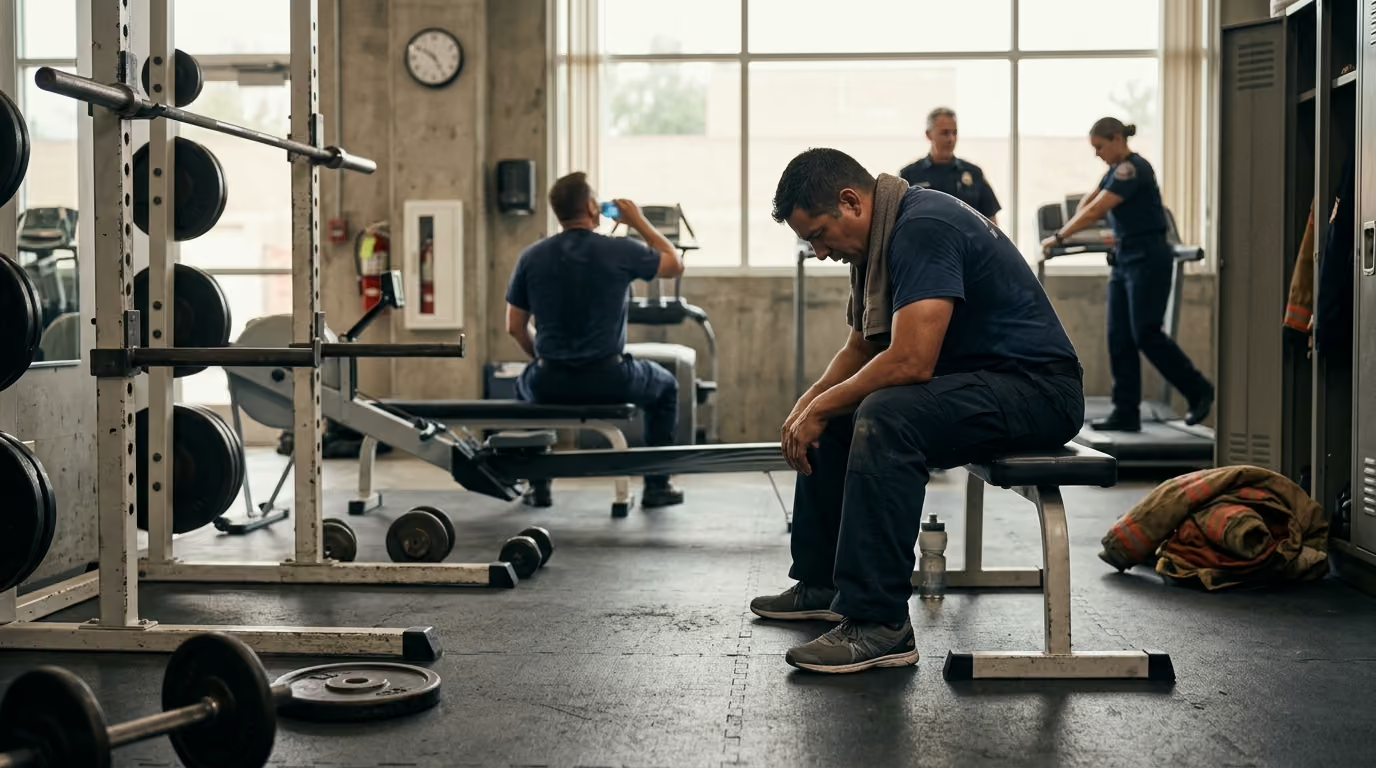

Five progressive training phases help tactical personnel build essential aerobic capacity, improve field recovery metrics, and sustain performance under extreme operational stress.





Many tactical fitness programs dismiss steady aerobic development as unnecessary or counterproductive for emergency personnel. The common belief suggests that because duty events are violent, brief, and chaotic, training should focus almost exclusively on heavy lifting and maximal glycolytic conditioning. This perspective misunderstands how the human body regenerates energy during repeated physical crises.
An underdeveloped aerobic system forces a responder to burn through finite anaerobic fuel stores during routine job tasks. When the aerobic engine lacks volume, heart rates remain elevated longer, thermal strain accumulates rapidly, and movement quality degrades across successive calls. Building a robust aerobic base provides the physiological foundation that allows strength, power, and mental focus to repeat across a thirty-year career.
Aerobic capacity determines how quickly your body clears metabolic byproducts, reloads cellular energy, and lowers cardiovascular strain between high-intensity operational demands. A high aerobic ceiling turns an all-out physical effort into a manageable submaximal task. This guide outlines how to evaluate, build, and maintain aerobic capability across demanding shift schedules and joint limitations without compromising raw strength.
Cardiorespiratory fitness is commonly quantified as maximal oxygen uptake, or VO2max. This metric represents the highest rate at which the body can transport and use oxygen during intense exercise. In occupational physiology, VO2max is not simply a score for long-distance runners. It serves as your working reserve capacity during emergency operations.
Reserve capacity is the buffer between the metabolic cost of a physical task and your physiological maximum. If advancing a charged hose line or dragging a victim requires an oxygen uptake of 35 mL per kilogram per minute, a responder with a ceiling of 40 mL per kilogram per minute works at nearly 88 percent of their maximum capacity. A responder with a ceiling of 50 mL per kilogram per minute performs the identical task at only 70 percent of capacity. The second worker retains substantial physiological reserve for unexpected threats, heavier gear, sudden thermal loads, or immediate secondary efforts.
Occupational research demonstrates that demanding emergency tasks require substantial aerobic output alongside sharp anaerobic spikes. Research examining structural firefighting operations recorded a mean oxygen consumption of approximately 41.5 mL per kilogram per minute. These operations generated peak blood lactate concentrations between 6 and 13.2 mmol per liter. High-intensity fireground work consumed an average of 85 percent of participants' VO2max, while general baseline operations required roughly 23 mL per kilogram per minute.
A standard benchmark across fire service research is 42 mL per kilogram per minute, which equals roughly 12 metabolic equivalents. Some occupational physiologists recommend monitoring targets between 45 and 46.5 mL per kilogram per minute to account for age-related decline and environmental heat. A United Kingdom fire service standard calculated this requirement by adding a 20 percent reserve buffer to a baseline operational cost of 35 mL per kilogram per minute. This calculation confirms that physical standards are designed to protect safety margins rather than measure athletic vanity.
Distinguishing between relative and absolute oxygen uptake is essential for tactical personnel. Relative VO2 is calculated per kilogram of total body mass, making it useful for evaluating body-weight movement such as running or unweighted stair climbing. Absolute VO2 is measured in total liters of oxygen consumed per minute, regardless of body weight. Absolute VO2 is critical during loaded emergency tasks because a responder must move external mass, including personal protective equipment, breathing apparatus, and carried gear.
A 2025 systematic review and meta-analysis confirmed that both relative and absolute cardiorespiratory fitness correlate strongly with occupational performance. Relative VO2max showed a strong correlation with task efficiency at r = -0.64. Absolute VO2max demonstrated an even stronger correlation at r = -0.75, showing that total oxygen delivery volume heavily influences heavy equipment handling and rescue speed.
Emergency response is fundamentally intermittent rather than steady-state. A patrol officer may sprint, wrestle a combative subject, and then stand for hours while writing reports under elevated sympathetic arousal. Firefighters perform repeated cycles of forcible entry, stair climbs, searches, and equipment carries, interspersed with brief resting intervals. These duty patterns create unique physiological profiles that traditional endurance training alone cannot solve.
True recovery between duty tasks is multidimensional. It involves distinct physiological processes operating on different biological timelines:
These recovery curves rarely align. A responder's heart rate and breathing can return to normal while their internal core body temperature remains dangerously elevated. Similarly, a paramedic might feel mentally calm after an intense extrication while their central nervous system and grip strength remain depressed.
Research by the United States Fire Administration found that recovering from a single 18-minute structural firefighting cycle can require 50 to 80 minutes for heart rate and core temperature to return to baseline. Studies evaluating 20-minute work cycles paired with 20 to 35 minutes of rest showed that core temperature and heart rate climbed faster during each subsequent work bout. Accumulated heat and vascular pooling impair cardiovascular efficiency on subsequent efforts even when rest intervals feel adequate.
Field studies show that a five-minute rest reduces peak heart rates compared to continuous work. However, repeated work cycles separated by short rests still produce higher cardiovascular strain than an isolated work bout. Short breaks provide necessary symptom relief, but they do not fully restore baseline physiology during prolonged emergency incidents.
Higher aerobic fitness directly accelerates between-bout recovery kinetics. Research demonstrates that firefighters with a VO2peak above 42 mL per kilogram per minute exhibit significantly faster heart rate recovery decay rates following intense exertion compared to less fit peers, even after adjusting for age and body mass index. Their bodies clear metabolites faster, utilize less glycogen for submaximal work, and return closer to homeostatic baselines during short operational pauses.
Systematic reviews also link higher cardiorespiratory capability to reduced occupational injury rates across emergency services. Better conditioned personnel preserve movement mechanics under fatigue, avoiding the lumbar compensation and compromised gait that cause acute musculoskeletal injuries.
Applying exercise physiology to first responders requires recognizing the harsh occupational environment. Laboratory research conducted in climate-controlled facilities on well-rested subjects does not reflect the daily realities of emergency work. Responders face constant disruptions that impair recovery, drive chronic systemic inflammation, and amplify cardiovascular stress.
Sleep disruption is the primary modifier of operational recovery. Irregular shifts, extended tours, and night calls disrupt natural circadian biology and suppress nighttime growth hormone release. When cumulative sleep debt rises, sympathetic tone stays elevated, resting heart rate climbs, and heart rate variability drops. Attempting hard cardiovascular conditioning on zero sleep often increases injury risk without creating a positive aerobic adaptation. Using a structured autoregulation framework for duty readiness helps personnel adjust training volume to their actual physiological recovery status rather than blindly following a rigid template.
Thermal stress and structural encapsulation severely impair cardiovascular efficiency. Personal protective gear, ballistic vests, and chemical suits trap metabolic heat and prevent sweat evaporation. As internal temperature rises, blood is shunted from working muscles to peripheral skin vessels to assist cooling. This process, known as cardiovascular drift, lowers stroke volume and drives heart rate progressively higher during moderate work.
Respiratory restriction adds another layer of operational friction. Breathing through a positive-pressure self-contained breathing apparatus or tactical respirator increases the physical work of breathing. The added respiratory muscle fatigue elevates perceived exertion and limits maximal oxygen delivery. A responder with poor aerobic capacity exhausts their respiratory muscles rapidly, leading to hyperventilation and early cylinder depletion.
Prolonged sedentary postures followed by sudden explosive outputs create severe cardiovascular strain. Paramedics and police officers frequently sit in vehicles for hours before immediately performing maximal physical efforts. This rapid transition spikes blood pressure and demands high anaerobic power without a warm-up. A strong aerobic foundation cushions this sudden cardiovascular shock by maintaining vascular elasticity and supporting faster circulatory adjustments.
Nutrition and hydration timing remain chronically unpredictable on shift. Emergency crews frequently miss planned meals, endure prolonged fasting during major scenes, or consume heavy meals right before high-priority dispatches. Implementing a practical shift nutrition framework helps maintain glycogen availability and fluid balance during extended operational calls.
Selecting an appropriate aerobic assessment depends on test accuracy, physical safety, equipment availability, and current joint health. The objective of testing is to establish a valid performance baseline and track progress over time. A valid assessment should never trigger an acute injury or compromise a responder's readiness for upcoming shifts.
A laboratory test using breath-by-breath gas analysis is the gold standard for determining VO2max and ventilatory thresholds. This assessment directly measures inhaled oxygen and exhaled carbon dioxide while recording continuous electrocardiography and blood pressure.
Laboratory testing is recommended when:
Laboratory testing requires specialized technicians, medical oversight, and expensive metabolic carts. It is rarely accessible for routine monthly or quarterly monitoring across entire departments.
Graded exercise protocols increase speed, incline, or mechanical resistance at standardized intervals until a target heart rate or maximal effort is reached. Treadmill protocols reflect walking, running, and loaded incline demands. Cycle ergometer tests provide a non-impact alternative that isolates cardiovascular capacity from foot-strike impact.
Cycle ergometry is ideal for individuals managing patellofemoral pain, plantar fasciitis, or lumbar disc pathology. However, cycling tests often yield VO2peak values 5 to 11 percent lower than treadmill testing due to localized quadriceps fatigue. Agencies utilizing the IAFF and IAFC wellness-fitness protocols often use submaximal treadmill testing and track recovery heart rates during a standardized cool-down to estimate cardiorespiratory fitness without requiring maximal exhaustion.
Standardized step tests, such as five-minute stepping protocols, offer a portable, low-cost screening tool. The responder steps onto a stable box at a fixed metronome cadence, and technicians measure the rate of heart rate recovery immediately following the bout.
Step tests require minimal equipment and can be performed inside fire stations or police precincts. However, tall boxes can provoke knee pain in personnel with existing joint issues, and differences in body mass or leg length can skew comparative scores. Step tests are best utilized for individual tracking over time rather than direct comparisons between different responders.
Field assessments evaluate cardiorespiratory stamina under task-specific conditions. These tests include timed 1.5-mile runs, multi-stage shuttle runs, continuous stair climbs in full gear, and weighted hose-drag circuits.
Field tests provide high motivational value and operational validity. However, they introduce variables that are difficult to control, including ambient temperature, humidity, surface traction, and pacing errors. When administering field tests, prioritize standardization of warm-ups, testing surfaces, and environmental conditions to collect meaningful data.
Tracking post-exercise recovery kinetics offers a reliable window into autonomic balance and cardiorespiratory health. You can embed simple recovery metrics into regular training sessions without performing exhausting maximal tests.
Useful operational recovery markers include:
Standardize the testing environment whenever tracking these markers. Pre-test caffeine intake, sleep duration, ambient room temperature, and preceding duty calls will affect autonomic recovery readings.
An evidence-based cardiovascular program should construct the underlying aerobic engine before demanding high-intensity, sport-specific power. Forcing high-intensity interval training onto a deconditioned or structurally damaged body leads to overuse injuries, elevated cortisol, and chronic fatigue. Progress gradually across five progressive phases.
The initial phase builds mitochondrial density, capillarization, stroke volume, and cardiac chamber compliance. Training in this zone occurs at conversational intensity, or Zone 2, where blood lactate remains below 2.0 mmol per liter. Utilizing low-impact modalities protects connective tissues and joints from excessive pounding.
Recommended modalities:
Protocol parameters:
Once a solid base is established, introduce sustained work near the first and second ventilatory thresholds. This work teaches the body to buffer hydrogen ions, clear lactate efficiently, and sustain steady paces under moderate discomfort.
Protocol parameters:
High-intensity interval training targets maximal cardiac output and elevates the VO2 ceiling. These sessions recruit high-threshold motor units and drive rapid central cardiovascular adaptations. Introduce this phase only when base conditioning and movement quality are solid.
Sample 4-week progression:
Adjust only one variable per week: increase total work repetitions, lengthen work intervals, or shorten rest periods. Never increase multiple variables simultaneously.
This phase bridges generic cardiovascular fitness and occupational demands. It trains the body to produce repeated mechanical force under accumulated metabolic fatigue and incomplete recovery.
Sample repeated-effort circuit structure:
The final phase develops task-specific stamina under equipment load, protective clothing, and controlled heat. It trains movement economy and mental composure when mechanical constraints and thermal buildup are present.
Guidelines for loaded conditioning:
To balance these conditioning blocks with duty fatigue, emergency crews can apply minimum effective dose training strategies to maintain high capability without accumulating deep neurological exhaustion.
Physical injuries and chronic joint wear are common across emergency services. Tactical personnel frequently carry knee degeneration, lumbar pathology, shoulder impingements, or ankle instability. An intelligent conditioning program modifies the mechanical vehicle without shutting down the internal engine.
The core rule of rehabilitation conditioning is simple: determine which physiological systems can be trained safely today, and work around local structural limitations. Complete rest leads to rapid cardiovascular detraining, weight gain, and reduced mental resilience.
Modify exercise selections to maintain strong cardiorespiratory stress while sparing irritated musculoskeletal structures:
Follow clear stop and go criteria to protect healing tissues during cardiovascular conditioning:
Well-intentioned first responders often make critical programming mistakes that undermine their conditioning and elevate injury risk. Identifying these operational pitfalls helps optimize your training time.
Achieving a 42 mL per kilogram per minute VO2max score ensures adequate aerobic reserve, but it does not guarantee operational capability. Job performance requires a blend of absolute strength, grip endurance, core stability, heat tolerance, and technical competence. A responder with high aerobic fitness will fail on the fireground or street if they lack the physical strength to drag an unconscious adult or force an entry door.
Many tactical athletes focus entirely on running times and body-weight calisthenics. Because emergency operations require managing substantial external loads, absolute aerobic power in liters per minute is often more predictive of task performance than body-weight relative scores. A 200-pound responder with a high absolute VO2 can often manipulate heavy equipment and manage external loads with less physiological strain than a 150-pound responder who runs faster unweighted.
Many tactical fitness programs rely on continuous, exhaustive high-intensity circuits that leave personnel lying on the floor. While occasional high-intensity training builds mental resilience, doing it year-round creates chronic sympathetic overdrive, elevates cortisol, and neglects the base mitochondrial development needed for long-term health. Build your base with steady Zone 2 work and reserve all-out interval work for structured blocks.
Routinely slashing rest intervals during training circuits does not replicate operational reality. While emergency scenes require operating through fatigue, constantly training with incomplete rest degrades movement mechanics and increases injury risk. Use generous rest periods when developing maximal strength and power, and apply compressed rest intervals strategically in specific conditioning phases.
Heart rate frequently returns to baseline while internal core temperature, autonomic balance, and neuromuscular function remain significantly impaired. Do not assume that breathing easily means your body is fully restored. Allow adequate physiological recovery between demanding duty calls and hard training sessions.
Completely shutting down physical activity when managing a localized musculoskeletal injury accelerates cardiovascular deconditioning. Use single-leg cycling, pool workouts, upper-body ergometers, or incline walking to maintain cardiorespiratory fitness while your injury heals.
The following practical case models illustrate how to structure cardiovascular training around real-world tactical constraints.
For personnel balancing high duty stress with unpredictable shift rotations, integrating structured post-incident recovery skills helps clear residual adrenaline and accelerate baseline physiological recovery. Responders looking to optimize their schedule can also consult our guide on structuring training sessions around rotating shift work to protect their central nervous system.
Aerobic conditioning is safe and beneficial for most first responders, but high cardiovascular strain carries real physiological risks. Emergency personnel experience high rates of occupational cardiovascular events. Knowing when to stop training and seek medical evaluation is essential.
Seek immediate emergency medical evaluation (call 911 or report to an emergency department) if you experience:
Schedule a non-emergency consultation with an occupational physician, cardiologist, or licensed physical therapist if you notice:
Occupational medical clearance, including formal cardiopulmonary exercise testing and coronary artery calcium scoring, is highly recommended for first responders over age 40 or those with risk factors such as smoking, high blood pressure, elevated cholesterol, or a family history of premature heart disease.
Building a dependable aerobic engine ensures that when an unexpected emergency demands your maximum effort, your body possesses the physiological reserve to perform safely, recover rapidly, and protect your long-term health throughout your career.
Stay connected for research-led guidance on duty fitness, shift-work sleep, injury recovery, stress, nutrition and career longevity. Practical ideas for first responders who want to stay capable on the job, recover well and protect their health for the long run.



Read practical guidance on first responder fitness, recovery, sleep, nutrition and resilience for demanding work and a long, active career.
read the blog



