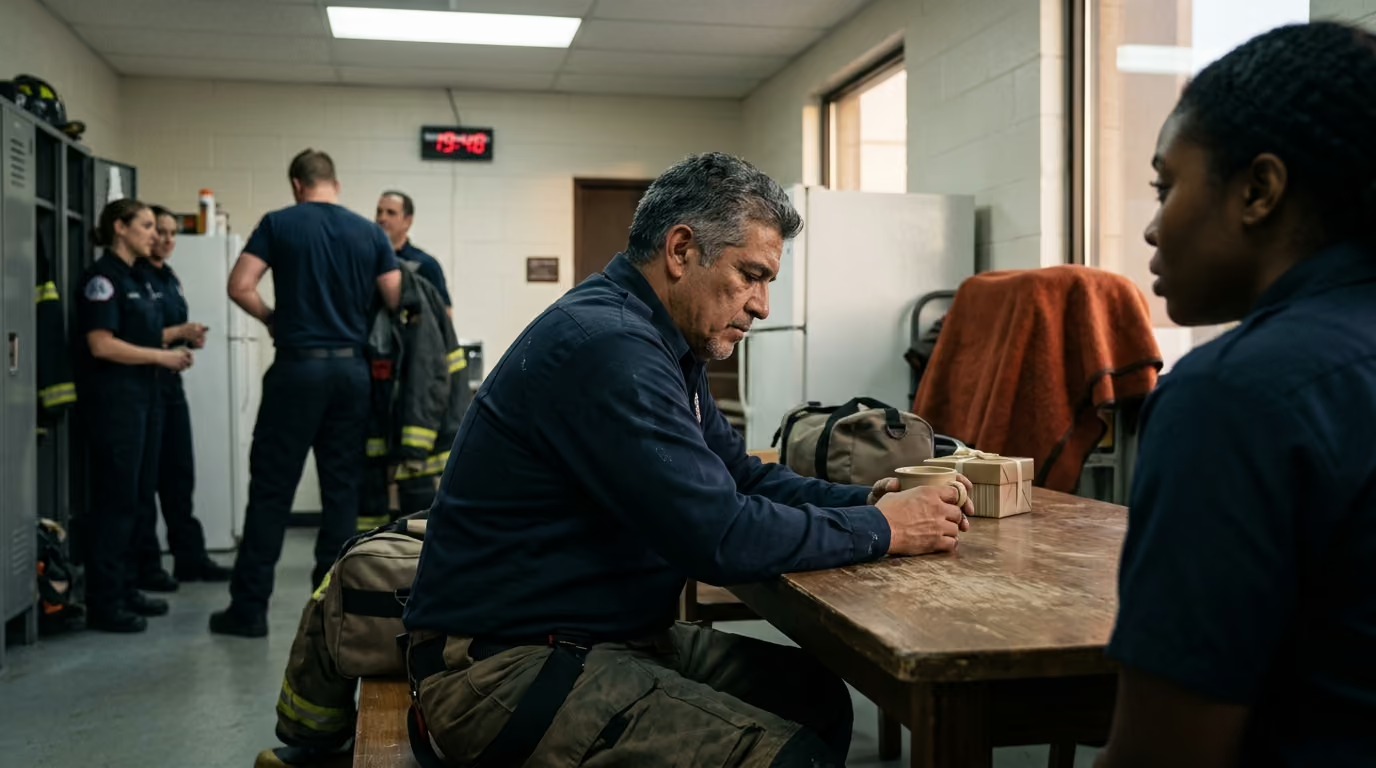

Accurate differentiation between burnout, moral injury, and PTSD empowers first responders to address cumulative occupational stress and navigate retirement transitions successfully.





If you or someone you know is experiencing severe distress, acute mental health crisis, or thoughts of self-harm, immediate help is available. Call 911 for immediate emergency response. Dial 988 and press 1 to reach the Veterans and Military Crisis Line, or text 838255. You can also text HOME to 741741 to connect with the Crisis Text Line. For first responders managing distress at home, collaborate with a family member, trusted peer, or licensed clinician to store firearms, medications, and other lethal means safely outside immediate reach during difficult periods.
Many people assume that leaving emergency services will automatically cure chronic occupational distress. Walking away from the job often does the opposite. Leaving active duty frequently unmasks unresolved trauma, strips away personal identity, and replaces high-tempo camaraderie with acute isolation.
Emergency-service distress is frequently grouped under the generic label of burnout. Treating burnout, compassion fatigue, secondary traumatic stress, moral injury, and retirement adjustment as the exact same condition leads to poor decisions. Each challenge develops from distinct operational mechanisms, produces unique psychological reactions, and requires a tailored approach to recovery.
Burnout is an occupational syndrome caused by chronic workplace stress that has not been successfully managed. It is defined by exhaustion, cynicism, and reduced professional efficacy.
Moral injury stems from events that violate deeply held ethical values or involve institutional betrayal. It produces guilt, shame, and loss of trust rather than pure exhaustion.
Retirement removes daily operational pressures, but it also strips away structured routines, mission, status, and crew camaraderie.
Recovery requires identifying the root cause of your distress rather than applying generic wellness advice. You must rebuild daily physical routines, diversify your personal identity beyond the uniform, and seek clinical care when symptoms persist.
Clinical and occupational research confirms that distress across emergency services is multifaceted and cannot be captured by a single diagnosis. The World Health Organization classifies burnout in the International Classification of Diseases as an occupational phenomenon rather than a medical condition. It is characterized by energy depletion, increased mental distance or negativism toward one's job, and feelings of reduced professional capability.
Compassion fatigue and secondary traumatic stress involve indirect trauma exposure and emotional depletion from repeated exposure to suffering. A systematic review of healthcare clinicians found burnout in 76 percent and compassion fatigue in 52 percent of participants, showing how widespread these reactions are in caregiving professions. Research on secondary traumatization in emergency personnel shows clinical-level secondary traumatic stress in 4 to 13 percent of studied cohorts.
Moral injury represents a profound psychological and spiritual rupture resulting from acts of commission, omission, or institutional betrayal that violate core moral beliefs. A systematic review covering over 14,000 healthcare personnel and emergency responders revealed reported moral injury prevalence rates ranging widely from 4.1 percent to 69.44 percent across different operational settings.
Retirement transition literature indicates that psychological distress does not vanish when service ends. A meta-analysis of former first responders identified a pooled point prevalence of post-traumatic stress disorder of 15.4 percent across general-exposure cohorts. Transition studies also show that between 50 and 70 percent of emergency-service retirees leave service due to physical injuries or psychological trauma. This turns what should be a planned transition into an abrupt, involuntary crisis.
Clear definitions protect first responders from improper self-assessment and ineffective interventions. When an exhausted responder misidentifies moral injury as simple fatigue, taking a short vacation will not resolve the underlying guilt or institutional betrayal.
Burnout develops gradually over months or years of operational imbalance. The World Health Organization defines burnout through three specific dimensions:
Burnout applies specifically to the occupational context. It should not be used to describe difficulties in personal relationships or general life domains outside work. A firefighter or paramedic can experience severe burnout without meeting the diagnostic criteria for a mood disorder or post-traumatic stress disorder.
Compassion fatigue is the progressive depletion of emotional energy in individuals who care for traumatized people. It often presents alongside secondary traumatic stress.
Secondary traumatic stress develops when an individual experiences trauma symptoms after indirect exposure to someone else's severe trauma. A 911 dispatcher listening to a catastrophic incident or an emergency medical technician treating severe pediatric injuries can develop intrusive imagery, hyperarousal, and emotional avoidance without being the direct victim of the physical hazard.
Compassion fatigue does not indicate that a responder is heartless or weak. Emotional numbing is an involuntary biological shield that the central nervous system deploys after repeated exposure to suffering without adequate physical recovery.
Moral injury occurs when a responder experiences, witnesses, fails to prevent, or learns about actions that severely transgress core moral and ethical beliefs. In first responder environments, moral injury often stems from impossible operational choices, systemic failures, or perceived institutional betrayal.
Common drivers of moral injury in emergency services include:
The hallmark emotions of moral injury are guilt, shame, profound anger, and spiritual disorientation. Unlike post-traumatic stress disorder, which is primarily driven by life threat, fear, and physiological hyperarousal, moral injury centers on grief, ethical violation, and shattered trust.
Post-traumatic stress disorder is a diagnosed psychiatric condition resulting from direct or indirect exposure to actual or threatened death, serious injury, or sexual violence. It requires specific diagnostic criteria across four symptom clusters: intrusion, avoidance, negative alterations in mood and cognition, and altered arousal or reactivity.
A first responder can have moral injury without meeting criteria for post-traumatic stress disorder. A responder can also develop post-traumatic stress disorder without experiencing moral conflict. Both conditions frequently co-occur following catastrophic incidents.
Retirement adjustment is a normal, non-pathological developmental life transition. It involves navigating the loss of daily operational structure, shifting social circles, renegotiating home roles, and establishing a new identity outside the uniform.
Distress during retirement does not automatically mean a retiree has a clinical mental disorder. The abrupt change from high-stakes duty to unstructured civilian life naturally creates feelings of uncertainty, boredom, and temporary grief.
Occupational distress in emergency services is rooted in cumulative biological strain. The combination of shift work, chronic sleep disruption, heavy physical loads, and repeated sympathetic nervous system activation alters systemic baseline physiology over a multi-decade career.
Circadian rhythm disruption damages emotional regulation. Emergency personnel working 24-hour shifts or rotating day-night schedules frequently build massive sleep debts. Chronic sleep fragmentation suppresses prefrontal cortex activity, impairing executive function, moral reasoning, and emotional regulation. When executive control is compromised, the amygdala becomes hyper-reactive, increasing susceptibility to irritability, emotional detachment, and panic.
First responders can review structured protocols like building a shift-specific sleep plan to protect circadian rhythms during active duty. Prolonged nocturnal light exposure and sudden wake-ups also drive cardiovascular wear. You can read about how nighttime light exposure affects cardiovascular health to mitigate physiological strain across long shifts.
Repeated exposure to critical calls triggers surges of epinephrine and cortisol. Over time, the hypothalamic-pituitary-adrenal axis can become dysregulated, leading to allostatic overload. This physical wear leaves responders with little physiological reserve to process workplace friction, trauma calls, or ethical dilemmas.
Physically depleted responders are more likely to experience compassion fatigue and moral injury. When biological recovery is chronically absent, empathy feels like an unaffordable metabolic expense. The nervous system defaults to cynicism and detachment as survival adaptations.
Integrating short tactical down-regulation techniques during shifts helps restore nervous system balance. Responders can utilize active post-incident transition strategies to discharge residual sympathetic activation between calls.
To address psychological strain in emergency personnel, evaluate four interacting operational domains. Focusing on only one domain, such as personal resilience, ignores systemic operational drivers.
This domain covers external physical and organizational demands:
Individual mindfulness techniques cannot correct severe staffing deficits or unsafe working conditions. Systemic exposure must be acknowledged as a primary driver of occupational burnout.
This domain reflects how the responder processes cumulative demands and critical incidents:
These psychological responses vary across individuals exposed to the exact same incident based on sleep status, trauma history, and personal interpretation of the event.
Emergency services rely on deep crew bonds and strong occupational identity. This domain encompasses:
A strong social fabric buffers operational stress. When departmental trust breaks down or toxic leadership takes over, the risk of moral injury and burnout multiplies rapidly.
This domain concerns changes in status, career stage, and employment:
Life transitions alter every social and psychological anchor an emergency worker possesses. Failing to plan for this domain leads to severe re-entry crises following retirement.
Examining realistic case patterns clarifies how burnout, compassion fatigue, moral injury, and retirement adjustment present in the field. The following illustrative models reflect common career dynamics without presenting fictionalized outcomes.
An experienced paramedic with fifteen years of service has not experienced a single catastrophic mass-casualty incident recently. However, sustained departmental understaffing has forced mandatory 36-hour rotations for six months. The paramedic sleeps poorly, feels persistent cynicism toward low-acuity callers, and feels detached from administrative supervisors.
This pattern demonstrates classic occupational burnout. The dominant drivers are workload, schedule instability, and systemic fatigue. The primary interventions involve schedule restructuring, sleep optimization, setting firm work boundaries, and confidential counseling to address cynicism before it leads to clinical depression.
A veteran emergency communications dispatcher handles multiple calls involving pediatric cardiac arrests, severe motor vehicle collisions, and active violence over several weeks. The dispatcher notices a growing inability to feel empathy for callers, experiences emotional numbness at home with family, and suffers from intrusive audio memories of callers screaming.
This case reflects compassion fatigue co-occurring with secondary traumatic stress. The dispatcher is absorbing indirect trauma through repeated audio exposure without adequate cognitive recovery intervals. Recovery requires trauma-informed clinical care, protected time off, structured debriefing with trained peers, and practical exposure-reduction strategies within the dispatch center.
A fire captain responds to a residential fire where water supply failures and inadequate mutual aid staffing delay interior search operations, resulting in a civilian fatality. The captain followed department policy and operational protocols correctly, but feels intense guilt, severe anger toward city leadership for budget cuts, and a broken sense of professional integrity.
This pattern represents moral injury. The central struggle is not fear-based trauma, but moral pain driven by an inability to fulfill a core duty due to systemic constraints. Traditional prolonged exposure therapy alone may fail if it does not address moral repair, spiritual distress, institutional betrayal, and the restoration of ethical meaning.
A police lieutenant retires voluntarily after twenty-eight years of continuous service with an honorable record and no active physical disability. Within four months of retirement, the former officer experiences severe boredom, irritability, disrupted sleep routines, and a loss of personal value. The retiree misses the daily tactical purpose, shared humor, and direct responsibility of leading a shift.
This profile illustrates ordinary retirement adjustment complicated by identity loss. The individual is not clinically ill, but is experiencing grief over the loss of a primary social identity. The solution involves building daily structured routines, identifying new non-law-enforcement goals, engaging in community mentorship, and connecting with retired peer groups.
A firefighter sustains a complex spinal injury and secondary trauma during a structural collapse, forcing an immediate, involuntary medical retirement at age thirty-five. The firefighter faces financial uncertainty, loss of physical capability, sudden separation from the station crew, and resentment toward the department's workers' compensation process.
This scenario represents an acute transition crisis that combines physical disability, involuntary career loss, occupational trauma, and institutional friction. Recovery requires an integrated approach. The retiree needs physical rehabilitation, financial and legal transition planning, specialized psychological counseling, and structured support from veteran alumni networks.
A former paramedic retires in seemingly great mental and physical condition, spending the first three months enjoying leisure and travel. By month six, the individual develops heavy nighttime alcohol use, severe nightmares, emotional isolation, and intrusive memories of calls from a decade earlier.
This pattern demonstrates delayed trauma emergence. During active duty, constant operational tempo, hyper-vigilance, and shift routines effectively suppressed underlying psychological distress. Once external demands disappeared, unresolved traumatic memories surfaced without the protective structure of the workplace. This pattern requires comprehensive clinical assessment for post-traumatic stress and substance use disorders.
Retirement from emergency services is a complex identity transition, not a single calendar date. A structured, phased transition framework reduces psychological and social disruption.
Planning should start several years before the planned retirement date. First responders must prepare mentally, socially, and physically for life outside emergency services:
The exit phase marks the formal conclusion of active emergency response duties:
The initial months of retirement often mimic a vacation, but this phase requires deliberate lifestyle stabilization:
This phase requires building a grounded identity outside the emergency services framework:
The final phase involves integrating a career of public service into a broader life story:
Managing occupational distress and career transitions requires aligned efforts across individual responders, family networks, and public safety organizations.
First responders must take active ownership of their daily physical and psychological health:
Families experience significant stress during active duty and the subsequent retirement transition:
Public safety agencies must build systemic structures that protect personnel from recruitment through retirement:
First responders often encounter unhelpful recovery advice rooted in public safety culture myths. Avoiding these common traps protects your long-term health and relationships.
Believing that walking away from the station will instantly erase trauma memories, insomnia, and hyper-vigilance is a dangerous mistake. Unstructured time often allows buried distress to emerge. Plan your post-service routines and support systems before your final shift.
Tiredness after an exceptionally busy 48-hour shift is acute physical fatigue, not necessarily clinical burnout. Burnout is a chronic, multi-dimensional state involving cynicism, exhaustion, and reduced professional efficacy. Ensure you differentiate acute sleep debt from systemic, unmanaged workplace depletion.
Trained peer supporters offer invaluable camaraderie, shared language, and early intervention. However, peer supporters are not licensed therapists, physicians, or addiction specialists. Peer support should serve as a trusted bridge to professional medical and psychiatric care, not as a standalone solution for complex conditions.
Treating moral injury solely with fear-focused desensitization protocols can worsen feelings of guilt, shame, and betrayal. Moral injury requires therapeutic approaches that focus on values clarification, moral repair, grief processing, self-forgiveness, and rebuilding trust.
An involuntary medical retirement caused by physical disability or severe post-traumatic stress triggers much higher rates of grief, anger, and financial stress than a planned exit. Agencies and peer teams must provide specialized, intensive transition assistance for responders forced off the job early.
When distress, shame, or depression mounts, first responders often pull away from family, friends, and trusted crew members. Isolation accelerates emotional decline.
If you are struggling with severe depression, trauma, or urges to harm yourself, work collaboratively with your family, a trusted friend, or your clinician to safely remove and store lethal means, including personal firearms and medications, outside your immediate living space. Reducing immediate access to lethal means during severe crises saves lives.
Self-care habits and peer support are foundational, but they cannot replace licensed clinical treatment when occupational distress escalates into a clinical disorder.
Seek an evaluation from a licensed mental health professional, such as a clinical psychologist, psychiatrist, or licensed professional counselor, when you experience:
When seeking clinical care, choose a licensed provider who specializes in first responder populations and understands public safety operational realities. Clinicians unfamiliar with the fire service, emergency medical services, or law enforcement may misinterpret dark humor, operational trauma exposures, or tactical vigilance.
Culturally competent clinicians can deliver evidence-based treatments tailored to first responders, including:
Sustaining a successful career across decades of emergency service requires viewing your health through the lens of long-term capability. Tactical readiness on duty is inseparable from your ability to recover off duty and transition successfully into civilian life.
Protecting your physical health, emotional regulation, and personal identity across your working career ensures that your service remains an honorable chapter of your life rather than the only thing that defines you.
Stay connected for research-led guidance on duty fitness, shift-work sleep, injury recovery, stress, nutrition and career longevity. Practical ideas for first responders who want to stay capable on the job, recover well and protect their health for the long run.



Read practical guidance on first responder fitness, recovery, sleep, nutrition and resilience for demanding work and a long, active career.
read the blog



