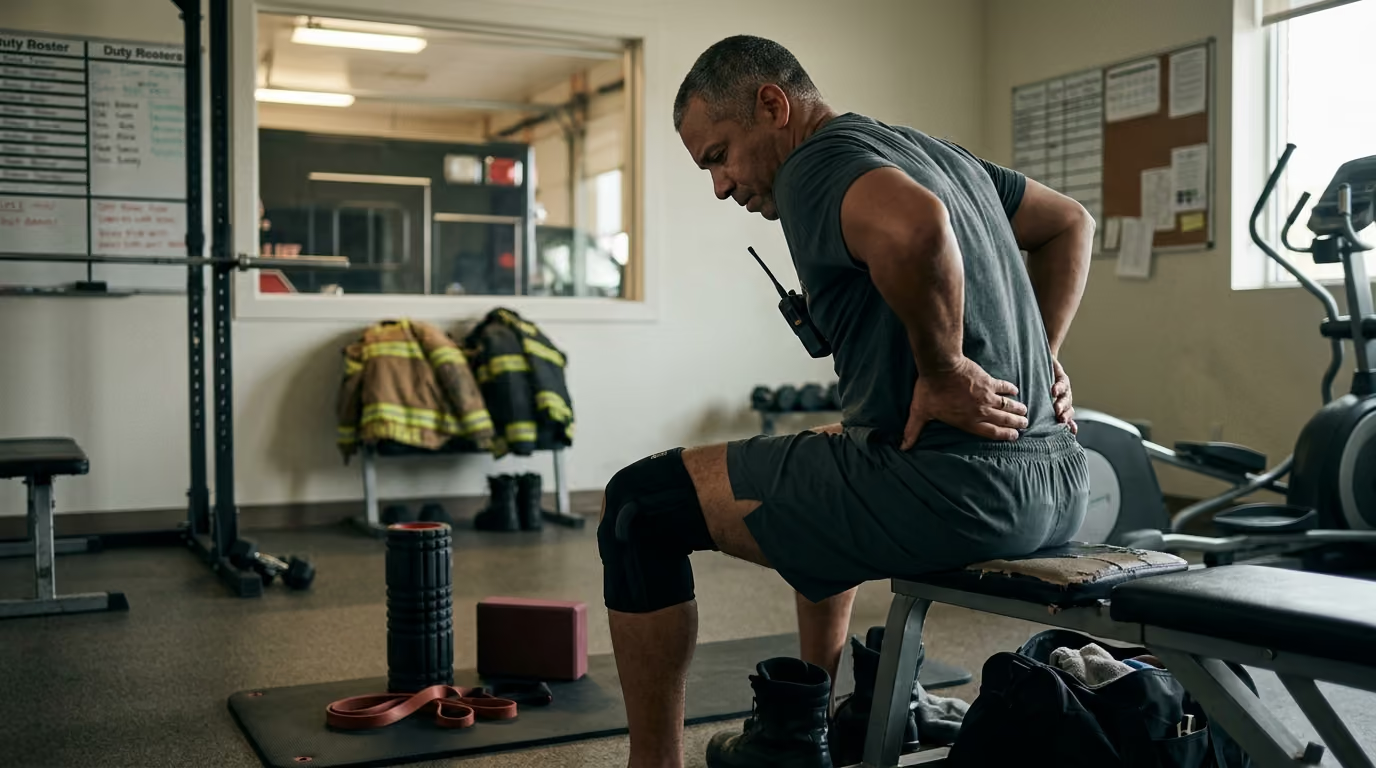

Stepping away from emergency service with persistent physical pain requires a structured seven-step framework to overcome fear avoidance and rebuild functional strength safely.





Most people assume that resolving chronic pain requires eliminating every trace of physical discomfort before returning to normal life. For retired and active emergency personnel, this assumption often leads to a cycle of complete rest, medical appointments, and lost physical capacity.
Chronic musculoskeletal pain rarely behaves like an acute injury. Chasing zero pain before resuming meaningful movement often worsens disability and deconditions the body. A sustainable recovery framework focuses on rebuilding functional capacity, restoring movement confidence, and making daily activities predictable again.
Chronic pain is generally defined as pain that persists beyond the normal tissue healing window, typically past three months. Chronicity is a description of duration rather than proof of ongoing tissue damage. Persistent symptoms can involve nociceptive input from irritated tissues, neuropathic signals from injured nerves, or nociplastic alterations where the central nervous system amplifies sensory signals.
Clinical guidelines emphasize that pain relief and functional capacity are two different outcomes. The Centers for Disease Control and Prevention guidelines for pain management highlight the importance of setting patient-centered goals focused on function. These goals include walking, resuming recreation, performing household tasks, or returning to work. Evaluating progress strictly by pain scores can obscure real physical improvement.
The World Health Organization guideline on chronic primary low back pain differentiates between primary and secondary chronic pain. Chronic primary pain refers to discomfort that cannot be explained by another distinct medical pathology. Chronic secondary pain stems from clear structural conditions such as osteoarthritis, radiculopathy, fracture nonunion, or inflammatory disease.
Both presentations benefit from an active, structured approach. When structural conditions are present, targeted medical care should integrate with physical conditioning. When pain is primary and nonspecific, the central goal becomes rebuilding tolerance to daily physical demands without treating every ache as a structural emergency.
Musculoskeletal wear is an established reality of emergency services. Systematic reviews demonstrate high rates of persistent physical issues across fire, rescue, and law enforcement personnel. A systematic review published in Injury identified a pooled musculoskeletal disorder prevalence of approximately 41% among firefighters. The most frequently affected areas were the lower back at 31%, the lower extremities at 16%, and the shoulders at 11%.
A separate meta-analysis reported an overall musculoskeletal disorder prevalence of 46.39% among firefighters. That analysis found specific regional burdens of 34.32% for the low back, 19.97% for the knee, 18.68% for the shoulder, and 18.36% for the neck. A broader critical review of firefighter injury profiles showed annual injury estimates ranging from 9% to 74.4% across different departments. These broad ranges reflect variations in reporting methods, job assignments, and injury definitions.
Data from the National Institute for Occupational Safety and Health lists emergency responders among occupations with musculoskeletal injury rates substantially higher than general industry averages. Responders spend years carrying heavy equipment, lifting patients in awkward positions, and performing explosive physical tasks without a warm-up. Over a career, these mechanical demands combine with irregular schedules to create persistent physical strain.
Psychological stress and sleep debt compound these physical strains. A systematic review of 43 studies examining paramedics found post-traumatic stress prevalence ranging from 1.0% to 82.4%, with 15 studies reporting rates between 14.6% and 40%. The review identified poor sleep, workplace stress, and depressive symptoms as recurring factors linked with increased chronic pain. When evaluating post-service recovery, physical loading, sleep disruption, and psychological stress must be addressed together.
To understand how baseline fatigue alters tissue loading, review our analysis of shift-specific sleep strategies.
When pain persists, many responders fall into predictable behavioral traps. The most common is the boom-and-bust cycle. On lower-pain days, an individual attempts heavy chores, intense workouts, or demanding physical labor. This sudden spike in activity triggers a severe flare-up, leading to days or weeks of strict bed rest.
Extended rest causes muscle deconditioning, joint stiffness, and heightened neurological sensitivity. When the individual tries to move again, their physical capacity is lower than before. The resulting discomfort is interpreted as evidence of new tissue injury, reinforcing fear of movement, known clinically as kinesiophobia. Guidelines from the American College of Occupational and Environmental Medicine identify fear of movement as a primary barrier to recovery that can reinforce physical debility.
Another common trap is treatment hopping. This occurs when a person moves rapidly between passive modalities like massage, adjustments, injections, and dry needling without committing to an active rehabilitation plan. Passive treatments can offer temporary symptom relief, but they do not build durable physical strength or capacity.
The National Institute for Health and Care Excellence explicitly recommends that manual therapies only be used as part of a treatment package that includes structured exercise. Relying exclusively on passive treatments creates dependency and fails to restore real-world physical capability.
A third trap involves excessive diagnostic imaging. The National Institute for Health and Care Excellence advises against routine imaging for lower back pain in non-specialist settings unless the results will directly change surgical management. Scans frequently show normal age-related changes, such as disc degeneration, facet arthropathy, or mild bulges. When these incidental findings are viewed as severe structural flaws, they can increase anxiety and worsen movement avoidance.
A structured recovery framework shifts the focus from chasing short-term relief to building predictable physical capability. This seven-step framework creates an organized path forward.
Before starting any progressive activity program, rule out urgent medical conditions. A formal clinical evaluation is essential if you experience progressive muscle weakness, loss of bowel or bladder control, numbness in the groin or saddle area, unexplained weight loss, or severe nighttime pain accompanied by fever. Clinical guidelines from the Veterans Affairs and Department of Defense emphasize comprehensive imaging and laboratory testing when progressive neurological deficits or serious systemic flags are present.
Classify your current presentation into one of four distinct categories:
Establish clear, real-world functional destinations. Avoid vague goals like "feeling better" or "reducing back tightness." Write concrete, observable goals with definite timelines.
Examples of functional goals include:
Determine your current capacity threshold without triggering a multi-day symptom flare. If you can walk for 15 minutes before discomfort starts to rise, your baseline is 12 minutes. If you can lift 20 pounds safely, your baseline is 15 pounds. Establishing a conservative baseline provides a solid foundation from which you can progress predictably.
For structured guidance on setting progressive baselines, explore our minimum effective dose training principles.
Every exercise, therapy, or habit in your plan must serve a specific purpose. If an intervention lacks a clear mechanism and a measurable outcome, remove it.
Graded exposure reintroduces previously avoided movements through progressive, controlled steps. Pacing means keeping the exercise dose within your current adaptive capacity. Increase only one variable at a time: volume, load, speed, or movement complexity.
Guidelines from the Washington State Department of Labor and Industries recommend graded exercise and work-related conditioning to restore movement tolerance systematically. If an activity causes a minor symptom increase that settles within 24 hours, the training stimulus is appropriate.
To balance physical adaptation with systemic recovery, review our guide on autoregulation training strategies.
Review your progress every four to six weeks against objective performance markers. Track total walking volume, loaded carry capacity, daily sitting tolerance, and sleep quality. If functional capacity is improving even while background discomfort remains steady, the plan is working. If physical capacity remains flat over two review cycles, adjust the training stimulus or reassess the primary limiting factors.
Understanding how different recovery scenarios unfold helps maintain perspective during rehabilitation.
A retired firefighter experiences lower back spasms after lifting heavy equipment. They rest in bed for two weeks until acute pain subsides. Upon returning to normal yard work, their back spasms immediately return.
The individual assumes their spine is permanently damaged. In reality, prolonged bed rest reduced their muscular endurance and tissue tolerance. A graded exposure plan using bodyweight hinges, brisk walking, and progressive core stabilization safely restores functional capacity.
A former police officer receives weekly massage, chiropractic adjustments, and periodic cortisone injections for shoulder discomfort. Symptoms improve for 48 hours following each appointment, but lifting overhead remains painful and weak.
The treatment plan lacks active strengthening to rebuild rotator cuff and scapular endurance. Adding resistance band rotations, overhead carries, and controlled pressing movements turns temporary symptom relief into durable functional stability.
An emergency medical technician undergoes a lumbar epidural injection that reduces back pain by 60%. Despite this relief, they continue to avoid bending, carrying gear, and taking stairs out of fear that movement will bring the pain back.
Symptom reduction opened a window for rehabilitation, but movement avoidance kept the nervous system sensitized. Implementing graded lifting tasks and step-up drills restores confidence and builds real-world capacity.
A former paramedic begins a structured walking and strength routine. Over three months, their walking tolerance increases from 10 minutes to 45 minutes, and they can comfortably carry their grandchildren.
Their resting pain score remains at a 3 out of 10. Rather than viewing the program as a failure, the individual recognizes substantial progress in physical independence, vitality, and daily capability.
Managing multiple healthcare providers can lead to contradictory advice, fragmented care, and conflicting treatment plans. Conducting an objective treatment audit helps ensure every intervention actively supports your recovery goals.
Ask the following seven questions for each treatment currently in your routine:
Coordination between physical therapists, primary care physicians, and mental health professionals is essential. Clinical guidelines from the Veterans Affairs and Department of Defense recommend interdisciplinary care models that combine physical conditioning with psychological and occupational strategies.
When seeing multiple providers, provide each clinician with a summary sheet detailing your active exercise baselines, current functional goals, and planned progression steps. Clear communication prevents conflicting recommendations and keeps your care focused on functional outcomes.
To explore multidisciplinary approaches to recovery, consult our comprehensive injury recovery resources.
Symptom flare-ups are a natural part of recovering from persistent musculoskeletal conditions. A flare-up does not mean your tissues have torn or that your rehabilitation has failed. Most flares result from temporary load spikes, poor sleep, mechanical fatigue, or heightened stress.
When a flare occurs, avoid the impulse to go on complete bed rest. Inactivity stiffens joints, increases muscle tension, and prolongs recovery time.
For strategies on managing physical conditioning during high-stress periods, read our guide on training around demanding shift schedules.
Returning to demanding physical tasks requires bridging the gap between basic daily function and full operational readiness. A person may be cleared for daily activities, light administrative duties, or desk tasks long before their body is prepared for the unpredictable physical strains of emergency response.
Unrestricted emergency service involves sprinting, stair climbing under load, awkward patient extractions, and rapid movement while wearing heavy protective gear. According to guidelines from the American College of Occupational and Environmental Medicine, modified duty should serve as a progressive bridge toward full capability rather than an indefinite restriction.
A comprehensive return-to-readiness progression includes:
While active rehabilitation and self-management are fundamental to recovery, certain symptoms require specialized medical evaluation. A self-management framework is not a substitute for clinical diagnostics when significant underlying pathology is present.
Consulting with licensed professionals provides critical guidance when progress stalls or symptoms become complex.
Never operate emergency vehicles, perform high-risk training, or engage in hazardous operational duties while experiencing unmanaged neurological deficits, extreme fatigue, or the impairing side effects of pain medications.
Rebuilding functional capacity after years of demanding emergency service takes patience, consistency, and a structured plan. Treating rehabilitation as a progressive, capacity-building process allows you to protect long-term health and maintain physical capability for the future.
Stay connected for research-led guidance on duty fitness, shift-work sleep, injury recovery, stress, nutrition and career longevity. Practical ideas for first responders who want to stay capable on the job, recover well and protect their health for the long run.



Read practical guidance on first responder fitness, recovery, sleep, nutrition and resilience for demanding work and a long, active career.
read the blog



