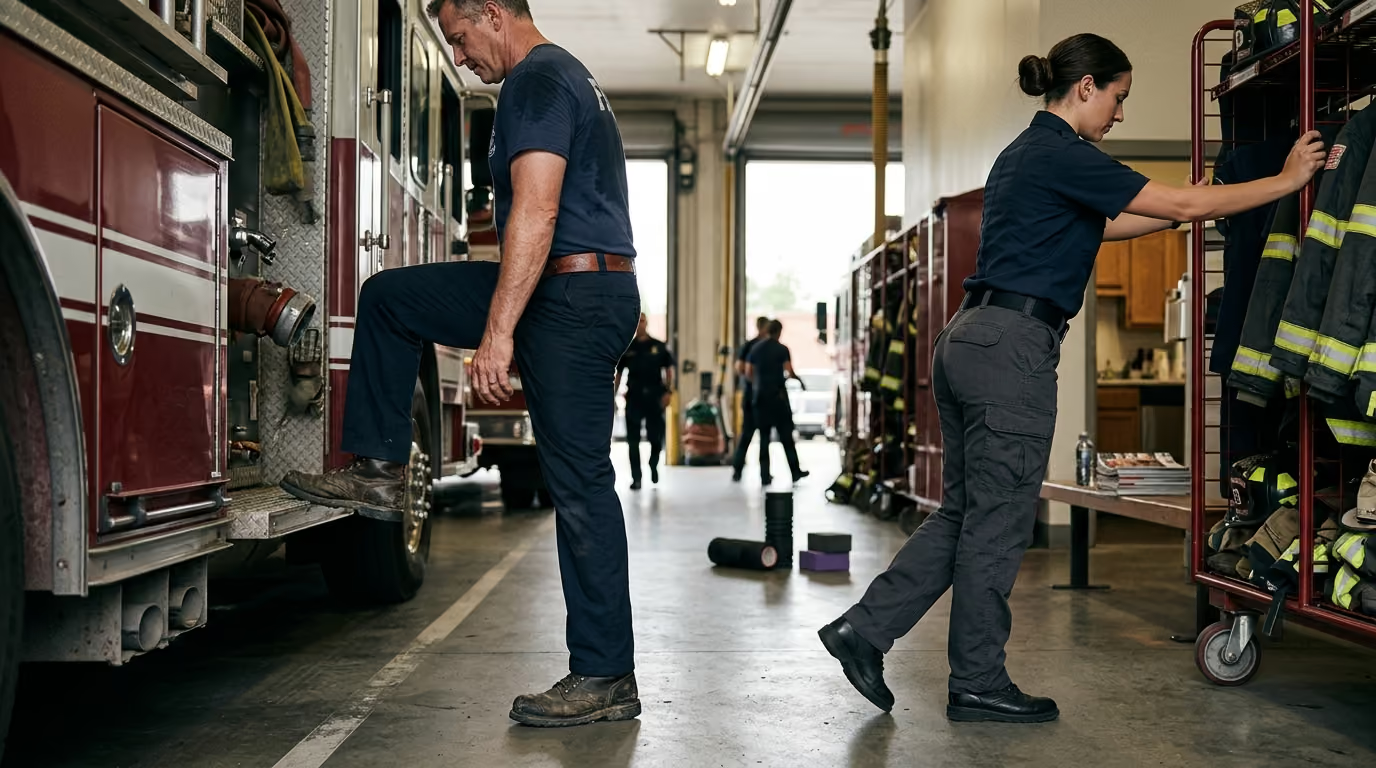

Long hours seated in patrol vehicles or dispatch chairs create severe physical stiffness that first responders can eliminate with targeted on-shift movement strategies.





Most physical preparation advice for emergency personnel focuses on lifting heavier, running faster, or surviving intense structural fires and combative calls. Yet the most frequent physical state in emergency service is not explosive action. It is hours of constrained sitting in a patrol car, ambulance cab, dispatch console, or station dayroom.
Sitting in emergency work is not simply a lack of exercise. It is an operational trap where low tissue activity abruptly collides with high physical demand. Counteracting this exposure requires an understanding of how static postures, heavy duty gear, and sudden transitions degrade operational readiness.
The practical solution is not to eliminate sitting, which is impossible in modern public safety. Instead, the goal is building a system of movement variability, tissue capacity, workstation adaptation, and brief transition routines. When emergency personnel preserve joint mobility and circulation during quiet periods, they protect their ability to perform when an urgent call arrives.
The World Health Organization defines sedentary behavior as any waking behavior with an energy expenditure of 1.5 metabolic equivalents or less while sitting, reclining, or lying down. In emergency services, sedentary exposure takes a unique form. It combines static positioning with external physical loads, whole-body vibration, and the mental tension of responding to unpredictable emergencies.
Sedentary research separates general metabolic risks from local musculoskeletal wear. At a general health level, high amounts of uninterrupted sedentary time correlate with adverse cardiovascular and metabolic outcomes. Replacing sedentary time with light physical activity improves these markers. However, general physical activity targets do not fully resolve the mechanical challenges faced by emergency crews.
The World Health Organization recommends that adults complete 150 to 300 minutes of moderate aerobic activity weekly, or 75 to 150 minutes of vigorous activity, alongside twice-weekly strength training. While this baseline is vital for long-term health, it does not guarantee that a responder can safely transition from a three-hour vehicle patrol into a high-speed sprint or heavy patient extrication. Fitness alone does not eliminate the physical stiffness created by hours of static sitting.
Occupational data confirms the scale of this problem across public safety sectors. In a cross-sectional study of 4,185 Swedish police officers, 41.3 percent reported multisite musculoskeletal pain lasting at least one day per week during the preceding three months. The study highlighted that equipment discomfort was strongly linked to pain, with odds ratios of 5.42 for duty belts and 2.69 for body armor. Prolonged vehicle sitting was a constant operational factor, showing that equipment and sitting combine to create physical strain.
Ambulance personnel experience similar exposure patterns. Research examining 246 ambulance workers identified a musculoskeletal disorder prevalence of 59.76 percent, with the lower back, neck, and shoulders being the most affected areas. Biomechanical evaluations using the Rapid Entire Body Assessment revealed that stretcher lifting presented the highest physical risk score. Prolonged seated transport followed immediately by heavy, awkward manual handling creates an extreme physical exposure profile.
Research from the United States Fire Administration also identifies seated cab postures and forceful exertion as primary ergonomic risk factors in the fire service. Fire apparatus seating often involves high step heights, constrained leg space, and awkward seated angles while wearing protective gear. These positions place cumulative mechanical stress on the lumbar spine and pelvis before the firefighter even arrives at the fireground.
The evidence base shows that the physical toll of emergency work is multifactorial. Studies examining sedentary interruptions demonstrate that two to three minutes of dynamic lower-limb movement every 20 to 30 minutes can support peripheral circulation and blood flow. Controlled laboratory trials also show that light walking attenuates post-meal glucose and insulin spikes more effectively than standing still. These findings provide a clear physiological rationale for integrating movement into long shifts.
In an ordinary office environment, prolonged sitting leads to postural fatigue, reduced calorie expenditure, and long-term metabolic strain. The office worker typically ends their day with a predictable commute and an optional workout. If an office worker feels stiff, they can stand up, stretch, or adjust their chair without operational consequences.
First responders face a completely different operational reality. A police officer may sit in a patrol vehicle for four hours conducting stationary surveillance or completing incident reports. During this time, the officer wears a fifteen-to-twenty-pound duty belt and body armor. The duty belt pushes the pelvis into a posterior tilt, flattens the lumbar spine, and creates focal pressure points against the vehicle seat.
Whole-body vehicle vibration adds another layer of mechanical stress. Low-frequency road vibration travels through the seat into the compressed lumbar discs and surrounding ligaments. Over hours of driving, this vibration increases spinal creep and temporary loss of disc height. When the officer suddenly spots a fleeing suspect or an active hazard, they must exit the vehicle instantly and sprint or grapple at maximal capacity.
Paramedics and emergency medical technicians encounter a similar operational pattern. A crew might drive forty-five minutes on an interfacility transfer or rural highway response. During the drive, the crew sits in a rigid cab seat while mentally processing dispatch notes. Upon arrival, they must immediately lift a two-hundred-pound patient from a low floor or carry a loaded stretcher down a narrow flight of stairs.
This abrupt transition from zero movement to maximal physical demand represents the primary injury mechanism in emergency services. In traditional ergonomics, this is known as an acute-to-cumulative workload mismatch. The cumulative load of sitting creates stiffness, reduces joint lubrication, and temporarily alters neuromuscular timing. The acute load of the emergency task then exceeds the tissue's immediate readiness state.
Dispatchers and communication officers face a different variation of this strain. While dispatchers do not perform heavy lifting on duty, they endure the highest total duration of uninterrupted sitting in public safety. Extended console shifts combined with sustained cognitive stress lead to chronic muscle tension across the neck, upper back, and shoulders. Without deliberate movement strategies, dispatchers accumulate significant musculoskeletal wear across a thirty-year career.
Understanding this reality means accepting that generic fitness advice is insufficient. Telling emergency personnel to sit with perfect posture for twelve hours is unhelpful and biomechanically unrealistic. Responders need structured ways to manage posture, maintain tissue readiness, and bridge the gap between sitting and operational execution.
To systematically address prolonged sitting in emergency services, agencies and individual responders can implement the SCOPE framework. This five-part operational model organizes countermeasures into five actionable domains: Sitting exposure, Capacity, Options for movement, Preparation for transitions, and Environment.
The first step is auditing the total volume and pattern of sitting throughout a shift. Responders should evaluate their longest uninterrupted sitting blocks, the number of vehicle segments, and the time spent on report writing. Identifying when sitting is constrained, asymmetrical, or accompanied by vehicle vibration helps pinpoint the highest-risk windows of the day.
Capacity refers to the baseline physical ability of muscles, tendons, joints, and the cardiovascular system to handle duty demands. Responders need sufficient strength in the hips, trunk, and lower body to tolerate both sitting postures and heavy manual handling. A responder with high tissue capacity can absorb the strain of a long vehicle shift far better than a deconditioned individual.
Responders need realistic movement choices that do not interfere with operational focus. Movement options range from seated ankle pumps and pelvis tilts to brief standing intervals during administrative tasks. Having a wide selection of low-effort movement options allows personnel to adapt to changing call volumes and operational constraints.
Preparation focuses on bridging the gap between low-movement duty and sudden exertion. When time allows, responders use short dynamic sequences to restore joint range of motion and muscle activation before lifting or sprinting. Even a ten-second preparation sequence can prime the nervous system and protect vulnerable spinal structures.
The final domain addresses the physical tools and workstations used during the shift. This includes duty belt layout, body armor fit, seat adjustments, console height, and footwell space. Modifying the physical environment reduces unnecessary contact pressure and supports natural movement variability throughout the working day.
Counteracting prolonged sitting does not require pausing operations for thirty-minute exercise sessions. The most effective approach relies on a tiered hierarchy of micro-interventions that fit into natural pauses during the shift. Responders can select the level of intervention that matches their current operational tempo.
These small movements can be performed while parked, waiting at traffic lights, monitoring a console, or writing reports. They require zero equipment and do not compromise situational awareness.
When arriving at a station, hospital bay, or staging area, personnel should immediately spend sixty to ninety seconds moving through standing positions. Using grounding techniques between calls alongside physical movement helps down-regulate acute sympathetic stress while restoring joint mobility.
During extended downtime at the station, emergency personnel can perform a brief, five-minute mobility and activation circuit. This routine primes the musculoskeletal system for sudden calls without creating excessive physical fatigue.
Dispatchers operate under strict workstation constraints where leaving the desk is often restricted by call volume. Dispatch centers can protect personnel by investing in electric sit-stand consoles and establishing ergonomic rotation standards.
Dispatchers should alternate between sitting and standing every forty-five to sixty minutes rather than standing for an entire shift. While standing at the console, dispatchers can utilize anti-fatigue mats, perform gentle calf raises, and adjust monitor heights to prevent cervical spine compression.
Movement breaks during a shift mitigate stiffness, but long-term protection requires structured physical conditioning. A first responder must develop the tissue capacity required to tolerate sudden, forceful movements under load. Conditioning should prioritize movement patterns that directly counter the mechanical deficits created by sitting.
Incorporating short readiness sessions for emergency crews ensures that physical capacity is maintained without exhausting the body between shifts. Training should emphasize posterior chain strength, multi-planar core stability, and hip mobility.
Prolonged sitting leaves the hamstrings and glutes in a lengthened, inactive state while shortening the hip flexors. Strength training must restore force production in the glutes and hamstrings.
Exercises such as Romanian deadlifts, trap-bar deadlifts, hip thrusts, and kettlebell swings build the structural strength needed to lift patients and equipment safely. Training these patterns builds a robust buffer against lower-back strain during awkward manual handling tasks.
Emergency responses rarely occur on flat, predictable surfaces. Responders constantly step over debris, climb steep apparatus steps, and carry loads across uneven terrain.
Split squats, walking lunges, and high step-ups develop single-leg stability and strengthen the stabilizing muscles of the pelvis. Unilateral training also helps identify and correct strength asymmetries caused by wearing heavy gear on one side of the body.
The core does not function merely to perform sit-ups. In emergency work, the trunk acts as a rigid bridge that transfers force between the lower and upper body while protecting the spine from shear forces.
Anti-rotational exercises, such as Pallof presses, suitcase carries, and side planks, teach the spine to resist twisting under dynamic loads. Heavy loaded carries directly replicate the demands of carrying medical jump bags, hydraulic tools, and hose packs.
A critical but frequently overlooked capacity is the ability to rise quickly from the floor without relying entirely on spinal flexion. Responders frequently kneel, crouch, or work on the ground during patient care or tactical operations.
Conditioning sessions should incorporate floor-to-stand transitions, such as Turkish get-ups, half-kneeling to standing drills, and medicine ball ground-to-overhead lifts. These exercises build fluid mobility and reduce the mechanical shock of moving from ground work to rapid movement.
When organizing weekly physical training, personnel should focus on programming workouts alongside demanding shifts to avoid training into deep physical exhaustion. Utilizing a clear shift-work training decision framework allows responders to adjust their training intensity based on recent sleep debt, call volume, and accumulated duty fatigue. Applying sound autoregulation strategies for duty readiness guarantees that physical exercise builds long-term capability rather than compounding the physical wear of a demanding shift.
Individual physical fitness cannot completely overcome poorly designed work environments. Equipment fit and vehicle setup play a decisive role in determining the cumulative physical strain experienced by emergency personnel.
The Swedish police study demonstrated that equipment discomfort accounts for massive increases in multisite musculoskeletal pain. Making targeted modifications to gear configuration and seating ergonomics can eliminate substantial mechanical stress before it accumulates.
Police patrol vehicles present severe spatial constraints due to center consoles, mobile data terminals, firearm mounts, and partition cages. Officers must deliberately optimize their cab setup:
External load-bearing vests represent a significant ergonomic advancement in law enforcement. By transferring heavy duty gear from the waist to the torso, load-bearing vests alleviate direct compressive forces on the hips, sciatic nerve, and lower back.
When wearing external vests, officers should distribute equipment weight symmetrically across the front and sides of the torso. Armor carriers must be fitted accurately to ensure the bottom edge does not dig into the thighs or push the vest upward into the throat when sitting in a vehicle.
Ambulance manufacturers and crews should prioritize adjustability within both the driver cab and the rear care compartment:
Firefighters face unique ergonomic challenges due to the sheer size of turnout gear, self-contained breathing apparatus brackets, and high apparatus steps:
Implementing movement and ergonomic countermeasures is rarely straightforward during dynamic emergency operations. Responders must understand how to adapt their strategies during complex, high-risk, or restrictive scenarios.
Safety during vehicle operation is non-negotiable. Movement interventions must never be attempted while driving in traffic or during emergency response driving.
Physical movement during driving should be limited strictly to seated ankle pumps or gentle pelvic tilts during complete stops at red lights or rail crossings. All other postural changes must wait until the vehicle is parked safely at a station, hospital bay, or staging area.
Tactical operators, detectives, and perimeter units often spend hours in stationary surveillance vehicles where exiting the car would compromise operations.
In these scenarios, operators must rely entirely on in-seat isometric contractions, diaphragmatic breathing, and subtle weight shifts. Alternating pressure between the left and right hip, extending one leg forward into the footwell, and performing seated glute squeezes maintain tissue blood flow without visible external movement.
During overnight shifts or extended operational periods, severe fatigue reduces motor control, slows reaction times, and increases tissue stiffness. Responders are at their highest risk of acute lifting injuries between 03:00 and 06:00.
During night shifts, transition routines are essential. Crews should perform thirty seconds of dynamic movement before lifting a patient or handling heavy equipment. Personnel must not rely on sudden physical exertion to wake themselves up, as cold, tired tissues are highly vulnerable to acute tears and sprains.
Extreme heat or cold alters tissue elasticity and recovery. In cold weather, prolonged vehicle sitting allows peripheral muscles to cool rapidly, increasing the risk of strain upon sudden egress.
In winter conditions, responders should spend the first sixty seconds on scene performing deliberate, progressive movements to warm cold tissues before executing heavy lifts. In high-heat conditions, personnel must balance movement breaks with thermal management to avoid accelerating core body heating and dehydration.
Movement routines, mobility exercises, and ergonomic adjustments are designed to manage normal occupational stiffness. They are not treatments for acute structural injuries, nerve root compression, or progressive medical conditions.
Responders must recognize when symptoms indicate a medical issue requiring formal clinical evaluation rather than self-directed movement breaks:
When these symptoms appear, the responder must cease self-directed exercise and seek immediate assessment from a licensed physician, physical therapist, or occupational health specialist. Early medical intervention prevents acute tissue strain from developing into career-ending chronic impairment.
Protecting your physical capability requires treating prolonged sitting as a manageable operational exposure rather than an inevitable career hazard.
Stay connected for research-led guidance on duty fitness, shift-work sleep, injury recovery, stress, nutrition and career longevity. Practical ideas for first responders who want to stay capable on the job, recover well and protect their health for the long run.



Read practical guidance on first responder fitness, recovery, sleep, nutrition and resilience for demanding work and a long, active career.
read the blog



