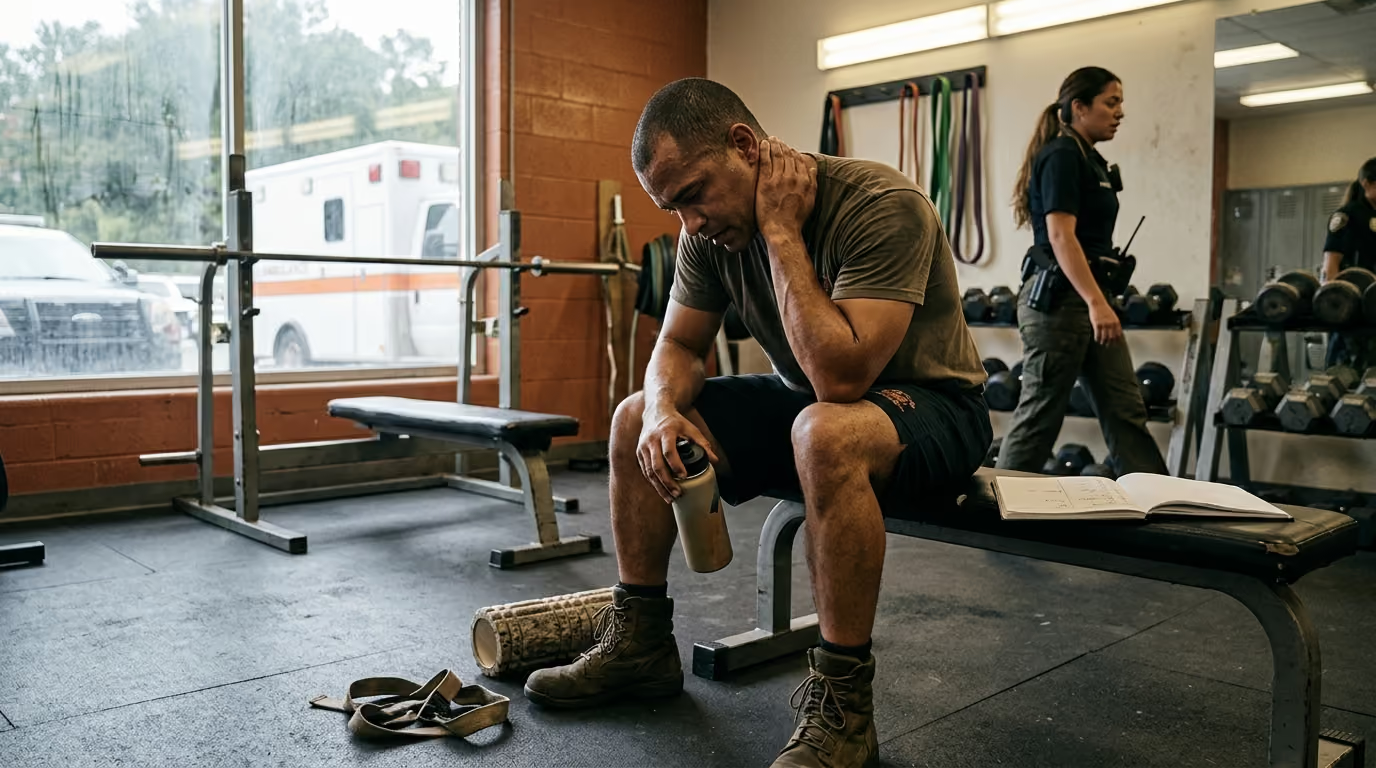

Deloading and maintenance training allow first responders to manage accumulated operational fatigue and sustain physical readiness without losing hard-earned strength.





You finish a third consecutive night shift, step onto the station gym floor, and look at the whiteboard. The training plan calls for heavy deadlifts, five working sets near your maximum, followed by high-intensity conditioning intervals. Your lower back is stiff from twelve hours in body armor, your reaction time is sluggish, and your total sleep across the last two days barely reaches eight broken hours. Pushing through the prescribed numbers feels like the only way to stay disciplined. Yet continuing to load an exhausted system often leads to stalled performance, chronic joint irritation, or an injury that compromises your readiness on duty.
A deload or maintenance phase is not a sign of surrender. It is an intentional, evidence-based reduction in training stress designed to shed accumulated fatigue while preserving the physical qualities that keep you safe on shift.
Understanding how to adjust your training volume, intensity, and exercise selection allows you to protect your long-term capability. You can navigate mandatory overtime, unpredictable call volumes, and poor sleep stretches without losing your hard-earned progress.
A deload is a short period, typically lasting one week, where you intentionally reduce training volume or intensity to clear physical and neurological fatigue. A maintenance phase is a longer period, often lasting several weeks or months during heavy operational schedules, where you train with the minimum effective dose to retain existing strength, power, and conditioning without trying to force new adaptation.
Reducing training volume by 40% to 60% while keeping movement quality crisp preserves your strength and duty capability. It clears systemic fatigue without causing detraining. You do not lose muscle or strength from a week of lighter work. Instead, removing excess fatigue unmasks the fitness you have already built.
The physiological principles behind deloading come primarily from research on sports periodization, tapering, and fatigue management. While athletic tapering focuses on peaking for a specific competition date, the underlying mechanisms explain why reducing training stress restores operational readiness.
Scientific research on tapering provides the foundation for planned training reductions. A landmark meta-analysis examining tapering strategies found that an exponential reduction in training volume of 41% to 60% over a two-week period produced the most consistent performance improvements across various sports disciplines. Crucially, this research showed that maintaining exercise intensity and training frequency while cutting volume prevented fitness decay while allowing accumulated neuromuscular fatigue to dissipate.
In strength-specific applications, research published in sports science literature demonstrates that reducing training volume by 30% to 70% can maintain or even slightly increase maximal strength expression. When athletes train heavy for multiple weeks, the body accumulates both positive adaptations (fitness) and negative systemic fatigue. Because fatigue masks your true physical capacity, a structured reduction in volume allows the body to repair tissues, replenish glycogen stores, and restore central nervous system drive.
It is essential to distinguish between related but different training concepts:
First responders often worry that reducing their training volume will cause immediate muscle loss or weakness. The physiological literature does not support this fear. Skeletal muscle mass and maximal strength are well-maintained for several weeks when a minimal stimulus is preserved.
Research indicates that high-threshold motor units, which are responsible for producing maximal force, can maintain their recruitment capabilities with remarkably low weekly exposures. As long as you retain a few challenging, technically precise sets each week, your body will maintain its contractile tissue and neuromuscular pathways. Detraining only becomes a significant factor after extended periods of complete inactivity or prolonged caloric restriction.
It is important to state the limits of the current scientific literature. Most periodization and tapering studies are conducted on collegiate athletes, competitive powerlifters, or endurance competitors. These populations operate in controlled environments with predictable sleep schedules, structured nutrition, and defined competition dates.
First responders face a very different reality. You operate under unpredictable shift schedules, acute psychological stressors, thermal strain, and fluctuating operational demands. While the biological mechanisms of muscle recovery remain the same, the application must be far more flexible. Fixed, four-week deload schedules taken from competitive athletics often fail in emergency services because duty demands do not follow a neat calendar.
A traditional athlete plans their training around an off-season, a pre-season, and a competitive season. First responders do not have an off-season. You must remain capable of dragging a charged hose line, performing prolonged CPR, extracting a patient, or managing a combative subject at any point during your shift.
Fatigue in emergency services is rarely just muscular tiredness from lifting weights. It is multidimensional, combining physical, cognitive, thermal, and circadian stressors. A single 24-hour shift or a series of night tours introduces several physiological disruptions:
A comprehensive review of emergency first-responder fatigue highlighted that insufficient sleep and poor sleep quality directly impair cognitive function, vigilance, motor coordination, and safety behaviors. When you step into the gym after a demanding shift, your central nervous system may already be operating with depleted reserves.
Sleep loss is not an occasional inconvenience in emergency services; it is a structural reality of the profession. Epidemiological research shows exceptionally high rates of sleep disorders among first responders. Studies estimate that roughly 31% of emergency personnel experience shift-work disorder, approximately 30% suffer from obstructive sleep apnea, and about 28% report chronic insomnia or excessive daytime sleepiness.
When chronic sleep disruption is present, your body cannot repair tissue damage or clear metabolic waste at the same rate as a well-rested individual. Attempting to force progressive overload on top of severe sleep debt significantly increases the likelihood of overreaching, joint pain, and illness. Understanding why willpower fails to overcome duty fatigue is essential for building a sustainable, career-long training approach.
A dangerous trap for first responders is equating gym performance with duty capability. You might possess the raw willpower to grind through a heavy barbell session while severely sleep-deprived. However, doing so consumes the very reserves you need for your shift.
If an intense workout leaves you with slow reaction times, compromised peripheral awareness, or severe back tightness, your operational readiness is degraded. The primary goal of physical training for first responders is to support duty performance, not to compete with it. Deloads and maintenance training provide the buffer needed to ensure you arrive on shift capable and alert.
The most effective strategy for managing training stress during busy operational periods is simple: preserve the high-value stimulus and strip away the non-essential volume. You do not need to invent an entirely new workout program when fatigue accumulates. Instead, you modify specific programming variables to lower the systemic cost of your training.
To modify a training session effectively, you must understand the primary levers at your disposal:
When you need to deload, adjusting volume is your most powerful tool. Research demonstrates that cutting total sets by 40% to 60% drastically reduces fatigue while retaining nearly all neuromuscular adaptations.
When adjusting your workouts during demanding operational stretches, follow these foundational rules:
Applying these principles allows you to integrate sustainable duty fitness into your life without feeling constantly run down.
There is no single way to run a deload. Depending on your operational schedule, physical fatigue, and joint status, different models offer distinct benefits.
In traditional strength programming, a deload is scheduled at fixed intervals, typically every fourth or sixth week. You complete three to five weeks of progressive training, followed by one planned week of lighter work.
An autoregulated deload is triggered by current physical and operational markers rather than the calendar. You train progressively until your body or your schedule indicates that fatigue is accumulating, then you insert a reduced-volume week.
This is the simplest and most reliable model for station gyms. You keep your exact exercise selection, workout structure, and working weights, but you cut the number of working sets in half.
When preserving maximal strength and explosive power is your top priority, you keep the loads relatively heavy while drastically slashing the volume and avoiding failure. This approach mirrors athletic tapering research.
If your joints feel battered or you are coming off an exhausting block of night shifts, reducing the load is far more appropriate than handling heavy iron.
Some exercises carry a high recovery cost due to heavy spinal loading, extreme joint ranges, or high eccentric muscle damage. An exercise-substitution deload replaces these high-cost movements with joint-friendly alternatives.
This approach maintains the underlying motor pattern while eliminating the specific joint wear and systemic fatigue associated with heavy barbell training.
When duty demands escalate rapidly, finding time for four or five weekly workouts creates unnecessary stress. Reducing your frequency allows you to consolidate training into fewer, highly efficient exposures.
Complete rest for 3 to 7 days is rarely the first choice for maintaining fitness, but it has a definitive place in operational life.
A deload is a temporary intervention lasting about a week. A maintenance phase, however, is a strategic holding pattern that can last for several weeks or even months.
During prolonged periods of mandatory overtime, extended fire seasons, or busy family transitions, trying to hit personal records in the gym is counterproductive. The goal of a maintenance phase is to preserve your operational foundation using the minimum effective dose of training.
To maintain duty readiness during a prolonged maintenance phase, your training should target five fundamental physical qualities:
Strength is the foundation of physical capability. It makes heavy equipment feel lighter and protects your joints during awkward lifts. You can maintain strength with very low volume, provided the movement quality is high.
The ability to produce force quickly is essential for sprinting to cover, breaching a barrier, or catching yourself during a slip. Power is highly sensitive to fatigue and deteriorates quickly when neglected.
A well-developed aerobic base supports cardiovascular health, improves recovery between emergency calls, and accelerates clearance of metabolic waste.
Emergency tasks such as carrying equipment up stairs or performing chest compressions require local muscular endurance and a stable core.
Wearing rigid gear and sitting in patrol vehicles or fire apparatus leads to hip stiffness, thoracic immobility, and shoulder tightness.
When transitioning from progressive training into a maintenance phase, choose a reduction bracket that matches your current operational stress:
Use this when your schedule is slightly busier than normal, but sleep remains relatively consistent.
Use this after a series of grueling night shifts, during minor joint flare-ups, or when work hours increase significantly.
Use this during extreme operational tempo, major incident responses, or periods of severe sleep deprivation.
For a deeper look at minimal programming structures, explore our guide to
minimum effective dose training for first responders.
To see how these concepts translate into real-world programming, consider this comparison between a progressive training block and a maintenance block.
This represents a standard, high-volume strength and conditioning program when work stress is manageable and sleep is adequate.
This structure maintains the essential strength, power, and conditioning signals while stripping out 50% of the volume, accessories, and metabolic exhaustion.
Notice the dramatic reduction in total sets and the complete removal of exhausting finishers. You preserve your strength, protect your joints, and leave the gym feeling capable and ready for duty. For further guidance on scheduling, read our framework on training around shift work.
A successful deload clears fatigue, but returning to full training too quickly can cause a sudden rebound in soreness and joint strain. Follow this structured five-step progression when ramping your volume back up.
If you consolidated your training into two days during your maintenance phase, start by reintroducing your regular schedule (for example, three or four days per week). However, keep the individual sessions short. It is better to move frequently with low volume than to perform long, exhausting workouts immediately.
Do not jump straight from 2 working sets back to 5 working sets. In your first week back, add a single set to your primary lifts (moving from 2 sets to 3 sets). Monitor how your body responds over the following 48 hours. If recovery, sleep, and joint comfort remain stable, return to your full planned volume the following week.
Begin with submaximal loads on heavy compound lifts. Focus on crisp acceleration, tight bracing, and flawless technique. Keep 2 to 3 repetitions in reserve during your first week back. Once your movement patterns feel rock-solid and stable, you can progressively add weight to the bar.
High-intensity interval training, heavy sled drags, and exhausting circuits generate significant metabolic waste and muscle damage. Keep your conditioning sessions light and aerobic for the first week of your return. Reintroduce high-intensity anaerobic work only after your body has adapted to the increased strength volume.
The biggest mistake responders make after a deload or missed training period is trying to make up for lost time. They add extra sets, double up on exercises, or perform grueling workouts to punish themselves. This completely erases the recovery benefits of the deload and creates an immediate spike in fatigue. Treat the deload as a planned investment in your long-term capability, and resume your program with patience.
Implementing a deload sounds simple, but operational habits and gym culture often lead to predictable errors.
Many responders believe that if they cannot train hard, they should not train at all. Complete inactivity can lead to stiffness, sluggishness, and disrupted daily routines. A structured deload keeps the habit alive, promotes blood flow, and preserves neuromuscular coordination without taxing your recovery reserves.
Lowering the weight on the bar is helpful if your joints are aching or your sleep is severely compromised. However, if your primary goal is to shed volume fatigue while keeping your strength sharp, keeping the weight moderate-to-heavy while cutting the sets in half is far more effective. High-load, low-volume training maintains neurological drive while producing minimal muscle damage.
First responders frequently experience functional fatigue, acute sleepiness, and muscular soreness. These symptoms are normal responses to demanding shifts and physical work.
True overtraining syndrome is a severe, multi-system neuroendocrine condition that takes months of chronic under-recovery to develop and months of medical rest to resolve. Most operational fatigue can be resolved with a well-timed deload week, improved sleep habits, and appropriate nutrition.
Your body does not distinguish between a 300-pound trap bar deadlift in the gym and lifting a 250-pound patient on a backboard in an awkward stairwell. Both draw from the same systemic recovery pool.
If your shift involved heavy lifting, extensive structural overhaul, or hours on your feet, that physical workload must be counted as training volume. Adjust your gym sessions accordingly rather than pretending duty tasks do not count.
When training volume drops, some individuals drastically cut their protein or water intake. Tissue repair, glycogen replenishment, and immune function require adequate dietary protein and proper hydration during a deload week. Fuel your body consistently to ensure that the recovery phase achieves its physiological purpose.
While deloading is a proven tool for managing fatigue, it must be applied within practical safety boundaries.
There are operational situations where even a light deload workout is inappropriate. Do not attempt to train through:
Your primary professional obligation is to remain safe and effective on shift. If completing a scheduled workout leaves you trembling, dizzy, or unable to focus during emergency operations, the training plan is failing. Always err on the side of caution. A deload or rest day that ensures you perform flawlessly on duty is far more valuable than hitting arbitrary gym numbers.
A deload or maintenance phase can resolve routine training fatigue, joint stiffness, and minor overreaching. However, it cannot cure underlying medical or physiological conditions. You should seek an evaluation from a qualified, licensed healthcare professional if you experience:
Taking a proactive approach to your health ensures that you address physical issues before they become career-limiting injuries.
Revisit this framework whenever you enter a period of mandatory overtime, prepare for an upcoming physical ability test, or notice that your recovery reserves are running low. Refer back to the volume reduction templates whenever your operational schedule changes, and use the return-to-normal steps after any extended break from regular training.
Deloading and maintenance training are not interruptions to your physical progress; they are the strategic adjustments that make lifelong duty capability possible. Managing fatigue intelligently ensures you remain strong, resilient, and fully prepared for the demands of the job throughout your entire career.
Stay connected for research-led guidance on duty fitness, shift-work sleep, injury recovery, stress, nutrition and career longevity. Practical ideas for first responders who want to stay capable on the job, recover well and protect their health for the long run.



Read practical guidance on first responder fitness, recovery, sleep, nutrition and resilience for demanding work and a long, active career.
read the blog



