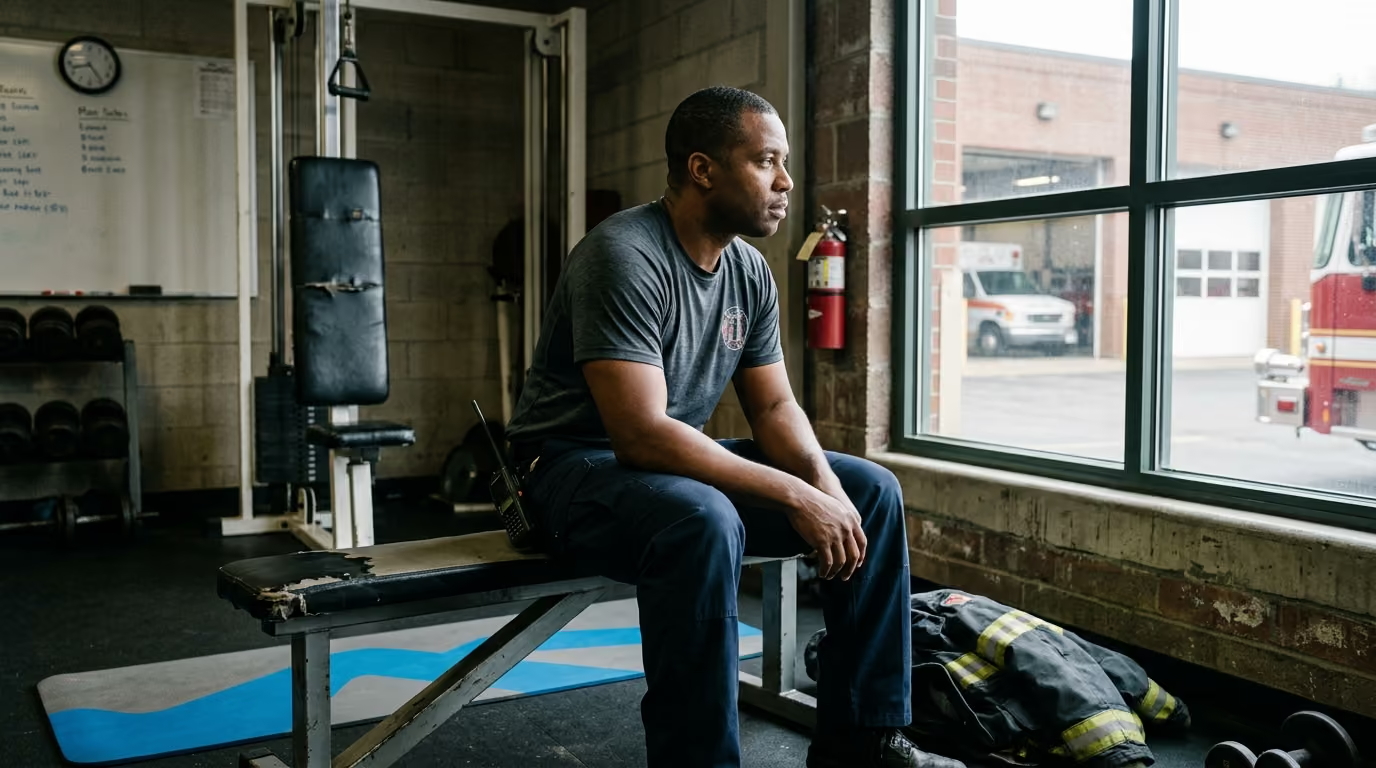

Three weekly sessions of aerobic exercise support first responder executive function and sustained attention when balanced carefully against high operational stress.





If you are in immediate danger, call 911. For 24/7 support, call or text 988 and press 1 for the Veterans Crisis Line, or text 838255.
You step off a twelve-hour night tour with your eyes burning and your lower back aching. The shift included two prolonged structure fires, three medical runs, and constant radio chatter. Your training program calls for a heavy barbell session or high-intensity interval sprints. Part of your mind insists that sweating out the tension is the only way to clear your head. Another part recognizes that your body is running on fumes and cold coffee.
Deciding whether to push through that workout or prioritize rest is a daily calculation for emergency personnel. Physical activity directly affects cognitive function, emotional stability, and operational alertness. Exercise also adds physiological strain to an already taxed nervous system. Knowing how to balance physical training against the unpredictable stressors of emergency duty is essential for staying sharp and protecting your health over a long career.
Physical activity is a powerful support tool for first responder mental performance, mood, and sleep quality. It improves executive function, working memory, and emotional regulation when programmed at sustainable intensities.
Exercise is not a standalone cure for clinical depression, severe anxiety, or post-traumatic stress. Because training is an intentional physical stressor, performing high-intensity workouts during periods of severe sleep restriction or acute operational stress increases total allostatic load. The most effective approach treats exercise as an adjustable dial rather than an all-or-nothing test of toughness.
Clinical research confirms that structured physical activity benefits cognitive performance and psychological well-being. Meta-analyses in adult populations show that exercise produces measurable improvements in executive function, working memory, cognitive flexibility, and planning capacity. Aerobic exercise performed at least three times per week demonstrates consistent benefits for cognitive processing speed and sustained attention.
These cognitive gains stem from multiple physiological adaptations. Moderate cardiovascular exercise increases cerebral blood flow, stimulates the release of neurotrophic factors, and supports hippocampal plasticity. Resistance training improves neuromuscular coordination, reduces systemic inflammation, and builds physical self-efficacy.
The relationship between exercise volume and mental health is non-linear. The World Health Organization recommends that adults complete 150 to 300 minutes of moderate-intensity aerobic activity per week, or 75 to 150 minutes of vigorous activity, alongside two days of full-body muscle strengthening. Exceeding these targets without adequate sleep, nutrition, and rest does not produce greater cognitive clarity. High training volumes combined with chronic life stress often lead to diminished concentration, mood disturbances, and persistent mental fatigue.
Systematic reviews of interventions designed for military, law enforcement, and emergency medical personnel show positive outcomes for workplace distress, absenteeism, and physical capability. The broader evidence indicates that occupational stress interventions do not reliably eliminate post-traumatic stress disorder, severe depression, or generalized anxiety disorders on their own. Physical activity serves as an adjunct support system within a broader health strategy, not a primary medical treatment.
Cross-sectional studies among firefighters have found an inverse relationship between weekly exercise hours and reported post-traumatic stress symptoms. These observational findings must be interpreted with caution. Cross-sectional data show an association, but they do not prove that exercise caused the lower symptom scores. Personnel with lower baseline distress or better sleep may simply have more energy and motivation to train consistently.
Emergency services present unique physical and psychological demands that alter how the body tolerates exercise. Unlike athletes who follow predictable schedules, first responders face irregular shift rotations, interrupted sleep, thermal stress, heavy gear loads, and acute psychological trauma.
The human body does not isolate exercise stress from operational stress. The brain processes emergency calls, circadian disruption, physical labor, and barbell training through the same neuroendocrine pathways.
Every difficult response activates the sympathetic nervous system and triggers the release of cortisol and catecholamines. When you layer an exhausting interval workout on top of a demanding shift, you add to your total allostatic load. Allostatic load represents the cumulative physiological burden required to adapt to repeated stress. When total load exceeds recovery capacity, adaptive gains stall and performance declines.
Different public safety roles impose distinct patterns of physical and psychological strain:
Firefighters carry heavy structural turnout gear and self-contained breathing apparatus in extreme heat. Operational tasks demand sudden anaerobic power, grip endurance, and sustained cardiovascular output in hazardous conditions. Training after intense fireground operations without rehydrating and restoring core temperature creates substantial cardiovascular strain.
Paramedics and emergency medical technicians encounter frequent patient transfers, awkward lifting angles, prolonged driving, and high call volumes. Their mental load involves rapid clinical calculations, pediatric emergencies, exposure to interpersonal violence, and constant vigilance. For EMS crews, adding high-volume spinal loading after a shift spent lifting stretchers can increase injury risk and cognitive exhaustion.
Police officers alternate between long periods of sedentary vehicle patrol and sudden, unpredictable foot pursuits or physical confrontations. Body armor and duty belts create chronic lumbar and hip strain. The primary mental challenge is sustained vigilance mixed with rapid threat assessment. Performing exhausting training sessions during extended shift cycles can impair situational awareness and slow reaction times on duty.
Dual-task research demonstrates that combining demanding physical tasks with complex cognitive decisions produces small negative effects on biomechanical control and fatigue rates. When personnel are already cognitively drained from managing chaotic scenes, high-complexity workouts can increase movement errors. Adjusting workout structure around duty demands protects movement quality and cognitive alertness.
When training for mental performance and career longevity, the goal is not chasing exhaustion in every session. The objective is identifying the minimum effective dose of exercise that maintains physical readiness, sharpens cognition, and supports emotional regulation.
Using a minimum effective dose training framework allows emergency responders to maintain strength and aerobic capacity without accumulating unnecessary systemic fatigue. A twenty-minute moderate aerobic session or a focused three-lift strength workout can stimulate focus and stabilize mood without draining energy reserves.
Physical activity supports mental performance through several distinct pathways:
Relying solely on maximal effort workouts can backfire. High-intensity interval training and training to muscular failure generate substantial central nervous system fatigue. If your shift work already limits sleep to four or five hours, heavy workouts deplete glycogen stores, elevate resting heart rate, and impair executive decision-making.
To protect mental performance, physical training must adapt to your current operational status. The stress-recovery-adaptation cycle requires sufficient recovery between hard physical inputs. When recovery is compromised by overnight calls or high emotional strain, the training stimulus must be modified.
Emergency personnel benefit from using a daily readiness assessment to guide their workouts. Rather than forcing a rigid workout split, you can categorize your daily readiness using a simple traffic-light approach.
Learning to apply autoregulation principles to daily training ensures that physical activity supports duty alertness rather than draining it. You do not lose fitness by dropping workout intensity for a day or two after a difficult shift block. You protect your nervous system and preserve your ability to think clearly on the next run.
A sustainable fitness plan for first responders balances physical development with recovery management. Structuring your training around duty demands requires separating long-term capacity building from short-term maintenance.
Applying structured training strategies around irregular shift schedules allows you to build physical capability during calm duty blocks while protecting energy during intense operational cycles.
You do not need to chase personal records every week of the year. During periods of heavy overtime, wildfire deployments, or intense department training, shift into a maintenance block. Two brief full-body strength sessions per week using moderate loads are sufficient to retain muscle mass and operational strength. Save progressive overload and peak conditioning blocks for periods when sleep and schedule stability allow full recovery.
A well-developed aerobic base improves your ability to recover between calls, clears metabolic waste products, and stabilizes resting heart rate. Low-to-moderate intensity steady-state cardiovascular work, performed at a conversational pace, stimulates parasympathetic nervous system activity.
This type of training calms chronic hyperarousal without adding significant muscular damage. Reserve high-intensity intervals for specific operational preparation when you are well-rested.
Operational duties require multi-planar movement under external load. Focus your strength work around fundamental human movement patterns:
Avoid training to absolute muscular failure during your regular duty rotations. Leaving two to three repetitions in reserve on every set allows you to build strength while minimizing muscle soreness and central fatigue.
Training with crew members or department peers can build camaraderie, mutual trust, and social support. Positive social interaction during physical activity stimulates endorphin release and buffers occupational stress.
Group workouts must not become coercive competitions. Forcing exhausted personnel into unplanned high-intensity team workouts increases injury risks and encourages individuals to ignore warning signs of fatigue.
Physical activity is an exceptional health habit, but emergency personnel often fall into predictable traps when using exercise to cope with job demands.
Physical fitness improves physical resiliency, but it does not make the human brain immune to psychological trauma. Viewing exercise as a primary shield against post-traumatic stress creates unrealistic expectations.
When personnel rely solely on workouts to manage intrusive memories, severe hypervigilance, or emotional numbness, they often delay seeking evidence-based psychological support. True resilience involves accessing comprehensive resources, moving beyond the traditional tough-it-out mindset that often discourages personnel from seeking care.
A high level of cardiovascular endurance or muscular strength does not automatically equate to psychological stability. Firefighter studies indicate that while baseline resilience correlates with lower anxiety and depression scores, it does not correlate directly with raw physical fitness test metrics. Physical readiness and emotional coping skills are distinct capacities that require their own intentional development.
Exercise can become an unhealthy coping mechanism when used to suppress distress, avoid quiet reflection, or self-punish. Signs of compulsive exercise include training through serious injuries, experiencing severe panic or guilt when a workout is missed, and deliberately using physical exhaustion to force sleep. Using high-intensity workouts to numb emotional pain adds physiological exhaustion on top of unresolved psychological distress.
Wearable devices that track heart-rate variability, sleep stages, and recovery metrics offer helpful trend data. They do not replace subjective self-awareness.
A wearable readiness score is an algorithm based on physiological estimates, not a clinical diagnosis. If your watch shows a high readiness score but you feel dizzy, exhausted, and mentally detached, prioritize rest. Listen to your body and your cognitive state before following an algorithm.
Individual physical activity cannot compensate for chronic department understaffing, forced mandatory overtime, poor administrative leadership, or hostile workplace cultures. Physical training is an individual habit that supports personal health. It must not be treated by leadership as a substitute for institutional reforms, reasonable shift lengths, and adequate rest cycles.
The following illustrative models show how different emergency responders can adjust their exercise strategy based on real-world operational demands.
A suburban firefighter assigned to a station with low overnight call volume is on a four-day rest cycle. Sleep has been consistent, averaging seven to eight hours per night, with minimal physical soreness.
An urban paramedic completes a grueling twelve-hour tour involving multiple critical trauma incidents, pediatric emergencies, and zero downtime. The responder reports poor sleep, racing thoughts, and elevated irritability.
A patrol officer working consistent night shifts trains with heavy weights twice per day while managing chronic patellar tendinopathy. The officer feels irritable, experiences sleep-onset insomnia, and uses intense training to manage racing thoughts.
A firefighter returns to active duty following a three-month absence due to a lumbar spine injury. The individual is eager to prove readiness and considers jumping directly into high-intensity station workouts.
Physical activity is a powerful component of a healthy lifestyle, but it has defined physiological limits. Training through acute illness, systemic infection, concussion symptoms, chest pain, or unexplained dizziness is dangerous and impairs cognitive function.
Emergency personnel must distinguish between normal training fatigue and the warning signs of nonfunctional overreaching or overtraining syndrome.
When these symptoms appear, continuing to push through hard workouts worsens nervous system dysregulation and impairs operational safety. The appropriate response is reducing training volume, increasing rest, and consulting a healthcare professional if symptoms persist.
Exercise supports general mental performance, but it is not a substitute for professional medical or psychological treatment. If you or a colleague experience any of the following challenges, seek evaluation from a qualified licensed professional:
If you or someone you know is experiencing thoughts of suicide, immediate confidential support is available. Call 911 for immediate emergency response. Call or text 988 to connect with the Suicide & Crisis Lifeline, and press 1 if you are a military veteran or service member. You can also text 838255 for veteran crisis text support. If you are struggling with distressing thoughts, speak with a peer support team member, a trusted colleague, or a licensed clinician to establish a personal safety plan and secure your home environment.
Review this guide whenever your shift rotation changes, your operational call volume spikes, or you notice persistent fatigue affecting your mood and concentration. Return to these principles after returning from extended leave or when rebuilding physical capacity following an injury.
Matching your daily exercise dose to your total duty stress protects your cognitive readiness, supports emotional stability, and sustains your physical capability across an entire emergency services career.
Stay connected for research-led guidance on duty fitness, shift-work sleep, injury recovery, stress, nutrition and career longevity. Practical ideas for first responders who want to stay capable on the job, recover well and protect their health for the long run.



Read practical guidance on first responder fitness, recovery, sleep, nutrition and resilience for demanding work and a long, active career.
read the blog



