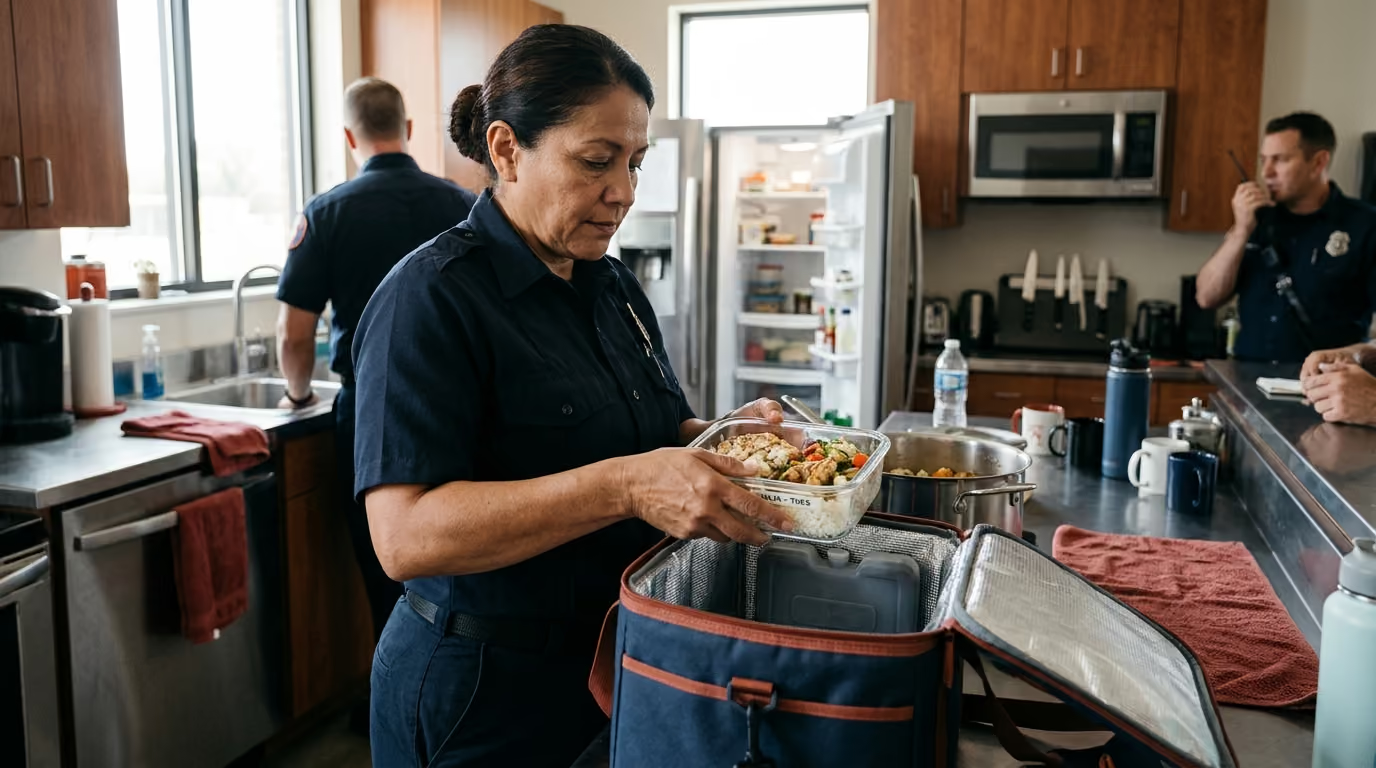

Reliable food safety on active duty comes from mastering vehicle temperature controls, safe packing protocols, and perishable meal management during shifts.





The tones drop right as the crew sits down to eat. A container of chicken and rice sits on the station table while the company responds to a commercial alarm, followed immediately by a motor vehicle collision. Four hours later, the crew returns to the station, tired and hungry. Someone covers the container, places it in an overcrowded station refrigerator, and plans to eat it on the next shift.
In a patrol vehicle across town, an insulated lunch bag sits on the passenger floorboard in eighty-degree ambient heat. In a rural ambulance bay, a medic leaves a half-eaten sandwich on the console during a ninety-minute hospital transfer.
These scenarios happen daily across the emergency services. Food safety during emergency operations is rarely a nutritional theory problem. It is an operational control problem involving time, temperature, contamination, and logistics under conditions of fatigue and unpredictable schedules.
Perishable food must be kept cold at or below 40 degrees Fahrenheit, or held hot at or above 140 degrees Fahrenheit. Perishable items left in the temperature danger zone between 40 and 140 degrees Fahrenheit for more than two cumulative hours must be discarded. When ambient temperatures exceed 90 degrees Fahrenheit, that safety window drops to one hour.
You cannot determine whether food is safe by smelling, tasting, or looking at it. Pathogenic bacteria and bacterial toxins can reach dangerous levels without altering the scent, flavor, or texture of the meal. If the temperature history of a perishable food is unknown, treat the food as unsafe.
Planning duty nutrition around these physical parameters protects operational readiness. A crew member incapacitated by acute gastrointestinal illness cannot perform on the fireground, operate an apparatus, or manage emergency medical care.
Foodborne illness is a significant public health burden that carries severe operational consequences for emergency service staffing. The Centers for Disease Control and Prevention estimates that foodborne pathogens cause roughly 48 million illnesses, 128,000 hospitalizations, and 3,000 deaths annually across the United States. In an analysis of domestic cases across seven major pathogens, the CDC estimated 9.9 million illnesses, 53,300 hospitalizations, and 931 deaths in a single year.
Norovirus alone accounted for over 5.5 million illnesses annually in these estimates. Other common bacterial culprits include Campylobacter at 1.87 million cases, Salmonella at 1.28 million cases, Clostridium perfringens at 889,000 cases, and Shiga toxin-producing Escherichia coli at 357,000 cases.
These pathogens produce rapid dehydration, debilitating abdominal cramping, severe vomiting, fever, and physical weakness. For emergency personnel, these symptoms do more than cause discomfort. They pull frontline responders off the roster, compromise crew safety, and increase the workload on remaining personnel.
A common misconception in station kitchens and field operations is that spoilage organisms and pathogenic bacteria are identical. Spoilage organisms degrade food quality, causing sour odors, slimy surfaces, and visible discoloration. Pathogenic bacteria such as Salmonella, Staphylococcus aureus, and Bacillus cereus multiply rapidly in warm food without producing obvious physical changes.
Federal food safety agencies emphasize that smelling or tasting a small portion to check safety is dangerous. Consuming even a tiny amount of contaminated food can introduce an infectious dose or preformed toxins. Food safety depends entirely on verified controls rather than sensory evaluation.
Perishable items require active temperature control to prevent bacterial multiplication. The Food and Drug Administration classifies these as time and temperature control for safety foods.
Common duty foods requiring strict temperature control include:
Research from the CDC demonstrates that plant-based foods are substantial contributors to foodborne illness. Sliced produce provides a moist, nutrient-rich environment for pathogen growth once the outer skin is broken. Treating cut fruit or cooked starches as shelf-stable items is a frequent point of failure during long shifts.
Standard food safety guidance assumes predictable access to domestic kitchens, reliable power, clean running water, and structured mealtimes. Emergency personnel work under operational constraints that directly conflict with these baseline assumptions.
Patrol vehicles, ambulances, command units, and fire apparatus experience extreme interior temperature fluctuations. A vehicle parked in direct sunlight on an eighty-degree day can see cabin temperatures exceed 120 degrees Fahrenheit in less than an hour. Equipment compartments and trunks often reach even higher temperatures due to heat transfer from exhaust systems and asphalt.
Placing a standard insulated lunch bag on a vehicle seat or floorboard exposes cold food to intense radiant heat. When ice packs melt completely, the internal temperature of the lunch bag enters the danger zone rapidly. Once inside this window, bacterial replication accelerates exponentially.
Emergency calls occur without warning. Responders frequently begin eating a meal, set it aside on a station counter or vehicle dashboard, and respond to an incident lasting several hours.
When responders return, they often finish the food without realizing how long it sat out. The two-hour safety window applies to cumulative time outside refrigeration. A meal that sits out for forty-five minutes before a call, remains at ambient temperature for ninety minutes during the response, and sits for another thirty minutes after return has accumulated over three hours in the danger zone.
Station kitchens see heavy traffic from multiple shifts, volunteer members, and visiting personnel. Shared refrigerators often suffer from chronic overcrowding, which blocks internal airflow and creates warm pockets above 40 degrees Fahrenheit.
Communal shift meals frequently sit out on kitchen counters for hours as crew members complete reports, clean equipment, or return from staggered assignments. Potlucks, union meetings, and community-donated meals introduce food of unknown origin and unmonitored preparation timelines.
Wildland deployments, large structure fires, technical rescues, and disaster responses place crews in environments without permanent infrastructure. Staging areas may rely on shared coolers where bags of melting ice submerge food containers in contaminated meltwater. Handwashing facilities are often absent, forcing personnel to handle food with soot, chemical residue, or biological contaminants on their hands.
Under these conditions, maintaining a safe nutritional intake requires a deliberate operational plan. Understanding how structured meal timing supports operational energy helps crews balance calorie needs with field storage realities.
A practical approach to duty food safety begins with classifying foods by their refrigeration requirements before leaving home or the station. Categorizing items into distinct groups simplifies packing decisions for varying shift lengths.
These items do not require refrigeration or hot holding before opening. They represent the lowest risk profile for long tours, unpredictable calls, and vehicle storage.
Category A foods remain safe even if an apparatus sits in high ambient heat for hours. They serve as essential backup rations when cold-chain management fails.
These foods require a verified cold chain maintaining an internal temperature at or below 40 degrees Fahrenheit. They must be packed cold and kept cold until consumption.
Category B foods can be used safely during station shifts or field operations if proper cooling equipment and monitoring protocols are present.
These items must be maintained continuously at or above 140 degrees Fahrenheit using active heating equipment such as slow cookers, insulated thermal carafes, or chafing dishes.
The common operational trap with Category C food is the ambiguous middle ground. When a slow cooker is switched off after lunch, the food slowly drops below 140 degrees Fahrenheit. If it sits on the counter for several hours before someone transfers it to the refrigerator, it spends substantial time in the danger zone.
Packing food for a demanding shift requires treating your cooler like an active thermal barrier. Using the right containers and cooling media protects your meals from severe environmental heat.
Match your food selection to your expected assignment duration and access to power:
An insulated bag cannot cool down warm food. It can only slow the rate at which cold food warms up. To maintain the cold chain:
Using an inexpensive refrigerator thermometer inside your duty cooler allows you to verify that the internal temperature remains at or below 40 degrees Fahrenheit. If you open your bag and the thermometer reads 50 degrees Fahrenheit, you know the cold chain has broken.
Unidentified containers in station refrigerators present a widespread operational hazard. To eliminate mystery leftovers, establish a clear labeling protocol:
Discard any unlabeled, unsealed, or dated containers that exceed the storage threshold. Station officers and crew leads should establish a weekly refrigerator clearing schedule to maintain airflow and hygiene.
Cooling large batches of cooked food safely is one of the most critical challenges in emergency service kitchens. When a company prepares a five-gallon pot of stew, the thermal mass of the food presents a serious food safety challenge.
The FDA Food Code outlines a strict, two-stage cooling parameter for cooked time and temperature control foods:
The total cooling time must not exceed six hours. The critical transition occurs in the first stage. Bacteria multiply most rapidly between 135 and 70 degrees Fahrenheit. If food lingers in this range, spore-forming bacteria such as Clostridium perfringens and Bacillus cereus can germinate, multiply, and produce heat-stable toxins.
Placing a deep, hot stockpot directly into a station refrigerator is an unsafe practice. The cold air cools the outer perimeter of the pot, while the center remains warm for six to eight hours or longer.
Furthermore, placing a massive, steaming pot inside an enclosed station refrigerator warms up the entire compartment. This raises the temperature of adjacent dairy, meat, and leftovers into the danger zone.
To safely cool large batches of food after a shift meal:
Managing station nutrition without risking foodborne illness requires balancing duty demands with physiological recovery. For crews dealing with shifting sleep windows, understanding circadian rhythm strategies for night duty helps align digestion with operational alertness.
Leftovers provide economical, nutrient-dense meals for long shifts, but they must be handled with strict temperature controls.
FoodSafety.gov and the United States Department of Agriculture establish that cooked meat, poultry, and general leftovers can be safely refrigerated for three to four days at 40 degrees Fahrenheit or below. After four days, the risk of Listeria monocytogenes growth increases, even under proper refrigeration.
If a large batch of station food will not be eaten within four days, freeze it immediately in single-serving portions. Frozen leftovers maintain safety indefinitely, though quality is best within three to four months.
Reheating is not simply warming food until it looks ready to eat. Federal food safety guidelines require leftovers to be reheated to an internal temperature of at least 165 degrees Fahrenheit.
Operational reheating guidelines:
Reheating does not destroy all bacterial toxins. If a tray of cooked meat sat on a station counter for five hours, Staphylococcus aureus may have produced enterotoxins that survive boiling temperatures. Reheating cannot make abused food safe.
Power outages, equipment failures, and natural disasters disrupt normal food storage infrastructure. First responders frequently operate in these disrupted environments while managing their own logistical survival.
When power fails at a station or operational base, strict time limits govern food preservation:
If an outage extends beyond four hours, transfer perishable food into heavy-duty coolers packed with dry ice, block ice, or frozen gel packs. Monitor the internal temperature with a thermometer to verify it remains at or below 40 degrees Fahrenheit.
According to CDC and USDA emergency guidance:
During severe weather events and flood responses, food supplies may contact floodwater. Floodwaters carry sewage, petrochemicals, heavy metals, and biological pathogens.
Pathogen transmission on duty often occurs through contaminated hands, dirty apparatus surfaces, or unsafe water supplies rather than temperature abuse alone.
First responders routinely handle contaminated tools, biological fluids, fireground soot, and chemical contaminants. Transitioning from emergency tasks to meal consumption requires deliberate decontamination:
Coolers used for station grocery shopping or field operations present severe cross-contamination risks:
Water supplies can become compromised during rural firefighting, urban disasters, or prolonged staging:
Balancing hydration, safe fueling, and operational energy demands is essential during demanding shifts. Personnel managing sleep debt and night shifts can review strategies for managing caffeine and energy intake on night duty to maintain mental clarity while protecting digestion.
Food safety protocols require realistic trade-offs based on operational feasibility. Rigid rules that cannot be executed in the back of an ambulance or at a brush fire will be ignored.
When facing challenging field conditions, prioritize controls by their impact on safety:
Never consume food when fatigue, dehydration, or time pressure tempts you to ignore obvious contamination. Operating with a missed meal is uncomfortable, but operating while acutely ill from foodborne toxins is dangerous.
Certain individuals face heightened risks from foodborne pathogens, including pregnant personnel, older adults, and individuals with underlying autoimmune conditions. These responders must exercise strict caution regarding unpasteurized dairy, undercooked eggs, deli meats not reheated to steaming hot, and cut melons held without verified cold storage.
For crews navigating extended duty schedules, maintaining physical capability requires a comprehensive look at systemic fatigue. Responders can explore how shift length and circadian timing drive fatigue debt and learn how to build a shift-specific sleep plan to protect overall health.
Most mild episodes of foodborne gastroenteritis resolve with rest and oral fluid replacement over 24 to 48 hours. However, emergency personnel must recognize the clinical warning signs that indicate a need for professional medical evaluation.
Consult a healthcare professional or seek emergency medical care if you or a crew member experience:
If multiple crew members develop similar gastrointestinal symptoms after a shared meal, notify department leadership and occupational health. Documenting the incident allows public health authorities to trace potential commercial food contamination, inspect station sanitation, and prevent broader departmental outbreaks.
Revisit this operational guide when updating station kitchen policies, preparing for seasonal wildland deployments, restocking apparatus gear bags, or reviewing department wellness and safety guidelines.
Protecting duty nutrition through systematic time, temperature, and contamination control preserves operational readiness and supports long-term career health.
Stay connected for research-led guidance on duty fitness, shift-work sleep, injury recovery, stress, nutrition and career longevity. Practical ideas for first responders who want to stay capable on the job, recover well and protect their health for the long run.



Read practical guidance on first responder fitness, recovery, sleep, nutrition and resilience for demanding work and a long, active career.
read the blog



