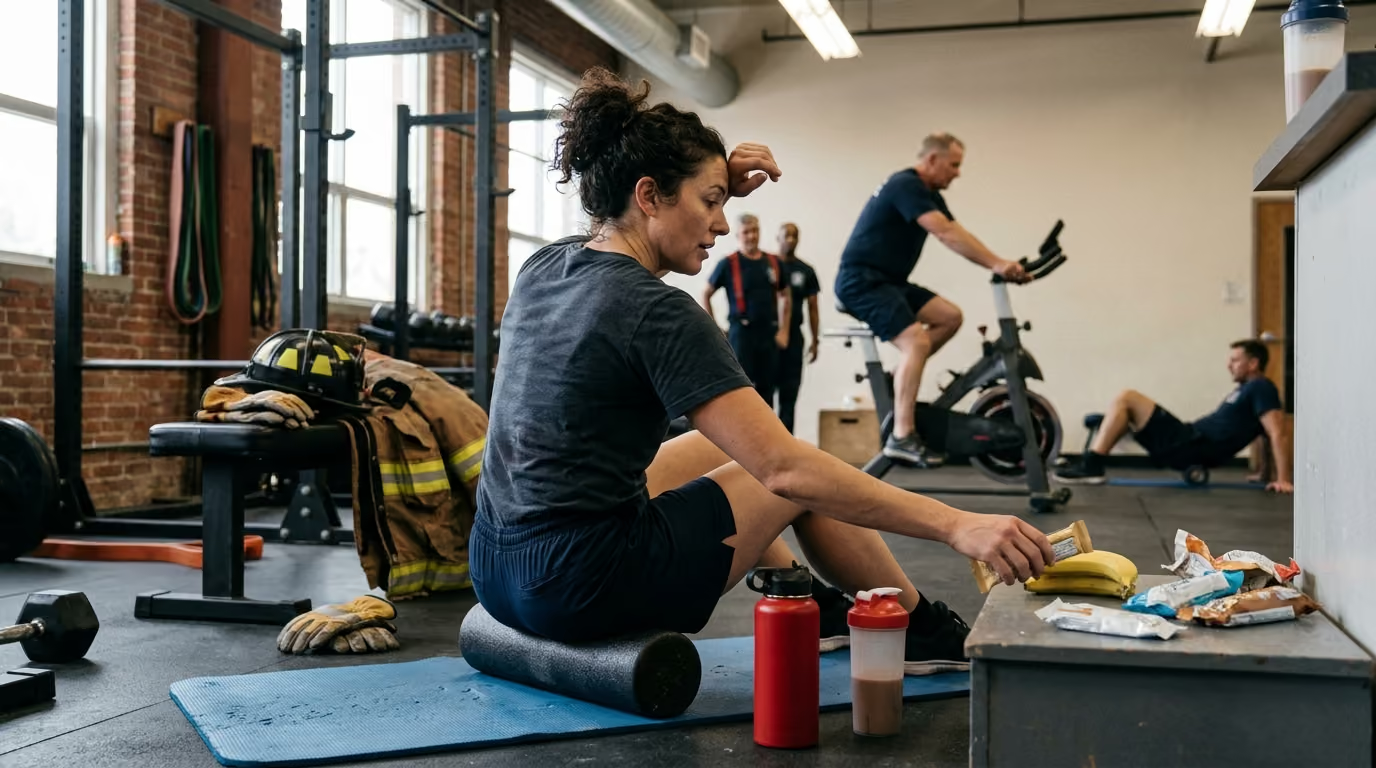

Four operational pillars define high-intensity work capacity and dictate how emergency responders train energy systems for repeated physical duty demands.





High-intensity work capacity is not the ability to survive a single exhausting workout. It is the physiological ability to produce, repeat, and sustain forceful efforts under incomplete recovery without losing technical control or situational awareness. In emergency services, this capacity determines whether a crew member can execute a rapid primary search, breach an entryway, drag a victim, and immediately reset to haul equipment up multiple flights of stairs.
This guide breaks down the underlying physiology of repeated-effort capacity, reviews the occupational research across fire and emergency services, and outlines scalable interval structures designed to maintain operational readiness across a career.
High-intensity work capacity is the operational ability to repeat task-relevant, high-effort physical actions at acceptable speed, force, movement quality, and decision clarity despite incomplete recovery. In practical field settings, these actions include sprinting across unpredictable terrain, stair climbs with heavy gear, victim drags, charged hose advances, forcible entry, equipment carries, and physical control tactics.
Four distinct operational outcomes define this capability:
This quality differs fundamentally from single-effort strength, isolated aerobic endurance, or general conditioning. To program effectively, practitioners must distinguish between several related physiological qualities.
Anaerobic power represents the rate of energy production during brief, explosive actions lasting under six seconds. It manifests in rapid accelerations, dynamic breaching, explosive lifting, jumping, or sudden changes of direction. A responder can possess exceptional anaerobic power yet show poor work capacity if their output collapses after two or three efforts.
Anaerobic capacity describes the total amount of energy produced through non-mitochondrial pathways during intense exertion. It reflects glycolytic contribution, metabolic buffering, and the ability to sustain high-rate force production across efforts lasting from tens of seconds to several minutes. Testing protocols that measure anaerobic capacity often capture a blend of neuromuscular drive, pacing, and pain tolerance rather than a single isolated metabolic capacity.
Repeated-sprint ability measures the ability to produce repeated maximal or near-maximal efforts separated by brief, incomplete rest periods. Sports science literature evaluates this quality through several specific markers:
An individual can improve their best single sprint without improving their ability to maintain output across a set. Duty readiness requires minimizing the performance decrement while maintaining a high baseline of output.
Aerobic fitness is not merely a tool for long-distance locomotion. In repeated emergency tasks, the oxidative system functions as the primary recovery engine. It restores intramuscular phosphocreatine, clears metabolic by-products, delivers oxygen to working tissues, and lowers heart rate during brief pauses.
Without a robust aerobic foundation, high-intensity intervals become progressively slower, turning explosive efforts into sluggish muscular endurance work. Integrating long-term duty fitness standards requires balancing pure conditioning with structured recovery.
Metabolic capacity cannot compensate for tissue-specific failure. A responder may possess high aerobic and anaerobic fitness, but if their grip gives out during a drag, their operational output drops to zero. Local muscular endurance in the forearms, upper back, posterior chain, and trunk protects against mechanical breakdown during loaded carries and tool operations.
Repeated efforts place severe demands on coordination, foot placement, joint braking, and trunk stability. When fatigue accumulates, motor control degrades, increasing the likelihood of acute injury. True work capacity requires technical durability: the ability to maintain sound movement mechanics and safe decision-making under severe physical strain.
The human body relies on three primary energy systems operating along a continuum. Rather than functioning as isolated switches, these pathways contribute simultaneously, with their relative proportions shifting based on effort duration, intensity, and recovery timing.
The phosphagen system utilizes stored adenosine triphosphate and phosphocreatine to deliver immediate energy for high-rate contractions. It drives initial accelerations, maximal jumps, heavy lifts, and rapid impact tasks.
Intramuscular phosphocreatine stores deplete rapidly during all-out efforts. Research indicates that roughly 20 seconds of rest is required to restore a meaningful portion of phosphocreatine stores. A 10-second rest window is typically insufficient for full muscle reoxygenation and substrate restoration, leading to reduced force output on subsequent bouts.
When intense efforts exceed several seconds, the glycolytic pathway accelerates to meet high energy demands. This rapid breakdown of glycogen supports forceful work lasting up to several minutes.
Rapid glycolysis produces an accumulation of hydrogen ions, inorganic phosphate, and other metabolites within the muscle tissue. This accumulation alters intramuscular pH, impairs calcium handling in the muscle fibers, and contributes to the burning sensation and mechanical slowing experienced during extended emergency tasks.
The oxidative system provides ongoing basal energy while serving as the exclusive mechanism for metabolic restoration between high-intensity bouts. Faster muscle reoxygenation kinetics correlate directly with improved performance on repeated sprint tests.
A well-developed aerobic system accelerates the removal of metabolic by-products, restores cellular homeostasis, and prepares neuromuscular pathways for the next call or burst of activity. Describing a task as anaerobic highlights its immediate mechanical intensity, but sustaining that work across an entire incident relies directly on oxidative capacity.
Sports science and occupational research provide clear evidence regarding how repeated high-intensity efforts adapt to specific training stimuli. The evidence base spans laboratory trials, athletic field testing, and occupational firefighter studies.
Systematic reviews and meta-analyses show that repeated-sprint training reliably improves single-sprint speed, acceleration over 10 and 20 meters, change-of-direction speed, and best repeated-sprint times. However, the data reveals mixed effects regarding mean sprint times, fatigue decrement percentages, and maximal oxygen consumption.
Meta-analytic evaluations comparing repeated-sprint protocols against repeated-sprint-with-hold protocols demonstrated moderate improvements in repeated-sprint ability, but effects on general anaerobic capacity were statistically variable and highly heterogeneous across populations. These findings confirm that training high-intensity bursts does not automatically translate to improved fatigue resistance unless structured recovery and aerobic volume are integrated into the program.
Occupational performance research demonstrates that high-intensity interval training and functional circuits transfer directly to tactical tasks when programmed with appropriate volume.
Research examining the acute fatigue curve following high-intensity resistance training highlights significant operational trade-offs. Firefighters tested 10 minutes after a high-intensity resistance bout displayed marked reductions in maximal occupational work rate, diminished work efficiency, and accelerated air consumption.
Even after 60 minutes of passive recovery, nearly half of the tested personnel had not returned to their baseline occupational work capacity. This evidence underscores the risk of performing exhaustive workouts immediately prior to active duty shifts. Managing training volume requires structured decision frameworks for duty readiness to avoid compromising emergency response safety.
Laboratory interval protocols assume stable room temperatures, shorts and running shoes, predictable work-to-rest intervals, and standard running gaits. Emergency operations disrupt every one of these assumptions.
Personal protective equipment, body armor, and structural turnout gear add between 20 and 50 pounds of external load while encapsulating the body. Turnout gear restricts evaporative cooling, causing core body temperature to rise rapidly even during moderate output.
This thermal burden elevates heart rate independent of mechanical movement, accelerating glycogen depletion and increasing perceived exertion. Interval training for emergency personnel must account for internal thermal strain rather than relying solely on running paces.
Athletes in structured sports operate with planned substitutions, halftimes, and fixed round intervals. First responders experience chaotic, unscripted rest intervals.
A crew may spend two minutes breaching a wall at maximum effort, stand static for 45 seconds while coordinating, and immediately transition into a 150-pound dummy drag. Work capacity conditioning must build physiological versatility, allowing responders to recover while standing, moving slowly, or carrying equipment rather than relying on seated passive rest.
Standard athletic conditioning focuses heavily on lower-body cyclic locomotion, such as sprinting, cycling, or rowing. Emergency work demands extensive upper-body and trunk power under asymmetrical loads.
Tasks like charged hose advances, patient extrications, ceiling pulls, and forcible entry place severe shear forces on the spine while heavily fatiguing the grip, shoulders, and thoracic musculature. Work capacity programs must incorporate loaded carries, drags, and ground-to-standing transitions to build true operational durability.
Effective monitoring separates physical testing into single-effort power assessments, repeated-effort capacity tests, and multi-modal occupational simulations.
Single-effort tests measure peak mechanical output. Common protocols include:
These assessments quantify pure neuromuscular power. They establish baseline explosive output, but they provide no data regarding a responder's ability to sustain that output over time.
Repeated-sprint testing provides direct measurement of repeatability and metabolic recovery. A standard research protocol consists of seven 30-meter sprints separated by 20 seconds of passive recovery.
When conducting repeated-effort batteries, practitioners should record:
((Total Time / (Best Time x Number of Reps)) - 1) x 100.
Simulated duty circuits combine task-specific movements to evaluate how metabolic conditioning interacts with load, grip, and tactical coordination. A standardized circuit may integrate a 20-meter sandbag drag, a stair climb with a weighted vest, a sled push, and an equipment carry.
To keep occupational testing reliable, practitioners should change only one training variable at a time. Modifying the load, circuit duration, rest periods, and exercise order simultaneously obscures whether performance shifts stemmed from improved aerobic fitness, greater grip strength, or simple pacing adjustments.
Interval programming requires manipulating work duration, recovery duration, intensity, and volume to target distinct physiological adaptations.
This structure develops explosive acceleration and force without accumulating debilitating metabolic fatigue.
This protocol trains the body to maintain mechanical output when recovery times are brief and incomplete.
This framework challenges maximal oxygen consumption and strengthens the oxidative recovery engine.
This template replicates the multi-planar, loaded demands of emergency responses.
This strategy establishes strict performance boundaries to prevent responders from drilling exhausted, technically compromised movement patterns.
Building sustainable work capacity requires a phased approach. Layering high intensity, high volume, external loads, and heat stress simultaneously creates excessive systemic fatigue and raises injury risk.
Establish clean movement mechanics across primary movement patterns: squatting, hinging, lunging, pushing, pulling, and bracing. Train these patterns under zero metabolic fatigue to build tendon resilience and stable joint positioning.
Develop foundational strength and explosive acceleration. Utilize heavy compound lifting and short, fully recovered sprints. Maximum power cannot be repeated until peak power is established.
Introduce multi-repetition sessions while keeping rest windows wide. Use work-to-rest ratios of 1:4 or 1:5. This stage builds physiological tolerance to repeated efforts without causing severe metabolic distress.
Gradually compress recovery intervals down to 1:2 or 1:1 work-to-rest ratios. This phase challenges the oxidative system to restore phosphocreatine rapidly and forces working muscles to operate under moderate metabolic acidosis.
Transition from straight-line cyclic modalities to multi-planar movements. Introduce lateral decelerations, sled drags, crawls, and loaded carries to expose the core and stabilizer muscles to dynamic stress.
Introduce external operational gear in a gradual, controlled manner. Begin with a light weight vest (10 to 15 pounds) before progressing to full duty gear or breathing apparatus. Monitor thermal strain and movement mechanics closely.
Once technical movement and metabolic capacity are stable, add simple cognitive and communication challenges. Responders can call out simulated radio traffic, read building floor plans, or solve procedural problems immediately following an intense interval.
Balancing these stages around rotating shifts requires adjusting workout intensity based on sleep and operational call volume. Responders can use minimum effective dose conditioning to maintain high-intensity capacity without draining energy reserves during heavy duty rotations. When irregular shifts disrupt training, training around demanding shift schedules helps balance high-output intervals with lower-fatigue maintenance sessions.
High-intensity training places significant stress on the cardiovascular and musculoskeletal systems. Pushing into severe fatigue without appropriate boundaries can lead to overtraining, degraded readiness, and injury.
Completing an exhaustive interval workout shortly before an operational shift compromises workplace safety. High-intensity resistance circuits and severe intervals induce neuromuscular fatigue, reduce grip strength, and impair reaction time for hours post-session.
Responders who choose to train on duty should prioritize low-volume power work with generous recovery. Exhaustive capacity workouts should be reserved for the start of off-duty blocks.
High-intensity intervals generate significant internal heat. Training in turnout gear or weighted body armor in hot, humid conditions quickly overwhelms the body's cooling mechanisms.
Uncontrolled core temperature elevation impairs cardiac stroke volume and increases the risk of heat illness. Hydration strategies, pre-cooling, and training in well-ventilated environments are essential when working under load. Supporting metabolic demands also requires robust shift-work nutrition strategies to sustain fuel levels and fluid balance across unpredictable schedules.
Fatigue degrades dynamic joint stability. As the posterior chain and core musculature tire, responders often shift shear forces onto the lumbar spine during lifts, or allow their knees to collapse inward during braking and deceleration.
Conditioning sessions must prioritize movement quality over sheer exhaustion. When form breaks down, continuing the workout only trains poor motor patterns and increases the risk of tendon and ligament injuries.
While high-intensity conditioning is an integral component of operational readiness, certain physical symptoms warrant medical evaluation rather than continued training.
Personnel should consult a qualified healthcare provider or sports medicine professional if they experience:
A structured medical evaluation provides an objective review of cardiovascular health, helping personnel identify underlying risks before undertaking demanding conditioning protocols.
Bodyweight exercises can improve basic metabolic conditioning, but they have limits for emergency personnel. Tactical tasks require manipulating heavy external masses, including victims, hose lines, and equipment. Building operational work capacity requires external resistance, such as sleds, sandbags, kettlebells, or weighted vests, to develop the necessary force output and tissue durability.
For active emergency responders, one to two targeted high-intensity sessions per week are generally sufficient when combined with strength training and aerobic base work. Adding more interval sessions often creates excessive systemic fatigue, which can interfere with operational readiness and shift performance.
Heart rate is a helpful measure of internal strain, but it can be distorted by ambient heat, protective gear, dehydration, caffeine, and operational stress. Combine heart rate data with external performance metrics, such as split times, wattage, or movement quality, alongside your rate of perceived exertion for a more accurate assessment.
If an emergency call occurs during training, transition immediately into duty mode by prioritizing hydration and rapid cooling. Remove heavy training vests, lower your core temperature with cool water, and consume rapid-acting fluids if needed. Adjust your post-call routine to account for the interrupted workout rather than attempting to finish an exhaustive interval session immediately after returning to quarters.
High-intensity work capacity is built by methodically developing peak power, metabolic recovery pathways, local muscular endurance, and movement precision. Balancing structured interval frameworks with adequate recovery ensures first responders maintain reliable operational capability throughout a long, healthy career.
Stay connected for research-led guidance on duty fitness, shift-work sleep, injury recovery, stress, nutrition and career longevity. Practical ideas for first responders who want to stay capable on the job, recover well and protect their health for the long run.



Read practical guidance on first responder fitness, recovery, sleep, nutrition and resilience for demanding work and a long, active career.
read the blog



