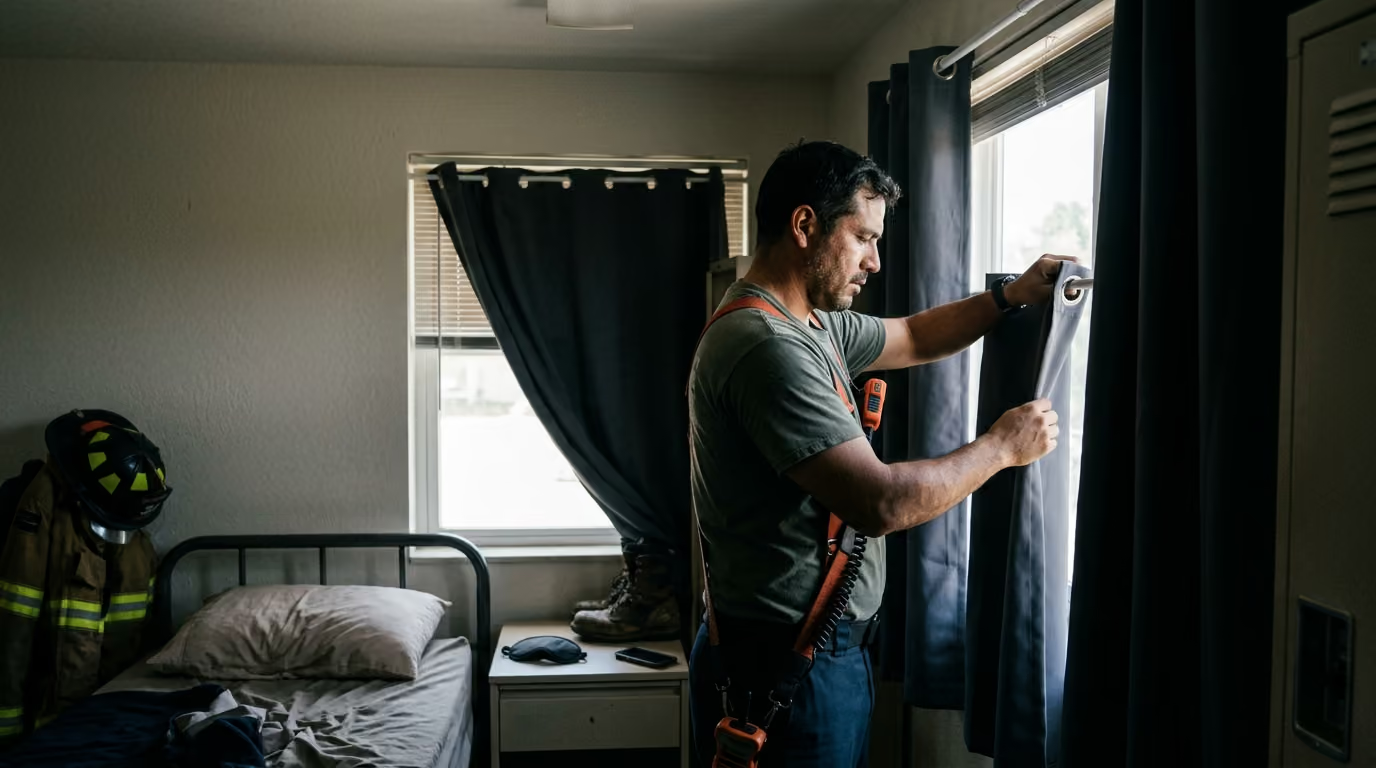

Waking up exhausted between night shifts becomes preventable when you systematically eliminate bedroom light, mask sudden neighborhood noise, and coordinate family schedules.





You finish a twelve-hour night shift at seven in the morning. Your eyes burn, your body feels heavy, and your mental focus is fading fast. You drive home into rising sunlight, step inside your house, and crawl into bed hoping for eight hours of solid rest. Two hours later, a delivery truck rumbles past, morning sunlight leaks through cheap window blinds, and the house begins to warm up. You wake up with a jolt, your heart racing, unable to fall back asleep despite feeling completely exhausted.
Daytime sleep is not just nighttime sleep moved to a different hour on the clock. Sleeping during daylight forces your body to fight against solar radiation, traffic sounds, rising outdoor temperatures, delivery drivers, and active household routines.
Creating a dependable day-sleep environment requires treating your bedroom as an engineered control system. You must systematically isolate your sleeping space from daylight, suppress sudden noise spikes, manage ambient temperature, filter electronic alerts, and coordinate household activity. By addressing these environmental failure points in order of impact, you can secure deep, restorative sleep between shifts and protect your long-term health.
The human body relies on an internal twenty-four-hour circadian clock regulated by the suprachiasmatic nucleus in the brain. This system uses natural light exposure to promote daytime alertness and darkness to trigger nighttime sleepiness. When you work at night and sleep during the day, your physiological drive to sleep clashes directly with your circadian drive for wakefulness.
Data from the National Institute for Occupational Safety and Health shows the scale of this challenge. NIOSH reports that 61.8 percent of night-shift workers experience short sleep, compared to 35.9 percent of day workers. Furthermore, 18.5 percent of night workers report chronic insomnia, compared to just 8.4 percent of daytime personnel. This biological mismatch makes intentional sleep environment design an operational safety requirement rather than a lifestyle luxury.
To fix the problem, you must separate sleep opportunity from actual sleep obtained. You might stay in bed for eight continuous hours, but environmental disturbances can steal two or three hours through micro-arousals and fragmented sleep cycles. Sleep fragmentation prevents your brain from spending adequate time in slow-wave sleep and rapid eye movement stages. These deep stages are essential for tissue repair, hormone regulation, and cognitive recovery.
Sound disturbances play a massive role in fragmenting daytime rest. The World Health Organization recommends maintaining continuous bedroom noise below 30 decibels for restorative sleep. WHO guidelines also advise keeping individual noise events below 45 decibels. Sudden, isolated sounds like a barking dog or a slamming car door cause immediate sleep disruption, even when the background room volume seems quiet.
Circadian biology also makes shift workers highly sensitive to morning light. Research from the American Academy of Sleep Medicine demonstrates that timed light exposure during shifts and aggressive light restriction before bed improve daytime sleep duration. Allowing morning light to reach your eyes during your commute or in your bedroom sends an immediate wake-up signal to your brain. This light exposure rapidly suppresses melatonin production and elevates core body temperature, making consolidated daytime rest nearly impossible.
First responders, medical staff, and shift workers face operational pressures that make day sleep far more complicated than standard sleep hygiene advice assumes. Public safety professionals cannot simply unplug from reality. You may need to remain reachable for mandatory overtime call-ins, court appearances, or critical agency notices while managing irregular shift patterns.
The constant state of hypervigilance required on duty does not automatically disappear when you take off your uniform. Operating in high-stress environments keeps the sympathetic nervous system elevated for hours after a shift ends. If your bedroom allows sudden noises or visual distractions, your brain interprets those cues as operational threats. This response triggers a burst of cortisol and adrenaline that pulls you straight out of light sleep.
Rotating shifts create another major operational barrier. Responders who alternate between day tours, night shifts, and extended twenty-four-hour rotations cannot permanently adapt their circadian biology to nocturnal hours. For practical guidance on handling these rosters, review our guide on building a shift-specific sleep plan. When schedules rotate constantly, the bedroom environment must work even harder to simulate nighttime conditions on demand.
The physical demands of emergency response work also elevate metabolic recovery needs. Research cited by NIOSH indicates that night-shift officers sleeping fewer than six hours face significantly elevated risks of physical injury and metabolic dysfunction. Protecting daytime sleep duration is a primary defense against cumulative career wear and occupational exhaustion.
Commute conditions compound these difficulties. Driving home through bright morning sun activates retinal photoreceptors, signaling to the brain that the active duty day has begun. If you step from a bright highway directly into a poorly darkened bedroom, your sleep latency increases dramatically. You can explore broader occupational baselines in our analysis of the CDC shift work fatigue report.
The first priority in any day-sleep bedroom is total light elimination. Standard residential curtains and horizontal mini-blinds are completely inadequate for daytime sleep. They leave massive perimeter light gaps, illuminate ceiling corners, and turn your bedroom into a dimly lit twilight space that keeps your brain partially alert.
NIOSH recommends making a day-sleeping bedroom dark enough that you cannot see your hand held directly in front of your face. Achieving this level of darkness requires stopping light at the window glass, around the window frame, and through interior doorways. True blackout conditions prevent ambient photons from penetrating your eyelids and suppressing natural daytime melatonin release.
Begin by sealing the primary window openings using heavy, multi-layered blackout treatments. Standard decorative blackout curtains often leak light along the top rod and side margins. To eliminate this issue, install wrap-around curtain rods or mount specialized side channels directly against the wall casing. Magnetic tape or hook-and-loop fasteners along the curtain edges ensure a continuous light seal against exterior window frames.
For severe sun exposure on south-facing or east-facing windows, install removable opaque window film or custom-cut insulation foam directly against the glass pane. This extra layer stops direct solar radiation before it hits the curtain fabric, blocking both blinding light and radiant heat. A tension-mounted cellular blackout shade installed inside the window frame provides a strong secondary barrier beneath your primary drapes.
Address interior light leaks with equal attention to detail. Hallway light passing under the bedroom door can easily wake a light sleeper during the middle of the day. Install a dense, heavy-duty door sweep or place an adjustable draft stopper along the bottom threshold. If light penetrates the perimeter gaps of the door frame, add self-adhesive foam weatherstripping along the interior door jamb.
Do not overlook small electronic light sources inside the room. Glowing power bricks, television standby LEDs, air purifier displays, and digital clocks emit blue and green light wavelengths that impair sleep quality. Cover these lights with opaque blackout stickers or remove unnecessary electronics from the room entirely. If you must navigate to the bathroom during your sleep block, use a low-wattage, dim red night-light that preserves your dark adaptation without triggering circadian alerting.
High-quality contoured eye masks provide a practical secondary defense, especially when sleeping in firehouse dorms, temporary housing, or shared apartments. Choose a molded, deep-cup mask that seals firmly against your nose bridge without putting direct pressure on your eyelids. While an eye mask is an excellent tool, it should support a dark room rather than replace thorough window and door lightproofing.
Controlling bedroom acoustics during daytime hours requires a dual strategy. You must physically block outside sound transmission while simultaneously smoothing out remaining acoustic spikes with steady sound masking. Daytime noise is naturally disruptive because it is unpredictable, intermittent, and filled with identifiable human speech or traffic patterns.
The WHO highlights that isolated, fluctuating noise spikes above 45 decibels trigger rapid shifts from deep sleep to light sleep. A steady, predictable hum is far less disruptive than an unexpected delivery truck horn, a barking dog, or footsteps in the hallway. Your acoustic objective is to raise the continuous ambient noise floor safely while lowering the peak intensity of sudden outside noises.
Start by addressing physical sound transmission pathways. Windows are generally the weakest acoustic barrier in any bedroom. Close and latch windows tightly to compress their weatherstripping seals. Hanging heavy, dense blackout drapes also adds mass that dampens mid-frequency street sounds, sirens, and nearby conversation.
Reposition your bed away from high-noise zones within the room. If your bed sits directly against an exterior wall facing a busy street or a shared wall adjacent to the living room, move it to an interior partition. Placing dense rugs or wall hangings on hard surfaces reduces interior room echo and absorbs incoming vibrations.
Next, introduce a dedicated sound masking device to camouflage unavoidable daytime noises. Choose a machine that produces true, non-looping white, pink, or brown noise across a balanced frequency spectrum. Pink and brown noise profiles feature deeper, lower frequencies that are particularly effective at drowning out low-end street rumble, engine idle, and distant footsteps.
Keep your sound machine volume within safe, evidence-supported thresholds. The sound masking should be loud enough to blend ambient spikes into the background, but it must never exceed safe continuous exposure levels. Position the machine between your bed and the primary noise source, such as near the window or the bedroom door, rather than placing it right next to your head.
Earplugs provide an additional layer of personal acoustic defense when external noise remains high. Soft, high-density foam earplugs with a noise reduction rating of 28 to 33 decibels work well when rolled tightly and inserted correctly into the ear canal. Custom-molded silicone earplugs offer an alternative for responders who experience ear canal irritation from standard disposable foam options.
Never use extreme sound isolation if you are responsible for monitoring active emergency dispatches or infant monitors. Always ensure that your primary life-safety alarms, including smoke detectors and carbon monoxide monitors, remain clearly audible over any sound masking or earplug combination. Balanced sound management creates acoustic stability without compromising personal safety or operational readiness.
Human sleep architecture is closely tied to the body's internal thermoregulatory cycle. To initiate and maintain deep sleep, your core body temperature must drop by roughly one degree Celsius. During standard night sleep, ambient outdoor temperatures fall naturally, supporting this biological cooling process.
During daytime sleep, outdoor temperatures rise steadily throughout the morning and early afternoon. Solar radiation heats exterior walls and roofs, driving bedroom temperatures up precisely when you are trying to complete your deepest sleep cycles. If your bedroom becomes hot or stuffy, your body will struggle to maintain slow-wave sleep, leading to restless tossing and frequent awakenings.
Consensus guidelines for shift-work sleep hygiene recommend keeping bedroom temperatures between 16 and 20 degrees Celsius, which equals 60 to 68 degrees Fahrenheit. Temperatures above 24 degrees Celsius, or 75 degrees Fahrenheit, cause marked sleep fragmentation and reduce total rapid eye movement sleep. Maintaining a cool, stable microclimate inside your bedroom is essential for continuous day sleep.
If your home uses a programmable thermostat, set it to drop the temperature an hour before your scheduled morning bedtime. If central cooling is unavailable or inefficient on upper floors, install an energy-efficient window air conditioner or a quiet portable dual-hose cooling unit in your bedroom. Make sure the cooling equipment operates at a steady, low decibel level to prevent jarring compressor cycling from waking you up.
Bedding choices significantly influence microclimate heat retention around your body. Replace dense synthetic fabrics, heavy polyester comforters, and solid memory foam toppers that trap radiant body heat. Switch to breathable, natural materials such as 100 percent percale-weave cotton, bamboo, or linen sheets that allow air circulation and wick away sweat.
Air movement and ventilation also prevent stagnant, warm air pockets from settling over your bed. A quiet, variable-speed ceiling fan or oscillating floor fan keeps air circulating without generating high-frequency motor whine. Keep interior bedroom doors closed to preserve darkness and sound isolation, but ensure that HVAC supply and return vents remain unobstructed to maintain steady airflow throughout your entire sleep block.
Unfiltered mobile phones and connected smart devices represent one of the most common causes of fragmented daytime sleep. Responders often leave their phones on full ring volume because they worry about missing an emergency call, a dispatch alert, or a family issue. Unfortunately, this leaves them vulnerable to spam callers, group chat notifications, work emails, and automated app updates.
Solving this problem requires establishing a strict alert hierarchy that separates critical emergency communications from routine digital noise. Every notification channel must be sorted into one of four distinct categories:
Modern smartphones include customizable focus and "Do Not Disturb" profiles that execute this hierarchy automatically. Configure a dedicated "Day Sleep" profile that activates with a single tap when you climb into bed. Set this profile to silence all incoming calls, text messages, and app notifications by default, while creating a strict allowlist for emergency contacts.
Add your agency dispatch desk, immediate family members, and your direct supervisor to your phone's priority bypass list. Enable the repeated call feature, which allows a second phone call from the same number to break through the silence filter if placed within three minutes. This configuration guarantees that genuine emergencies reach you immediately, while silencing the dozens of routine notifications that typically occur during standard business hours.
Physical device placement within the room is equally important. Place your smartphone across the room on a dresser rather than on your bedside table. Position the screen facing downward so that incoming notification lights do not illuminate the ceiling or catch your peripheral vision. Keeping the device out of arm's reach also eliminates the subconscious habit of checking work emails or scrolling through news feeds if you wake up briefly between sleep cycles.
Manage smart home devices, doorbells, and landlines with identical discipline. Mute smart speakers and voice assistants in the bedroom during your sleep block. If your home has a connected video doorbell, set its interior chime to silent mode during your rest hours. If delivery personnel drop a package on the porch, the camera can log the event silently without disturbing your sleep.
Even the most advanced light-sealed, temperature-controlled bedroom will fail if family members, roommates, or visitors repeatedly interrupt your sleep. Daytime rest requires clear household communication and firm social boundaries. People who work standard daytime hours often forget that entering a shift worker's bedroom at noon is the exact biological equivalent of waking someone up at three in the morning.
Establish a clear, written household operating agreement that defines your protected sleep block. Ensure your partner, children, and housemates know the exact hours you will be sleeping and understand that this time is dedicated to non-negotiable recovery. You can also explore nutritional strategies that support these recovery blocks in our review of night-shift meal timing windows.
Use simple visual signals outside your bedroom to eliminate guesswork for everyone else in the house. Hang a clear sign on the bedroom door indicating that a shift worker is resting inside. A reversible door hanger or a simple color-coded light outside the room lets family members know immediately whether the space is open or strictly off-limits.
Coordinate daily household chores around your sleep schedule. Schedule high-noise activities like vacuuming, running the dishwasher, lawn maintenance, and laundry during hours when you are awake or already out of the house. If you have active pets, keep them outside the bedroom during your sleep window to prevent unexpected door scratching, whining, or bed jumping.
Delivery drivers and unexpected visitors pose another frequent source of daytime awakenings. Place a clear, durable sign near your front door or gate asking delivery drivers not to ring the bell or knock on the door unless a signature is legally required. Instruct delivery services through their mobile apps to leave all packages silently on the front step.
If you share a bed with a partner who operates on a standard daytime schedule, agree on clear entry and exit protocols. The daytime-active partner should prepare clothing, toiletries, and work gear in a separate room beforehand. This prevents them from opening closets, turning on bathroom lights, or making noise inside the bedroom while you are sleeping.
Building an effective sleep environment involves navigating practical trade-offs. Responders often make critical mistakes by relying on quick fixes, overlooking safety constraints, or implementing changes that solve one problem while creating another. Recognizing these common failure points will save you time, money, and unnecessary frustration.
One major mistake is assuming that an eye mask alone can solve a brightly lit room. While a good eye mask helps, light leaking around the nose bridge or slipping off during the sleep period will wake you abruptly. Furthermore, getting up to use the bathroom in a brightly lit hallway shocks your circadian system, instantly raising your alertness. Total room darkening provides a much more robust, continuous defense.
Another dangerous error is turning sound masking machines up to extreme, damaging volumes to drown out loud neighborhood noise. Sound levels exceeding 70 decibels right next to your head can cause long-term hearing fatigue and prevent you from hearing real household safety emergencies. Always position sound machines several feet away from your mattress and use the lowest effective volume that smooths out ambient noise spikes.
Responders also risk career and family consequences by silencing all communications without establishing a priority bypass system. Completely powering down your phone might ensure quiet, but it leaves you vulnerable if your department initiates an emergency operational recall. Build an automated priority allowlist instead of relying on total digital isolation.
Finally, avoid relying on heavy sedative medications or unguided over-the-counter sleep aids to force daytime sleep in a poor environment. Chemical sedatives do not create the same restorative sleep architecture as natural sleep. They can leave you feeling groggy, slow, and cognitively impaired when your shift begins. Fix your physical bedroom environment before considering pharmaceutical options.
Fatigue management carries serious life-safety implications. Never attempt to drive home after an exhausting shift if you are fighting severe drowsiness, experiencing micro-sleeps, or drifting across road lanes. If you are dangerously exhausted, take a brief twenty-minute tactical nap in a secure, parked vehicle before driving home to your prepared sleep space.
An engineered bedroom environment will dramatically improve sleep duration and recovery for most shift workers. However, physical adjustments to your room cannot solve every sleep issue. If you have optimized your darkness, acoustics, temperature, alert settings, and household schedule but still experience debilitating fatigue, you may be facing an underlying clinical condition.
Shift Work Disorder is a recognized medical condition characterized by chronic insomnia, excessive daytime sleepiness, or both, lasting for at least three months. The Journal of Clinical Sleep Medicine emphasizes that this disorder is directly tied to work schedules that overlap traditional sleep windows. It requires careful documentation through validated sleep logs, actigraphy monitoring, and comprehensive medical evaluation.
You should consult a licensed healthcare professional or a board-certified sleep physician if you experience any of the following persistent red-flag symptoms:
A comprehensive sleep assessment can rule out underlying physiological conditions like sleep apnea, restless legs syndrome, or chronic circadian rhythm misalignment. Sleep specialists can provide evidence-based clinical interventions, including structured light therapy protocols or targeted medical treatments tailored to your operational schedule.
Never ignore chronic sleep failure as an unavoidable badge of honor in emergency services. Your physical capability, cognitive processing, operational safety, and long-term health depend directly on consistent physiological recovery. Take sleep health as seriously as any other tactical or physical readiness discipline.
Optimizing your bedroom environment is most effective when approached as a structured, step-by-step process. Rather than spending hundreds of dollars on unproven sleep gadgets, audit your current room conditions during the middle of the day. Testing your space at one in the afternoon reveals the exact light leaks, noise patterns, and heat loads you must fix.
Use this systematic checklist to evaluate your bedroom and implement changes one variable at a time over a seven-day period:
To evaluate whether your environmental upgrades are working, monitor your results across three practical operational tiers:
Review our broader analysis on leadership and sleep measurement in emergency services for more insights on organizational readiness. Treating sleep as an active component of operational performance protects both your career longevity and your personal well-being.
When to revisit this resource: Re-audit your day-sleep environment whenever you change shift rotations, move into a new living space, experience seasonal temperature shifts, or notice your total daytime sleep dropping below six hours.
Building a fully controlled day-sleep environment transforms your recovery between demanding shifts, turning broken daytime rest into deep, predictable recovery that sustains your career and protects your health over the long haul.
Stay connected for research-led guidance on duty fitness, shift-work sleep, injury recovery, stress, nutrition and career longevity. Practical ideas for first responders who want to stay capable on the job, recover well and protect their health for the long run.



Read practical guidance on first responder fitness, recovery, sleep, nutrition and resilience for demanding work and a long, active career.
read the blog



