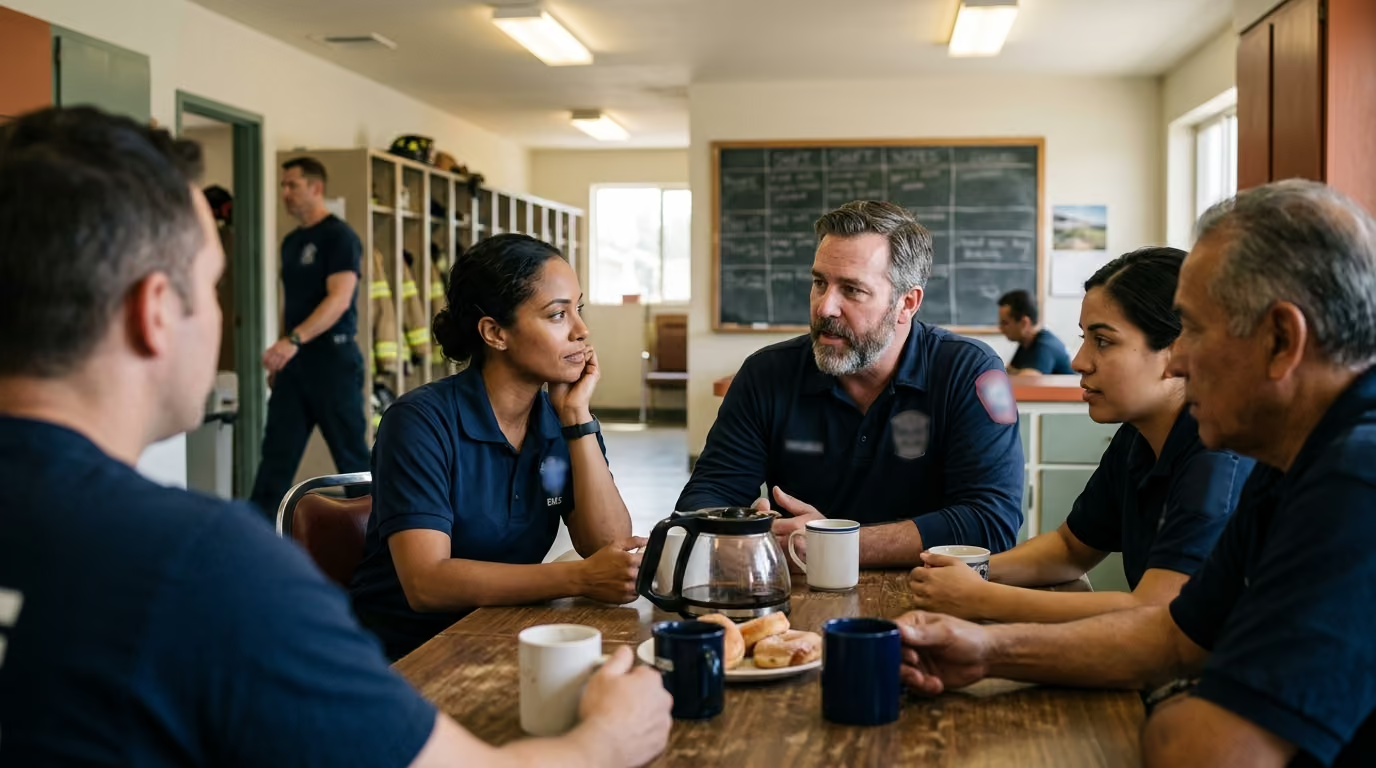

Critical field emergencies disrupt attention and cause costly errors unless responders build proven regulation skills through structured, progressive stress-inoculation drills.





If you are in immediate danger, call 911. For 24/7 support, call or text 988 and press 1 for the Veterans Crisis Line, or text 838255.
Stress-inoculation training is a structured method for learning how to recognize physical arousal, regulate attention, and execute operational skills under progressively demanding conditions. It is not an attempt to eliminate the stress response, suppress human emotion, or make emergency personnel immune to trauma. Real emergency work activates the autonomic nervous system. Training must teach responders how to maintain clear decision-making, accurate physical skills, and coherent communication while that activation occurs.
Stress Exposure Training adapts clinical stress inoculation for high-stakes operational environments. Its primary goal is to preserve task performance when time pressure, physical exhaustion, social scrutiny, and physical danger surge. Building these capabilities requires a systematic progression rather than chaotic overload. Responders can learn to manage arousal, maintain situational awareness, and protect their long-term health across a full career.
Stress-inoculation training originated as a cognitive-behavioral framework designed around three distinct phases. Donald Meichenbaum and Jerry Deffenbacher outlined these phases as conceptualization, skills acquisition and rehearsal, and application with follow-through. When translated to emergency services, the method provides a clear bridge between classroom theory and chaotic field conditions.
The first phase focuses on education and conceptualization. Responders learn what acute arousal does to human physiology, sensory perception, and cognitive processing. They identify personal stress cues, such as accelerated breathing, muscle tension, tunnel vision, or racing thoughts. Instead of viewing these bodily changes as signs of failure, personnel learn to view them as predictable physiological activation.
The second phase involves acquiring and rehearsing a compact set of regulation skills. Responders learn actionable techniques, including controlled breathing, task-focused internal cueing, attentional shifting, and structured communication. These tools are practiced in low-stress settings until they become automatic. Personnel do not wait for an active structural fire or a critical medical call to test a new coping behavior.
The third phase applies those rehearsed skills under graded operational stress. Trainees face controlled scenarios where cognitive load, physical fatigue, and unpredictable variables increase incrementally. The training environment allows personnel to experience stress, apply their regulation tools, and receive immediate objective feedback. Over repeated exposures, responders build confidence in their ability to act effectively under pressure.
Stress inoculation is often confused with traditional stress hardening. Unstructured stress hardening relies on overwhelming trainees with arbitrary yelling, physical punishment, and chaotic conditions without providing regulation tools. This approach can lead to threat conditioning, panic, and unnecessary injuries.
Effective stress inoculation differs in four fundamental ways:
The objective is never to generate the highest possible heart rate or induce panic. The objective is to preserve functional behavior when heart rate, uncertainty, and mission complexity rise.
Functional performance during an emergency is defined by observable behavior rather than internal emotional state. A firefighter, paramedic, or police officer can feel fear, urgency, or sorrow and still execute tasks effectively. Calm should not be defined as the absence of emotion or a flat physiological baseline. A more practical operational standard is organized action under activation.
Key indicators of functional performance under acute stress include:
First responders face significant exposure to acute and cumulative operational stressors. A 2026 systematic review of mental health outcomes across emergency occupations found post-traumatic stress disorder prevalence estimates ranging from 1.0% to 82.4% across 29 studies. Fifteen of those studies reported prevalence rates between 14.6% and 40%. This wide range reflects differences in occupational roles, measurement methodologies, and organizational contexts.
A separate systematic review and meta-analysis demonstrated that routine occupational exposures often carry a higher post-traumatic stress burden than single large-scale disaster responses. The review reported PTSD prevalence estimates of 14.3% for routine occupational exposure compared to 8.3% for disaster exposure. Chronic, repeated exposure to daily critical incidents can gradually erode performance if recovery and regulation skills are absent.
A comprehensive systematic review by the RAND Corporation evaluated 136 publications examining stress-control interventions across military, law enforcement, and emergency personnel. The review identified 38 controlled trials, 35 cohort comparisons, and 42 uncontrolled case studies. The interventions included stress-inoculation training, biofeedback, resilience workshops, mindfulness practice, decompression programs, and peer-support models.
The RAND analysis found that stress-control programs generally produced positive outcomes for return to duty, reduced absenteeism, and lower general distress. The review did not find a significant overall reduction in clinical PTSD, depression, or anxiety symptoms. The authors noted that methodological limitations, inconsistent intervention designs, and variable sample sizes make it difficult to isolate the effects of specific program components.
Stress training should not be viewed as a standalone cure for occupational mental health disorders. Training provides tactical and psychological tools to manage acute operational demands. It must exist alongside organizational support systems, reasonable staffing levels, effective rest periods, and access to professional healthcare.
Research shows a clear link between elevated physiological stress reactivity and decision-making errors during high-threat tasks. In a study evaluating police officers during realistic lethal-force simulations, elevated stress reactivity strongly predicted degraded performance. Officers with higher physiological reactivity had a 13% drop in overall performance and six-times-higher odds of making lethal-force decision errors.
Similar patterns emerge in fire and rescue operations. Research on emergency management decision-making shows that acute stress impairs situational awareness and leads to information bias. Incident commanders under severe stress often experience distorted acceptance of information, either overreacting to minor inputs or ignoring critical hazard updates.
Resilience training integrated directly into realistic scenarios can alter these outcomes. In a controlled study by Judith Andersen and Harri Gustafsberg, police officers who completed a resilience program integrated with realistic use-of-force training showed superior physiological control. They maintained better situational awareness and made significantly more accurate force decisions than officers in standard training.
Acute threat triggers an immediate sympathetic nervous system response. Epinephrine, norepinephrine, and cortisol flood the bloodstream. Heart rate climbs, breathing accelerates, peripheral blood vessels constrict, and sensory input is altered.
These physiological shifts are adaptive for immediate survival, but they can impair complex emergency tasks. High arousal narrows the visual field, commonly called tunnel vision. It can reduce auditory sensitivity, impair fine motor coordination, and disrupt short-term working memory.
When arousal escalates past an optimal threshold, attention tends to fixate on the most salient perceived threat. A paramedic may fixate entirely on a single obvious laceration while missing signs of airway compromise. A firefighter might focus on forcing a specific door while failing to notice changing smoke conditions overhead.
Sensory processing changes can also compromise communication. Responders operating under acute load may fail to hear radio traffic directed at their unit. They may misinterpret environmental sounds or fail to register verbal warnings from their partners.
Training must teach personnel to recognize the onset of attentional narrowing. Using brief grounding cues helps responders deliberately expand their perceptual field back to the broader operating environment. Learning practical stress regulation skills between calls allows personnel to reset their physiological baseline before entering the next high-acuity scene.
High stress reduces working memory capacity. Responders have fewer mental resources available to calculate drug dosages, navigate building layouts, or recall complex command hierarchies. Under severe time pressure, the brain relies on intuitive heuristics rather than systematic analysis.
Heuristics are often effective, but they can fail when a scene presents unusual or contradictory features. Incident commanders under pressure may experience confirmation bias, interpreting new information as support for their initial plan while ignoring contradictory field reports.
Emergency operations should not rely entirely on solo cognitive composure. Agencies must build deliberate, structured verification steps into standard operating procedures. Teams benefit from verbal challenge phrases, standardized read-backs, and designated safety officers whose specific role is to monitor hazards without task saturation.
Stress inoculation cannot be treated as an isolated classroom exercise. First responders operate under unique physical, environmental, and operational constraints that directly influence how the body handles pressure.
Shift work and sleep disruption significantly alter autonomic nervous system regulation. Chronic sleep debt increases baseline cortisol, reduces heart rate variability, and impairs prefrontal cortex function. A responder operating on four hours of broken sleep will experience higher physiological reactivity to minor stressors than a well-rested individual.
Physical load and thermal stress also compound cognitive strain. Firefighters carry heavy turnout gear and self-contained breathing apparatus while working in extreme heat. Law enforcement officers wear protective vests and duty belts that restrict natural ventilation and alter movement mechanics. The metabolic cost of physical work amplifies cardiovascular strain, leaving less physiological reserve for cognitive tasks.
The nature of emergency calls creates distinct psychological loads. Responders may transition from complete sedentary rest in a recliner to maximum physical output within two minutes of an alarm. This rapid surge in sympathetic tone requires deliberate pacing and down-regulation habits once the incident concludes.
Cumulative routine exposure also shapes training needs. While critical incidents like active shooter responses or mass casualty events receive significant focus, daily exposure to human suffering, severe neglect, and verbal abuse creates substantial cumulative wear. Training must prepare responders for interpersonal friction and moral fatigue alongside acute physical danger.
Emergency personnel cannot execute complicated multi-step psychological routines during an evolving emergency. Regulation skills must be concise, memorable, and directly integrated with operational movement. A functional field repertoire relies on five core competencies.
Breathing regulation serves as a direct input to the autonomic nervous system. Slow, controlled exhalations help stimulate parasympathetic activity, tempering runaway tachycardia without eliminating necessary alertness.
Responders should practice breathing mechanics while moving, wearing gear, and operating equipment. Traditional seated meditation is insufficient for field readiness.
A field-applicable breathing sequence involves:
Breathing control does not make a responder completely immune to acute stress. It serves as a physiological anchor that prevents hyperventilation and preserves cognitive capacity.
Internal dialogue shifts under pressure. Unchecked self-talk often defaults to catastrophic or helpless framing, such as thinking an entire operation is lost after an initial mistake.
Cue-controlled self-talk replaces vague panic with actionable, behavior-based directives. Cues must be short, positive, and focused on immediate physical action.
Useful operational cues include:
Responders must learn to cycle between narrow focus and broad situational awareness. Narrow focus is required to start an intravenous line, clear a weapon stoppage, or operate a hydraulic rescue tool. Broad focus is required to track structural integrity, monitor surrounding traffic, and watch for approaching threats.
Training drills should require responders to switch focus intentionally. While performing a fine motor task, the instructor can prompt the trainee to state the location of all team members, identify exit paths, or report changes in ambient conditions.
Reframing does not mean forced optimism or ignoring actual danger. It means evaluating operational obstacles accurately rather than catastrophizing.
Common reframing patterns include:
Under stress, speech patterns tend to become rapid, clipped, and fragmented. Responders often transmit assumptions rather than objective facts, or they omit crucial location details.
Communication training should mandate closed-loop protocols during high-load scenarios:
Stress inoculation requires a structured, six-level progression. Rushing trainees into high-intensity, chaotic simulations before they master basic regulation skills creates confusion rather than competence.
The objective of Level 1 is to execute technical skills flawlessly while introducing core regulation cues. Drills are performed at a slow, deliberate pace in a quiet environment.
Examples include:
Success is measured entirely by technical precision and consistent use of regulation habits, without time pressure.
Level 2 introduces external cognitive demands while keeping physical effort low. Trainees must execute the technical task while filtering distractions.
Instructors can introduce:
The trainee must maintain clear communication and technical accuracy despite cognitive distractions.
Level 3 induces physiological arousal through physical exertion prior to the technical task. Instructors should not exhaust trainees to complete muscle failure. The goal is to elevate heart rate and respiratory rate to simulate acute operational activation.
Practical methods include:
Trainees must use breathing regulation and pacing to perform fine motor tasks while physiologically activated.
Level 4 removes predictable conditions. Scenarios begin with incomplete or deliberately misleading dispatch information, requiring trainees to adapt.
Variables to introduce include:
Trainees are evaluated on their ability to pause, reassess, communicate plan changes to their team, and abandon ineffective courses of action.
Interpersonal conflict, moral dilemmas, and public scrutiny often generate greater emotional stress than pure physical hazards. Level 5 introduces trained role-players who create realistic social friction.
Scenario elements include:
Trainees must maintain professional de-escalation, clear command presence, and focused task execution without losing emotional control.
Level 6 combines physical exertion, cognitive complexity, emotional friction, and shifting hazards into realistic, full-mission profiles. Scenarios must have clear learning objectives and strict safety boundaries.
Safety parameters for Level 6 training require:
Stress exposure must reflect the unique failure modes and operational realities of specific emergency disciplines. Generic training models fail to address role-specific cognitive demands.
Firefighters operate in hazardous environments where spatial disorientation, thermal load, and air management are critical safety factors. Drills must integrate stress inoculation with life-safety protocols.
Scenario design features:
Evaluation focuses on air management discipline, radio clarity under physical load, and the decision to withdraw before safety margins are breached. Integrating structured recovery ensures personnel balance physical output during extended responses, as outlined in practical shift-work recovery baselines.
Law enforcement personnel face rapidly evolving interactions that require swift transitions between verbal de-escalation, empty-hand control, and lethal force.
Scenario design features:
Evaluation focuses on proportionality of force, situational awareness, verbal de-escalation, and post-engagement scene security.
EMS personnel frequently work in isolated, uncontrolled environments with minimal immediate backup. They must execute complex clinical protocols while managing volatile social dynamics.
Scenario design features:
Evaluation focuses on adherence to clinical algorithms, systematic reassessment, clear crew resource management, and early requests for additional transport units.
Commanders and dispatch personnel experience intense cognitive load and high-consequence decision-making without the outlet of physical movement.
Scenario design features:
Evaluation focuses on maintaining calm radio discipline, delegating functional command roles, and periodically verbalizing operational assessments to the command staff.
A credible stress-inoculation program must evaluate concrete performance, process quality, and physiological recovery. Relying solely on self-reported trainee confidence is misleading. Stress exposure can easily inflate confidence without improving decision accuracy or tactical safety.
Agencies should track specific behavioral indicators during simulations:
Instructors must evaluate whether trainees actively apply regulation skills rather than relying purely on willpower:
Wearable heart rate monitors and physiological sensors can provide valuable training feedback when interpreted properly. A high heart rate during a dynamic drill is normal and expected. It reflects metabolic demand and sympathetic mobilization.
Physiological tracking should focus on recovery dynamics rather than trying to enforce an artificially low heart rate during action. Useful indicators include:
Standardized psychological screening should accompany operational training. Confidential evaluations measuring sleep disruption, burnout, and emotional exhaustion help agencies identify when operational stress is exceeding individual coping reserves. Agencies should establish clear systems for building operational resilience through shared support to sustain long-term capability.
Stress-inoculation training carries real physical and psychological risks if conducted carelessly. Agencies must recognize clear boundaries to prevent training injuries, emotional trauma, or the reinforcement of bad operational habits.
Agencies must establish strict safety protocols before conducting high-arousal training:
Personnel should never be encouraged to work, drive, or participate in dynamic high-stress training when extreme fatigue, acute injury, or sedating medications compromise safety. Managing fatigue through structured shift-specific sleep strategies and managing shift-work sleep disruption are critical prerequisites for safe operational performance. Adjusting duty and training schedules using frameworks like adjusting physical training around duty fatigue preserves both physical readiness and cognitive function.
Stress-inoculation training is designed to build operational performance and immediate coping skills. It is not a clinical treatment for established psychological injuries, clinical depression, severe anxiety disorders, or post-traumatic stress disorder.
Emergency personnel must recognize the boundary between normal, acute operational activation and persistent stress injuries. Experiencing elevated arousal, temporary intrusive thoughts, or mild fatigue immediately after a critical call is a common human response. These acute reactions typically diminish within days as normal sleep, physical activity, and social connection resume.
Professional clinical evaluation by a licensed mental health professional familiar with first responder culture should be sought when symptoms persist or interfere with daily functioning.
Signs that indicate a need for professional clinical support include:
Confidential employee assistance programs, specialized first responder clinical networks, and trauma-informed mental health providers offer evidence-based therapies. Seeking professional care is a standard health maintenance decision that protects career longevity and family well-being.
Building stress-inoculation skills is a practical, systematic process that prepares emergency personnel to act with clarity, precision, and purpose under demanding operational conditions. Long-term career longevity relies on combining realistic, graded training with deliberate recovery habits, structured team communication, and accessible health support.
No. Stress-inoculation training improves task performance, situational awareness, and short-term coping under acute operational pressure. The systematic review literature shows that while stress-control programs improve return-to-duty rates and reduce general distress, they do not consistently prevent clinical PTSD, depression, or anxiety. Training should be viewed as one component of a broader organizational health and safety framework.
Controlled breathing during heavy physical output will not reduce your heart rate to resting levels because your muscles demand oxygen. Its primary purpose during intense physical work is to prevent hyperventilation, stabilize respiratory cadence, reduce panic, and preserve prefrontal cortex function so you can think clearly and communicate accurately while physically activated.
Basic regulation skills, such as controlled breathing, brief cue words, and attentional scanning, should be integrated into daily operational checks and routine low-stress training. Graded, high-fidelity operational scenarios should be conducted periodically throughout the year, with sufficient time between sessions for structured debriefing, technical correction, and physical recovery.
If a trainee freezes, the instructor should immediately pause the scenario, step in to assist with physiological regulation using structured breathing and grounding cues, and identify the specific cognitive or sensory overload that caused the breakdown. The trainee should then be stepped back to a lower level of the drill progression to master the skill before advancing again. Freezing should be treated as an operational training deficit to correct rather than a personal failure.
Stay connected for research-led guidance on duty fitness, shift-work sleep, injury recovery, stress, nutrition and career longevity. Practical ideas for first responders who want to stay capable on the job, recover well and protect their health for the long run.



Read practical guidance on first responder fitness, recovery, sleep, nutrition and resilience for demanding work and a long, active career.
read the blog



