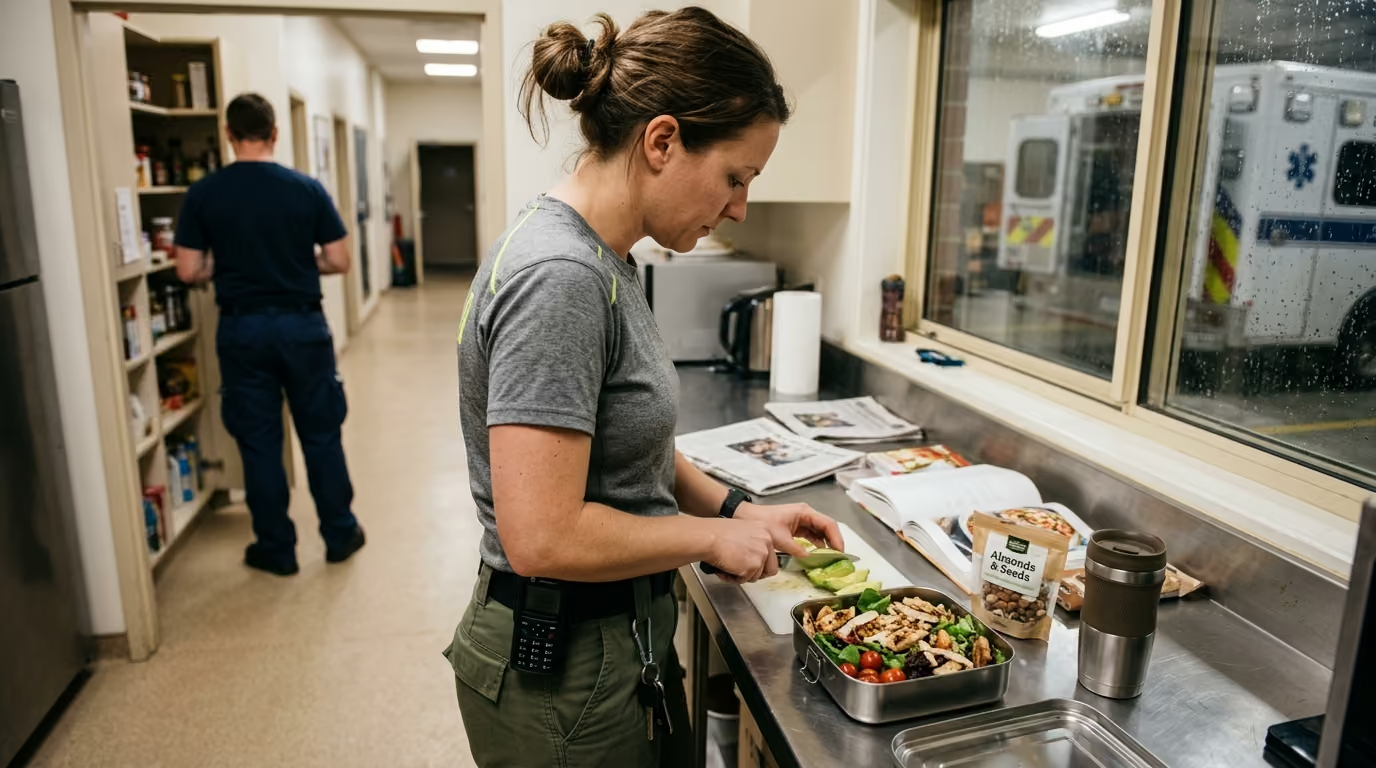

Low-carbohydrate and ketogenic diets impact first responder physical performance, operational hydration, and sustained energy output across diverse emergency service environments.





Adopting a very low-carbohydrate diet to improve physical readiness often produces the opposite outcome during demanding emergency operations. While restricting carbohydrates can support body weight reduction and improve resting glycemic control, the physiological demands of structural firefighting, tactical operations, and prolonged rescue tasks depend heavily on rapid glycolytic energy pathways.
For emergency personnel, nutritional choices cannot be judged solely by resting blood markers or scale weight. The true benchmark is whether a dietary pattern sustains physical strength, preserves high-intensity output, supports thermoregulation, and protects cognitive clarity across irregular shifts and unpredictable calls.
A low-carbohydrate diet provides fewer than 130 grams of carbohydrates per day, which is roughly under 26 percent of total daily energy intake. In contrast, a very-low-carbohydrate ketogenic diet restricts carbohydrate intake to 20 to 50 grams per day, or less than 10 percent of total calories, forcing the liver to produce ketone bodies from fatty acids. Research consistently demonstrates that while ketogenic protocols increase fat oxidation rates during steady-state exercise, they do not offer a performance advantage over balanced, higher-carbohydrate diets for high-output work. For first responders, moderate carbohydrate reductions can serve as a viable tool for appetite control during low-intensity assignments, but rigid ketosis often introduces substantial operational friction during sustained heat exposure, heavy lifting, and sleep-deprived tours.
Nutritional ketosis represents a specific metabolic state, whereas carbohydrate restriction exists along a broad spectrum. In clinical and sports science literature, nutritional ketosis is defined by a sustained blood beta-hydroxybutyrate concentration of at least 0.5 mmol/L. Achieving this state requires severe carbohydrate restriction along with moderate, controlled protein intake. If protein intake is excessively high, gluconeogenesis can suppress ketone production.
To evaluate dietary strategies accurately, responders should categorize intake patterns by absolute daily amounts rather than vague labels:
A conventional mixed diet supplies well over 130 grams of carbohydrates daily, often ranging between 3 to 8 grams per kilogram of body weight depending on activity levels. This approach prioritizes liver and muscle glycogen storage to support vigorous training blocks, dynamic physical rescues, and long-duration incidents.
A low-carbohydrate approach typically provides between 50 and 129 grams of carbohydrates per day. This intake level supports baseline brain glucose requirements while reducing refined sugars and processed starches. It often improves appetite regulation without driving the liver into deep ketosis or compromising all fast-acting glycogen stores.
A ketogenic diet restricts carbohydrates to approximately 20 to 50 grams daily. The primary metabolic purpose is to upregulate fatty acid oxidation and generate acetoacetate and beta-hydroxybutyrate as supplemental fuels for the central nervous system and peripheral tissues.
These clinical approaches restrict carbohydrates to fewer than 20 grams daily. They are primarily utilized in specialized medical therapies, such as pediatric epilepsy management or specific supervised metabolic interventions. They are rarely compatible with the variable physical demands of emergency services.
Confusing nutritional ketosis with diabetic ketoacidosis leads to common misunderstandings. Nutritional ketosis is a regulated, physiological response to low carbohydrate availability where blood pH remains normal. Diabetic ketoacidosis is an acute, life-threatening metabolic emergency characterized by severe insulin deficiency, uncontrolled hyperglycemia, and dangerous blood acidification. However, the presence of benign nutritional ketosis does not automatically mean that a diet is safe, practical, or optimal for a working firefighter, paramedic, or police officer.
Carbohydrate is far more than an interchangeable energy unit. Muscle glycogen and circulating blood glucose provide the substrate for rapid adenosine triphosphate regeneration via substrate-level phosphorylation. When an emergency task demands forceful muscle contractions, rapid stair ascents in heavy gear, or high-intensity suspect containment, fat oxidation is too slow to meet the rate of energy demand. Relying on fat alone during sudden, maximal efforts creates a metabolic bottleneck that limits operational speed and sustained power.
The scientific evidence evaluating ketogenic diets reveals a clear divide between static strength maintenance and repeated high-intensity capacity. A major position stand from the International Society of Sports Nutrition established that ketogenic diets have neutral or detrimental effects on athletic performance compared to higher-carbohydrate diets, even though they substantially elevate fat oxidation rates up to 1.5 grams per minute. Higher fat oxidation demonstrates metabolic adaptation, but it does not equate to improved work capacity, faster movement speeds, or superior occupational stamina.
Controlled trials indicate that absolute maximal strength, such as a one-repetition maximum squat or bench press, can generally be maintained on a ketogenic diet. A systematic review examining resistance-trained individuals found no consistent negative effect on upper-body or lower-body maximal strength when protein intake and total calories were matched. Because a single maximal lift relies primarily on stored phosphagens and immediate phosphocreatine resynthesis, absolute peak force is less vulnerable to reduced glycogen stores.
While absolute strength can be preserved, gaining lean muscle tissue is more difficult under strict carbohydrate restriction. An eight-week randomized trial examining resistance-trained men found that participants consuming a ketogenic diet achieved notable fat mass loss, but they failed to gain significant lean body mass compared to a non-ketogenic control group despite eating in a calorie surplus with high protein intake. A systematic review of resistance training studies similarly confirmed that ketogenic diets resulted in an average loss of 1.26 kilograms of fat-free mass across pooled cohorts. For first responders who need to build structural resilience and muscular armor, long-term ketogenic protocols may limit hypertrophy goals.
Emergency service tasks are rarely limited to a single maximal lift. Structural firefighting, patient extrications, and tactical engagements require repeated, high-intensity bursts interspersed with brief, incomplete recovery intervals. A systematic review assessing high-intensity cyclic performance and anaerobic power demonstrated that low-carbohydrate diets frequently lead to early fatigue and reduced power output during repeated sprints or intense circuits. When glycogen is depleted, muscle cells cannot regenerate energy fast enough to sustain high anaerobic power output, leading to reduced physical capacity during critical duties.
Evidence regarding steady-state aerobic endurance is more neutral. A comprehensive systematic review of 33 endurance-focused studies found that low-carbohydrate and ketogenic interventions did not substantially impair submaximal aerobic capacity in trained individuals once fat-adaptation occurred. However, steady-state running or cycling does not replicate the erratic demands of emergency scenes. A responder moving in protective gear must climb, lift, haul, and sprint against variable external resistances, demands that fall outside continuous submaximal parameters.
Heat stress presents an extreme operational challenge where rigid carbohydrate restriction can introduce critical vulnerabilities. When working in structural turnout gear, wildland fire environments, or tactical body armor, internal heat production combines with high ambient temperatures to create rapid thermal accumulation. Under these conditions, the cardiovascular system must balance blood flow between active working muscles and the skin surface for evaporative cooling.
Entering nutritional ketosis causes an initial diuretic effect. When dietary carbohydrates are sharply reduced, stored glycogen is metabolized to release glucose, dumping approximately three grams of bound water for every gram of glycogen cleared. Concurrently, lower circulating insulin levels prompt the kidneys to excrete higher amounts of sodium and water. If a responder begins a strenuous, high-heat shift in a state of ongoing electrolyte and fluid loss, their risk of heat-related illness, muscle cramping, and early cardiovascular drift increases substantially.
Guidance from the U.S. Forest Service recommends that wildland firefighters obtain one-third to one-half of their total fluid requirements through balanced electrolyte and carbohydrate beverages during arduous operational shifts. Carbohydrates in hydration solutions do not merely provide fuel; they accelerate water and sodium absorption in the small intestine via sodium-glucose cotransporters. A responder following a strict ketogenic diet who refuses all carbohydrate-containing fluids must rely exclusively on sugar-free electrolyte formulas, which can reduce intestinal fluid uptake rates during heavy exertion.
Operational nutrition protocols for wildland firefighters recommend a carbohydrate intake of 5 to 7 grams per kilogram of body weight per day during sustained fire suppression campaigns. For an 80-kilogram firefighter, this equates to 400 to 560 grams of carbohydrates daily to offset massive caloric expenditure and preserve physical performance. Attempting to fulfill these high operational energy demands purely through dietary fats and proteins can cause gastrointestinal distress, sluggish digestion, and insufficient muscular recovery between consecutive 14-hour operational shifts.
Responders seeking to understand sustainable fueling patterns can review the structured shift nutrition framework for actionable meal planning ideas.
Shift work disrupts circadian biology, which directly alters glucose tolerance, insulin sensitivity, and appetite-regulating hormones. Night duty and rotating schedules chronically elevate nighttime cortisol and catecholamine levels, leaving responders prone to impaired glucose metabolism regardless of their chosen diet.
During overnight shifts, the human body is biologically primed for rest and downregulates insulin sensitivity in peripheral tissues. Eating large, carbohydrate-dense meals at three in the morning often results in prolonged hyperglycemia and digestive discomfort. A moderate low-carbohydrate approach during the overnight window can mitigate severe blood glucose swings and prevent post-meal lethargy. Understanding eating strategies on night shift helps personnel choose appropriate meal timing that aligns with circadian physiology.
Emergency calls introduce unpredictable spikes in sympathetic nervous system activity. Combining high mental stress, chronic sleep debt, and strict dietary restriction often leads to diet abandonment and binge eating on station snacks. A 2026 clinical review highlighted that intense physical activity, acute psychological stress, and disrupted sleep warrant extreme caution when adopting restrictive ketogenic diets. Imposing rigid dietary rules during demanding work blocks increases cognitive fatigue and friction.
Personnel facing extended rotations can review insights on shift length and circadian strain to understand how cumulative sleep loss affects metabolism. Furthermore, balancing hydration and stimulants by managing caffeine during night duty prevents additional sleep fragmentation and cardiovascular stress.
Body composition management is a primary motivator for first responders adopting low-carbohydrate or ketogenic diets. While these diets frequently produce rapid initial reductions in scale weight, analyzing the composition of that weight loss is critical for long-term health and performance.
The initial drop in body mass observed during the first two weeks of carbohydrate restriction is primarily driven by glycogen depletion and accompanying water loss. When carbohydrate intake falls below 50 grams daily, the body consumes stored liver and muscle glycogen. Each gram of stored glycogen holds roughly three grams of water, leading to a sudden shift on the scale. Responders must recognize that this rapid reduction does not reflect accelerated loss of body fat.
Long-term fat loss on a low-carbohydrate diet occurs primarily because high protein and fat intakes increase satiety, leading to an unconscious reduction in total calorie consumption. Eliminating ultra-processed carbohydrates, refined pastries, and sugary beverages removes energy-dense foods that drive overconsumption. The metabolic state of ketosis itself does not break the laws of energy balance. A low-carbohydrate diet works for fat loss when it establishes a manageable, sustainable caloric deficit while maintaining high dietary protein.
Preserving lean mass during a weight-loss phase requires adequate total protein intake, sufficient overall energy, and consistent resistance training. Responders who combine a severe calorie deficit with strict ketosis and intense physical duty risk losing functional muscle tissue. A meta-analysis published in the British Journal of Nutrition found that while ketogenic diets reduced total body mass by an average of 3.67 kilograms and fat mass by 2.21 kilograms, they also produced a concurrent reduction in fat-free mass of 1.26 kilograms. Responders can explore additional nutrition and body composition resources to design sustainable, body-composition plans.
Rather than treating nutrition as an all-or-nothing identity, first responders benefit from a targeted, workload-based fueling model. This method adjusts carbohydrate intake according to anticipated shift demands, scheduled physical training, and seasonal duties.
A targeted carbohydrate approach allows personnel to capture the appetite-control benefits of lower carbohydrate eating while preserving high-intensity performance. Responders maintain a moderate carbohydrate baseline throughout the day, focusing on lean meats, eggs, fish, fibrous vegetables, and healthy fats. They then consume 30 to 60 grams of easily digestible carbohydrates 30 to 60 minutes prior to intense physical training or heavy structural drills, followed by another modest carbohydrate portion afterward to facilitate rapid recovery.
Every responder experimenting with lower carbohydrate intakes must establish a predefined carbohydrate-rescue protocol for unexpected emergencies. During prolonged rescue incidents or severe tactical stress, attempting to remain strictly ketogenic can impair situational awareness and physical endurance.
Carbohydrate-rescue criteria include:
When these symptoms emerge, personnel should immediately consume 30 to 60 grams of rapid-acting carbohydrates, such as standard electrolyte-carbohydrate sports beverages, fruit purees, or glucose gels. Preserving human life and personal safety always takes priority over maintaining a dietary state.
Responders can integrate this nutritional strategy with autoregulation and readiness training to adjust training intensity according to daily recovery levels.
Nutritional strategies must be adapted to the specific physical, cognitive, and logistical demands of different emergency service roles.
A full-time urban firefighter wishes to reduce body fat while maintaining strength for structural calls. The firefighter has reliable access to station cooking facilities and regular gym equipment.
A moderate low-carbohydrate diet providing 75 to 125 grams of carbohydrates per day is highly manageable in this scenario. Carbohydrates are consumed around station workouts and before evening duty windows. This plan allows the firefighter to create a sustainable calorie deficit without compromising muscle glycogen or inducing dangerous dehydration during routine interior drills.
A wildland firefighter operates in steep terrain under hot, dry conditions for 14-day assignments. Total daily energy expenditure frequently surpasses 4,500 to 6,000 kilocalories.
In this setting, a ketogenic diet is counterproductive and operationally impractical. Relying entirely on incident-camp fats and proteins limits rapid glycogen resynthesis and makes adequate hydration difficult. The firefighter should prioritize mixed meals, energy-dense carbohydrates, and consistent electrolyte-carbohydrate beverages to support physical stamina and prevent heat exhaustion.
A paramedic works alternating 12-hour day and night shifts with unpredictable call volume and limited station downtime. High-stress calls alternate with prolonged driving and report writing. The primary challenge is avoiding convenience store snacks and sugary energy drinks.
A portable, low-carbohydrate nutritional structure providing 50 to 100 grams of carbohydrates per day helps stabilize energy levels. Packing hard-boiled eggs, cooked poultry, nuts, Greek yogurt, and fresh vegetables prevents reactive hypoglycemia during long transfers. Strict ketosis is not required; the main benefit comes from eliminating ultra-processed carbohydrates and maintaining consistent protein intake.
A law enforcement officer is training for a tactical team selection course involving obstacle courses, loaded pack marches, tactical marksmanship, and repeated sprints. The officer needs to optimize their strength-to-weight ratio without losing anaerobic work capacity.
Adopting a strict ketogenic diet during selection preparation increases the risk of reduced sprint speed and early fatigue on obstacle courses. Instead, the officer should adopt a periodized nutrition strategy: moderate carbohydrate intake (2.0 to 3.5 g/kg) during heavy conditioning days and lower carbohydrate intake (1.0 to 1.5 g/kg) on recovery days. This preserves high-intensity output while supporting body composition goals.
Carbohydrate restriction alters metabolic pathways, fluid balance, and medication clearance. Emergency personnel must evaluate clinical contraindications and safety boundaries before attempting aggressive dietary changes.
First responders managing type 2 diabetes who are prescribed sodium-glucose cotransporter-2 (SGLT2) inhibitors, such as empagliflozin or dapagliflozin, must strictly avoid ketogenic diets. Combining SGLT2 inhibitors with severe carbohydrate restriction substantially increases the risk of euglycemic diabetic ketoacidosis. In this condition, dangerous ketoacidosis develops despite normal or only mildly elevated blood glucose levels, making field identification difficult and delaying critical medical care.
Because carbohydrate restriction prompts renal sodium and water excretion, personnel taking antihypertensive medications, ACE inhibitors, or diuretics face an increased risk of symptomatic hypotension, orthostatic lightheadedness, and syncope. These side effects present severe hazards when operating heavy apparatus or performing interior search-and-rescue operations. Medication dosages must be adjusted under direct medical supervision before altering dietary patterns.
Clinical research demonstrates an increased incidence of kidney stone formation (nephrolithiasis) in individuals adhering to long-term ketogenic protocols. High dietary purine intake from animal meats, combined with mild chronic dehydration and acidic urine pH, accelerates uric acid and calcium oxalate stone precipitation. Responders with a personal or familial history of kidney stones, solitary kidneys, or reduced glomerular filtration rates should avoid rigid ketogenic diets.
The cardiovascular response to high-saturated-fat ketogenic diets is highly variable. While many individuals experience favorable reductions in triglycerides and improvements in HDL cholesterol, a notable subset experiences marked elevations in low-density lipoprotein cholesterol (LDL-C) and apolipoprotein B (ApoB). Given that cardiovascular disease remains a leading cause of line-of-duty deaths in the fire service, responders adopting low-carbohydrate diets should undergo baseline and follow-up lipid panel evaluations, including advanced lipoprotein testing, under the care of a licensed physician.
If an individual decides to test a lower carbohydrate approach, the transition should be conducted methodically during a low-stakes operational period rather than during heavy training blocks or wildfire deployments.
Spend two weeks recording standard dietary intake, scale weight, waist circumference, resting heart rate, and training performance. Document sleep quality, subjective energy during calls, and post-shift fatigue to create an objective reference point.
Begin dietary modifications during scheduled leave or a predictable, low-demand station rotation. Never begin a strict ketogenic diet immediately before an academy physical assessment, specialty selection course, or high-heat deployment.
To mitigate early symptoms of low-carbohydrate transition, commonly referred to as the keto flu, ensure adequate daily sodium, potassium, and magnesium intake through food and dedicated supplementation. Consume two to three grams of supplemental sodium daily, especially before physical training or warm shifts, unless clinically contraindicated.
Evaluate physical and cognitive capacity using job-specific performance tests under controlled conditions:
If work capacity, cognitive speed, or heat tolerance declines over a three-to-four-week trial, the dietary approach should be adjusted by increasing daily carbohydrate intake.
Choosing the right fueling strategy ensures you maintain the strength, endurance, and cognitive clarity needed to perform safely on duty and protect your long-term health throughout your career.
Stay connected for research-led guidance on duty fitness, shift-work sleep, injury recovery, stress, nutrition and career longevity. Practical ideas for first responders who want to stay capable on the job, recover well and protect their health for the long run.



Read practical guidance on first responder fitness, recovery, sleep, nutrition and resilience for demanding work and a long, active career.
read the blog



