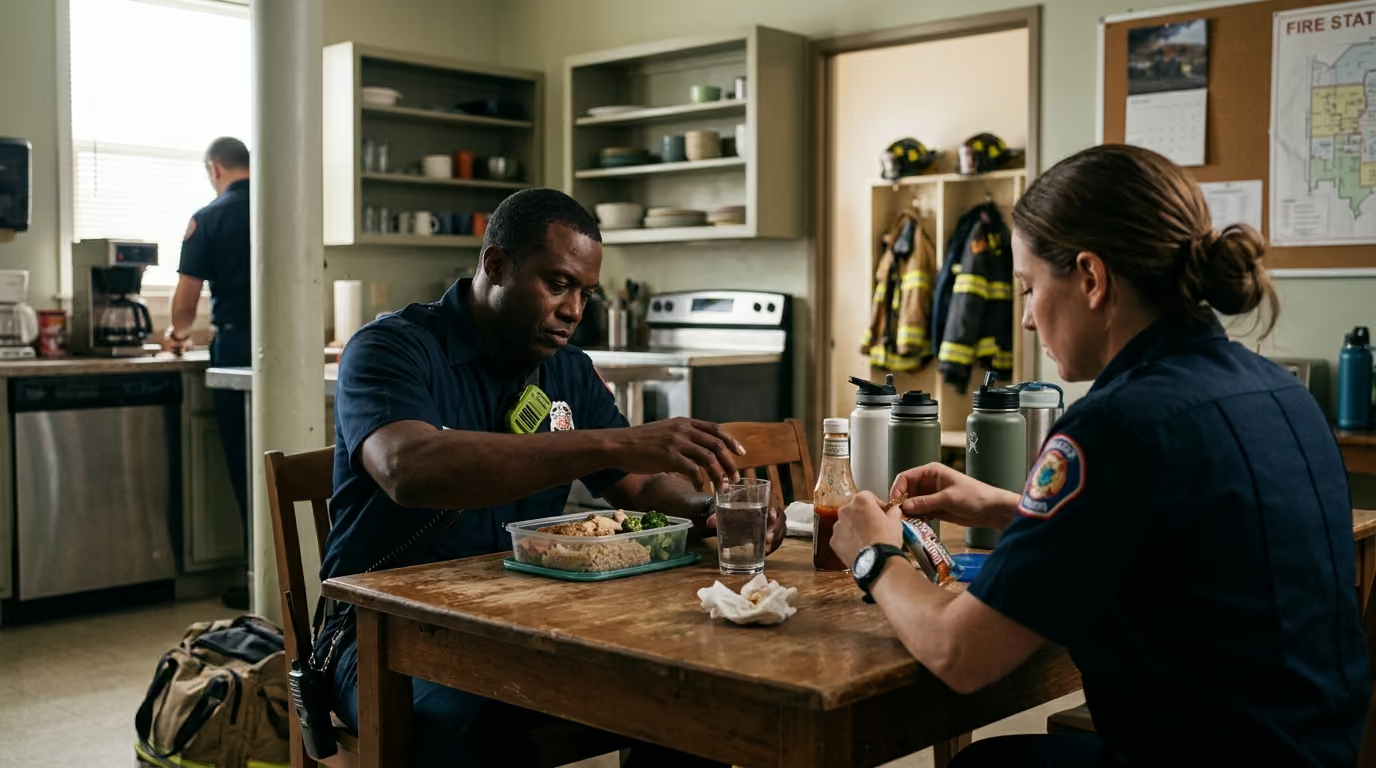

Emergency service personnel need a flexible, tiered macronutrient framework that scales daily fuel and recovery nutrition to match unpredictable shift intensities and physical workloads.





You finish an eight-hour stretch of back-to-back calls, step back into the station, and realize you have consumed only black coffee and half a protein bar since morning. Your turnout gear is soaked with sweat, your legs feel heavy from carrying equipment up three flights of stairs, and your next assignment could drop in four minutes or four hours. Trying to calculate precise gram percentages or weigh your food on a digital scale in this environment is completely unrealistic.
First responders do not need rigid, bodybuilder-style meal plans that fall apart the moment an alarm tones. You need a practical, evidence-based method to adjust carbohydrates, proteins, and fats based on the physical work you actually face.
The quick answer is straightforward. Keep your daily protein intake steady across every shift to protect muscle mass and support tissue recovery. Let your carbohydrate intake rise and fall depending on the physical intensity and duration of your operational workload. Use dietary fats to maintain total energy density, protect hormonal health, and keep meals satisfying without creating digestive sluggishness before hard physical tasks. By establishing consistent protein and produce anchors, you can scale your carbohydrate portions up or down using simple visual cues rather than full-time calorie tracking.
Scientific literature from sports medicine and tactical performance demonstrates that macronutrient needs are dynamic rather than fixed. Organizations including the American College of Sports Medicine, the International Society of Sports Nutrition, and the International Olympic Committee emphasize that nutrition should match energy expenditure and metabolic fuel utilization. The evidence supporting structured macronutrient adjustment is strong across athletic and military cohorts. In emergency services, observational data consistently shows that rigid, single-percentage diet models fail because occupational demands vary wildly from day to day.
Your body relies on different energy systems depending on the speed, resistance, and duration of the task. Sedentary station time and routine vehicle patrols rely primarily on oxidative metabolism, using circulating fatty acids and baseline glucose. Sudden structural fire suppression, patient extrications, or combative suspect handling instantly shift your physiology toward anaerobic glycolysis. This high-intensity energy pathway relies almost exclusively on stored muscle glycogen and blood glucose.
A successful nutritional model requires three core components:
Dietary fat supplies the balance of your daily energy needs. Fat supports fat-soluble vitamin absorption, cellular membrane integrity, and long-term endocrine health. When you understand how these three macronutrients interact with human physiology, you can adjust your plate without stress or guesswork. For broader context on metabolic health, explore our guide on first responder nutrition and body composition.
Standard fitness diets assume a predictable daily routine. Commercial plans generally assume you wake at the same time, complete a one-hour workout, sit at a desk, eat on a precise schedule, and sleep uninterrupted for eight hours. Emergency work routinely shatters every one of these assumptions.
Occupational research reveals substantial physical demands during active duty. Wildland firefighters, for example, demonstrate total daily energy expenditures ranging from roughly 2,800 to 6,200 calories per day during deployments. Research published in occupational physiology shows that sustained hand-tool work and hiking with heavy packs can burn approximately 400 calories per hour above basal metabolic requirements. Structural firefighters face acute surges in heart rate, profound thermal stress, and gear loads exceeding 50 pounds.
Despite these high physical costs, first responders frequently under-fuel. A study supported by the Centers for Disease Control and Prevention found that municipal firefighters experienced an average daily energy deficit of approximately 731 calories on workdays. In wildland firefighting deployments, research has shown that personnel on 14-hour shifts consumed an average of only 1,494 calories during the active work period. This work-shift intake accounted for barely one-third of their measured daily expenditure.
This severe mismatch occurs for several real-world reasons:
When you try to follow a rigid macronutrient ratio under these conditions, you either under-fuel your operational capability or abandon nutritional structure entirely. A flexible, demand-responsive framework solves this problem by giving you simple rules to scale your intake based on actual duty requirements.
Carbohydrates are the most physiologically variable macronutrient in the human diet. While your body can adapt to use fats for low-intensity activities, high-power muscular contractions depend on carbohydrate availability. When you climb stairs in full protective ensemble, drag a charged hose line, or control a resisting subject, your working muscles demand rapid ATP generation. Anaerobic glycolysis delivers this energy quickly, but it requires muscle glycogen and circulating glucose.
Sports nutrition consensus statements recommend tailoring carbohydrate intake to training and work volume rather than keeping it static:
For a 90-kilogram responder, baseline intake on a quiet station day might sit near 270 to 350 grams. That same individual may require 500 to 700 grams during sustained, multi-hour structural operations or heavy outdoor search details. Treating carbohydrate as an adjustable throttle protects your high-output capacity when you need it without promoting unnecessary fat gain during slow tours.
The type of carbohydrate matters as much as the total volume. During quiet station hours, prioritize unrefined, high-fiber carbohydrates such as oats, brown rice, beans, quinoa, and whole fruits. These foods provide sustained blood glucose release, maintain healthy digestion, and supply valuable micronutrients.
When operational tempo accelerates, high-fiber foods become a liability. Fiber slows gastric emptying, which can cause cramping, bloating, or nausea during sudden physical exertion. Before intense training or when anticipating immediate dispatches, shift toward easily digestible, lower-fiber options:
During prolonged operations lasting several hours, consuming 30 to 60 grams of easily digestible carbohydrate per hour preserves circulating blood sugar and delays central nervous system fatigue. This practice helps maintain tactical decision-making, physical coordination, and reaction time under stress.
Protein provides the essential amino acids necessary for muscle protein synthesis, tissue repair, immune function, and structural maintenance. Unlike carbohydrates, your body does not possess an expansive storage reservoir for protein. You cannot simply load up on protein once a week and draw on it continuously.
The International Society of Sports Nutrition recommends that active individuals consume between 1.4 and 2.0 grams of protein per kilogram of body weight daily. For tactical athletes and emergency responders performing demanding resistance training, this baseline supports lean mass retention and athletic performance. For an 80-kilogram responder, this equates to roughly 112 to 160 grams of daily protein.
Research consistently demonstrates that distributing protein across multiple eating occasions stimulates muscle protein synthesis more effectively than consuming the entire daily total in a single evening meal. Aim for 0.25 to 0.40 grams of high-quality protein per kilogram of body weight per meal. For most adults, this means aiming for 25 to 40 grams of protein per feeding, spaced every three to five hours.
Each feeding should provide an adequate dose of essential amino acids, particularly leucine, to trigger the intracellular signaling pathways responsible for muscle remodeling. Excellent sources include:
When a responder is trying to lose body fat, adequate protein becomes even more critical. In a caloric deficit, the body is more prone to breaking down skeletal muscle tissue for fuel. Sports nutrition reviews indicate that lean, resistance-trained individuals operating in a caloric deficit may require 2.3 to 3.1 grams of protein per kilogram of fat-free mass daily to preserve lean tissue. Keeping your protein intake high while training with weights ensures that the weight you lose comes from adipose tissue rather than functional muscle.
Dietary fat is often misunderstood in tactical communities. Some responders adopt very low-fat diets to restrict calories, while others adopt ultra-high-fat ketogenic models. Sports nutrition consensus statements suggest that fats should generally comprise 20 to 35 percent of total daily caloric intake. Chronically reducing dietary fat below 15 to 20 percent can impair the absorption of fat-soluble vitamins (A, D, E, and K), reduce sex hormone production, and compromise cellular health.
Dietary fat offers two distinct advantages for emergency service professionals:
Emphasize unsaturated fat sources that promote cardiovascular health and help resolve systemic inflammation. High-quality options include extra virgin olive oil, avocados, nuts, seeds, nut butters, and fatty fish such as salmon or sardines. These foods supply essential omega-3 fatty acids that support joint health and recovery from physical trauma.
The primary operational rule regarding fat is meal timing. Because fat digests slowly, consuming a high-fat meal immediately before intense physical training or heavy structural firefighting can lead to significant gastrointestinal discomfort. Keep pre-incident and pre-workout meals relatively low in fat, shifting your primary fat intake toward standard meals when you have adequate digestion time.
To translate these physiological requirements into daily habits, use a four-tier operational framework. Rather than tracking every calorie, classify your upcoming day based on anticipated physical demand and adjust your plate accordingly.
You do not need to weigh food in a station kitchen or enter every bite into a smartphone app to execute this framework. You can achieve consistent results using the Anchor and Adjust method. This practical system relies on your hand as a portable portion guide.
To implement this on duty, establish your two daily anchors:
Once your anchors are set, you simply adjust your cupped hands of carbohydrates based on your operational tier. On a Tier 1 day, keep it to one cupped hand per meal. On a Tier 2 training day, increase it to two cupped hands. On a Tier 3 or 4 operational day, expand your carbohydrates to three or more cupped hands and add portable fuel between calls.
To ensure success during unexpected operational surges, build a dedicated shift food kit to store in your gear locker or apparatus. Keep your kit stocked with shelf-stable options:
Having these items immediately accessible prevents reliance on fast food or vending machines when calls run late. For more structured meal prep strategies, read our breakdown of practical shift meal strategies.
Consuming large, heavy meals during the biological night presents unique metabolic challenges. Human insulin sensitivity, gastric emptying rates, and lipid clearance decrease substantially during overnight hours due to natural circadian rhythms. Eating heavy, high-fat, or high-sugar meals at 03:00 can cause significant gastrointestinal discomfort, impair alertness, and contribute to long-term metabolic strain.
To support digestive health and operational alertness on night duty:
For detailed tactical timing protocols, review our guide on night shift eating windows.
Avoiding common nutritional errors is just as important as hitting target ranges. First responders frequently encounter several widespread nutritional pitfalls.
Drinking a pure whey protein isolate shake after a multi-alarm fire provides essential amino acids, but it completely fails to replenish depleted muscle glycogen stores. Without co-ingesting carbohydrates, full structural recovery and glycogen resynthesis are delayed. Always pair post-incident protein with accessible carbohydrates like fruit, bagels, or recovery beverages.
Consuming the exact same high-carbohydrate intake on a sedentary desk day as you would during a wildland fire deployment leads to unwanted fat accumulation. Conversely, following an ultra-low-carbohydrate diet during intense operational periods degrades physical work capacity, increases thermal strain, and elevates injury risk. Scale your fuel to the work.
Many responders believe that because their scale weight is not changing, their nutrition must be fine. However, research from the International Olympic Committee on Relative Energy Deficiency shows that individuals can maintain stable body weight while experiencing chronic low energy availability. If your caloric intake chronically fails to cover the combined cost of your resting metabolism and physical duty, your body downregulates reproductive hormones, immune function, bone density, and thyroid output to maintain balance. Monitor performance, sleep quality, and recovery markers rather than relying solely on the scale. For strategies to assess systemic stress, read our guide on managing cumulative duty fatigue.
Macronutrient adjustments are powerful tools, but they cannot compensate for dangerous fatigue, clinical disorders, or unsafe operational conditions. Physical capability depends on an integrated foundation of sleep, hydration, progressive training, and appropriate medical oversight.
Never attempt extreme caloric restriction, severe dehydration protocols, or radical elimination diets while on active operational duty. Under-fueling before entering high-heat environments or performing heavy physical extrications increases your risk of heat exhaustion, cardiac strain, syncope, and impaired operational decision-making. If you experience severe lightheadedness, disorientation, persistent nausea, or muscular cramping during a shift, remove yourself from immediate hazards, hydrate with electrolytes, and seek operational medical evaluation.
Consulting a licensed healthcare professional or a Registered Dietitian specializing in tactical or sports performance is strongly recommended under the following conditions:
A sports dietitian can help you establish customized macronutrient and hydration targets that align with your specific medical history, shift schedule, and body composition goals.
Nutrition for emergency personnel does not require perfection, calorie counting apps, or restrictive food dogmas. It requires an understanding of basic human energetics and a reliable system that withstands unpredictable operational stress.
Establish your daily protein baseline to protect your muscle tissue and accelerate structural recovery. Keep dietary fats sufficient to support long-term endocrine and cellular health. Treat carbohydrates as your operational throttle, scaling intake upward on demanding duty days and dialing it back when demands are light. By building simple, repeatable habits around your shift schedule, you protect your physical capability on duty and safeguard your health for a long, active retirement.
Revisit this practical framework when your shift schedule changes, when transitioning from station duty to high-demand operational seasons, or when initiating a new strength and conditioning program. Review these guidelines if you notice persistent mid-shift fatigue, sluggish physical recovery, or unwanted shifts in body composition.
Sustainable operational readiness is built on consistent daily fueling habits that match the real-world demands of emergency service.
Stay connected for research-led guidance on duty fitness, shift-work sleep, injury recovery, stress, nutrition and career longevity. Practical ideas for first responders who want to stay capable on the job, recover well and protect their health for the long run.



Read practical guidance on first responder fitness, recovery, sleep, nutrition and resilience for demanding work and a long, active career.
read the blog



