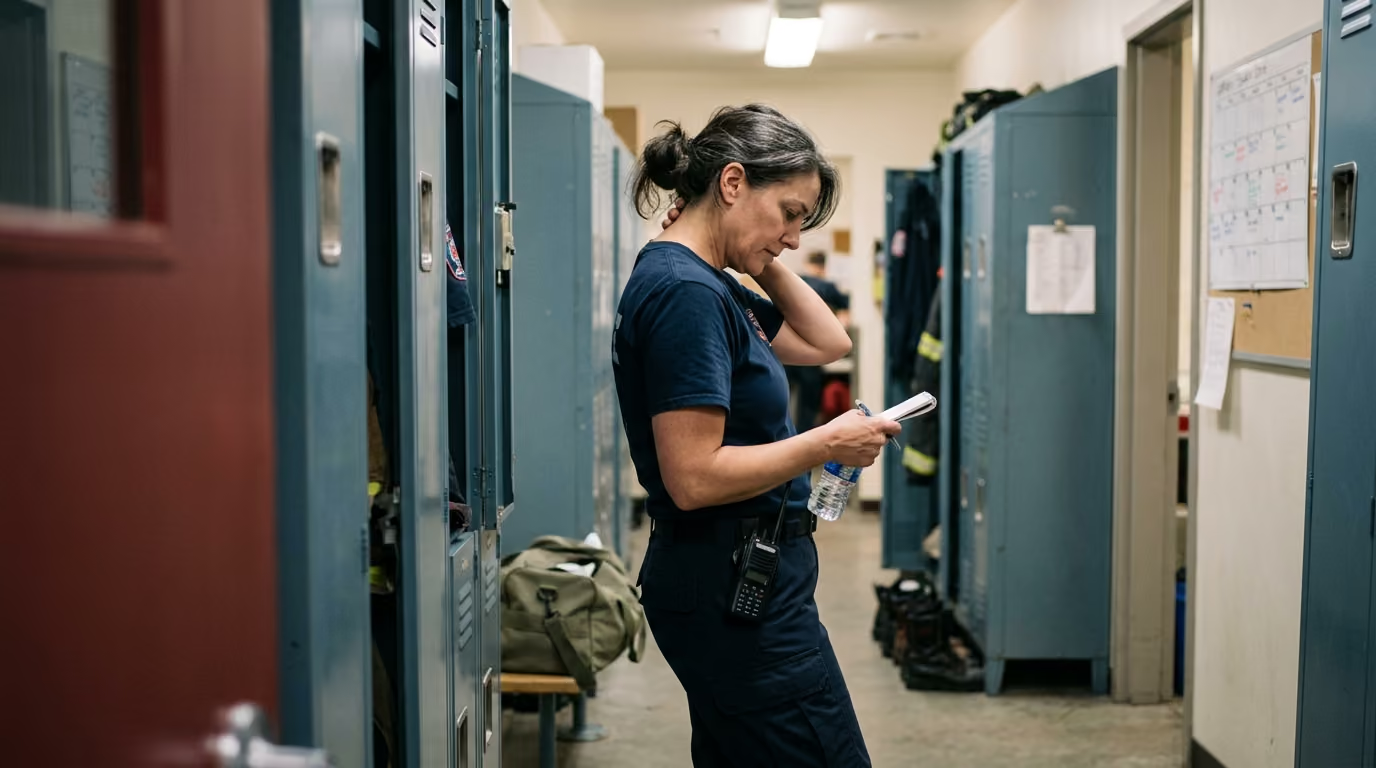

Better health and safety outcomes on the front line follow clear strategies for managing menopausal symptoms, sleep disruption, and physical recovery.





If you are in immediate danger, call 911. For 24/7 support, call or text 988 and press 1 for the Veterans Crisis Line, or text 838255.
Menopause is a normal biological transition, not a medical disorder, a sign of premature decline, or a personal failure of discipline. It represents a physiological shift in ovarian hormone production that every woman experiences if she lives long enough. At the same time, menopause is not a minor footnote in an operational career. When fluctuating hormones intersect with midnight dispatches, heavy protective equipment, thermal stress, and rotating schedules, the resulting symptoms can directly challenge daily comfort and duty readiness.
This guide provides an evidence-based roadmap for navigating perimenopause and menopause in emergency services. It breaks down the underlying physiology, separates clinical facts from commercial marketing claims, and examines how operational environments change symptom management. You will find practical strategies for sleep, thermoregulation, physical training, and clinical consultations, providing clear tools to protect your performance and career longevity.
The reproductive hormonal transition is often discussed as if it were a single, sudden event. In reality, it is a multi-stage physiological transition that unfolds across several years. Understanding the distinct phases helps personnel recognize changes early and seek appropriate clinical support.
Perimenopause, also known as the menopausal transition, begins when ovarian follicle responsiveness and hormone output become irregular. According to guidance from the National Institute for Health and Care Excellence, clinicians should identify perimenopause based on clinical symptoms and cycle changes in women aged 45 and older, rather than relying on blood tests. Estrogen and progesterone levels do not drop in a smooth line. Instead, they fluctuate wildly from week to week, producing unpredictable spikes and drops that drive physical symptoms.
Menopause itself is defined retrospectively. It is confirmed once a person has gone 12 consecutive months without a menstrual period, provided no hormonal medications or medical procedures are masking the bleeding pattern. For individuals who have undergone a hysterectomy or endometrial ablation, menstrual bleeding cannot serve as a marker. In these cases, clinicians evaluate the complete symptom picture, surgical records, and specific health history to determine menopausal status.
Early menopause occurs between the ages of 40 and 45. Premature ovarian insufficiency occurs when ovarian function declines before age 40. Both conditions involve distinct health risks, particularly regarding bone mineral density and cardiovascular health, and require specialized medical management compared to typical midlife menopause.
Vasomotor symptoms include hot flashes and night sweats. They stem from altered neurochemical signaling in the hypothalamus, the brain region that regulates core body temperature. When circulating estrogen levels fluctuate, the brain's thermoneutral zone narrows. Minor shifts in environmental temperature or internal stress can trigger a massive heat dissipation response.
Research from the Study of Women's Health Across the Nation indicates that up to 80 percent of women experience vasomotor symptoms during the menopausal transition. These episodes are not brief phases for many individuals. A large analysis from the same cohort found a median total duration of 7.4 years for vasomotor symptoms. For women whose frequent hot flashes began during early perimenopause, the median duration exceeded 11.8 years.
During an episode, peripheral blood vessels suddenly dilate, causing intense flushing, profuse sweating, rapid heart rate changes, and subsequent chills. On a normal day, these episodes cause discomfort. Inside an insulated emergency vehicle or under layers of structural protective gear, they present distinct physical challenges.
Genitourinary syndrome of menopause involves structural and functional changes in the vulvovaginal and lower urinary tract tissues. As estrogen exposure declines, mucosal tissues become thinner, less elastic, and less lubricated. Blood flow to the pelvic floor decreases, altering local immune defenses and tissue resilience.
Published prevalence estimates for genitourinary symptoms range from 13 percent to 87 percent, depending on the diagnostic criteria and population studied. Symptoms include vaginal dryness, burning, tissue irritation, discomfort during physical activity, pain during intercourse, urinary urgency, and recurrent urinary tract infections.
Unlike hot flashes, which eventually peak and subside over years, genitourinary symptoms tend to persist or progress without targeted treatment. First responders often underreport these symptoms due to social stigma or the assumption that discomfort is an unavoidable consequence of aging.
Emergency service work places unique physical demands on the human body. Irregular rosters, environmental extremes, and physical gear interact directly with changing hormonal physiology.
First responders frequently operate in hostile thermal environments. Firefighters wear multi-layer turnout gear designed to keep external heat out, which also prevents internal metabolic heat from escaping. Law enforcement officers wear ballistic body armor that traps body heat against the torso throughout a 12-hour patrol shift. Paramedics and emergency medical technicians move rapidly between air-conditioned vehicles, overheated residences, and humid outdoor incident scenes.
A vasomotor hot flash inside protective gear creates rapid heat buildup. Sweat cannot evaporate effectively through heavy textiles, impairing normal evaporative cooling. This leads to severe physical discomfort, rapid fluid loss, skin maceration, and elevated cardiovascular strain.
Emergency personnel must distinguish between a menopausal hot flash and operational heat illness. A hot flash causes flushing, sweating, and temporary discomfort, but it does not cause acute mental confusion, ataxia, collapse, or dangerous core temperature elevations. Any acute neurological deficit, fainting episode, or severe cognitive disorientation requires immediate medical evaluation and cooling protocols.
Shift work disrupts the central circadian clock located in the suprachiasmatic nucleus. This central pacemaker coordinates peripheral clocks in the liver, gut, skeletal muscle, and cardiovascular system. When personnel work night duty, meal timing and light exposure shift out of sync with natural circadian rhythms.
Hormonal changes compound this strain. Fluctuating ovarian hormones alter insulin sensitivity and metabolic flexibility. Consuming heavy meals during the biological night while managing menopausal metabolic changes increases the risk of gastrointestinal distress, acid reflux, and postprandial fatigue. Implementing time-restricted eating windows for shift work can help stabilize digestion and metabolic parameters across rotating shifts.
Hydration management becomes equally complicated. Responders dealing with genitourinary symptoms or hot flashes may deliberately restrict water intake to avoid public or station restrooms during calls. Dehydration thickens secretions, worsens heat strain, increases urinary concentration, and elevates the risk of urinary tract infections.
Sleep disruption is one of the most debilitating challenges reported during the menopausal transition, especially for personnel working rotating rosters.
Research shows that 40 to 60 percent of menopausal women report significant sleep difficulties. Longitudinal data from the Study of Women's Health Across the Nation found that individuals with moderate to severe hot flashes were nearly three times more likely to experience frequent nighttime awakenings than those without hot flashes.
Sleep problems during this life stage take multiple forms:
Subjective sleep complaints and objective sleep metrics do not always correlate perfectly in clinical research. Polysomnography studies indicate that some awakenings occur independently of measured hot flashes, pointing to broader neurochemical changes in sleep centers. First responders should avoid assuming that every awakening is purely hormonal, as underlying shift work disorder or sleep apnea may also be present.
Fatigue degrades executive function, situational awareness, working memory, and emotional regulation. In safety-critical emergency environments, severe sleep debt elevates the risk of vehicle collisions, dosing errors in emergency medical care, and tactical misjudgments.
Many responders report subjective cognitive difficulties during perimenopause, commonly described as brain fog. This involves word-finding difficulties, short-term memory lapses, and reduced multitasking capacity. Clinical evidence suggests these cognitive symptoms are primarily driven by chronic sleep fragmentation, circadian strain, and psychological stress rather than permanent cognitive impairment.
Developing a structured shift-specific sleep plan helps protect daytime sleep quality following night tours. Combining quiet, dark, and temperature-controlled sleep environments with evidence-based cognitive strategies significantly mitigates cumulative sleep debt.
Midlife brings observable changes in physical capacity, recovery rates, and soft tissue resilience. First responders must distinguish between biological aging, hormonal changes, and lifestyle factors to train effectively.
Declining estrogen levels influence musculoskeletal tissue maintenance. Estrogen exerts protective effects on muscle protein synthesis, satellite cell function, and collagen structures within tendons and ligaments. As estrogen decreases, women experience accelerated loss of lean muscle mass, known as sarcopenia, along with reduced bone mineral density if progressive resistance training is absent.
Visceral fat storage also tends to increase during the menopausal transition. This shift in fat distribution is driven by hormonal changes combined with reduced non-exercise activity, broken sleep, and chronic occupational stress. Elevated nighttime cortisol levels from shift work exacerbate abdominal adiposity and impair glucose regulation.
These physiological shifts do not mean physical capability must decline. They simply mean that unstructured, random workouts become less effective. Tactical athletes need structured strength programming, adequate daily protein distribution, and intentional recovery periods to maintain strength and power output.
Emergency service work involves heavy loads, awkward lifting angles, and high impact forces. Paramedics lift bariatric patients in cramped spaces, firefighters advance charged hose lines, and police officers carry duty belts that alter hip mechanics.
During perimenopause, decreased estrogen and altered collagen synthesis can increase susceptibility to joint stiffness, tendinopathies, and chronic lower back discomfort. Recovery from strenuous duty or heavy training sessions takes longer when sleep is fragmented by night sweats.
First responders can manage these challenges by autoregulating training readiness around duty fatigue rather than forcing rigid, maximal workouts on sleep-deprived days. Tracking resting heart rate trends, subjective muscle soreness, and joint comfort allows personnel to adjust training volume while preserving operational readiness.
Navigating medical treatment options requires separating rigorous clinical consensus from commercial wellness trends. Multiple evidence-based hormonal and nonhormonal therapies exist to manage menopausal symptoms safely.
Systemic menopausal hormone therapy remains the most effective medical treatment for moderate to severe vasomotor symptoms. The North American Menopause Society and the American College of Obstetricians and Gynecologists affirm that the benefit-to-risk ratio is favorable for symptomatic women who are younger than 60 years of age or within 10 years of menopause onset, provided they have no medical contraindications.
Clinical protocols depend on anatomical factors and individual medical history:
Hormone therapy is not appropriate for everyone. Absolute and relative contraindications include unexplained vaginal bleeding, active liver disease, prior history of breast cancer or other estrogen-sensitive malignancies, previous stroke, myocardial infarction, or active thromboembolic disease. Clinical decisions require an individualized discussion with a qualified healthcare provider.
For personnel who have contraindications to hormone therapy or choose not to use it, several nonhormonal prescription medications provide documented relief for vasomotor symptoms:
Nonhormonal options represent validated medical therapies, not second-tier substitutes. They offer practical symptom relief for personnel navigating complex health histories.
Systemic hormone therapy does not always resolve localized genitourinary symptoms. Fortunately, localized treatments can directly restore tissue integrity with minimal systemic absorption:
Personnel experiencing painful sex, urinary urgency, or persistent dryness should discuss localized options directly with their clinician rather than waiting for symptoms to worsen.
Testosterone marketing directed at midlife women has expanded dramatically in recent years. Commercial clinics frequently promise that testosterone will cure fatigue, build muscle, eliminate brain fog, and restore youthful vitality. Evaluating these claims against independent clinical consensus is critical for first responders.
The international consensus on testosterone therapy for women, established by a coalition including the Endocrine Society and the International Menopause Society, is clear:
In clinical trials for Hypoactive Sexual Desire Disorder, appropriately dosed testosterone therapy produced a modest, statistically meaningful increase of approximately one satisfying sexual event per month, alongside improvements in sexual desire and distress scores. It is a specific treatment for a specific sexual health condition, not a broad performance-enhancing agent.
First responders must exercise caution regarding aggressive commercial optimization clinics. Many private facilities promote compounded testosterone pellets, high-dose injections, or unregulated combination creams that produce supraphysiological hormone levels.
Supraphysiological dosing carries substantial medical risks:
When testosterone is medically indicated for Hypoactive Sexual Desire Disorder, clinicians prescribe doses that match normal female premenopausal physiology. Regulated transdermal products formulated for women, or carefully calibrated doses of approved formulations with regular blood monitoring, represent the safest clinical standard.
Navigating perimenopause and shift work requires tactical adjustments to daily routines before, during, and after shifts.
Preparation begins well before stepping onto the station floor or into the patrol vehicle:
Reviewing strategic caffeine timing during overnight shifts helps personnel maintain alertness without destroying subsequent daytime sleep quality.
During the shift, personnel should use practical measures to mitigate thermal spikes and fatigue:
When fatigue compromises physical coordination or situational awareness, personnel should utilize a training decision framework for irregular schedules to modify voluntary physical exertion and preserve operational capability.
The post-shift routine sets the foundation for restorative sleep:
First responders must recognize clinical boundaries and know when symptoms require urgent medical investigation rather than routine self-management.
Symptoms should never be assumed to be menopausal when acute warning signs are present:
The hormonal fluctuations of perimenopause can trigger or worsen depressive episodes, panic attacks, and severe emotional lability, especially in individuals with a past history of postpartum depression or mood disorders. When combined with cumulative operational trauma and severe sleep deprivation, psychological distress can escalate quickly.
If you or a coworker are experiencing severe depression, profound hopelessness, or thoughts of self-harm, confidential crisis support is available immediately:
If you are struggling with distressing thoughts, reach out to a trusted peer, clinician, or loved one to help secure home environments and establish a comprehensive safety plan together.
For healthy women aged 45 and older, medical guidelines from the National Institute for Health and Care Excellence recommend against routine blood tests like follicle-stimulating hormone or estradiol to diagnose perimenopause. Hormone levels fluctuate hourly during the transition, meaning a single normal blood test cannot rule out perimenopause. Diagnosis is based primarily on your age, menstrual cycle patterns, and physical symptoms.
If your uterus was removed but your ovaries remain, you will not experience the standard marker of 12 months without a menstrual period. Clinicians establish menopausal status by evaluating the onset of vasomotor symptoms, sleep changes, tissue symptoms, and surgical history. In ambiguous cases, serial measurements of follicle-stimulating hormone may be used alongside clinical evaluation.
Custom-compounded bioidentical hormone formulations are not safer or more effective than government-approved regulated therapies. Compounded preparations lack standardized quality control, consistent dosing, and rigorous safety monitoring. Regulated bioidentical hormones, including 17-beta estradiol and micronized progesterone, are widely available through standard pharmacies with consistent purity, clear safety data, and insurance coverage.
If a hot flash occurs while operating in protective gear or during an incident, maintain steady breathing and communicate your physical status to your partner or crew lead if necessary. Avoid removing protective equipment in hazardous environments. As soon as you transition to a safe rehab area, shed external gear layers, apply cold water or damp towels to your neck and wrists, and hydrate with cool fluids.
Menopause is a predictable biological transition that intersects directly with the unique physical, thermal, and operational demands of emergency services. By seeking individualized medical care, rejecting unproven optimization protocols, and implementing practical sleep and recovery habits, first responders can protect their physical capability, mental clarity, and health across a long career and into retirement.
Stay connected for research-led guidance on duty fitness, shift-work sleep, injury recovery, stress, nutrition and career longevity. Practical ideas for first responders who want to stay capable on the job, recover well and protect their health for the long run.



Read practical guidance on first responder fitness, recovery, sleep, nutrition and resilience for demanding work and a long, active career.
read the blog



