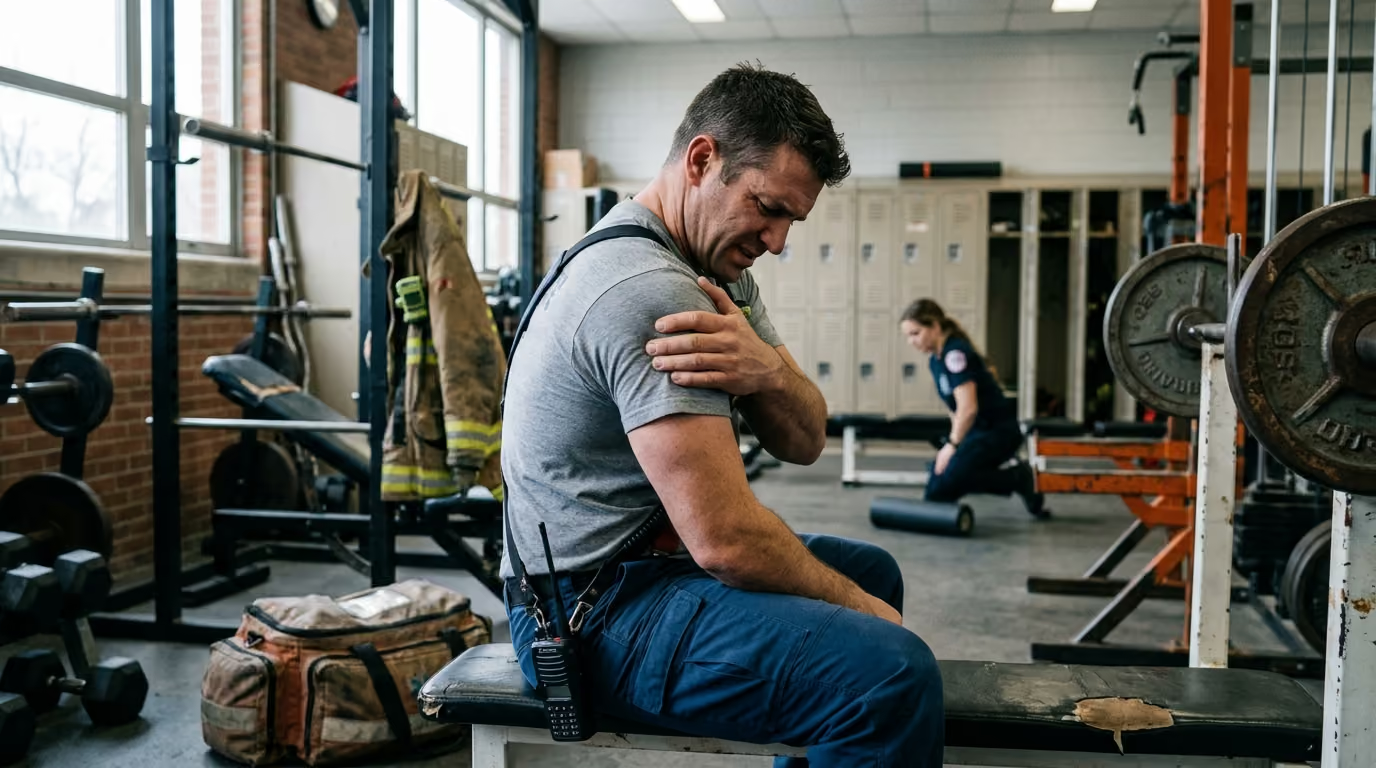

Five to seven days is the standard window for muscle soreness to resolve, giving first responders a clear baseline to identify serious tissue injuries.





You finish a heavy station workout, run three calls overnight with disrupted sleep, and step off the apparatus the next morning with deep stiffness across your legs and lower back. By midday, moving feels awkward and standing up from a desk or bench brings a sharp reminder of yesterday’s physical work. The immediate question is familiar: is this normal training fatigue that will pass, or did a muscle tear during that awkward lift on the call?
Pain is not a diagnosis. Pain intensity alone cannot reliably tell the difference between harmless post-exercise soreness and true tissue damage. To make an accurate assessment, emergency service personnel need to look at timing, mechanism, pain quality, objective function, symmetry, neurological signs, and how symptoms change over 24 to 72 hours.
Understanding these signals protects your capability on shift while preventing minor tissue irritation from turning into a career-altering injury.
Clinical research establishes a clear boundary between normal muscular adaptation and pathological tissue trauma. Delayed-onset muscle soreness, commonly known as DOMS, represents a
benign, temporary response to unaccustomed mechanical tension, high exercise volume, or prominent eccentric loading. High eccentric actions, such as lowering heavy loads, landing from jumps, or running downhill, create microscopic disruption across muscle fibers. This microscopic disruption triggers a temporary local inflammatory cascade that produces stiffness and aching without permanent structural failure.
Current evidence shows that DOMS follows a predictable physiological timeline. Symptoms typically become noticeable several hours after exertion, reach peak intensity between 24 and 72 hours, and resolve completely within five to seven days. Research demonstrates that post-exercise muscle soreness is not a required marker of muscular growth or strength adaptation. A highly productive training session can generate minimal soreness once an individual adapts to a given movement pattern.
Tissue injuries operate under different physiological mechanisms. Acute muscle strains involve structural disruption of muscle fibers, the connective tissue matrix, or the myotendinous junction. Tendon pathology, joint irritation, and ligamentous sprains present distinct patterns that do not follow the broad, self-limiting course of DOMS. In high-risk operational environments, severe systemic conditions such as exertional rhabdomyolysis or acute compartment syndrome can also mimic or follow intense training. The published evidence consistently indicates that diagnosing tissue status requires evaluating functional capacity, neurological integrity, and symptom trajectory rather than relying on how intensely a muscle aches.
Emergency service professionals face physical demands that make interpreting pain signals complex. Unlike athletes who follow structured, predictable training and recovery blocks, first responders handle heavy physical loads under uncontrollable conditions. A firefighter might perform an aggressive lower-body training session, only to spend hours advancing charged hoselines in forty pounds of personal protective equipment. A paramedic might experience upper-back tightness before having to lift a bariatric patient in a confined stairwell.
Shift schedules and sleep loss alter how the central nervous system processes pain signals. Circadian disruption, sleep restriction, and cumulative occupational stress increase pain sensitivity, making normal muscular tightness feel sharper and more concerning. In addition, irregular shifts make it harder to separate training fatigue from accumulated duty wear. When you are managing circadian fatigue and sleep debt, tissues recover more slowly, resting muscle tone often increases, and movement coordination can become compromised under load.
Thermal stress, dehydration, and prolonged static postures inside patrol vehicles or ambulances further complicate the picture. Dehydration and thermal strain increase the risk of extreme muscle breakdown when strenuous training collides with high-heat operations. Meanwhile, sitting for extended periods in body armor tightens hip flexors and places sustained stress on the spine. Knowing whether a pain signal stems from normal gym adaptation, postural strain, or genuine tissue trauma is critical for operational safety and career longevity.
To make sound decisions on duty, you must categorize your symptoms into clear physiological groups. Not all post-shift pain originates in the muscle belly.
DOMS is diffuse, broad, and typically bilateral when both sides of the body performed the same exercise. It presents as an ache, tightness, or tender sensation when pressing the muscle belly or moving through a full range of motion. DOMS does not produce sharp joint pain, sudden loss of motor control, rapid local swelling, or visible bruising. While severe DOMS can make movement uncomfortable, the limb retains its structural integrity and baseline strength when tested systematically.
An acute strain involves physical damage to the muscle fibers or the tendon junction. It typically occurs during a distinct, high-force event such as sprinting, sudden deceleration, jumping, or catching an awkward load. A strain often presents with an immediate sharp sensation, a feeling of a "pop" or "snap," and localized pain at a specific spot in the muscle. Common features include focal swelling, visible bruising, muscle spasms, and a clear loss of force production.
Tendons and joints behave differently than muscle bellies. Tendon pain is characteristically focal, located directly at an insertion point such as the patellar tendon, Achilles tendon, or rotator cuff attachment. Tendon discomfort often feels stiff and painful at the start of movement, appears to warm up during activity, and then aches severely several hours later or the following morning. Joint irritation frequently produces joint-line tenderness, localized swelling, catching, clicking with pain, or sensations of instability.
Exertional rhabdomyolysis is a dangerous medical condition characterized by rapid, severe skeletal muscle breakdown that releases intracellular contents into the bloodstream. It occurs after unusually strenuous, prolonged, or unfamiliar physical exertion, particularly when compounded by heat, dehydration, or illness. Clinical guidelines define rhabdomyolysis by severe muscle pain, profound weakness, noticeable swelling, and marked elevation of serum creatine kinase, often accompanied by dark, tea-colored, or cola-colored urine. Rhabdomyolysis is not standard soreness and requires immediate medical intervention to prevent acute kidney injury.
Acute compartment syndrome occurs when swelling or bleeding causes pressure to rise within a closed fascial compartment, compromising blood flow and nerve function. While frequently associated with direct impact fractures, it can occasionally develop following extreme, high-volume exertion. Key warning signs include intense, burning pain that feels out of proportion to the apparent injury, severe pain provoked by passive stretching of the affected muscles, extreme firmness or tightness of the compartment, numbness, tingling, and motor weakness. This is a surgical emergency that must never be managed with a wait-and-see approach.
When pain appears after a hard workout or an intense shift, avoid guessing. Run through the systematic T-M-Q-F-S-N-T framework to determine whether you are dealing with benign soreness or an issue that requires modification or clinical assessment.
The exact timeline of when pain started provides a strong initial clue. DOMS does not begin during a lift. It develops gradually, becoming noticeable several hours later or the next morning, peaking between 24 and 72 hours after the session.
If your pain began suddenly during a specific repetition, a jump, a sprint, or an awkward lift on a call, treat it with high suspicion. Pain that is severe immediately following an incident points toward an acute strain, sprain, or joint injury. While delayed onset generally aligns with DOMS, severe delayed pain combined with marked weakness or systemic symptoms can still point toward exertional rhabdomyolysis.
Review the physical actions that took place right before the pain appeared. A low-risk mechanism involves high training volume, new exercises, or controlled tempo work without any sudden, unexpected loading events.
A high-risk mechanism involves sudden acceleration, rapid deceleration, cutting, direct impact, slips, trips, or a missed repetition where the load shifted abruptly. Hearing or feeling a pop, tear, or snap under heavy resistance strongly indicates an acute structural strain or ligament injury rather than benign training soreness.
Pay close attention to how the pain feels and where it sits. Soreness presents as a dull, diffuse ache spread across the entire muscle belly. It is tender to broad pressure and feels stiff during initial movement, but it lacks a single, razor-sharp epicenter.
Concerning pain qualities include sharp, stabbing, catching, burning, or constant throbbing pain. If you can point to the pain with the tip of a single finger, it is more likely a focal strain, tendon attachment issue, or bone stress injury. Furthermore, pain localized directly inside a joint line, over a bony prominence, or radiating down a limb does not fit the profile of DOMS.
Functional capacity is far more informative than subjective pain ratings. Ask yourself practical questions about how your body is moving:
If your joint gives way, your limb refuses to bear weight, or you experience true weakness where your muscles will not produce force regardless of effort, you are dealing with structural or neurological compromise.
Examine the affected area under good lighting and compare it directly to the opposite side. DOMS may produce a mild feeling of fullness in the muscle belly, but it does not cause rapid, localized swelling or skin discoloration.
Visible bruising, rapid joint effusion, tense local swelling, or a visible indent or bulge in the muscle contour indicates tissue tearing and internal bleeding. The absence of bruising does not entirely rule out an injury, as deep muscle layers may not show surface discoloration immediately. However, the presence of visible swelling and bruising strongly rules out ordinary DOMS.
Normal post-exercise soreness never involves the nervous system or systemic health. Symptoms such as numbness, pins and needles, electrical tingling, burning sensations, loss of light touch sensation, or foot drop demand prompt medical attention.
Similarly, pay attention to systemic red flags after extreme physical exertion. Dark, cola-colored urine, profound systemic lethargy, persistent nausea, fever, or confusion are clear indicators of severe systemic compromise, including exertional rhabdomyolysis or heat illness, requiring emergency care.
Track the direction of your symptoms across 24, 48, and 72 hours. A normal soreness trajectory reaches a peak within two to three days, begins to ease with light activity, and resolves within roughly five to seven days.
If your pain continues to intensify after 48 hours, if swelling spreads, if your movement becomes progressively more restricted, or if pain repeatedly flares with basic daily tasks, your symptoms do not match DOMS. A worsening trajectory is one of the clearest reasons to stop self-management and seek a formal evaluation.
Pain is inherently subjective. It is shaped by adrenaline, previous injuries, stress levels, and sleep quality. Relying solely on a 1-to-10 pain score often leads first responders into trouble. A disciplined responder might push through a level-seven pain caused by an acute tendon tear, while someone experiencing acute sleep deprivation might rate benign quadriceps soreness as an eight.
Objective functional capacity cuts through this subjective confusion. Evaluating movement quality, strength output, and compensation patterns gives a clear assessment of tissue capability. When dealing with minor DOMS, you can typically perform basic functional patterns once your body warms up. You might feel stiff, but your joint mechanics remain sound, your limb supports your body weight, and you do not need to alter your mechanics to complete simple tasks.
True injury disrupts functional control. When tissue is damaged, the body creates involuntary protective movement strategies to unload the injured structure. Recognizing these compensations helps identify an injury before it worsens:
When you observe clear movement compensation, stop testing the tissue under heavy loads. Compensations shift abnormal stress onto surrounding joints, ligaments, and tendons, increasing the likelihood of secondary injuries while on duty.
To maintain baseline conditioning without overloading vulnerable structures, many first responders turn to short readiness training sessions that prioritize sound movement patterns over sheer volume.
Use this operational traffic-light system to decide whether to train, modify, or seek medical care.
You are safe to perform duty tasks and light, structured training when your symptoms meet the following criteria:
In a green-light situation, your best response is active recovery. Perform light mobility work, low-intensity steady-state cardiovascular work, and maintain adequate hydration. Avoid maximal lifting or high-speed sprint work on severely sore muscles, but keep moving through comfortable ranges of motion.
You should pause the specific movement and seek routine clinical assessment when your symptoms show these warning signs:
In an amber-light scenario, immediately stop the exercise or movement that aggravates the pain. Do not repeatedly test the injured area with heavy loads to check if it still hurts. Substitute low-impact, non-provocative movements to maintain conditioning while arranging a formal evaluation with a physical therapist or sports medicine professional. Following comprehensive injury and recovery protocols allows you to address the underlying issue before it compromises duty performance.
You must seek immediate emergency medical care if you observe any of the following critical indicators:
A red-light scenario requires prompt medical attention at an emergency department or urgent care center. Never attempt to push through red-light symptoms on shift.
Occupational culture in emergency services values toughness, mission completion, and resilience. While these traits are essential during critical incidents, they can lead to poor self-care decisions when interpreting physical pain.
A widespread training myth suggests that a workout is only effective if it leaves you severely sore the next day. Scientific research has disproven this idea. Hypertrophy, strength gains, and cardiovascular conditioning occur through progressive overload and cellular signaling, not mechanical destruction of muscle tissue. Chasing severe soreness creates unnecessary fatigue that degrades operational readiness on shift.
Using high doses of non-steroidal anti-inflammatory drugs (NSAIDs) to blunt pain before a training session or a demanding shift is a dangerous habit. Analgesics reduce the brain's perception of pain without repairing the underlying tissue strain. By muting your body’s natural warning system, you increase the risk of converting a minor, low-grade muscle strain into a complete structural tear. Furthermore, heavy NSAID use combined with severe physical exertion and dehydration increases strain on the kidneys.
When a muscle feels tight and painful, the instinct is often to stretch it aggressively. If that tightness is caused by an acute muscle strain, pulling the muscle into an end-range stretch pulls damaged muscle fibers apart, worsening the structural tear and prolonging healing time. Gentle, symptom-free active movement is therapeutic, but forcing a painful muscle into a deep stretch should be avoided.
Tendon irritation and early-stage muscle strains often feel less painful as tissue temperature rises during a warm-up. This temporary reduction in pain can give a false sense of security. If you load an irritated structure heavily simply because it felt better after five minutes on a stationary bike, you will often experience a severe rebound in pain and stiffness several hours later. Always look at the 24-hour symptom response, not just how the area feels during a warm-up.
Emergency service professionals often pride themselves on their ability to ignore discomfort. However, tissue physiology does not respond to mental grit. Structural tears, compartment pressures, and muscle enzyme leaks do not resolve through determination. Using autoregulating daily duty readiness strategies allows you to adjust training intensity to match your current physical capacity, protecting your body across a long career.
When returning to full operational duties and demanding physical training after an amber-light issue, use a step-by-step framework rather than jumping straight back to full intensity. Research consensus models emphasize that return-to-activity decisions must look at multiple operational factors:
When programming workouts around shift rotations, reintroduce demanding movements gradually. Start with controlled, bilateral exercises before progressing to explosive, high-speed, or unilateral drills. If symptoms reappear or movement quality drops at any stage, step back to the previous loading level and give the tissue more time to adapt.
Self-assessment frameworks are educational tools designed to help you make informed decisions. They are not a substitute for formal clinical diagnosis, diagnostic imaging, or personalized medical care.
Never attempt to train through, self-treat, or ignore clear red-flag symptoms:
If you observe any of these symptoms in yourself or a crew member, stop all physical activity immediately and seek professional medical evaluation. Operating an emergency vehicle, entering a fireground, or engaging in physical law enforcement duties with compromised physical control puts yourself, your crew, and the public at risk.
Knowing when to consult a healthcare professional protects your health and career longevity. You should schedule a professional evaluation if:
A qualified physical therapist, sports medicine physician, or occupational healthcare provider can perform specific orthopedic tests, order diagnostic imaging if necessary, and design a structured rehabilitation plan tailored to the physical demands of emergency response work.
Pain is an essential physiological signal designed to protect your physical structure, not an obstacle to be ignored. Distinguishing benign training soreness from meaningful tissue injury requires looking past pain intensity and evaluating timing, mechanism, objective function, symmetry, and 24-to-72-hour trends.
By systematically reading your body's signals and respecting tissue recovery timelines, you build the physical resilience and capability needed to perform on duty and stay healthy long after your service ends.
When to revisit this resource: Review this guide whenever you experience unfamiliar pain after a hard workout or demanding shift, when designing return-to-duty training progressions, or when helping a colleague assess post-call physical symptoms.
Stay connected for research-led guidance on duty fitness, shift-work sleep, injury recovery, stress, nutrition and career longevity. Practical ideas for first responders who want to stay capable on the job, recover well and protect their health for the long run.



Read practical guidance on first responder fitness, recovery, sleep, nutrition and resilience for demanding work and a long, active career.
read the blog



