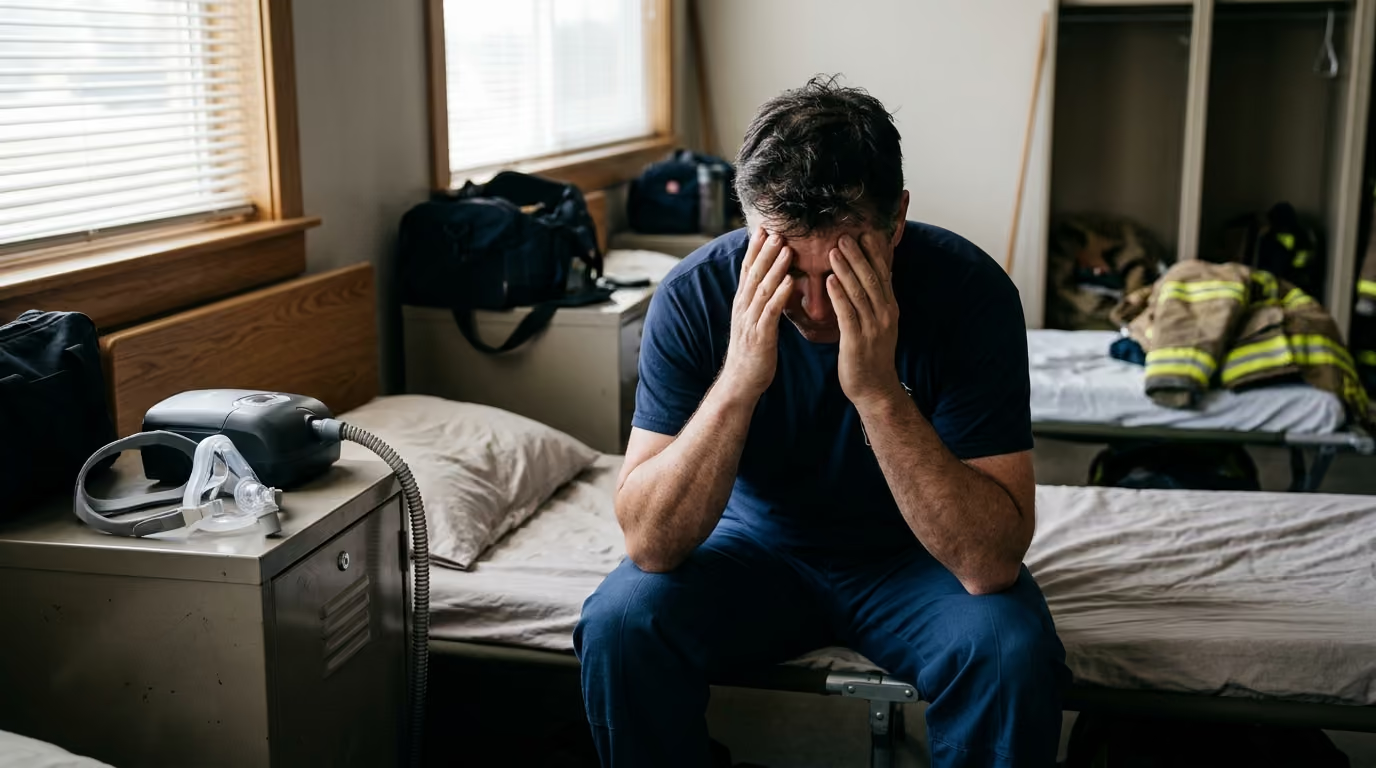

Sleep disruption from airway collapse lowers essential hormone levels in shift workers, who benefit from structured clinical evaluations, PAP adherence, and practical recovery strategies.





Many first responders search online for answers when persistent exhaustion, stalled strength gains, low libido, and brain fog start interfering with daily life. Blood tests ordered during an annual physical or a clinic visit often return with borderline or low testosterone levels. When snoring or witnessed breathing pauses enter the picture, it is easy to assume that obstructive sleep apnea caused the hormone drop directly.
The clinical reality is more nuanced. Obstructive sleep apnea, fragmented sleep, circadian strain, occupational stress, and metabolic changes overlap heavily and produce nearly identical symptoms. While sleep loss can transiently suppress testosterone production, treating sleep apnea with continuous positive airway pressure does not reliably restore hormone levels to normal.
This guide delivers a definitive, evidence-based assessment of the relationship between airway obstruction, sleep disruption, and androgen production. It outlines the dual-track assessment framework needed to evaluate breathing and hormone health safely and accurately.
Obstructive sleep apnea is a sleep-related breathing disorder marked by repetitive collapse of the upper airway during sleep. These obstructive events cause brief drops in blood oxygen saturation and trigger sudden autonomic arousals that pull the brain out of deep sleep. An individual might experience dozens of these micro-arousals every hour without ever remembering waking up.
This nocturnal disruption degrades overall sleep architecture. Deep slow-wave sleep and rapid eye movement sleep are frequently curtailed or fragmented. Sleep fragmentation means that continuous, restorative rest is broken into disjointed segments. Even if a responder spends eight hours in bed, the physiological recovery achieved during those hours remains severely compromised.
Testosterone production follows a distinct circadian rhythm tied closely to unbroken sleep. In healthy men with regular schedules, serum testosterone concentrations begin rising upon sleep onset, peak during the early morning hours, and gradually decline across the waking day. The majority of daily testosterone synthesis occurs during undisturbed, consolidated sleep, particularly during slow-wave and rapid eye movement stages.
When repetitive airway collapse fragments sleep, the normal nocturnal rise in testosterone can be blunted. Intermittent hypoxia, recurrent arousals, elevated overnight cortisol, and sympathetic nervous system activation create a hostile physiological environment for healthy endocrine signaling. However, sleep apnea is rarely the sole driver of endocrine changes. Age, body fat percentage, alcohol intake, and cumulative shift work also exert powerful influences on systemic hormone regulation.
Understanding this biological interplay requires separating sleep quantity from sleep continuity, timing, and quality. Sleep quantity refers strictly to the total hours spent in bed or asleep. Sleep continuity describes how uninterrupted that sleep period remains from start to finish. Sleep timing relates to whether the sleep occurs at a biologically appropriate circadian phase, while sleep quality reflects the overall restorative outcome. A firefighter or police officer may possess adequate sleep quantity on off-duty days yet suffer from severe sleep continuity deficits due to undiagnosed airway obstruction.
The scientific literature surrounding sleep loss, obstructive sleep apnea, and testosterone production provides important clarity for shift workers. Controlled laboratory research has demonstrated that acute sleep curtailment directly lowers circulating androgen levels in healthy individuals. A landmark study published in JAMA evaluated healthy young men whose sleep was restricted to five hours per night for eight nights. The researchers observed that daytime testosterone concentrations dropped by roughly 10% to 15% compared to their fully rested baseline.
Despite these laboratory findings, chronic sleep-disordered breathing represents a more complex physiological state than simple voluntary sleep restriction. Research evaluating whether obstructive sleep apnea directly causes clinical hypogonadism has yielded mixed results. Cross-sectional studies frequently show that men with severe obstructive sleep apnea have lower average testosterone levels than men without the condition. However, when researchers control for age, body mass index, and waist circumference, the independent association between apnea severity and low testosterone often weakens significantly.
Obesity serves as a major confounding variable in these investigations. Excess visceral adiposity contributes directly to upper airway narrowing and increased pharyngeal collapsibility during sleep. Concurrently, adipose tissue contains high concentrations of the aromatase enzyme, which converts circulating testosterone into estradiol. Visceral fat also promotes systemic low-grade inflammation and downregulates hepatic production of sex hormone-binding globulin, resulting in lower total testosterone measurements.
Systematic reviews and meta-analyses examining the hormonal effects of continuous positive airway pressure (CPAP) therapy reinforce this complexity. If airway obstruction were the single driving cause of low testosterone, eliminating apneas with positive airway pressure should reliably normalize serum androgen levels. Yet meta-analyses of randomized and prospective trials show no statistically significant change in mean total testosterone following CPAP therapy.
These findings indicate that treating airway obstruction remains vital for cardiovascular health, daytime alertness, and neurological recovery, but CPAP should not be viewed as a standalone cure for androgen deficiency. A responder with both confirmed sleep apnea and true hypogonadism likely has distinct, overlapping physiological drivers that each require targeted clinical attention.
Emergency service professionals operate under working conditions that place extraordinary strain on normal human biology. Irregular rotations, mandatory overtime, extended twenty-four-hour shifts, and sudden nighttime emergency dispatches continually disrupt normal circadian alignment. These operational demands make first responders disproportionately vulnerable to sleep disorders.
A comprehensive meta-analysis evaluating sleep disorders across emergency personnel estimated that approximately 30% of first responders suffer from obstructive sleep apnea. The same analysis found a 31% prevalence for shift-work disorder, 28% for chronic insomnia, and 28% for excessive daytime sleepiness. In a broad screening of nearly 7,000 active-duty firefighters, 37% screened positive for at least one sleep disorder, with obstructive sleep apnea representing one of the most common conditions identified.
Several job-specific factors explain why sleep-disordered breathing and sleep fragmentation are so prevalent across fire, law enforcement, and emergency medical services:
The physical demands of first responder gear also interact with sleep health. Firefighters, tactical officers, and paramedics often carry heavy personal protective equipment, ballistic vests, and breathing apparatus that place substantial physical loads on the body. Many responders deliberately maintain larger muscle mass through heavy resistance training to handle these operational demands.
However, increased muscular bulk in the neck and upper torso can increase pharyngeal tissue mass and airway resistance during sleep, even in individuals with relatively low body fat percentages. A lean, highly trained tactical officer with an eighteen-inch neck circumference may be just as susceptible to sleep-disordered breathing as an individual with elevated visceral adiposity.
Operational readiness depends heavily on cognitive processing speed, situational awareness, emotional regulation, and physical endurance. When sleep apnea fragments nocturnal rest, daytime functioning degrades across all of these operational domains. Responders may notice slower reaction times behind the wheel, difficulty recalling tactical details during debriefs, irritability with colleagues, or near-miss incidents during routine driving. Understanding these operational risks allows personnel to approach sleep screening as an essential tool for professional capability rather than a personal weakness.
Responders navigating irregular schedules can learn more about building systematic recovery strategies through our guide to shift-specific sleep planning and review protocols for managing caffeine intake on night shifts to protect upcoming rest windows.
Because fatigue, low mood, reduced exercise capacity, and low libido can stem from multiple overlapping sources, clinical evaluations must avoid single-cause assumptions. A first responder presenting with these nonspecific complaints should undergo a coordinated, dual-track assessment. Track one objectively evaluates sleep-disordered breathing and sleep opportunity, while track two evaluates endocrine function according to rigorous clinical guidelines.
A thorough sleep assessment begins with a detailed occupational and clinical history. The clinician must examine total sleep duration on workdays versus days off, shift rotations, caffeine usage, alcohol consumption, and witnessed breathing abnormalities. Standardized questionnaires such as the STOP-BANG or Epworth Sleepiness Scale provide useful preliminary risk stratification.
However, guidelines from the American Academy of Sleep Medicine state explicitly that clinical questionnaires and prediction algorithms must never be used alone to diagnose obstructive sleep apnea without objective testing.
Objective sleep testing generally takes one of two forms:
If a first responder completes a home sleep apnea test and receives a negative or inconclusive result despite strong clinical symptoms, the evaluation is not complete. American Academy of Sleep Medicine guidelines recommend following up an inconclusive or negative home test with formal in-laboratory polysomnography to rule out subtle upper airway resistance, central events, or fragmented sleep architecture.
Evaluating androgen status requires strict adherence to endocrine diagnostic standards. Both the Endocrine Society and the American Urological Association emphasize that low testosterone is a clinical and biochemical diagnosis, not a single laboratory number. A diagnosis of hypogonadism requires the presence of compatible symptoms and signs alongside unequivocally and consistently low serum testosterone concentrations.
Non-specific symptoms such as low energy, fatigue, reduced work performance, and depressed mood are common in many conditions and do not confirm hypogonadism on their own. More specific symptoms include noticeably reduced sexual desire, loss of spontaneous morning erections, erectile dysfunction, unexplained loss of lean muscle mass, hot flashes, and reduced bone mineral density.
Accurate laboratory testing must follow precise timing parameters:
First responders working rotating schedules must take special care when scheduling hormone testing. Drawing blood immediately following a twenty-four-hour shift or a run of overnight callouts will likely produce an artificially depressed testosterone value that does not reflect true baseline physiology. Testing should ideally be scheduled after at least one or two days of restored, circadian-aligned recovery sleep.
To understand how circadian misalignment impacts systemic metabolism and energy, review our analysis of eating schedules and metabolic strain on night shifts.
When blood tests confirm low testosterone, some responders seek immediate prescription testosterone replacement therapy (TRT) as a fast solution for chronic fatigue. However, clinical guidelines establish clear safety guardrails regarding when testosterone therapy is appropriate and when it poses serious medical hazards.
The Endocrine Society clinical practice guidelines explicitly recommend against starting testosterone therapy in men with untreated severe obstructive sleep apnea. While research regarding whether testosterone therapy consistently causes new sleep apnea is mixed, androgen administration can worsen preexisting, untreated airway collapse.
Testosterone therapy can alter central respiratory control mechanisms, increase upper airway collapsibility during rapid eye movement sleep, and increase metabolic oxygen consumption. Initiating testosterone therapy in a responder whose severe airway obstruction remains unmanaged increases the risk of nocturnal hypoxia, severe blood pressure spikes, and dangerous daytime somnolence.
Testosterone therapy also stimulates erythropoiesis, which increases the production of red blood cells. When elevated red blood cell counts raise hematocrit levels above 50% to 54%, blood viscosity rises significantly. For a firefighter operating inside hot structural fire environments or a tactical officer wearing heavy gear, increased blood viscosity combined with dehydration places massive strain on the cardiovascular system. Untreated sleep apnea independently worsens nocturnal hypoxia, creating a compounding risk factor for elevated hematocrit and systemic clotting events.
Furthermore, exogenous testosterone therapy suppresses the hypothalamic-pituitary-gonadal axis, leading to marked reductions in intratesticular testosterone, sperm production, and testicular volume. For younger first responders who plan to have children in the future, standard testosterone therapy is generally inappropriate. Alternative clinical approaches that preserve fertility, or lifestyle strategies focused on circadian recovery and weight optimization, must be discussed with an endocrinologist or urologist.
Testosterone therapy should never be prescribed as an empirical pick-me-up for unexplained operational exhaustion. If a clinician offers hormone therapy without confirming low morning levels across multiple fasting tests, and without checking for underlying sleep apnea, the responder should seek a comprehensive second opinion. Treating fatigue with hormones while ignoring a collapsing upper airway leaves the underlying cardiovascular and operational dangers completely unaddressed.
Responders can explore how overall fatigue accumulates across extended tours by reviewing our breakdown of circadian timing and shift fatigue.
Addressing sleep-disordered breathing and hormonal health requires a structured, multi-layered approach. Responders diagnosed with obstructive sleep apnea must focus on effective airway management, while implementing supportive sleep environment and lifestyle practices that protect biological recovery between duty cycles.
Positive airway pressure therapy remains the most effective non-invasive medical treatment for obstructive sleep apnea. By delivering a constant stream of pressurized air through a mask, the device forms a pneumatic splint that prevents pharyngeal tissues from collapsing. The American Academy of Sleep Medicine strongly recommends continuous or auto-adjusting positive airway pressure for adults with obstructive sleep apnea and excessive sleepiness.
Achieving consistent adherence requires treating equipment use as a dynamic process rather than an all-or-nothing test. Common obstacles include:
For responders with mild-to-moderate sleep apnea who cannot tolerate positive airway pressure despite exhaustive troubleshooting, alternative clinical interventions exist. Custom-fabricated mandibular advancement devices, constructed by qualified dental sleep medicine specialists, advance the lower jaw and tongue forward to enlarge the retroglossal airway.
Surgical consultations with otolaryngologists can identify correctable anatomical issues, such as severe nasal septal deviations, hypertrophic turbinates, or enlarged tonsils, that increase nasal resistance and airway collapse.
Medical airway management must be paired with operational sleep hygiene tailored to first responder realities:
Learn how to tailor training volume around operational fatigue through our resource on autoregulation training for emergency crews.
Navigating the healthcare system can be challenging for emergency personnel who operate outside standard office hours. Knowing which medical specialists to consult, and what specific questions to ask, ensures efficient and accurate care.
When a first responder suspects sleep-disordered breathing, the initial step should be a referral to a board-certified sleep medicine physician. These specialists oversee comprehensive diagnostic testing, interpret polysomnography data, and help patients navigate initial positive airway pressure setups, mask fittings, and pressure adjustments.
If repeat morning blood tests confirm low testosterone, the responder should consult an endocrinologist or a urologist who specializes in male reproductive and sexual medicine. These specialists possess the clinical expertise required to differentiate between primary testicular failure and secondary pituitary dysfunction, evaluate fertility-sparing alternatives, and safely manage hormone therapies when clinically indicated.
Responders who are already using CPAP therapy but continue to experience persistent fatigue, brain fog, or low energy should not assume their airway treatment has failed or conclude that low testosterone is the missing link. Ongoing daytime fatigue despite confirmed CPAP compliance can stem from several distinct causes:
Open communication between sleep physicians, prescribing endocrine clinicians, and primary care providers ensures that all contributing physiological systems receive proper attention.
Taking control of your recovery, breathing, and hormonal health requires a structured, step-by-step approach. You can begin implementing this practical evaluation plan this week:
Maintaining sustainable physical capability, sharp cognitive alertness, and robust hormonal health across a demanding first responder career requires respecting the biological fundamentals of sleep. By evaluating airway breathing problems and hormone levels as distinct, interconnected systems, emergency personnel can protect their operational readiness on duty and secure their long-term health for the years beyond service.
Stay connected for research-led guidance on duty fitness, shift-work sleep, injury recovery, stress, nutrition and career longevity. Practical ideas for first responders who want to stay capable on the job, recover well and protect their health for the long run.



Read practical guidance on first responder fitness, recovery, sleep, nutrition and resilience for demanding work and a long, active career.
read the blog



