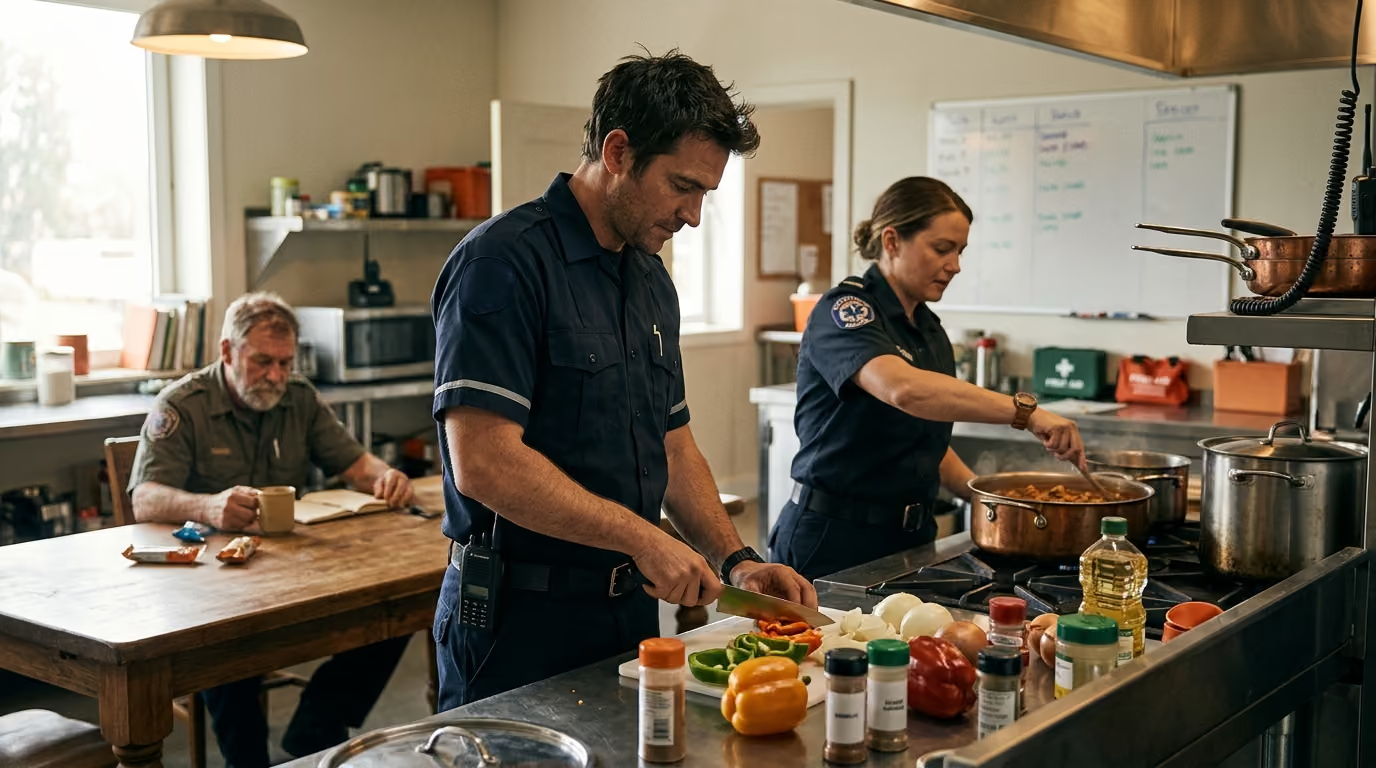

Four operational activity levels help first responders accurately calculate daily caloric burn and adjust macronutrient intake to sustain readiness across demanding emergency shifts.





Most standard nutrition plans fail emergency-service personnel because they treat calorie needs as a static daily number. A corporate worker might burn a predictable amount of energy from Monday through Friday, but an emergency responder faces radical daily fluctuations. A 24-hour shift can swing between hours of sedentary desk work and intense physical exertion in extreme heat, heavy gear, and dense smoke.
Energy planning for emergency services requires an adaptable budget rather than an obsessive calorie-counting system. Your daily requirement equals your baseline resting metabolism plus routine movement, occupational tasks, physical training, and recovery demands. You must also account for reductions caused by inactivity, injury, or impaired appetite. By learning how to categorize your shifts, pace your carbohydrate intake, protect lean tissue with adequate protein, and monitor field recovery, you can maintain duty readiness without carrying a food scale to the station.
Calculating daily energy needs begins with resting metabolic rate, often abbreviated as RMR. This represents the baseline energy your body requires to maintain vital organ function, respiration, and cellular repair while completely at rest. Because laboratory indirect calorimetry is rarely accessible for working crews, predictive formulas provide an initial planning estimate.
The Mifflin-St Jeor formula remains the most consistent equation for predicting resting metabolism across diverse adult populations. Research evaluating metabolic prediction tools indicates that Mifflin-St Jeor estimates resting energy expenditure within ten percent of measured values more reliably than alternative formulas. It serves as an estimation tool rather than an absolute biological measurement.
To calculate your baseline resting metabolic rate, use the standard formulas:
To convert pounds to kilograms, divide your body weight by 2.2. To convert inches to centimeters, multiply your height by 2.54. A 35-year-old male firefighter weighing 90 kilograms at 180 centimeters tall has an estimated resting metabolic rate of roughly 1,860 calories per day. This number represents what the body expends before swinging out of bed, putting on boots, or lifting a single piece of equipment.
Total daily energy expenditure builds upon this baseline through three additional components:
A related concept for first responders is energy availability. Energy availability refers to the amount of dietary energy left over for essential physiological functions after subtracting the energy expended during training and hard physical work, normalized to fat-free mass.
When occupational physical demands spike and dietary intake fails to keep pace, energy availability drops. A responder might consume 2,800 calories in a day, which seems substantial on paper. Yet, if an extended rescue operation burns 1,800 calories above baseline, the body is left with insufficient energy to support hormone production, immune defense, and tissue remodeling.
Occupational energy demands across emergency services are highly variable and task-dependent. Published measurements of tactical athletes and emergency personnel show total daily energy expenditure ranging from 3,500 to over 7,400 calories per day. This wide range reflects differences in body size, external load, terrain, environmental heat, and operational tempo.
Wildland firefighting represents one of the highest documented physical workloads in occupational physiology. Field research utilizing doubly labeled water, the gold standard for tracking energy expenditure, shows wildland firefighters expending between 2,800 and 6,200 calories per 24-hour period. During arduous suppression work on steep terrain, sustained expenditure often averages roughly 400 calories per hour of active labor before accounting for baseline metabolic demands.
Field data tracking multi-day wildfire assignments indicate that male firefighters average daily expenditures near 4,758 calories while consuming roughly 4,068 calories. Female firefighters average expenditures around 3,550 calories against intakes of 3,222 calories. Over a standard 14-day deployment, an unmanaged daily deficit of 600 to 700 calories produces measurable weight loss, which frequently includes muscle tissue and stored glycogen.
Structural fire suppression involves intermittent, high-intensity bursts of work under extreme thermal load. Firefighters routinely operate while carrying 40 to 60 pounds of protective clothing, self-contained breathing apparatus, and hand tools.
Working inside structural fires elevates heart rates near maximum capacity within minutes. While the total daily duration of structural fire attack is typically shorter than a wildland shift, the hourly energy demand is exceptionally high. The metabolic challenge stems from heat stress, restricted heat dissipation from heavy turnout gear, forced respiratory resistance, and awkward movement patterns during forcible entry, search, and hose advancement.
Patrol officers face an occupational pattern characterized by extended periods of low activity punctuated by sudden physical confrontations. A routine shift may involve vehicle operation, paperwork, and static standing, requiring an energy budget close to standard baseline levels.
Tactical operations, foot pursuits, active search details, and defensive tactics training elevate expenditure rapidly. Carrying tactical armor and duty belts weighing 20 to 35 pounds increases the baseline energy cost of walking and running. Planning for law enforcement must focus on task density rather than job titles alone, avoiding massive overfeeding on quiet shifts while ensuring fuel is available for unexpected physical events.
Paramedics and emergency medical technicians regularly perform heavy manual handling under unpredictable conditions. Energy expenditure rises sharply during repetitive stair-chair carries, bariatric transfers, extended CPR sequences, and equipment transport across difficult scenes.
EMS crews also face high call frequencies that disrupt scheduled nutrition. The primary metabolic strain in EMS is often not an extreme 6,000-calorie daily burn, but rather inconsistent fueling windows that leave providers in an acute deficit when heavy lifting occurs. Learning practical meal strategies on demanding shifts is vital for maintaining physical capacity across back-to-back transport runs.
Rather than tracking every calorie on a digital application during an emergency shift, use a four-level energy budget. This system scales your intake according to occupational demands, training load, and recovery status.
Level 1 applies to scheduled rest days, administrative shifts, or low-intensity station days with minimal physical response activity.
Level 2 fits normal emergency response shifts characterized by moderate movement, regular station chores, routine patient transports, and low fireground activity.
Level 3 covers days combining heavy structural responses, high EMS run volumes, prolonged extrications, or dedicated heavy strength and conditioning sessions.
Level 4 addresses prolonged wildland campaigns, major disaster responses, extended tactical deployments, or multi-alarm commercial fires lasting many hours.
Meeting overall energy targets requires distributing calories effectively across carbohydrates, proteins, and dietary fats. Each macronutrient serves a distinct role in physical performance, hormonal stability, and tissue recovery.
Carbohydrate is the primary fuel for high-intensity muscular work and central nervous system function. When fireground tasks or tactical responses require rapid movements, your body relies on stored muscle glycogen and circulating blood glucose.
Sports nutrition guidelines recommend specific carbohydrate intakes based on daily physical demands:
Focus on complex, fiber-rich carbohydrates like oatmeal, brown rice, sweet potatoes, and whole-wheat wraps during main station meals. During active field work, switch to easily digestible options such as applesauce pouches, bananas, pretzels, or sports drinks to avoid gastrointestinal cramping.
Dietary protein provides the amino acids necessary to rebuild muscle tissue damaged during heavy load carriage, awkward lifts, and physical training. Maintaining adequate protein protects against the loss of lean body mass when operating in temporary calorie deficits.
Aim for a daily protein intake between 1.2 and 2.0 grams per kilogram of body weight. An 85-kilogram responder should target approximately 102 to 170 grams of protein daily, distributed evenly across three to five meals.
Prioritize complete protein sources containing all essential amino acids:
Distributing protein in doses of 25 to 40 grams across waking hours stimulates muscle protein synthesis more effectively than consuming the majority of your protein at dinner.
Dietary fat is an essential component of a balanced nutrition plan, providing cellular structure, supporting testosterone and hormone production, and aiding the absorption of fat-soluble vitamins. Fat provides nine calories per gram, making it a valuable tool for reaching high caloric targets during arduous deployments without requiring massive food volume.
Fats should make up roughly 20 to 35 percent of your total daily energy intake. Emphasize unsaturated fats from sources like olive oil, avocados, nuts, seeds, and fatty fish, while keeping saturated fats from fatty meats and fried foods in moderation.
Avoid consuming large, high-fat meals immediately before strenuous duty or intense physical training. Fat slows gastric emptying, which can cause severe indigestion, acid reflux, and lethargy when moving quickly in tight protective gear.
Hydration directly dictates cardiovascular strain, physical endurance, and thermoregulation. Operating in structural turnout gear or fighting wildland fires induces substantial sweat rates, frequently exceeding 1.5 to 2.0 liters per hour in hot environments.
The National Institute for Occupational Safety and Health provides clear guidance for workers performing physical labor in high heat. During moderate work in warm conditions lasting under two hours, drink roughly eight ounces of water every 15 to 20 minutes. Fluid consumption should generally not exceed six cups per hour, because excessive plain water intake can cause exercise-associated hyponatremia, a life-threatening dilution of blood sodium levels.
When heavy sweating continues for several hours, plain water is insufficient. Sweating expels critical electrolytes, primarily sodium and chloride, along with smaller amounts of potassium and magnesium. Failing to replace sodium during extended shifts reduces fluid retention, impairs muscular contractions, and increases the risk of heat exhaustion.
Implement these hydration principles on duty:
Monitoring urine color provides a simple, practical gauge of hydration. Aim for a pale straw color throughout the day, recognizing that specific vitamins and supplements can temporarily alter urine appearance.
Chronic underfueling occurs when a responder consistently fails to meet the metabolic demands of their occupational tasks and physical training. In athletic populations, this clinical condition is termed Relative Energy Deficiency in Sport, or RED-S. First responders face an identical risk due to unpredictable shift lengths, missed meals, intentional extreme dieting, and high occupational stress.
Prolonged low energy availability causes the body to enter a defensive, energy-conserving state. Metabolic rate down-regulates, reproductive hormone output decreases, bone turnover is impaired, and immune function drops.
Watch for these warning signs of chronic energy deficiency:
Treating these warning signs requires adjusting food intake upward, particularly carbohydrates and total calories, rather than attempting to push through exhaustion with higher doses of caffeine.
Shift work inherently disrupts human circadian biology, which directly affects how the body processes nutrients. Working overnight suppresses insulin sensitivity and alters the secretion of appetite-regulating hormones such as leptin and ghrelin, often leading to intense cravings for refined sugars and high-fat foods.
A notable study examining Spanish firefighters revealed that working active duty shifts was associated with consuming an extra 433 calories, losing two hours and 18 minutes of sleep, and experiencing a 3.7-fold increase in injury risk compared to off-duty days. While this study does not prove direct causation, it clearly illustrates that shift work couples altered eating behaviors with sleep deprivation and increased physical vulnerability.
To manage energy effectively across night operations:
Understanding how circadian timing drives shift fatigue and learning strategies for eating during night shifts will help protect your metabolic health over a multi-decade career. Furthermore, properly managing caffeine and night duty energy ensures you stay alert on scene without destroying daytime sleep quality. Establishing a shift-specific sleep plan supports both hormonal recovery and metabolic stability.
While predictive calculations and energy budgets provide a useful structure, they have clear boundaries. Consumer fitness trackers and smartwatches frequently overestimate or underestimate calories burned during non-standard activities like structural firefighting, hose dragging, or patient carries. Never rely entirely on a wearable device to dictate your exact food intake.
Safety considerations must always supersede nutritional experiments:
If you experience persistent gastrointestinal distress, rapid unintentional weight loss, chronic fatigue lasting several weeks, disordered eating behaviors, or recurring bone stress injuries, seek guidance from a licensed physician or registered dietitian specializing in tactical and sports performance.
Structuring your nutrition around real-world workload variations protects your immediate physical capability on shift while preserving your metabolic and cardiovascular health for life after service.
Stay connected for research-led guidance on duty fitness, shift-work sleep, injury recovery, stress, nutrition and career longevity. Practical ideas for first responders who want to stay capable on the job, recover well and protect their health for the long run.



Read practical guidance on first responder fitness, recovery, sleep, nutrition and resilience for demanding work and a long, active career.
read the blog



