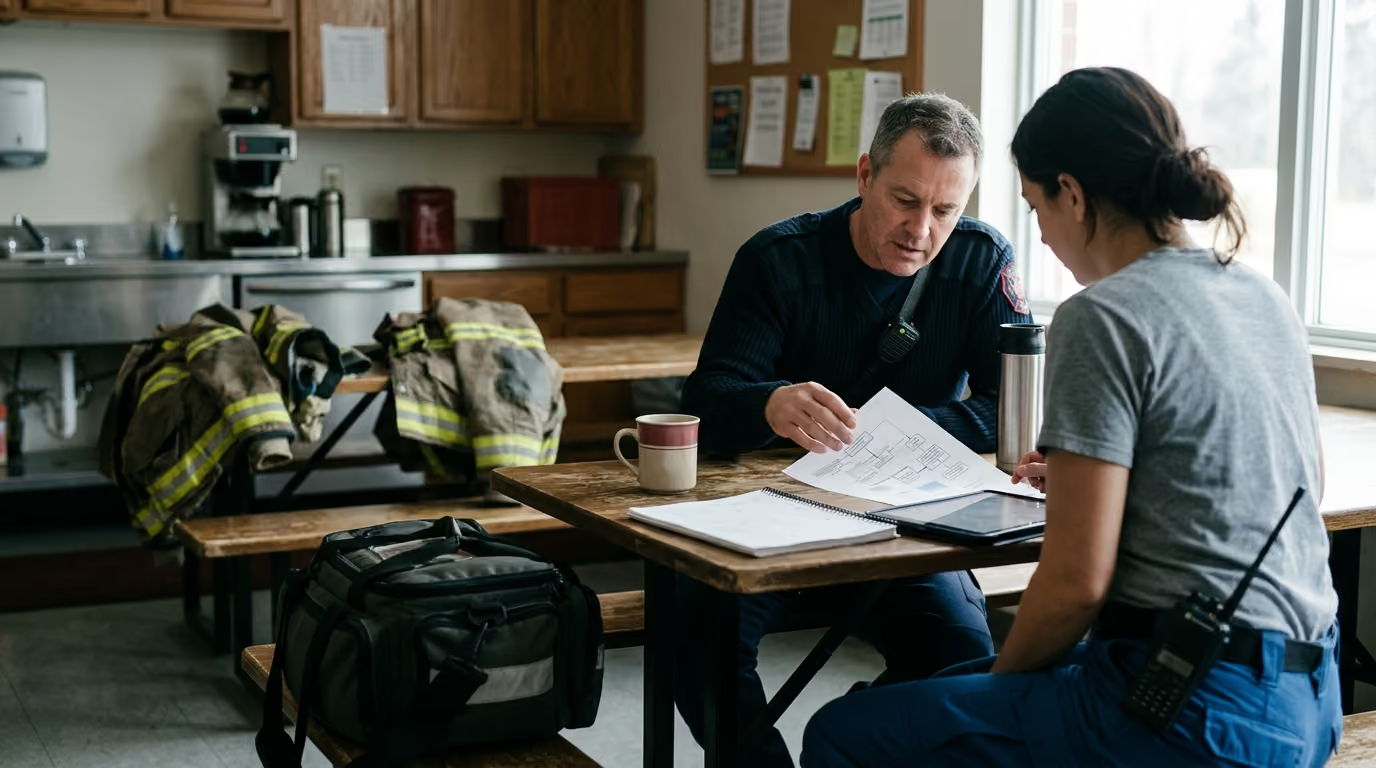

Tactical load management helps first responders balance operational demands, training volume, and recovery through a structured five-level decision framework.





First responders frequently search for a clear answer to a common problem: should you train through joint pain, muscle soreness, or shift fatigue, or should you rest? The answer is neither pure grit nor complete inactivity.
A reliable load-management decision framework uses a five-level operational model: push, modify, recover, refer, or stop. The right choice depends on your symptoms, recent occupational workload, physical capacity, and upcoming shift demands.
Physical training load represents the total physiological and mechanical stress placed on the body through exercise. For emergency personnel, physical load cannot be measured solely by counting barbell sets, running miles, or tactical drills. Occupational duties such as carrying patients down narrow stairwells, wearing heavy body armor, or advancing charged hose lines create substantial physical wear. Effective load monitoring tracks these combined exposures over time to prevent overtraining while preserving operational capability.
Researchers categorize physical stress into four distinct dimensions:
Capacity represents your current physiological ability to tolerate physical work safely. Capacity is dynamic and changes daily based on sleep quality, hydration, nutritional intake, recent injury history, and mental stress.
Demand represents the physiological and mechanical requirement of the upcoming task. A standard strength workout might impose a moderate demand during a scheduled rest period. That exact same workout becomes an extreme demand when completed after a sleepless 24-hour shift in high summer temperatures.
Emergency personnel must evaluate whether planned training matches current capacity and leaves enough physical reserve for sudden emergency calls. Using autoregulating training based on daily readiness helps responders adjust exercise volume to match their fluctuating operational capacity.
Acute workload reflects the physical stress accumulated over the previous several days or week. Chronic workload represents the longer-term training base accumulated over several weeks or months. Sports science consensus statements published by the International Olympic Committee note that rapid spikes in acute training load relative to chronic load increase injury risk.
However, rigid mathematical ratios should never be used as a standalone diagnostic tool for tactical populations. Mathematical formulas cannot account for sudden calls, broken sleep schedules, or thermal stress from protective gear. Emergency responders must avoid rapid spikes in volume while also avoiding boom-bust cycles where extended periods of inactivity are followed by extreme bouts of exertion.
A practical tactical framework organizes daily training choices into five operational tiers.
The push level indicates that you proceed with your scheduled workout as planned. This level is appropriate when you are free from concerning pain, illness, or excessive fatigue. Your warm-up feels smooth, movement quality is clean, and your recent sleep and operational calls have been manageable.
Pushing does not mean reckless exertion or lifting with poor form. It means executing the planned stimulus while maintaining strict technical standards and preserving an operational reserve. If movement quality deteriorates or pain arises during the workout, you immediately step down to a modified level.
Modification allows you to train productively while reducing physical stress on vulnerable tissues or an overtaxed nervous system. This approach is appropriate when you have mild, familiar musculoskeletal tightness, minor joint irritation, or moderate duty fatigue. Rather than canceling the session, you adjust variables to train safely.
You can modify workouts across multiple parameters:
Rehabilitation research demonstrates that continuing modified activity is frequently superior to complete rest for joint and tendon recovery. The key requirement is that modified movement must not compromise mechanics or worsen symptoms.
The recover level suspends the primary training stimulus in favor of restorative protocols. This option is selected when generalized fatigue, severe sleep debt, systemic illness, or extreme occupational stress impairs your basic capacity. The primary objective shifts from building fitness to restoring operational baseline.
Active recovery protocols include low-intensity walking, targeted mobility, gentle nasal-breathing drills, hydration, and protected sleep periods. Attempting to force a high-intensity workout during periods of acute sleep deprivation or systemic exhaustion impairs immune function and increases injury risk. Using minimum effective dose training strategies provides an alternative way to maintain strength during heavy operational stretches without inducing deep systemic fatigue.
Referral involves seeking a structured evaluation from a licensed medical professional, physical therapist, or certified athletic trainer. This level is activated when pain persists across multiple weeks, recurs at the exact same anatomical site, or alters your movement patterns.
Referral is also required when joint swelling occurs, resting pain disrupts sleep, or physical performance steadily declines despite load reductions. First responders frequently make the mistake of endlessly modifying around a worsening injury instead of obtaining a clear diagnosis. Early clinical assessment prevents minor soft-tissue strains from developing into career-threatening chronic pathologies.
The stop level demands immediate cessation of all physical exertion and, when necessary, activation of emergency medical evaluation. This tier is triggered by acute red-flag symptoms that indicate cardiopulmonary distress, neurological compromise, exertional heat illness, or structural musculoskeletal failure.
Immediate stoppage is mandatory upon experiencing:
Guidelines from the American College of Sports Medicine state that individuals experiencing acute cardiovascular or metabolic symptoms must stop exercise immediately and obtain medical clearance before resuming physical activity.
Evaluating pain requires looking beyond a single numerical rating. Pain is a complex biological signal influenced by tissue stress, inflammation, previous injury history, and psychological stress. Emergency personnel must evaluate pain across four distinct dimensions: intensity, anatomical location, mechanical behavior, and functional impact.
Pain behavior describes how symptoms change over time. Does the discomfort improve as your body warms up, only to return with greater severity the following morning? Does the pain remain localized to a specific tendon, or does it radiate along a nerve pathway?
Functional impact evaluates whether the symptom forces you to alter your gait, shift weight away from an injured joint, or compensate during lifting tasks. A low pain score of two out of ten that causes a visible limp is far more concerning than a stable score of four out of ten that allows perfect movement mechanics.
Clinical studies on tendon rehabilitation, such as research on Achilles tendinopathy, have validated the use of structured pain-monitoring models. In these clinical trials, patients were permitted to continue loading activities with mild to moderate pain up to five on a ten-point scale, provided specific safety rules were met. The pain had to subside promptly after exercise, return to baseline by the following morning, and show no progressive increase across weekly assessments.
This clinical finding must not be misunderstood as universal permission to train through all pain. Tendons often tolerate controlled, progressive mechanical load during structured rehabilitation. However, acute muscle tears, ligament sprains, joint instabilities, bone stress injuries, and spinal nerve compressions do not follow this rule. Using a pain threshold to justify heavy loading during acute traumatic injuries or nerve compression creates severe tissue damage.
A practical three-zone operational traffic light helps categorise musculoskeletal symptoms:
Subjective feelings do not always reveal underlying physiological fatigue. First responders often possess high mental drive, enabling them to push through severe systemic exhaustion without realizing their neuromuscular performance has degraded. Incorporating objective, low-fatigue performance markers into daily routines helps identify fatigue before injuries occur.
Neuromuscular readiness refers to the ability of the central nervous system to recruit muscle fibers quickly, coordinate complex movement patterns, and stabilize joints under load. When the nervous system is fatigued from shift work, sleep loss, or intense physical duty, dynamic stability declines. This leaves joints and soft tissues vulnerable to acute sprains and strains.
Valuable daily performance markers include:
A marked decline in these baseline markers indicates that your central nervous system is carrying excessive fatigue. If your warm-up feels sluggish, balance is uncharacteristically unstable, and routine submaximal loads feel heavy, proceeding with high-intensity lifting or maximal sprints is counterproductive. These performance decrements serve as a clear operational signal to shift from a push workout to a modified or recovery-focused session.
The International Olympic Committee consensus on athlete monitoring highlights that individual responses to training stress vary widely. No single technological device or subjective score can predict overtraining or injury with absolute precision. Combining objective movement checks with subjective fatigue ratings provides the most reliable picture of true physical capacity.
The physical demands of emergency services require a load-management framework distinct from standard commercial fitness programs. First responders do not operate in climate-controlled environments with guaranteed sleep windows and predictable schedules. Operational demands must always override personal fitness goals.
Data from the National Fire Protection Association (NFPA) indicates that overexertion and strain consistently rank as the leading cause of fireground injuries, accounting for approximately 27% of all reported occupational injuries. Federal regulatory reports from occupational safety agencies confirm similar rates across emergency medical and tactical personnel. These overexertion injuries occur when the physical demands of structural firefighting, heavy lifting, or patient transport exceed the responder's current capacity.
Turnout gear, body armor, and self-contained breathing apparatus (SCBA) impose substantial mechanical and thermal burdens. Encapsulating gear restricts heat dissipation, causing core body temperature to rise rapidly even during moderate physical exertion. This thermal strain accelerates dehydration, elevates heart rate, impairs cognitive function, and drains muscular endurance.
Emergency incident rehabilitation guidelines established under NFPA 1584 provide clear operational work-to-rest benchmarks:
These occupational rehabilitation standards highlight why post-shift training requires careful planning. If you have completed an extended structural fire, executed multiple patient carries down stairwells, or spent hours in tactical gear during high summer heat, your physiological load is already elevated.
Planning training requires looking ahead 24 to 48 hours. A heavy lifting session or high-intensity conditioning workout might be manageable if you have two scheduled rest days ahead. That same workout is irresponsible if you are scheduled for a busy night shift in extreme heat. Understanding how cumulative fatigue and shift length interact is critical for matching your daily gym workload to upcoming shift demands.
When duty calls demand heavy physical exertion, discretionary gym training must yield. Discretionary workouts exist to build and support operational capacity, not to compete with the primary duties of the job.
A robust load-management system uses clear escalation pathways. These pathways ensure that minor physical symptoms are managed early, supervisory staff are informed appropriately, and medical interventions are activated before small injuries become chronic.
The self-management pathway applies to mild, familiar muscular soreness or low-level joint irritation in the green or lower amber zones:
Supervisors, peer fitness trainers, and training officers play a vital role in injury prevention. This pathway is activated when a responder demonstrates visible movement compensations, repeatedly requests training modifications, or returns to duty after an extended illness or musculoskeletal injury.
Supervisors must cultivate a culture that separates dedication from dangerous exertion. When an individual shows signs of extreme sleep deprivation, thermal exhaustion, or movement-altering pain, the supervisor must intervene to modify physical training or adjust operational exposures. Supervisors should document physical limitations, facilitate access to department physical therapists or athletic trainers, and eliminate peer pressure that encourages personnel to conceal injuries.
The clinical pathway connects the responder with qualified healthcare professionals, such as physical therapists, occupational health physicians, sports chiropractors, or certified athletic trainers.
This pathway is indicated when:
First responders seeking evidence-based guidance on physical rehabilitation should review educational materials on injury management and recovery to understand modern rehabilitation timelines.
The emergency pathway is reserved for critical, life-threatening, or limb-threatening presentations:
In cases of suspected exertional heat stroke, consensus guidance from the National Athletic Trainers' Association emphasizes immediate, aggressive whole-body cooling on site. Cold-water immersion remains the gold standard treatment and should be initiated immediately before transport whenever feasible.
First responder organizational cultures value resilience, reliability, and mental toughness. While these traits are essential for emergency operations, they frequently lead to predictable errors when applied to physical training and injury management.
Many responders treat pain as an all-or-nothing switch: either they push through all discomfort with maximum effort, or they cease all physical movement and adopt complete bed rest. Both approaches are flawed.
Ignoring pain damages healing tissue, while complete inactivity leads to rapid muscle atrophy, reduced tendon capacity, and cardiovascular deconditioning. Modern load management relies on controlled, modified movement that keeps tissues loaded within safe, symptom-monitored limits.
Wearable devices that track sleep, heart-rate variability, and skin temperature provide helpful context, but they should never dictate training decisions in isolation. A low readiness score on a wearable device does not automatically mean you are incapable of training, just as a green score does not grant permission to ignore a sharp shoulder impingement. Biometric data must be interpreted alongside your actual physical symptoms, movement quality, and upcoming shift demands.
Certain chronic tendon issues feel noticeably better as tissue temperature rises during a warm-up. This temporary reduction in discomfort can mislead responders into believing the tissue is fully healed and ready for maximal loads.
Under heavy eccentric stress, high impact, or ballistic movement, an irritated tendon remains highly vulnerable to structural damage. A smooth warm-up provides useful information, but it does not replace sensible volume and intensity limits.
A common error is calculating weekly training volume solely from workouts recorded inside the gym. An emergency crew that spends four hours extricating a victim from a vehicle, carries heavy gear up multiple flights of stairs, or performs rigorous hose-advance drills has completed a massive volume of physical work.
Failing to count occupational labor as physical load leads to cumulative overtraining, systemic exhaustion, and elevated injury risk. Tactical fitness programs must dynamically adjust gym volume downward when operational duty volume spikes.
Emergency personnel pride themselves on operational dedication. Highly motivated individuals routinely use mental focus to override physical exhaustion, deep sleep debt, and localized pain.
However, willpower cannot alter the physiological realities of neuromuscular fatigue or compromised soft tissues. Forcing heavy barbell sessions or intense sprint intervals on severe sleep debt degrades motor control and significantly increases the risk of acute spinal or joint injuries.
When pain arises, responders often rest completely for several weeks until symptoms fade. However, passive rest does nothing to restore the mechanical load tolerance of tendons, ligaments, and muscles.
When the individual returns to full duty or heavy lifting, the unconditioned tissue quickly breaks down again under operational stress. True rehabilitation requires progressive, controlled mechanical loading to rebuild functional tissue capacity.
Reviewing illustrative operational scenarios shows how this load-management framework applies across diverse emergency response environments.
A 34-year-old firefighter experiences a familiar 3/10 ache in the anterior knee during squats. The firefighter demonstrates normal walking mechanics, no joint effusion, and full range of motion. The discomfort remains localized and does not escalate during the warm-up.
A paramedic reports for training after working three consecutive 12-hour night shifts with frequent patient transfers and broken daytime sleep. The paramedic feels irritable, exhibits poor balance during warm-up drills, and shows an uncharacteristic 15-beat elevation in heart rate during light aerobic cycling.
A police officer on patrol feels a sudden, sharp 7/10 pain in the lower back while performing barbell deadlifts. The pain radiates down into the right gluteal region and posterior thigh, accompanied by a noticeable antalgic lean and altered gait.
A structural firefighter completes two consecutive 30-minute SCBA cylinder evolutions inside a burning residential structure during high ambient summer temperatures. The firefighter exhibits heavy sweating, skin flushing, elevated respiratory rate, and mild lightheadedness upon exiting the structure.
A tactical team member returns to physical training three weeks after sustaining a Grade 1 medial gastrocnemius strain. The officer has zero resting pain and walks with a normal gait. However, during jogging drills, the officer feels a 4/10 tightness and subtly shortens the right-side stride.
A patrol officer feels physically rested and reports zero pain. However, the officer is scheduled to participate in an intensive 8-hour tactical building-clearing certification the following morning involving full armor, ballistic shields, and repeated physical combative drills.
Integrating a systematic load-management process into a fire station, police precinct, or EMS station requires simplicity. A complex, time-consuming protocol will be ignored during busy operational periods.
An effective departmental framework centers on five daily screening questions:
Tracking these answers in a daily training log helps responders spot negative trends before injuries materialize. A brief daily entry noting sleep hours, soreness locations, session RPE, and operational call volume provides a clear history for both the individual and healthcare providers.
A structured load-management framework empowers first responders to make intelligent training adjustments, but it is not a substitute for formal medical evaluation. First responders must know when self-management reaches its limit.
Physical training must never be used to evaluate or diagnose suspected cardiovascular disease, severe spinal trauma, acute concussions, or exertional heat stroke. Attempting to work through severe systemic symptoms or acute traumatic structural injuries endangers your personal health and risks the safety of your crew and the public you serve.
If you experience persistent, unexplained joint pain, progressive loss of strength, joint swelling, radiating nerve symptoms, or chronic fatigue that fails to respond to rest, you must schedule an evaluation with a licensed healthcare provider. Physical therapists, occupational health physicians, and certified athletic trainers can diagnose underlying tissue pathology, address biomechanical compensations, and build structured, individualized return-to-duty rehabilitation programs.
Sustainable capability across a 25- or 30-year emergency services career requires managing physical load with precision. Treating recovery and load management as operational skills protects your physical health, maintains your readiness for duty, and ensures you leave the career with your body intact.
To put this decision framework into immediate practice, apply this five-step checklist during your upcoming duty cycle:
Stay connected for research-led guidance on duty fitness, shift-work sleep, injury recovery, stress, nutrition and career longevity. Practical ideas for first responders who want to stay capable on the job, recover well and protect their health for the long run.



Read practical guidance on first responder fitness, recovery, sleep, nutrition and resilience for demanding work and a long, active career.
read the blog



