
Three operational fueling levels guide tactical athletes through varying shift demands, sleep disruption, and macronutrient requirements across a full emergency career.





A recruit sits in an academy classroom reviewing a rigid meal plan built for a bodybuilder. Fast-forward ten years, and that same individual is an experienced patrol officer or firefighter working a 24-hour rotation. They are operating on four hours of broken sleep, responding to unpredictable calls, wearing twenty to fifty pounds of protective equipment, and grabbing food from convenience store shelves. The rigid diet from the academy collapsed years ago under the pressure of real shift schedules.
Nutrition for emergency personnel cannot function as a short-term weight-loss diet or a generic sports regimen. Emergency response demands a durable, career-long system. This framework must support high-intensity physical output, preserve lean tissue, manage cardiovascular risk, and protect long-term health through retirement.
First-responder performance nutrition is a dynamic fueling system based on shifting operational demands, not rigid calorie counting. Tactical personnel need sufficient energy and carbohydrates to support high-intensity tasks and cognitive clarity. They need consistent daily protein distribution to protect muscle mass, alongside quality fats and hydration to support cardiometabolic and thermal regulation.
Across a career, nutritional priorities progress from building physical capacity in the academy to preserving functional capability on shift. Later stages focus on mitigating cardiovascular and metabolic risks, ultimately protecting metabolic health and physical independence after service.
Systematic reviews examining tactical populations, including military personnel, law enforcement officers, and firefighters, reveal a clear dietary mismatch. Research shows that first responders generally meet or exceed recommended protein targets. However, they frequently consume excess dietary fat and fail to meet minimum requirements for total energy and carbohydrates.
This under-fueling of carbohydrates occurs alongside extreme, highly variable daily energy expenditure. Measured energy expenditure in tactical personnel using doubly labeled water ranges from approximately 3,504 to 7,416 kilocalories per day. This wide range reflects differences in job assignments, environmental heat, protective gear, and physical call volumes. When personnel under-consume carbohydrates, high-intensity work capacity, cognitive speed, and recovery suffer.
Occupational data also highlights severe health risks across service careers. Cardiovascular disease represents the leading cause of on-duty death among firefighters, according to findings from the National Institute for Occupational Safety and Health. A significant percentage of investigated line-of-duty cardiovascular fatalities involve underlying coronary artery disease, with most events occurring during or immediately after strenuous emergency responses or training drills.
Research also demonstrates high rates of sleep disorders among emergency responders. Meta-analyses report elevated prevalence rates for shift-work disorder, obstructive sleep apnea, insomnia, and excessive daytime sleepiness. These occupational stressors alter appetite hormones, impair glucose regulation, and accelerate central body fat accumulation.
To build a nutrition framework that lasts twenty to thirty years, agencies and individuals must distinguish between physical capacity and operational capability.
Capacity represents the raw physical reserve developed through structured physical training. This includes maximal strength, aerobic power, anaerobic work capacity, and lean muscle mass. The recruit academy phase focuses heavily on building this reserve from the ground up.
Capability represents the practical ability to express that physical reserve reliably during chaotic field conditions. An active responder must perform while wearing heavy personal protective equipment, enduring severe sleep deficits, experiencing thermal strain, and managing high mental stress.
Protective equipment alone increases the metabolic cost of occupational movement by 6 to 21 percent, depending on load, speed, and terrain. A high aerobic capacity or heavy deadlift in gym clothing does not guarantee readiness if an officer or firefighter runs out of fuel inside gear.
Nutrition serves as the bridge between raw capacity and durable capability. In the early career, nutrition supports adaptation to heavy training loads. In mid-career and late-career stages, nutrition shifts toward protecting the biological systems that sustain capability, with a strong focus on joint health, heart health, and metabolic balance.
Emergency response work rarely follows a predictable, steady schedule. Responders may spend one shift completing administrative reports and equipment checks, while the next shift demands hours of structural fire suppression, backcountry search operations, or prolonged tactical containment.
Applying the exact same calorie and carbohydrate intake to every day leads to either under-fueling during intense operations or chronic energy surplus during quiet periods. A flexible three-level fueling model allows personnel to adjust their intake based on anticipated and real-time demands.
This level applies to scheduled rest days, light station duties, administrative assignments, and periods with minimal physical exertion.
This level serves as the daily default for standard patrol, typical emergency medical service shifts, regular firehouse rotations, and days with planned strength or conditioning workouts.
This level is required during multi-alarm fires, prolonged tactical operations, natural disaster deployments, wildland fire suppression, and arduous training blocks.
Achieving optimal performance requires understanding how macronutrients function under operational stress. Emergency personnel should view food as functional fuel and structural material rather than moral choices.
Carbohydrates are the primary fuel source for high-intensity muscular contractions, rapid decision-making, and central nervous system function. Tactical personnel operating in protective gear rely heavily on glycolytic energy pathways during hose advances, victim extractions, suspect pursuits, and rapid stair climbs.
When carbohydrate intake is chronically low, responders experience premature physical fatigue, reduced strength endurance, and slower reaction times. Field personnel should periodize carbohydrates according to work volume rather than eliminating them.
Quality sources for routine duty include:
Protein supplies the essential amino acids required to repair skeletal muscle, maintain immune defenses, and protect lean tissue during energy deficits. Tactical fitness guides suggest daily protein targets ranging from 0.5 to 0.8 grams per pound of body weight for active tactical athletes, extending up to 1.0 gram per pound when building muscle or recovering from injury.
Rather than consuming the majority of daily protein at a late dinner, responders benefit from distributed intake:
Dietary fats are necessary for absorbing fat-soluble vitamins, building cell membranes, and supporting endocrine function. However, because dietary fat contains nine calories per gram, passive overconsumption can quickly drive unwanted body fat gain.
Emergency responders should focus on fat quality rather than extreme restriction:
You can learn more about building sustainable duty eating habits in our guide on practical shift meal strategies for emergency personnel.
Thermoregulation and fluid balance directly affect physical performance, cardiovascular safety, and cognitive precision. Dehydration increases core body temperature, elevates heart rate at any given workload, and accelerates physical exhaustion.
In hot or humid environments, structural firefighting gear and tactical body armor trap metabolic heat. Firefighters and tactical officers can lose up to two liters of sweat per hour during strenuous operations in full gear. These fluid losses represent an upper limit, but they illustrate the speed at which dehydration can develop during prolonged calls.
Responders should avoid relying solely on plain water during prolonged heavy sweating. Drinking massive volumes of plain water without electrolytes can dilute blood sodium levels, leading to dangerous hyponatremia. Pairing fluids with electrolyte packets, sports drinks, or regular salted meals restores osmotic balance effectively.
Shift work and circadian disruption fundamentally alter human metabolism. Eating large, carbohydrate-dense, or high-fat meals late at night impairs glucose tolerance and elevates circulating blood fats compared to eating the exact same meal during daylight hours.
Sleep disruption also shifts appetite hormones. Insufficient sleep reduces leptin, the hormone signaling fullness, and increases ghrelin, the hormone stimulating hunger. This hormonal shift creates intense cravings for energy-dense, refined foods high in sugar and fat.
To counter these physiological disruptions, emergency personnel should structure their night-shift nutrition carefully.
First, consume a balanced, substantial dinner containing complex carbohydrates, lean protein, and vegetables before the night shift begins, ideally between 17:00 and 19:00. This meal serves as the primary metabolic anchor for the night.
Second, keep overnight food light and easily digestible. During the hours between 00:00 and 06:00, digestion slows. Personnel should rely on low-burden foods such as Greek yogurt, cottage cheese, sliced turkey wraps, whole fruit, or a modest handful of nuts. Heavy, greasy take-out food at 02:00 frequently causes severe acid reflux, gastrointestinal distress, and profound sluggishness.
Third, manage caffeine intake strategically. While caffeine temporarily improves alertness, consuming high-dose energy drinks late into the shift disrupts post-shift daytime sleep. Establish a strict caffeine cutoff four to six hours before the scheduled sleep window.
Fourth, prepare a small, light recovery meal before post-shift sleep. Going to bed starving can cause mid-sleep awakenings, while eating a heavy meal triggers indigestion. A small bowl of oatmeal with protein powder or a slice of toast with nut butter provides enough satiety to protect uninterrupted sleep.
For detailed timing methods, read our comprehensive resource on using time-restricted eating to counter shift work metabolic strain. You can also review practical strategies for managing caffeine intake on night shifts.
Maintaining an effective body composition in emergency services is about protecting functional capability and cardiovascular health, not achieving an arbitrary scale weight or bodybuilder physique.
In tactical research, elevated body fat percentages consistently correlate with lower aerobic capacity, slower victim drag times, and reduced load-carriage endurance. Fat mass acts as non-functional dead weight that increases the metabolic cost of every movement, elevates joint wear, and impairs heat dissipation.
However, body mass index alone is an incomplete metric for first responders. A heavily muscled responder may carry a high body mass index while possessing excellent cardiovascular fitness and low body fat. Conversely, a responder with normal weight may carry high visceral fat and poor muscle mass, a condition termed sarcopenic obesity.
First responders and agency wellness programs should evaluate body composition through a multi-factor lens:
Cardiovascular disease remains the primary medical threat to first responders. Structural firefighting and high-stress law enforcement encounters cause sudden surges in sympathetic nervous system activity, spiking heart rate and blood pressure within seconds. When these acute surges occur in an individual with underlying plaque accumulation, arterial stiffness, or unmanaged hypertension, the risk of acute myocardial infarction rises dramatically.
Nutrition plays a direct role in modifying these cardiovascular risk factors across a twenty-year career. Emphasizing soluble fiber, omega-3 fatty acids, colorful plant phytonutrients, and lean proteins while minimizing trans fats, excess sodium from ultra-processed food, and excess alcohol protects the vascular system against premature degradation.
For a deeper dive into physical preparation, explore our framework for balancing high-capacity workouts with low-fatigue duty sessions.
Nutritional needs and physiological vulnerabilities change substantially as a responder progresses through the operational lifespan. A twenty-one-year-old recruit has vastly different metabolic requirements and recovery rates than a fifty-two-year-old captain or a newly retired veteran.
The primary objective during the academy is building physical capacity, adapting to high training volumes, and establishing lifelong nutritional literacy.
Recruits often make the mistake of severe under-fueling. Trying to lose weight rapidly while navigating demanding daily physical training and academic stress leads to injury, illness, and physical failure.
Recruits should focus on:
The probationary and early-career period brings irregular schedules, overtime shifts, mandatory holdovers, and station culture pressures.
New responders often abandon the structured routines developed in the academy. They frequently adopt the poor dietary habits of senior peers, relying on fast food runs and excessive energy drinks to cope with fatigue.
Early-career personnel should focus on:
The mid-career stage, spanning roughly eight to eighteen years of service, is characterized by accumulated physiological wear, joint stiffness, career stress, and family obligations.
During this window, natural metabolic rate and physical activity levels often decline slightly, while high-calorie eating habits remain unchanged. Police officers in comparative occupational studies often show higher average body fat, larger waist circumferences, and less favorable lipid panels than younger cohorts.
Mid-career personnel should focus on:
The late-career phase focuses on preserving functional capability, protecting joint integrity, mitigating severe cardiac risks, and preparing for life after emergency service.
Tissue healing slows down with age, and the margin for error regarding cardiovascular stress narrows. The average age of line-of-duty cardiovascular fatalities in public safety research clusters around fifty years old, typically with roughly twenty years of accumulated occupational service.
Senior responders should focus on:
Retirement introduces an immediate, dramatic drop in non-exercise physical activity and daily occupational movement. However, appetite and habitual portion sizes often remain set at active-duty levels.
Without structured shifts and physical demands, retired responders face rapid weight gain, loss of physical purpose, and accelerated cardiometabolic decline if they do not establish new daily anchors.
Retired responders should focus on:
For additional strategies on managing overall workload across your career, see our guide on minimum effective dose training for emergency personnel.
Applying nutritional science inside a working firehouse, police precinct, or emergency medical services station requires practical, field-tested systems. High-minded dietary advice fails if it cannot survive a sudden high-priority dispatch.
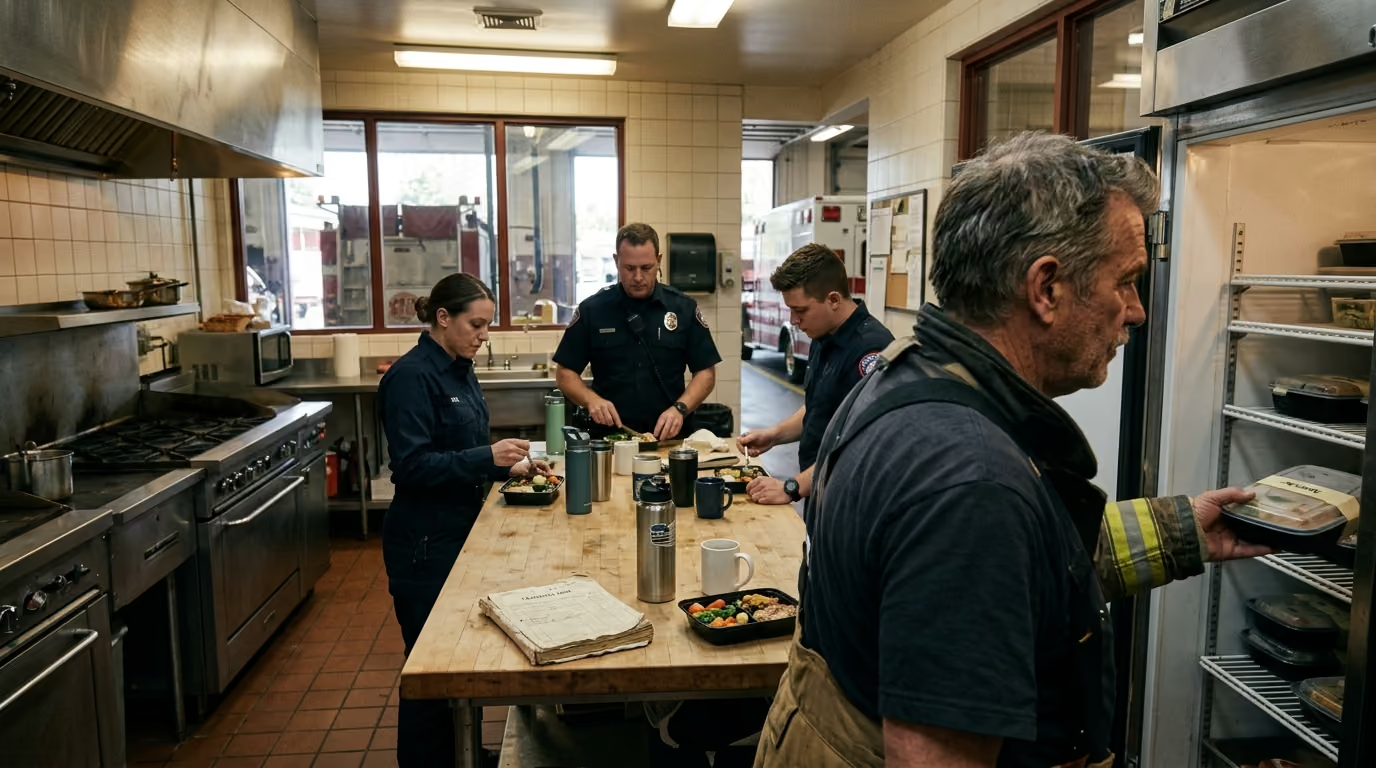
The firehouse dining table represents an essential hub for team cohesion, debriefing, and morale. However, traditional station meals frequently feature oversized portions of refined starches, heavy cream sauces, and processed meats.
Responders can maintain camaraderie while protecting their health:
Nutrition is a powerful tool for performance and longevity, but it operates within hard physiological limits. Recognizing these boundaries prevents dangerous practices on duty.
Intermittent fasting has gained popularity among shift workers, but extreme fasting protocols introduce substantial operational risks. Undertaking heavy physical labor, structural firefighting, or high-stakes tactical operations after sixteen to twenty hours of fasting can induce severe hypoglycemia, lightheadedness, impaired coordination, and compromised decision-making.
Fasting windows should remain flexible. If a major call occurs during a planned fasting period, duty readiness must take absolute priority over the fasting schedule. Personnel should immediately consume accessible carbohydrates and fluids to support safe performance.
Very low-carbohydrate or ketogenic diets require extended adaptation periods and can impair high-intensity glycolytic performance. Furthermore, ketogenic states alter fluid and electrolyte retention, increasing the risk of cramping and dehydration under extreme heat. Any dietary change that results in chronic lightheadedness, chronic fatigue, or poor heat tolerance must be reassessed immediately.
Dietary supplements represent the very top of the performance pyramid and cannot compensate for poor sleep, inadequate hydration, or an inconsistent diet. First responders should approach supplements with extreme caution:
While general nutrition principles apply across the service, individual physiology often requires specialized medical and clinical support. First responders should seek direct guidance from licensed healthcare professionals in specific circumstances.
Consult a licensed physician or registered dietitian specializing in sports or occupational nutrition if you experience:
Occupational medical evaluations are designed to identify risk factors before they produce catastrophic events. Utilizing specialized medical guidance ensures that nutritional strategies match your specific clinical status, prescription medications, and duty profile.
Revisit this framework whenever your operational reality changes significantly. Return to these principles when promoting to a new rank, changing shift rotations, recovering from a significant injury, noticing changes in annual health screenings, or preparing for the transition into retirement.
Sustainable duty capability is built through consistent, repeatable daily habits rather than short-term extreme diets. Fueling the human body properly preserves operational readiness on duty today and protects the health required to enjoy a long, capable life after service.
Stay connected for research-led guidance on duty fitness, shift-work sleep, injury recovery, stress, nutrition and career longevity. Practical ideas for first responders who want to stay capable on the job, recover well and protect their health for the long run.



Read practical guidance on first responder fitness, recovery, sleep, nutrition and resilience for demanding work and a long, active career.
read the blog



