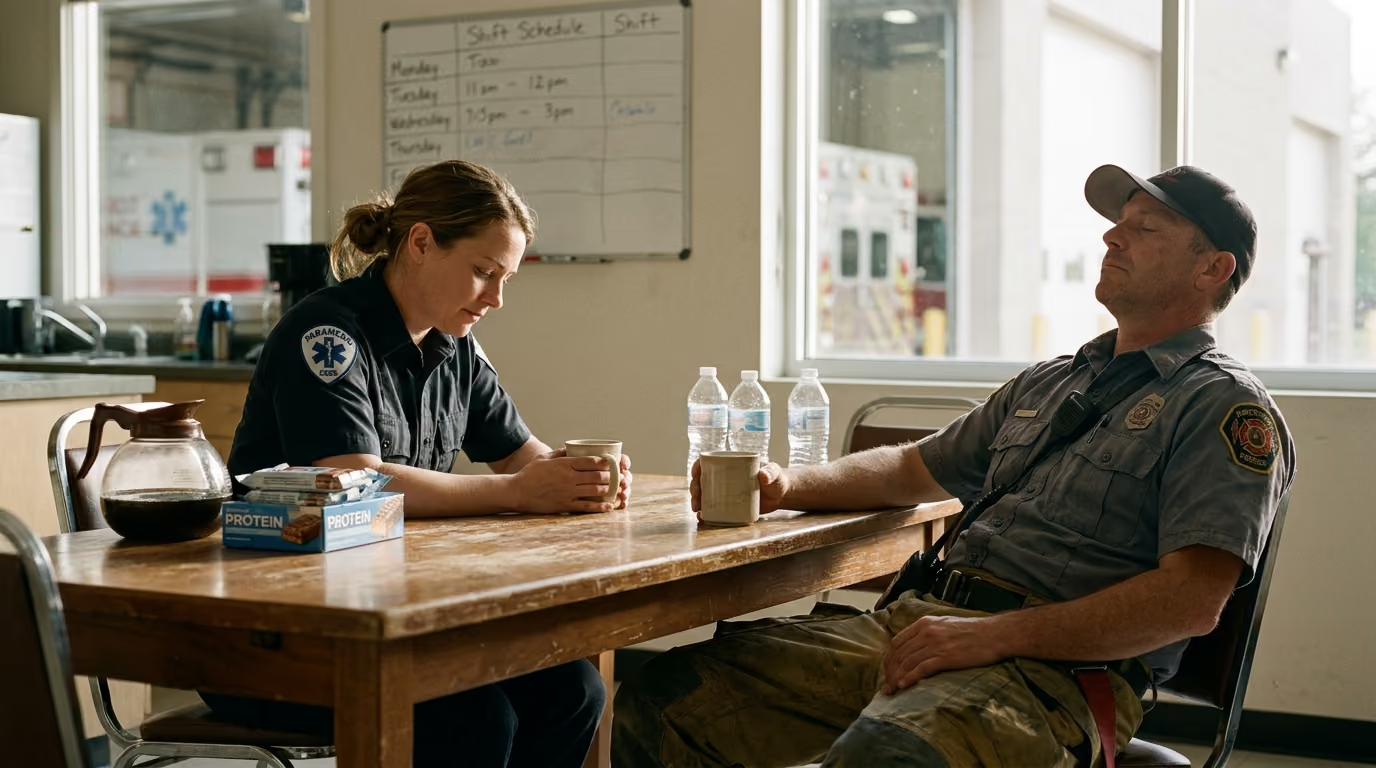

Seven critical domains of whole-person recovery provide emergency personnel with evidence-based strategies to reduce allostatic load and restore shift-to-shift capacity.





If you or someone you know is in immediate danger, call 911. If you are experiencing a mental health crisis, call or text 988 to reach the Suicide and Crisis Lifeline, and press 1 if you are a veteran. You can also text 838255. When managing periods of high distress, safe storage of personal firearms and medications should be arranged in advance with a trusted family member, peer, or healthcare professional.
You pull into the station bay or your driveway at six in the morning after a night of back-to-back runs. Your muscles feel rigid, your mind is racing through radio traffic and call details, yet your energy is completely drained. You try to sleep, but your nervous system stays locked on high alert.
A single recovery tool, like a post-shift workout or a breathing drill, cannot fix that level of physical and mental wear. First responder recovery is a multi-domain operating system. It restores physiological balance, cognitive clarity, emotional stability, and social capacity so you can perform on duty and stay healthy off duty.
A whole-person recovery system treats recovery as an integrated network of habits rather than an isolated stress-management technique. Sleep, nutrition, physical activity, social connection, cognitive processing, physiological downshifting, and organizational practices work together to return your nervous system to baseline.
Recovery does not mean passive relaxation or distraction on the couch. It means actively restoring the energy, tissue repair, and mental focus required to operate safely. When one domain is restricted by unpredictable shift work, the other domains must adjust to support your overall capacity.
Operational duty requires rapid physiological mobilization. When a high-priority call drops, your sympathetic nervous system initiates a surge in heart rate, blood pressure, muscle tension, and mental focus. This threat response is an adaptive survival mechanism that helps you manage immediate danger.
The problem begins when that activation fails to shut down after the call ends. When high arousal persists across twelve-hour or twenty-four-hour shifts, your body accumulates allostatic load. Allostatic load represents the cumulative physical wear resulting from repeated stress exposure, circadian disruption, and incomplete recovery.
This cycle directly alters your window of tolerance. The window of tolerance is the physiological zone where you can process information, communicate clearly, and regulate your emotions under pressure.
When demands exceed restoration, your operational capacity shrinks. You may drift into hyperarousal, showing irritability, physical agitation, and hypervigilance. Alternatively, you may collapse into hypoarousal, experiencing brain fog, emotional numbness, and deep fatigue.
Recovery is the deliberate process of widening this window. It allows you to move smoothly between high operational output and restorative rest without getting stuck at the extremes.
Research demonstrates that emergency response work creates distinct physiological and psychological risks across all service branches. Occupational exposure creates elevated baseline strain, but targeted recovery practices and organizational support act as proven buffers.
The evidence highlights specific challenges across three main categories:
These findings show that recovery cannot rely on a single behavior. An intervention may improve physical conditioning and daytime mood without automatically solving underlying sleep apnea or social isolation. A complete system must address each physiological component directly.
A comprehensive recovery model coordinates seven distinct functional domains. Each domain addresses a specific physiological, psychological, or environmental demand.
Sleep is the biological foundation of all physical and emotional recovery. Sleep deprivation impairs executive function, slow-wave physical tissue repair, metabolic regulation, and emotional control.
First responders must navigate sleep opportunity versus actual sleep time. Station interruptions, dispatch tones, and circadian misalignment reduce sleep quality even when time in bed seems adequate.
Key sleep practices include:
Clinical sleep issues require direct medical evaluation. Loud snoring, witnessed breathing pauses, morning headaches, and relentless daytime drowsiness often indicate obstructive sleep apnea or shift-work sleep disorder rather than standard fatigue.
Nutrition serves as operational fueling rather than an aesthetic pursuit. Irregular call volumes, extended field operations, and night duties disrupt digestion, elevate cortisol, and drive cravings for ultra-processed foods.
The goal is to stabilize blood glucose and provide continuous micronutrients for tissue repair. Skipping meals during shifts leads to energy crashes, while heavy meals before sleep impair sleep quality.
Key nutrition practices include:
Alcohol must not be used as a primary sleep aid. While alcohol induces sedation, it fragments rapid eye movement sleep, elevates overnight heart rate, and compounds dehydration.
Physical training provides occupational strength, reduces muscular tension, and helps clear acute stress hormones. However, training must be adjusted based on accumulated fatigue and duty demands.
High-intensity training layered on top of acute sleep loss or severe physical exhaustion increases injury risk and delays systemic recovery. Movement should be selected from a graduated ladder based on current readiness.
Responders can balance workload by referencing guidelines on programming high output workouts with maintenance sessions to preserve long-term health. When fatigue is severe, five to ten minutes of walking or mobility work provides restorative blood flow without straining the nervous system.
Occupational isolation is a major predictor of long-term psychological strain. First responders frequently pull away from civilian social circles because they feel misunderstood or want to protect family members from gruesome details.
Social support provides emotional safety, reality testing, and early identification of behavioral changes. A strong support network includes four distinct tiers:
Maintaining communication with at least one person outside the emergency services world protects personal identity beyond the job.
Emergency calls frequently expose responders to acute human suffering, personal danger, and chaotic environments. Suppressing immediate emotional reactions is necessary to complete operational tasks, but chronic suppression prevents healthy resolution.
Responders need structured methods to transition out of duty mode without being forced into mandatory psychological debriefings immediately after trauma. Processing works best through a clear progression:
Responders should not be forced into emotional group debriefings immediately after critical incidents. Sleep, nutrition, practical support, and personal space take precedence during the initial hours following severe events.
Downshifting refers to practices that signal to the autonomic nervous system that an operational threat has ended. It provides a bridge between high vigilance and restful recovery.
Without active downshifting, the sympathetic nervous system can remain elevated for hours after a shift. Simple grounding techniques help lower heart rate and reduce resting muscle tone.
Effective downshifting habits include:
These practices manage your current physiological state. They do not replace formal processing for deep trauma, but they establish the baseline calm needed to initiate restorative sleep.
Recovery cannot rest entirely on the individual responder. Emergency service agencies must establish operating environments that respect human physiological limits.
Agency leadership and operational structures should provide:
When agencies treat physical recovery as a core safety metric, injury rates fall and operational retention improves across the organization.
To build an adaptable recovery system, responders need a fast way to evaluate current readiness without complex equipment. The 5-Layer Recovery Check evaluates functional capacity across body, mind, and behavior.
Using this check daily helps you decide whether to push through regular training or fall back on a lighter recovery plan. Understanding when individual willpower cannot override physical exhaustion is detailed in our guide on training readiness and autoregulation for first responders.
During heavy call cycles, complex deployments, or forced overtime blocks, you will not have time for extensive wellness routines. In these situations, use a minimum viable recovery protocol focused on simple biological necessities.
This sequence takes under an hour and delivers the baseline physiological recovery needed to survive intense operational cycles.
Using the wrong recovery tool can make your current physical or mental state worse. A highly agitated responder will struggle with silent meditation, while an exhausted responder will only run down their immune system with intense conditioning.
Use this recovery menu to match your practices to your real-time physiological condition:
Even dedicated emergency personnel fall into common recovery traps that undermine long-term performance. Recognizing these errors helps protect your health across decades of service.
Resilience is not the ability to absorb unlimited psychological and physical trauma without reaction. True resilience is the capacity to process strain, adapt effectively, and return to a functional baseline. Refusing to acknowledge physical limits or mental stress leads to abrupt career burnout and preventable medical issues.
Many first responders use intense exercise as an emotional outlet to burn off frustration. While exercise supports mental health, performing high-intensity workouts while severely sleep-deprived elevates injury risks and accelerates systemic fatigue. Match your daily physical exertion to your accumulated recovery debt.
Alcohol is commonly used in emergency services culture to shift out of hypervigilance. While it induces rapid sedation, it suppresses restorative sleep stages, worsens dehydration, elevates resting heart rate, and compounds anxiety the following morning.
You can remain technically proficient on the street while accumulating dangerous cardiovascular strain, high blood pressure, and severe sleep debt. Do not use your ability to pass an annual physical or run a clean call as proof that your current lifestyle is sustainable.
Real-world recovery requires modifying habits around varied occupational realities. These case patterns illustrate how to adapt the whole-person framework across common operational demands.
A recovery system is designed to support baseline human function. It cannot instantly erase severe biological exhaustion, structural joint damage, or acute medical emergencies.
Safety guidelines must take precedence over personal motivation:
Self-directed recovery practices manage daily operational stress, but they cannot replace specialized medical or psychological treatment. Knowing when to escalate your care is a vital professional skill.
Consider scheduling an evaluation with a licensed professional under the following circumstances:
Seeking care through specialized clinicians, department occupational health providers, or employee assistance programs ensures you get the right support before minor issues become career-ending conditions.
Revisit this framework whenever you undergo major roster changes, transition to a new rank, experience a sustained increase in mandatory overtime, or notice that your standard recovery habits are no longer leaving you rested. Returning to these core domains allows you to identify emerging recovery debt and make tactical lifestyle adjustments before performance or health breaks down.
Building a multi-layered recovery system protects your operational capability on shift while preserving your physical health, mental clarity, and personal relationships across a long career and into an active retirement.
Stay connected for research-led guidance on duty fitness, shift-work sleep, injury recovery, stress, nutrition and career longevity. Practical ideas for first responders who want to stay capable on the job, recover well and protect their health for the long run.



Read practical guidance on first responder fitness, recovery, sleep, nutrition and resilience for demanding work and a long, active career.
read the blog



