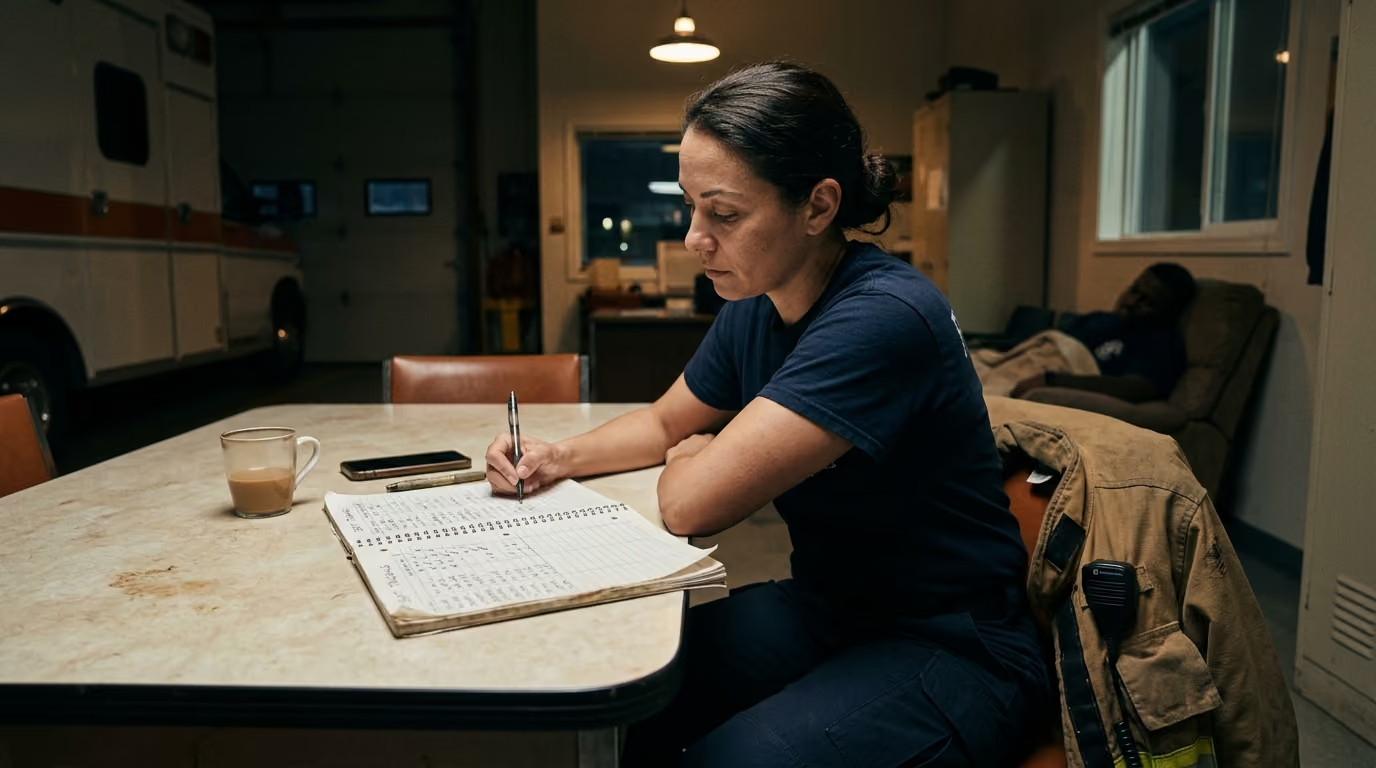

Six essential tracking categories help first responders monitor cumulative sleep debt, manage caffeine timing, and maintain cognitive performance across demanding shift rotations.





If you are in immediate danger, call 911. For 24/7 support, call or text 988 and press 1 for the Veterans Crisis Line, or text 838255.
Most first responders believe tracking sleep requires expensive wearable devices, complex algorithms, or rigid sleep schedules. In reality, accumulating more automated data often creates confusion rather than clarity. A wearable may assign a high recovery score simply because a person remained still in bed for seven hours. That same score completely overlooks fragmented daytime sleep, cumulative night shift strain, and the severe cognitive fog of a heavy call volume tour.
A practical fatigue log is not an attempt to turn a notebook into a medical diagnostic tool. It is a structured observation system designed to connect real-world duty exposure, sleep quality, stimulant timing, physical training, and operational performance. By tracking specific variables over time, emergency personnel can identify predictable recovery patterns, make safer decisions on shift, and protect their long-term health.
To manage fatigue effectively, responders must record three distinct areas: exposure, state, and outcomes. Exposure includes shift length, call frequency, traumatic incidents, caffeine intake, and physical workouts. State reflects sleep duration, sleep continuity, and subjective fatigue levels. Outcomes track observable performance markers such as reaction times, documentation accuracy, driving safety, and emotional regulation.
Fatigue is a multifactorial condition rather than a simple lack of sleep. The National Institute for Occupational Safety and Health defines fatigue as a reduction in physical or cognitive capability caused by inadequate sleep, prolonged wakefulness, circadian misalignment, heavy workload, or high stress. Federal data shows that nearly 30 percent of the civilian workforce works nonstandard shifts, while roughly one in four workers exceeds 40 weekly hours. In public safety, irregular hours and mandatory overtime are standard baseline conditions rather than occasional disruptions.
A reliable fatigue log separates what happened to the responder from how the body responded. A paramedic may sleep seven hours after a demanding night tour, but that daytime rest is often shallow and interrupted by neighborhood noise or rising core body temperature. The exposure was a high-volume night shift with daytime sleep. The internal state is fragmented rest and elevated nervous system arousal. The resulting outcome might be missed radio communications or slower response times during the next tour.
To track recovery accurately, responders must distinguish between sleep opportunity and actual sleep obtained. Consensus sleep research establishes clear parameters for evaluating rest:
A firefighter who spends eight hours in bed but wakes four times for tones obtains an entirely different physiological recovery profile than someone with six hours of uninterrupted sleep. Documenting these specific parameters reveals whether persistent exhaustion stems from a lack of scheduled time or severe sleep fragmentation. You can understand how these shift mechanics affect your recovery through circadian timing and shift length strategies.
Research from the American Academy of Sleep Medicine demonstrates that simple sleep diaries are consistently more reliable than consumer wearable sensors for assessing shift-work sleep patterns. Wearables frequently misinterpret quiet wakefulness as light sleep and struggle to evaluate split-sleep schedules. A pen-and-paper or digital log completed at consistent daily checkpoints remains the gold standard for tracking operational readiness.
Human physiology operates on an internal circadian timing system of roughly 24 hours. This internal clock governs core body temperature, alertness, hormone secretion, and cognitive speed. Night duty forces responders to stay awake when the biological clock promotes rest. It also forces them to attempt sleep during daylight hours when biological signals promote wakefulness.
Because of this mismatch, six hours of daytime sleep following a midnight patrol does not yield the same restorative benefit as six hours of nighttime sleep. The American Academy of Sleep Medicine highlights two daily windows of heightened sleepiness: 2:00 a.m. to 5:00 a.m. and 2:00 p.m. to 5:00 p.m. Operational performance dips severely during these windows, while errors, microsleeps, and near misses increase.
A fatigue log must document the timing of every sleep episode rather than treating all sleep as a single block. Relevant entries include:
Tracking naps requires recording both benefits and immediate drawbacks. Waking from deep sleep triggers sleep inertia, which is a temporary state of grogginess, slowed thinking, and reduced motor control. Guidance from the National Institute for Occupational Safety and Health suggests keeping operational naps to roughly 30 minutes during night shifts. Brief naps boost alertness while minimizing severe sleep inertia upon waking.
Log entries for naps should record the duration, the wake time, and the number of minutes required to regain sharp focus. If a responder must drive or perform critical tasks immediately after waking, that transition period represents a distinct operational risk window.
Occupational data across emergency services shows significant sleep deficits between duty and off-duty periods. Published studies report that public safety personnel average approximately 6.2 hours of sleep on duty nights compared to 7.2 hours on off-duty nights. Research on structural firefighters indicates that active fire duty days reduce time in bed by 1.07 hours and total sleep time by 0.90 hours compared to non-fire days. Screening tools identify positive indicators of chronic insomnia in roughly 49 percent of firefighters and 60 percent of paramedics.
A tracking system that requires fifteen minutes of complex calculations will quickly be abandoned during a demanding shift cycle. A successful personal fatigue log relies on a minimum viable dashboard that captures essential variables in less than two minutes per entry.
Record the shift configuration, total operational hours, and call frequency. Differentiate between routine calls and high-stress or physically exhausting incidents. Note whether mandatory overtime was required and record commute difficulty.
Log the exact time you attempted to sleep and your estimated wake time. Track the estimated number of awakenings caused by dispatch tones, street noise, heat, or internal anxiety. Rate sleep quality and morning restedness on a standard scale from 1 to 5.
Document total caffeine intake, including coffee, energy drinks, pre-workout supplements, or caffeine gum. Record the timestamp of your final caffeine dose relative to your planned sleep window. You can pair this tracking with structured caffeine management strategies for night duty to avoid sabotaging daytime sleep.
Log the mode of exercise, total training duration, and a subjective rating of perceived exertion from 1 to 10. Note whether the workout was finished as planned, modified due to exhaustion, or canceled entirely. Record joint pain or lingering muscle soreness.
Rate your emotional and psychological stress level from 1 to 10. Categorize the primary stressor as operational demands, traumatic exposure, department conflict, personal family strain, or physical pain. The National Institute for Occupational Safety and Health lists irritability, slowed logic, poor communication, and attention lapses as key warning signs of operational fatigue.
Check your alertness at three distinct moments: upon waking, midway through the shift, and before the commute home. Pair your numerical fatigue rating with at least one objective observation. Writing "Fatigue 8/10, missed dispatch address on first read" is far more actionable than simply writing "felt exhausted."
Raw log entries become valuable when converted into practical metrics. Responders do not need complicated statistical software to spot meaningful operational trends. Five basic calculations provide deep insight into personal recovery status.
The sleep opportunity ratio compares total sleep obtained against total time spent in bed. Calculate this by dividing estimated sleep hours by total hours in bed. A ratio below 0.80 indicates low sleep efficiency. This signals that environmental disruptions, emotional hyperarousal, or poor timing are preventing sleep, even when adequate time has been scheduled.
Sleep debt represents the difference between your baseline sleep requirement and the amount of sleep actually achieved. If your rested baseline is 7.5 hours and you achieve only 5.5 hours following a busy night shift, you carry an acute sleep debt of 2.0 hours. Tracking this across a four-day tour reveals cumulative sleep debt. Accumulating six or more hours of total sleep debt drastically degrades reaction times and executive judgment. To address these deficits across different rosters, consider implementing a shift-specific sleep recovery strategy.
Calculate sleep regularity by measuring the range between your earliest and latest sleep onset times across seven days. A responder who goes to bed at 10:30 p.m. on off days but sleeps at 8:30 a.m. after night shifts experiences a ten-hour timing swing. Large swings induce severe circadian misalignment, producing physical fatigue symptoms that mimic a heavy sleep debt even when total hours appear sufficient on paper.
Track the elapsed time between your last caffeine intake and your planned sleep window. Controlled clinical research shows that consuming 400 milligrams of caffeine six hours prior to bedtime significantly disrupts sleep architecture and reduces total sleep time by more than one hour. If your log shows repeated four-hour intervals between your last energy drink and your daytime sleep, caffeine is almost certainly compromising your sleep quality.
Compare subjective fatigue ratings against actual operational errors. First responders frequently experience periods where perceived alertness feels acceptable due to adrenaline or caffeine, yet objective performance declines. Tracking near misses, documentation errors, or training drop-offs helps identify when personal self-assessment cannot be trusted.
Maintaining a useful fatigue log requires avoiding common assumptions that distort data interpretation. Recognizing these pitfalls keeps tracking practical and relevant to duty performance.
Assuming that eight hours in bed equals complete physical recovery is a common error. Fragmented sleep during a 24-hour shift does not equal eight hours of consolidated nighttime sleep. When you log sleep, prioritize continuity and waking restedness over raw time spent lying down.
Treating a commercial recovery score as definitive proof of readiness is unreliable. Proprietary algorithms rely primarily on heart rate variability and movement. They cannot detect acute emotional exhaustion, moral distress, or the cognitive fatigue caused by complex decision-making. Use wearable data as secondary context while prioritizing your daily subjective log. You can learn how to balance personal perception and workload by reviewing readiness monitoring and training autoregulation.
Believing that caffeine eliminates operational fatigue is dangerous. Stimulants temporarily block adenosine receptors in the brain, masking feelings of drowsiness. However, they do not restore compromised peripheral vision, micro-decision speed, or emotional regulation. If your log shows high stimulant use paired with declining performance, your body is operating on borrowed time.
Viewing physical exercise as purely beneficial regardless of fatigue levels can stall recovery. Heavy resistance training or high-intensity conditioning demands significant nervous system recovery. Adding intense workouts on top of severe sleep debt increases injury risk and delays physical recovery. Use your log to adjust workout intensity to match your current recovery capacity.
Attempting to fill out an entire week of fatigue logs from memory produces inaccurate data. Human memory reliably underestimates caffeine intake, misjudges sleep onset, and forgets minor operational near misses. Keep your log easily accessible and record short entries at consistent checkpoints throughout your duty cycle.
Reviewing logs across several shift cycles reveals recurring operational patterns. Identifying these scenarios allows responders to adjust their routines before fatigue causes serious performance failures.
A fatigue log is a personal risk management tool designed to highlight dangerous operational conditions. Certain log patterns represent immediate safety hazards that require immediate mitigation.
The drive home after a night shift or an extended 24-hour tour represents one of the most dangerous periods for emergency personnel. If your log shows repeated instances of eyelid drooping, lane drifting, missed highway exits, or involuntary head nodding, your fatigue has reached a critical safety threshold. When these signs appear, pulling over in a safe location for a brief 20-minute nap or arranging alternative transportation is essential.
Log entries that capture missed critical radio transmissions, misread medication labels, forgotten equipment checks, or vehicle near misses must never be ignored. When these events occur alongside elevated fatigue scores, they indicate compromised executive function. Implement buddy checks with your partner to cross-verify critical actions during high-demand calls.
Personal logs help identify when schedule demands exceed safe human limits. Guidelines from the National Institute for Occupational Safety and Health recommend at least 10 consecutive hours off duty between shifts to provide an adequate opportunity for 7 to 8 hours of sleep. When emergency operations or mandatory overtime compress off-duty rest below eight hours, cognitive impairment rises sharply.
A personal fatigue log provides valuable personal insight, but it cannot certify operational fitness or replace professional safety protocols. Never use an acceptable log score to justify driving or operating equipment when you feel visibly impaired.
A fatigue log helps distinguish expected shift-work tiredness from underlying medical sleep disorders or psychological strain. If your log consistently documents eight or more hours of uninterrupted sleep opportunity, yet your waking restedness remains 1/5 and mid-shift fatigue stays above 8/10, an underlying clinical issue may be present.
Shift Work Sleep Disorder is characterized by chronic insomnia or excessive sleepiness that persists despite optimizing sleep opportunities. First responders are also at elevated risk for Obstructive Sleep Apnea due to physical neck circumference, structural demands, and shift stress. Common warning signs include loud snoring, waking with a dry mouth, morning headaches, and gasping for breath during sleep. If your log demonstrates chronic exhaustion despite adequate time in bed, schedule an evaluation with a board-certified sleep specialist.
Operational trauma can profoundly disrupt normal sleep architecture. If your fatigue log shows persistent nightmares, racing nighttime heart rates, intrusive memories, or an inability to relax your body outside of the station, the issue extends beyond standard schedule fatigue. These patterns indicate nervous system dysregulation that benefits from specialized professional support.
If you or a colleague experience severe emotional distress, overwhelming despair, or thoughts of self-harm, access confidential crisis support immediately:
Sharing fatigue log observations with an occupational physician, primary care doctor, or licensed mental health professional provides clear clinical context. A completed two-week log eliminates guesswork and helps clinicians design targeted medical, behavioral, or occupational interventions.
Tracking fatigue is not about achieving flawless sleep metrics every single day. The unpredictable realities of emergency services make occasional sleep loss and operational exhaustion unavoidable. A structured fatigue log provides the objective feedback needed to manage operational risk, adjust training loads, and protect recovery windows across a long career.
By monitoring what matters, first responders can identify personal fatigue trends early, sustain their tactical readiness, and protect their health throughout their careers.
Stay connected for research-led guidance on duty fitness, shift-work sleep, injury recovery, stress, nutrition and career longevity. Practical ideas for first responders who want to stay capable on the job, recover well and protect their health for the long run.



Read practical guidance on first responder fitness, recovery, sleep, nutrition and resilience for demanding work and a long, active career.
read the blog



