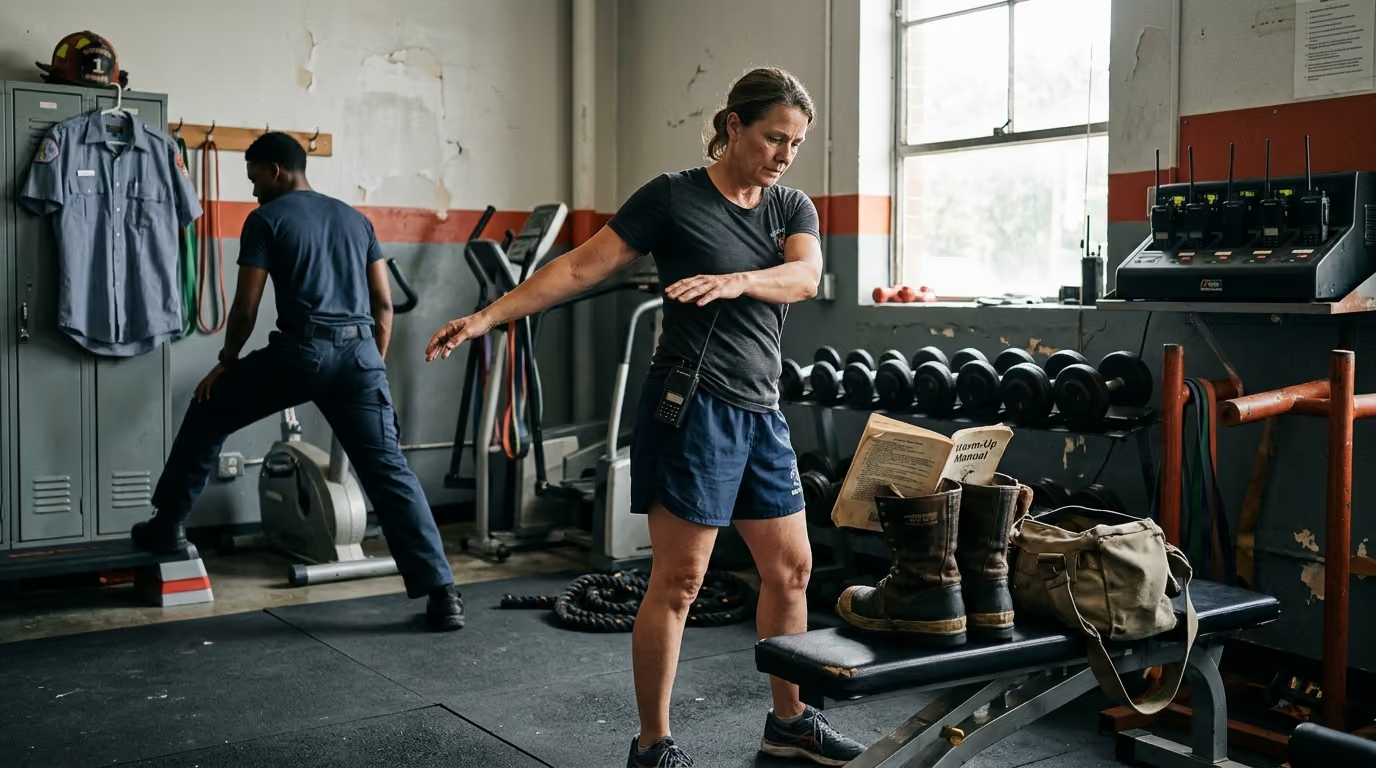

Generic stretching routines do not build operational readiness, but targeted RAMP warm-up protocols prepare first responders for physical duty demands, station shifts, and heavy training.





You step onto the apparatus floor at 0645 after a broken night of sleep. The bay temperature is hovering just above freezing, your lower back feels compressed from the previous shift, and the first tone could drop in five minutes or four hours. Grabbing a heavy barbell or jumping straight into a high-intensity circuit feels jarring, yet sitting on a foam roller for twenty minutes is unrealistic when duty calls take priority.
A first responder warm-up must function as an operational readiness system rather than a generic fitness routine. Its primary purpose is to raise core body temperature, rehearse fundamental movement patterns, stimulate the nervous system, and transition your body from rest to high physical output without generating premature fatigue. When designed correctly, a structured preparation sequence takes between two and ten minutes, requires minimal or no equipment, and prepares joints and tissues for unpredictable physical demands.
Modern exercise science views pre-activity preparation through the lens of movement quality and neuromuscular readiness. Research examining dynamic warm-ups shows small but positive acute improvements across sprinting, jumping, force output, and balance. A comprehensive systematic review of dynamic stretching literature found performance improvements across twenty studies and trivial effects across twenty-one studies. The overall average performance enhancement was approximately 1.3 percent across measured athletic outcomes. While a 1.3 percent gain seems modest in an isolated gym drill, it represents a meaningful shift in movement coordination and muscular responsiveness during demanding tasks.
Systematic reviews analyzing upper-body warm-up strategies demonstrate that high-load dynamic warm-up sequences consistently improve upper-body strength and power output. Conversely, short-duration static stretching does not improve explosive power outcomes. The physiological mechanism behind dynamic preparation involves increased muscle temperature, faster nerve conduction velocity, and enhanced muscle fiber recruitment.
The evidence surrounding static stretching is more nuanced than traditional fitness debates suggest. Holding a passive stretch for longer than sixty seconds per muscle group consistently reduces subsequent maximal strength and power output by 4.0 to 7.5 percent. However, brief static stretches lasting under sixty seconds produce only trivial reductions of 1 to 2 percent, particularly when embedded inside a comprehensive dynamic protocol. Static stretching can improve acute joint range of motion, but relying on prolonged static holds right before explosive or heavy work remains counterproductive.
When evaluating injury prevention, research presents distinct findings between muscle-specific trauma and all-cause occupational injuries. Some systematic reviews report that pre-activity stretching routines can reduce acute muscle strains by up to 54 percent during high-velocity activities. Other broad occupational reviews conclude that pre-shift stretching alone does not significantly alter all-cause workplace injury rates. Occupational safety data from the Centers for Disease Control and Prevention recommends combining low-intensity aerobic movement with targeted, dynamic mobility tailored to specific job tasks rather than relying exclusively on passive flexibility.
Fireground tasks, tactical law enforcement responses, and emergency medical extrications place extreme physiological stress on unprimed cardiovascular and musculoskeletal systems. Firefighter physiological demand studies show that common tasks require oxygen consumption rates between 29 and 47 milliliters per kilogram per minute. Cardiovascular strain during these duties routinely pushes heart rates to 64 to 92 percent of heart-rate reserve.
Simulated fireground research examining high-rise stair climbing and charged hose drags recorded heart rates reaching or exceeding 88 percent of age-predicted maximums within minutes. Emergency personnel are frequently required to transition from sedentary station duties or light patrol driving directly into near-maximal physical output. A cold musculoskeletal system subjected to sudden, heavy load faces elevated mechanical stress at the tendon and joint level.
Personal protective equipment significantly compounds this physiological burden. Structural firefighting gear, body armor, and heavy tool belts alter biomechanics, restrict joint range of motion, and severely limit the body's natural heat dissipation mechanisms. Training reviews indicate that wearing full protective gear can elevate resting heart rates by approximately 44 percent compared to standard clothing. Performing an overly demanding, sweat-inducing warm-up while wearing heavy gear can accelerate thermal strain before operational work even begins.
Surveillance data from the National Fire Protection Association estimated 53,575 municipal firefighter line-of-duty injuries in the United States in 2024. Strains, sprains, and muscular pain accounted for 43 percent of all fireground injuries. Overexertion and bodily strain remained the leading cause of fireground trauma at 27 percent, followed by falls, slips, and trips at 22 percent. Emergency service personnel require preparation routines that prioritize ankle stability, hip mobility, spinal bracing, and multi-planar movement control under realistic shift conditions.
Applying a structured physical training approach helps personnel build resilience against these occupational movement stressors.
The RAMP model provides an organized, scientifically supported structure for designing first responder warm-ups. Developed in high-performance athletic environments, RAMP stands for Raise, Activate, Mobilize, and Potentiate. This framework transitions smoothly into fire stations, police precincts, and ambulance bays because it can scale from a three-minute quick drill to a fifteen-minute pre-training session.
The Raise phase elevates core body temperature, tissue temperature, blood flow, respiration rate, and neural alertness. In an athletic setting, this might involve light jogging or stationary cycling. In an occupational setting, it can be accomplished with brisk walking, marching in place, low step-ups, or gentle multi-directional footwork.
The goal is to increase circulation and joint lubrication without generating metabolic waste or muscular fatigue. Perceived exertion in this phase should remain strictly conversational.
The Activate phase engages key stabilizing muscle groups that protect joints under load. For emergency responders, activation work focuses on the gluteal complex, deep abdominal wall, scapular stabilizers, and foot intrinsics.
Targeted exercises include glute bridges, bird-dogs, band pull-aparts, and plank variations. The objective is not to fatigue these muscle groups to exhaustion. Instead, activation establishes neural communication, ensuring that stabilizing structures fire promptly when external loads are applied.
The Mobilize phase takes major joint complexes through active, controlled ranges of motion. Rather than holding static stretches, responders use dynamic movement patterns that match occupational tasks.
Key movements include multi-directional lunges, deep bodyweight squats, thoracic spine rotations, and ankle dorsiflexion rocks. Mobilization focuses on movement quality, joint control, and motor coordination. It teaches the central nervous system to access usable mobility under active muscular tension.
The Potentiate phase primes the neuromuscular system for high-force or high-velocity tasks. By performing a small number of progressive, task-specific efforts, responders elicit post-activation potentiation.
Examples include progressive dummy drags, short medicine ball throws, light sled pushes, or unloaded stair accelerations. This phase should contain very low volume to avoid depleting muscular energy stores. The responder should complete this phase feeling explosive, coordinated, and confident.
Operational environments require practical routines that do not demand clean floor space or extensive exercise equipment. The following protocols provide actionable preparation templates for shift work, tight quarters, and extreme environmental conditions.
This routine requires no floor contact and minimal floor space, making it ideal for apparatus bays, station hallways, or parking areas.
This sequence provides a thorough readiness foundation at the beginning of a shift or before station maintenance tasks.
Extreme weather changes how the human body responds to warm-ups. In cold environments, peripheral tissues lose elasticity, synovial fluid in joints thickens, and nerve conduction slows down. Cold-weather warm-ups require a longer, gradual Raise phase using continuous, low-velocity movements. Personnel should keep outer layers on during the warm-up to retain body heat until duty movements commence.
In hot and humid environments, the priority shifts toward preserving thermoregulatory reserve. Personal protective equipment rapidly traps heat, and vigorous warm-ups in high ambient temperatures can elevate core body temperature prematurely.
In the heat, keep the Raise phase brief, avoid heavy sweating before donning gear, and emphasize low-velocity joint mobilization. Monitoring hydration and utilizing active cooling between bouts takes priority over extensive physical priming. Responders balancing these demands alongside irregular work hours can consult our guide on shift work training decision trees to adapt daily volume effectively.
Preparing for a heavy strength workout or a high-intensity interval conditioning session requires greater volume and higher specificity than a standard shift warm-up. The closer a training movement is to maximal force output, the more progressive the warm-up must be.
Before loading compound movements like deadlifts, squats, or overhead presses, the warm-up must bridge the gap between general mobility and heavy spinal loading.
Workouts involving sled pushes, sandbag carries, kettlebell intervals, or simulated hose work require cardiovascular and movement rehearsal without draining energy systems.
Heavy rescue operations and forcible-entry drills require high torque through the trunk, robust grip endurance, and powerful lateral hip drive.
Candidate testing environments, such as the Candidate Physical Ability Test (CPAT) or municipal Physical Ability Tests (PAT), present unique logistical challenges. Testing guidelines enforce strict rules regarding what candidates can and cannot do immediately prior to their evaluation.
Candidate preparation documents from municipal testing agencies often specify exact, limited warm-up parameters. For instance, standard CPAT test procedures provide only a 20-second warm-up on the StepMill at a rate of 50 steps per minute before the timed evaluation begins. Candidates are not permitted to dismount or take extended breaks once the testing clock starts.
To optimize testing performance within these constraints:
First responders frequently make systematic errors when preparing for duty shifts or training bouts. Recognizing and correcting these pitfalls protects operational readiness and prevents wasted effort.
A common mistake among motivated personnel is performing high-repetition burpees, hard sprints, or heavy kettlebell swings as a warm-up. If you finish your warm-up sweating heavily, breathing hard, or feeling local muscular burn, you have crossed from preparation into conditioning.
Fatigue accumulated during warm-up degrades movement precision and diminishes power output during the subsequent work. The freshness test is simple: you should finish your warm-up feeling more alert, more mobile, and more capable than when you began.
Spending ten minutes sitting on the floor holding passive hamstring and groin stretches does not prepare the neuromuscular system for sudden dynamic loads. Prolonged static holds reduce neural drive and tendon stiffness temporarily.
Static stretching can address specific, identified mobility restrictions, but it should be brief and followed immediately by active movement. Dynamic mobility should always form the foundation of occupational prep.
Using an identical five-minute routine for a heavy deadlift session, a high-rise stair climb, and a morning ambulance shift ignores task specificity.
A heavy lifting session requires progressive mechanical loading of target muscle groups. A stair climb requires ankle dorsiflexion, hip extension power, and cardiovascular readiness. An emergency vehicle shift requires multi-planar spinal mobility and hip flexor lengthening. Match your preparation to the biomechanical demands of the upcoming event.
Performing floor-based mobility drills on contaminated apparatus bay floors exposes personnel to diesel exhaust particulates, road grime, and chemical residues.
Similarly, conducting fast lateral agility drills on wet bay tiles creates an unnecessary slip and fall hazard. When working in apparatus bays or on road scenes, select standing protocols that require no hand-to-floor contact. Inspect your immediate surface area before initiating dynamic movement.
A warm-up is not a cure for severe sleep deprivation, acute illness, clinical exhaustion, or musculoskeletal pathology. It serves as an active diagnostic screen that helps you evaluate your readiness for duty or training.
Before engaging in heavy duty drills or high-intensity workouts, run through a rapid, three-point physical status check:
If any of these warning signs appear, modifying your physical output is necessary. When severe shift-related fatigue and sleep disruption impair central nervous system function, attempting maximal lifts or exhaustive conditioning drills elevates injury risk.
Under conditions of extreme fatigue, adjust your training session to low-intensity restorative movement, focus on technique drills, or prioritize recovery. Never attempt to push through joint pain or acute neurological symptoms using a warm-up.
While a structured warm-up improves daily movement quality, it cannot resolve underlying structural pathology, chronic joint dysfunction, or medical conditions. Personnel should seek formal assessment from a qualified healthcare professional, such as a physical therapist, athletic trainer, or physician, under the following circumstances:
Professional guidance ensures that underlying biomechanical deficits, soft-tissue restrictions, or cardiovascular concerns are identified and rehabilitated correctly, preserving long-term health and capability. Readers can explore our broader duty fitness resources for ongoing guidance on career longevity and performance management.
Revisit this manual whenever your operational environment changes, such as transitioning to a new shift schedule, preparing for a mandatory physical ability test, recovering from a minor soft tissue strain, or adjusting your training cycle for seasonal weather changes. Periodic review of these protocols ensures that pre-duty preparation remains purposeful, efficient, and aligned with current exercise science.
A structured warm-up is a critical operational tool designed to prime your cardiovascular and nervous systems, improve movement mechanics, and screen for physical readiness without wasting energy. By integrating the RAMP framework into daily routines and respecting physiological boundaries, first responders can protect their physical capabilities, maintain daily operational readiness, and support long-term career longevity.
Stay connected for research-led guidance on duty fitness, shift-work sleep, injury recovery, stress, nutrition and career longevity. Practical ideas for first responders who want to stay capable on the job, recover well and protect their health for the long run.



Read practical guidance on first responder fitness, recovery, sleep, nutrition and resilience for demanding work and a long, active career.
read the blog



