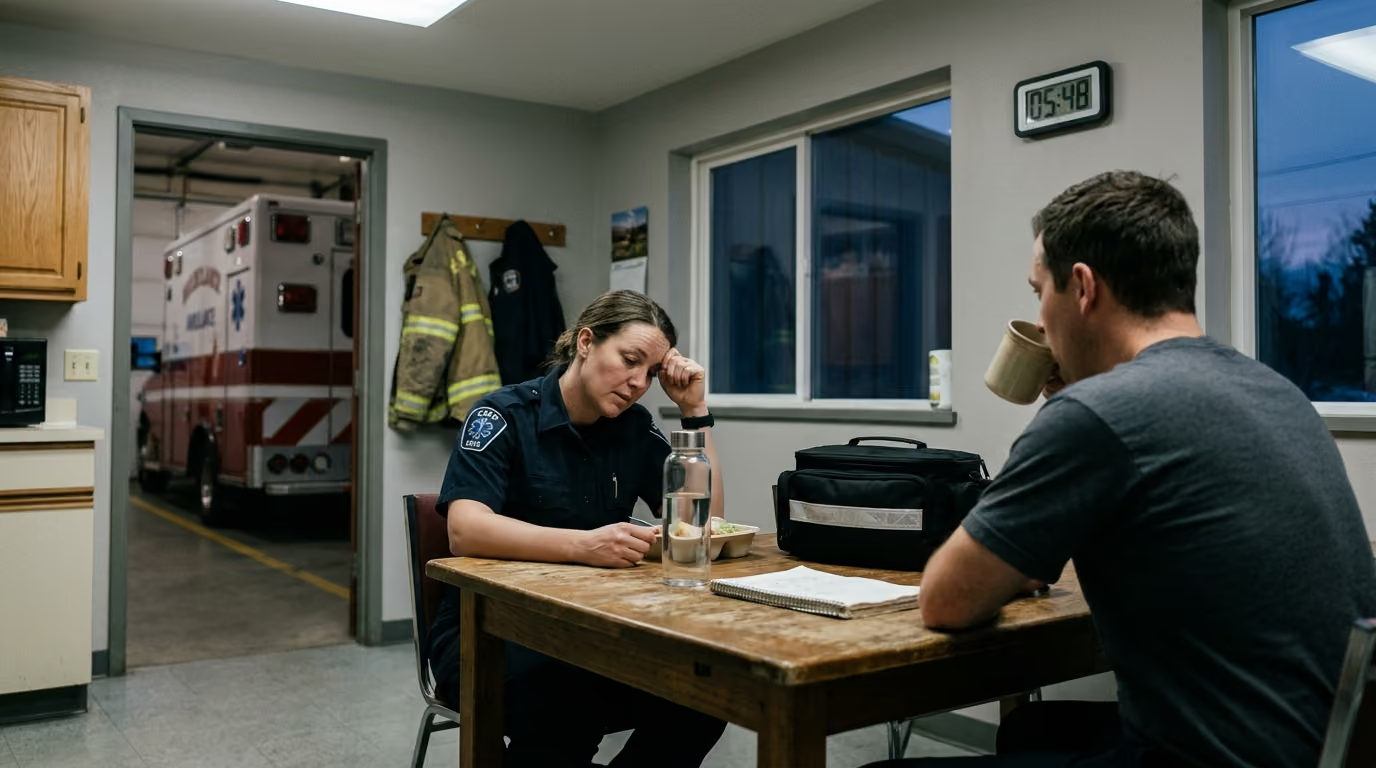

Shift-working first responders can protect endocrine health and balance testosterone levels by applying targeted recovery anchors around sleep, training, and nutrition.





You step off the apparatus floor or out of the patrol vehicle after seventy-two hours of broken sleep, missed meals, and high-tempo emergency calls. Your joints ache, your brain feels slow, and your drive to train is non-existent. You might wonder if your testosterone has crashed, or if your cortisol is permanently elevated. The standard internet advice tells you to buy a handful of test boosters, drink more caffeine, or push through another brutal workout. That advice fails because it treats your endocrine system like an isolated switch rather than a biological response to total physical load.
This playbook provides an operational recovery system built around the realities of emergency service. It connects sleep timing, training dose, nutrition, and stress regulation so you can maintain capability across a full career.
Hormonal health in emergency services is an operational recovery problem, not a supplement deficiency. When you work rotating shifts or extended overnight hours, your endocrine system responds directly to disrupted sleep, high physical demands, and nervous system activation. You cannot force hormonal balance with quick fixes while ignoring sleep opportunity and chronic fatigue.
Healthy endocrine function is the downstream result of a consistent weekly system. When you combine protected sleep opportunity, appropriate training volume, sufficient caloric intake, light management, and stress regulation, your body has the physiological safety required to produce hormones normally.
This does not mean every tired first responder has clinical hypogonadism. It means that your recovery practices must match the occupational demands of your schedule.
Endocrine stability is a lagging indicator of sustainable work habits. If you build repeatable routines around your shift patterns, your physical readiness and overall vitality will follow.
Scientific research provides clear insights into how irregular hours, sleep disruption, and occupational strain alter human physiology. Understanding these mechanisms helps separate evidence-based strategies from marketing claims.
Experimental research shows that severe sleep restriction can suppress testosterone production. In a well-known study published in JAMA by researchers at the University of Chicago, restricting healthy young men to five hours of sleep per night for one week reduced daytime testosterone levels by 10% to 15%. The researchers observed that the greatest reductions occurred during the afternoon and evening hours when fatigue peaked.
Other studies show a more complex relationship. Research on longer-term partial sleep restriction indicates that individual responses vary significantly based on baseline fitness, age, and genetics. While chronic short sleep is a clear risk factor for suppressed testosterone, one bad night will not destroy your endocrine system.
Testosterone production follows a circadian rhythm, peaking during deep, uninterrupted sleep. When shift work fragments your sleep architecture, you spend less time in slow-wave and rapid eye movement stages. Over weeks and months, this persistent disruption reduces total androgen output.
Cortisol is often misunderstood as a purely destructive hormone. Cortisol is vital for survival, regulating blood pressure, mobilizing blood glucose, and controlling acute inflammatory responses during emergency incidents. Problems occur when the stress response remains constantly activated without adequate downregulation.
Occupational health research demonstrates that shift work and broken sleep are associated with higher baseline cortisol and lower heart rate variability. A review of first-responder physiology noted that multi-day wildland firefighting assignments produced a 14% increase in resting cortisol and a two-fold increase in circulating interleukin-6.
This combination reflects cumulative physical strain and systemic inflammation. When your body remains locked in a high-alert state, anabolic processes such as tissue repair, muscle protein synthesis, and sex hormone production are down-regulated.
It is critical to distinguish between sleep deprivation and circadian misalignment. Sleep deprivation means getting too few total hours of rest. Circadian misalignment means sleeping at biological times that conflict with your internal clock.
Even if you obtain seven hours of sleep during the day after a night shift, your body temperature, digestive enzyme production, and hormone secretions are out of sync with daylight. The National Institute for Occupational Safety and Health emphasizes that working against internal circadian rhythms strains metabolic and cardiovascular systems. Managing light exposure and meal timing is just as necessary as tracking total sleep duration.
Standard fitness advice assumes predictable schedules, low baseline stress, and uninterrupted eight-hour sleep blocks. First responders operate in a completely different physiological environment.
A typical civilian gym session represents the primary physical stressor of that person's day. For a firefighter, paramedic, or police officer, a gym session is layered on top of unpredictable occupational exertion. Carrying heavy equipment up stairwells, extricating patients from vehicles, or wrestling combative subjects creates substantial muscular damage and central nervous system fatigue.
Emergency calls trigger rapid surges of catecholamines, including adrenaline and noradrenaline. Experiencing these surges at three in the morning disrupts normal endocrine cycles and elevates blood glucose. If you follow a demanding shift with a high-volume lifting session, you add more physiological debt to an already exhausted system. Understanding how individual willpower fails to overcome cumulative duty fatigue is essential for programming your week intelligently.
First responders routinely work in extreme environments that compound physical strain. Firefighters face external heat, toxic combustion byproducts, and heavy personal protective equipment that limits evaporative cooling. Police officers carry duty belts and body armor that place continuous mechanical stress on the spine and hips during long driving shifts.
These physical realities increase fluid loss, elevate core temperature, and raise baseline inflammatory markers. When recovery is neglected, the body perceives this chronic stress as an unsafe state for reproductive hormone maintenance. Preserving capability requires viewing your entire shift as part of your physical training load.
To build endocrine resilience around an irregular schedule, you need a systematic framework. The Recovery Anchor Model establishes six practical habits that stabilize your physiology, regardless of shift timing.
Your primary sleep opportunity must be treated as your most important recovery tool. Training sessions, household errands, and social activities must be organized around this window rather than cutting into it.
Create a sleep environment that supports deep rest, especially during daytime hours. Use high-grade blackout curtains or an eye mask to block sunlight. Keep the bedroom temperature between 65 and 68 degrees Fahrenheit to assist the natural drop in core body temperature required for sleep. Use white noise machines or earplugs to block neighborhood sounds.
Establish a firm transition routine before heading to bed. Minimize bright screen exposure thirty minutes before sleep, avoid alcohol as a sedative, and keep caffeine far away from your rest period. Learning how to build an effective sleep plan for rotating shifts creates the foundation for long-term hormonal stability.
Naps cannot fully replace a continuous sleep block, but they effectively reduce acute sleep debt and restore alertness. NIOSH guidelines highlight that planned naps before and during extended shifts can counteract severe fatigue.
Two primary nap protocols work best for emergency personnel:
Allow a fifteen-minute buffer after waking from a longer nap before driving or responding to high-consequence incidents. This buffer allows sleep inertia to dissipate so your decision-making remains sharp.
Resistance training supports bone density, joint stability, and healthy androgen levels. However, crushing yourself with maximal loads after a sleepless night creates systemic breakdown. Training for duty longevity requires leaving repetitions in reserve and focusing on movement quality.
Structure your program around two basic full-body sessions per week, using programming that balances high output workouts with maintenance sessions.
If you step off shift completely exhausted, reduce the workout to a twenty-minute mobility routine and a light walk. Never perform heavy, spinal-loading compound lifts when severely sleep-deprived.
Aerobic conditioning strengthens cardiac output, speeds up recovery between calls, and supports hormone clearance. High-intensity interval training has its place, but stacking endless high-intensity intervals onto occupational stress drives cortisol higher.
Dedicate the majority of your conditioning to low-intensity base training. Perform two to three sessions of 30 to 45 minutes of steady cycling, rowing, incline walking, or light jogging per week. Keep your heart rate in a conversational zone where you can speak in complete sentences.
This low-intensity work builds mitochondrial density and strengthens parasympathetic tone without adding excessive systemic fatigue. Reserve high-intensity intervals for days when you are well-rested and occupational call volume is low.
Severe caloric deficits, low carbohydrate availability, and chaotic meal timing signal energy scarcity to the brain. In response, the hypothalamic-pituitary-gonadal axis downregulates sex hormone production to conserve energy.
Focus on these nutritional priorities:
Prepare a portable shift meal kit containing Greek yogurt, hard-boiled eggs, whole fruit, quality protein powder, and mixed nuts. Having reliable food on hand prevents reliance on fast food or vending machines during extended calls. Reviewing practical meal strategies for demanding shifts will keep your energy consistent throughout your tour.
Transitioning from hypervigilance to physiological rest requires deliberate action. If you go directly from an emergency call to bed, your sympathetic nervous system remains active, preventing deep sleep.
Implement simple downshifting practices:
Applying these recovery anchors requires matching them to your specific shift structure. Use these practical templates to organize your weekly routines.
Day shifts require early rising and consistent energy throughout the workday.
Night shifts require managing sleep opportunity during the daytime and keeping alertness high overnight.
argy.
A 24-hour shift can vary from a restful tour to non-stop runs. Triage your recovery based on operational tempo.
Flipping your schedule from night duty back to standard day life is a common point of failure.
Follow this step-by-step transition:
Even experienced emergency personnel fall into traps that undermine their hormonal health and duty readiness.
Many first responders view testosterone as a single number that explains all fatigue. When you feel exhausted, it is easy to assume low testosterone is the sole cause.
In reality, your fatigue might stem from chronic sleep apnea, unrecognized post-traumatic stress, clinical depression, iron deficiency, or simple accumulated sleep debt. Relying on an unverified supplement or seeking replacement therapy without addressing underlying lifestyle factors rarely resolves deep exhaustion.
Standard clinical guidelines require measuring total testosterone via a fasting blood sample collected in the early morning. This timing matches the natural circadian peak in rested individuals.
If you draw blood at 08:00 immediately after a grueling 24-hour shift or after an overnight tour, your results will naturally be suppressed. This artificial drop does not reflect your true baseline physiology. Work with an informed physician who understands your shift schedule and orders repeat testing on well-rested off-duty mornings.
Alcohol is one of the most common coping mechanisms used to induce sleep after high-stress calls. While alcohol acts as a central nervous system depressant and helps you fall asleep faster, it destroys sleep architecture.
Alcohol suppresses rapid eye movement sleep, causes frequent micro-arousals, elevates resting heart rate, and impairs nocturnal growth hormone release. The result is unrefreshing rest that leaves your endocrine system further depleted. Replace alcohol with warm herbal tea, magnesium glycinate, or five minutes of slow nasal breathing.
High doses of caffeine, pre-workout drinks, and energy shots can keep you alert during emergency driving and patient care. However, relying on high stimulant intake late in your shift creates a vicious cycle.
Caffeine has a half-life of roughly five to seven hours. Consuming energy drinks at 04:00 ensures that active caffeine remains in your bloodstream when you try to sleep at 08:00. This blunts deep sleep, preventing the restorative endocrine processes you need. Restrict caffeine to the first half of your shift, switching to water or electrolyte drinks as the tour winds down.
First responder culture often praises extreme physical toughness and training through pain. Pushing through heavy deadlifts or maximal sprints on two hours of sleep is counterproductive.
When your nervous system is already depleted, heavy lifting increases the risk of acute musculoskeletal injury and triggers excessive cortisol release. Learn to autoregulate your workouts. Match your training intensity to your sleep quality and operational workload.
Maintaining physical and hormonal health requires accounting for individual differences, occupational safety, and life circumstances.
The most dangerous part of a shift is often the drive home after a busy tour. Extreme sleep debt slows reaction time, impairs spatial awareness, and leads to dangerous microsleeps at the wheel.
Never compromise your safety for a workout or an errand. If you feel your eyelids drooping on the road, pull over to a safe location and take a twenty-minute nap. Arriving home safely to your family is always the primary operational objective.
Hormonal health is not limited to testosterone regulation. Female emergency personnel face unique physiological considerations, including menstrual cycle fluctuations, energy availability, and perimenopause.
As first responders age, the body takes longer to clear inflammatory markers, repair muscle microtrauma, and adapt to rotating shifts. Responders over forty must prioritize joint mobility, soft tissue work, and cardiovascular screening.
Adjust your recovery ratios by taking longer rest intervals between heavy lifting sessions and emphasizing low-intensity aerobic base building. This approach protects cardiac function and preserves strength throughout the final decades of service.
A common obstacle for shift workers is balancing recovery with family life. It is frustrating to come off an overnight tour only to be met with loud household noise or daytime family obligations.
Communicate clearly with your family about your physiological needs:
Instead of obsessing over daily hormone numbers, use a simple weekly tracking dashboard. Monitoring these actionable indicators reveals trends before severe overtraining or burnout occurs.
While lifestyle systems form the foundation of endocrine health, certain symptoms warrant professional medical evaluation.
Schedule an appointment with a licensed medical professional if you experience:
If you are currently feeling worn down, do not try to overhaul your entire life overnight. Follow this structured 30-day plan to reset your recovery systems:
By the end of thirty days, you will have built a repeatable operating framework. Your fatigue will drop, your mood will stabilize, and your body will have the physiological support it needs for healthy endocrine function.
Endocrine health is not a puzzle you solve with exotic supplements or extreme discipline. It is the direct biological reflection of how well you protect your sleep, fuel your body, match your physical training to occupational stress, and regulate your nervous system. When you respect these physiological rules, you protect your hormonal function, preserve your physical capability, and ensure you finish your career healthy enough to enjoy your retirement.
Revisit this guide whenever your shift rotation changes, when you experience a major spike in occupational call volume, or if you notice early warning signs of chronic fatigue, joint breakdown, or declining drive.
Build your weekly system around recovery anchors, listen to your physiological feedback, and treat your physical resilience as an essential duty tool.
Stay connected for research-led guidance on duty fitness, shift-work sleep, injury recovery, stress, nutrition and career longevity. Practical ideas for first responders who want to stay capable on the job, recover well and protect their health for the long run.



Read practical guidance on first responder fitness, recovery, sleep, nutrition and resilience for demanding work and a long, active career.
read the blog



