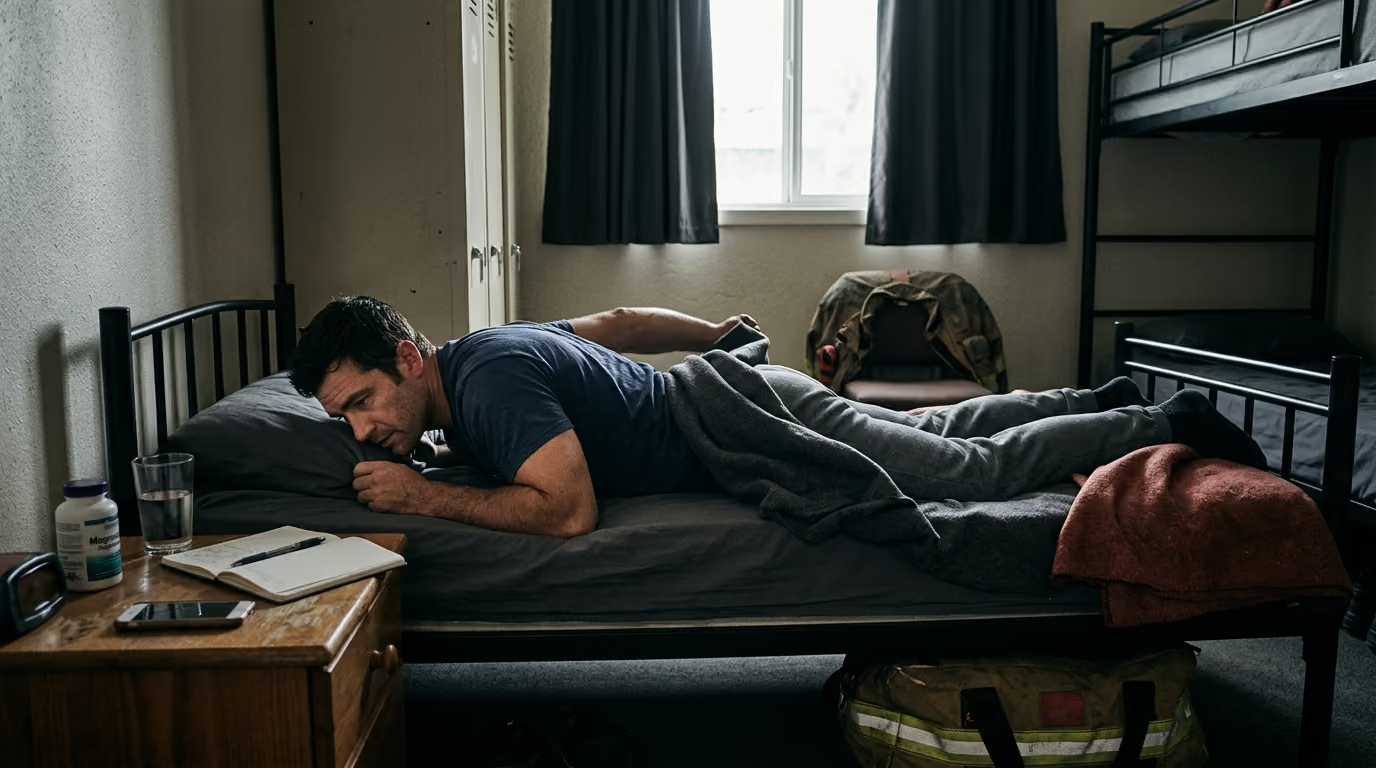

Occasional days off cannot reverse emergency duty exhaustion, so this staged recovery plan helps first responders rebuild stable circadian rhythms and restful sleep.





If you are in immediate danger, call 911. For 24/7 support, call or text 988 and press 1 for the Veterans Crisis Line, or text 838255.
You pull into your driveway at seven in the morning after a brutal twenty-four-hour shift. Your eyes burn, your body feels heavy, and your mind is still racing from the cardiac arrest call at dawn. You climb into bed hoping for uninterrupted rest, but two hours later you wake up sweating, alert, and unable to fall back asleep.
Rebuilding sleep after months or years of emergency work requires a structured, multi-stage recovery program. Sleep recovery is not about quick bedroom tips or sudden changes in willpower. It is a biological rehabilitation process that systematically targets sleep opportunity, circadian alignment, nervous system hyperarousal, and undiagnosed medical sleep disorders.
Long-term sleep recovery for emergency personnel requires a staged progression rather than immediate, perfect sleep hygiene. The most effective approach begins with safety triage and baseline assessment, moves into protecting realistic sleep opportunities, stabilizes biological timing cues, and concludes with targeted clinical interventions for chronic insomnia or sleep apnea.
Progress must be measured across weeks and months using objective indicators such as alertness, reduced near-miss incidents, and sleep continuity. A sustainable plan accommodates the unavoidable realities of dispatch tones, mandatory overtime, and rotating shift patterns rather than demanding a standard civilian routine.
Rebuilding restorative sleep requires understanding how sleep architecture operates under occupational stress. Sleep opportunity represents the total window of time set aside for rest. Total sleep time is the actual duration spent asleep, while sleep efficiency reflects the percentage of time in bed that an individual is truly sleeping.
Sleep debt accumulates whenever the biological need for sleep exceeds the sleep obtained. When emergency calls repeatedly wake a responder throughout the night, sleep fragmentation occurs. This fragmentation disrupts slow-wave and rapid eye movement stages, leaving the brain unrefreshed even if the total hours in bed appear adequate.
Circadian timing operates through an internal twenty-four-hour biological clock governed by the suprachiasmatic nucleus in the brain. This system synchronizes core body temperature, alertness, cortisol output, and melatonin production with environmental light and dark cycles. Circadian misalignment occurs when work duties force alertness during the biological night and demand sleep during the biological day.
Shift work disorder occurs when this misalignment causes chronic insomnia, excessive sleepiness, and significant functional impairment. Chronic insomnia involves ongoing difficulty initiating or maintaining sleep despite adequate opportunity. When a responder struggles to rest on off-duty days, chronic conditioned insomnia or psychological hyperarousal is often present alongside basic shift disruption.
Sleepiness and fatigue represent two distinct physiological states. Sleepiness is the biological drive to fall asleep, which creates severe operational and driving hazards. Fatigue is a subjective state of physical exhaustion or low energy that can persist even when nervous system hyperarousal prevents sleep onset.
Catch-up sleep on off-duty days helps clear acute sleep debt, but it cannot fully reverse the systemic effects of prolonged restriction. Full recovery requires a staged approach that stabilizes circadian signals and protects daily sleep windows rather than relying solely on weekend binges.
Research examining public safety personnel shows high rates of sleep pathology across every branch of emergency response. A comprehensive meta-analysis of twenty-eight studies covering roughly 100,000 first responders identified high pooled prevalence rates for multiple sleep disorders.
The pooled data demonstrated a 31 percent prevalence for shift work disorder, 30 percent for obstructive sleep apnea, 28 percent for insomnia, and 28 percent for excessive daytime sleepiness. Restless legs syndrome occurred in 2 percent of personnel, while narcolepsy appeared in 1 percent.
Individual study findings within that meta-analysis varied widely based on study quality and testing methods. Reported insomnia rates ranged from 3.4 percent to 74.1 percent, while obstructive sleep apnea ranged from 9.9 percent to 80.8 percent across different cohorts.
Because most available data are observational and cross-sectional, researchers caution against assuming simple direct causation. Shift work creates the conditions for sleep disruption, but individual genetics, age, physical demands, and trauma exposures influence how severe these conditions become.
An occupational review of public safety personnel highlighted similar patterns across municipal services. Approximately 59 percent of firefighters in the reviewed research reported chronic sleep deprivation, while 23 percent met criteria for clinical insomnia. More than half of emergency medical personnel and roughly half of surveyed law enforcement officers reported poor overall sleep quality.
Evidence also links untreated sleep disorders to broader medical and psychological conditions. First responders with obstructive sleep apnea showed significantly higher odds of anxiety, cardiovascular disease, diabetes, depression, gastroesophageal reflux, and post-traumatic stress symptoms.
Responders with clinical insomnia faced markedly elevated risks for depressive and post-traumatic stress symptoms compared to peers without sleep disorders. A longitudinal study of recruit paramedics showed that insomnia symptoms during the initial six months of emergency service predicted post-traumatic stress symptoms at twelve months. This relationship persisted even after controlling for baseline trauma exposure and demographic factors.
The operational consequences of sleep debt are well documented by the American Academy of Sleep Medicine. Rotating shifts consistently correlate with longer sleep latency, frequent nighttime awakenings, increased absenteeism, and elevated accident rates compared to fixed day schedules. Night-shift workers regularly obtain one to four hours less sleep per twenty-four-hour period than daytime colleagues.
Research cited by occupational safety agencies shows human error rates increase by approximately 18 percent on afternoon shifts and 30 percent on night shifts relative to morning duties. National worker health data from federal agencies indicate that over 61 percent of night-shift personnel report short sleep duration, compared to 35.9 percent of regular day workers.
Emergency service disrupts human physiology through mechanisms that civilian sleep hygiene advice fails to address. Night operations force the brain to remain alert when core body temperature drops to its lowest biological point.
When responders return home in the morning, their natural circadian rhythm increases alertness and cortisol output. This biological drive makes daytime sleep lighter, more fragmented, and easily interrupted.
The sudden transition from calm station life to high-intensity emergency response creates acute sympathetic nervous system surges. Tones drop, adrenaline spikes, heart rates climb rapidly, and vascular resistance increases within seconds.
Experiencing multiple tone activations during a single night leaves the autonomic nervous system locked in a hyperarousal state. This sustained activation prevents the parasympathetic tone required for deep, slow-wave restorative sleep.
Physical demands add substantial strain to the recovery process. Structural firefighting involves heavy protective equipment and intense thermal loads that elevate core body temperature for hours.
Law enforcement duties require carrying heavy duty belts while alternating between prolonged vehicle sitting and sudden physical confrontations. Paramedics and EMTs perform repetitive patient transfers in tight quarters under high mental stress.
These physical demands create cumulative muscle tension and systemic inflammation that interfere with physical comfort during rest windows. You can learn more about evaluating fatigue across shift lengths to understand how duty duration alters these physiological patterns.
Psychological factors create further barriers to normal sleep. Emergency responders regularly witness severe trauma, violence, and life-threatening medical events. Over time, the quiet darkness of a bedroom can become associated with intrusive memories or an uncomfortable loss of environmental vigilance.
Research indicates that a distinct fear of sleep develops in some emergency personnel. This fear is driven by a subconscious belief that letting down one's guard is dangerous. Treating sleep recovery purely as a bedroom lighting problem ignores these deeper neurological and psychological drivers.
Before making significant changes to sleep habits or schedules, every responder must complete a safety triage. The primary objective is identifying immediate hazards that put the responder, their crew, or the public at risk.
If you are experiencing suicidal thoughts, severe depression, or overwhelming emotional distress, immediate professional support is available. Call 911 for immediate emergencies, call or text 988 to reach the Suicide & Crisis Lifeline, press 1 for the Veterans Crisis Line, or text 838255.
Securing dangerous items or medications at home should be arranged in collaboration with a trusted peer, family member, or healthcare professional. Crisis interventions must always take precedence over long-term sleep rehabilitation plans.
Once immediate safety is established, track baseline sleep for at least two weeks using a structured sleep diary. A daily written record is generally more reliable for capturing timing patterns and wakefulness than consumer wearable devices.
Validated screening questionnaires provide valuable baseline data during this initial stage. The Insomnia Severity Index helps quantify sleep initiation and maintenance difficulties. The Epworth Sleepiness Scale assesses the likelihood of falling asleep during routine daytime activities.
The STOP-BANG questionnaire screens for obstructive sleep apnea risk by evaluating snoring, tiredness, observed apneas, blood pressure, body mass index, age, neck circumference, and gender. You can review established frameworks in the CDC fatigue guidelines and baselines for additional workplace metrics.
The primary goal of Stage 1 is not achieving unbroken eight-hour sleep immediately. The objective is defending a consistent, predictable, and protected sleep window after every shift type.
Environmental control is critical when sleeping against the biological clock during daylight hours. High ambient light and neighborhood noise actively signal the brain to promote wakefulness.
Use heavy blackout curtains, high-density eye masks, and external door signs to block visual light completely. Continuous sound masking with white noise machines, box fans, or silicone earplugs helps neutralize daytime neighborhood disturbances.
Naps serve as essential operational tools rather than signs of weakness or poor discipline. Preventive naps taken before reporting for a night tour help reduce the rate of sleep debt accumulation. Operational naps taken during quiet station periods restore cognitive focus and reaction time. Recovery naps taken after a broken shift clear acute grogginess without destroying the subsequent sleep drive.
Keep operational naps under thirty minutes to avoid waking from deep slow-wave sleep. Waking from deep sleep produces sleep inertia, a state of grogginess and impaired cognitive function that can last up to thirty minutes. Always allow adequate time for sleep inertia to dissipate before operating emergency vehicles, handling weapons, or managing medical emergencies.
Once sleep opportunities are protected, Stage 2 focuses on minimizing circadian whiplash. The body struggles when forced to rapidly alternate between daytime living and nighttime alertness.
Light is the most potent environmental cue for shifting human circadian rhythms. Strategic light exposure during the first half of a night shift promotes alertness and suppresses premature melatonin release.
Conversely, light exposure during the morning commute home signals the brain that daytime has begun. Wearing dark, polarized sunglasses during the morning drive helps prevent early morning light from resetting your clock toward daytime wakefulness.
Caffeine is an effective tool for improving operational alertness, but improper timing severely disrupts subsequent daytime sleep. Caffeine functions by blocking adenosine receptors in the brain. Adenosine is the neurochemical responsible for building homeostatic sleep pressure throughout waking hours.
Consuming caffeine during the second half of a shift leaves adenosine receptors blocked when you climb into bed, resulting in shallow, unrefreshing rest. You can implement a practical plan by reviewing structured caffeine timing for night duty across operational tours.
Melatonin supplements can assist in circadian phase shifting when timed correctly, but they should not be treated as general sedatives. Taking melatonin at the wrong biological time can worsen circadian misalignment and produce daytime hangover effects.
Over-the-counter sleep aids, sedatives, and wake-promoting medications require careful clinical oversight. These substances can alter sleep architecture, interact with cardiovascular physiology, and compromise rapid waking capabilities during station duties.
When sleep difficulties persist despite environmental controls and protected rest windows, structured behavioral interventions are required. Cognitive Behavioral Therapy for Insomnia (CBT-I) represents the primary evidence-based standard for managing chronic insomnia.
The American Academy of Sleep Medicine supports adapted CBT-I for shift workers experiencing ongoing sleep disturbances. This approach restructures maladaptive habits and catastrophic thought patterns that develop around poor sleep.
Stimulus control prevents the bedroom from becoming associated with anxiety, wakefulness, and hyperarousal. If you remain fully awake after twenty to thirty minutes in bed, leave the room. Move to a dimly lit space and engage in a quiet, non-stimulating activity until genuine sleepiness returns.
Standard sleep restriction must be adapted cautiously for first responders. Severe sleep restriction should never be self-administered by personnel operating emergency vehicles, individuals with untreated medical conditions, or those under severe operational fatigue.
Trauma exposure, hypervigilance, and recurrent nightmares require targeted clinical interventions alongside sleep retraining. First responders often experience physical autonomic arousal when attempting to relax in a dark, quiet room.
Nightmare-focused therapies, imagery rehearsal therapy, and trauma-focused cognitive processing can systematically reduce the emotional charge of duty-related memories. A comprehensive approach to sleep planning for rotating shifts integrates these mental health considerations with physical rest windows.
Medical conditions can undermine sleep recovery even when behavioral habits and schedules are well managed. Obstructive sleep apnea represents one of the most common undiagnosed conditions among first responders.
Repetitive upper airway collapse during sleep causes drops in blood oxygen saturation, surges in blood pressure, and frequent micro-arousals. Responders with untreated apnea often wake up feeling exhausted despite spending eight hours in bed.
Alcohol is frequently used across emergency services as an informal sedative after high-stress calls or night shifts. While alcohol shortens sleep onset latency, it severely disrupts sleep architecture during the second half of the rest period.
Alcohol suppresses restorative rapid eye movement sleep, worsens upper airway collapse in sleep apnea, and causes frequent early morning awakenings. Replacing post-shift alcohol with structured physical down-regulation routines significantly improves sleep continuity.
Dietary habits and meal timing influence circadian rhythms through metabolic pathways in the liver and digestive tract. Consuming large, heavy meals right before daytime sleep triggers gastroesophageal reflux and elevates core body temperature.
To maintain healthy metabolic function on irregular shifts, implement strategies for managing meal timing on irregular shifts. Regular physical training improves sleep depth, provided intense sessions finish several hours before sleep to permit heart rate and core temperature reduction.
Many well-intentioned recovery efforts fail because personnel adopt habits that provide short-term relief while worsening long-term sleep architecture. Identifying these common errors helps responders avoid prolonged cycles of exhaustion and conditioned insomnia.
Attempting to pay off an entire week of sleep debt through a single massive sleep binge on off-duty days disrupts internal timing. This practice shifts the circadian phase, making sleep onset nearly impossible when returning to early morning shifts.
Similarly, over-relying on consumer wearable devices can create orthosomnia, a condition where anxiety over poor sleep data increases nighttime wakefulness. Wearables provide helpful general trends, but they lack the clinical precision of formal diagnostic polysomnography.
Assuming that emergency service capability is a matter of willpower leads to dangerous operational errors. First responders frequently normalize severe fatigue because their peers appear to tolerate similar sleep loss.
Subjective feelings of alertness are notoriously unreliable under chronic sleep restriction. Personnel often rate themselves as functioning adequately even while objective testing shows severely degraded reaction times and frequent microsleeps.
Different operational schedules create distinct biological challenges. A single universal bedtime routine cannot accommodate the diverse shift structures used across municipal fire departments, law enforcement agencies, and EMS systems.
Personnel working rotating shifts should adjust their light exposure, nap timing, and sleep windows based on the specific shift block. When transitioning from day shifts to night shifts, stay up slightly later the night before and take a ninety-minute pre-shift nap.
During the night block, defend a protected daytime sleep window immediately after shift. When rotating back to day duties, take a short three-hour morning nap after the final night shift, expose yourself to bright afternoon sunlight, and sleep at a normal evening hour.
Responders on permanent night shifts benefit from maintaining schedule consistency on off-duty days. Completely flipping back to a normal daytime schedule on weekends forces the circadian system through constant biological jet lag.
A practical compromise involves adopting an anchor sleep window. Maintain a sleep period from 04:00 to 12:00 on both work days and off-duty days to provide social flexibility while preserving circadian stability.
Long emergency tours require clear separation between on-duty rest and post-tour recovery. Treat station rest as protective maintenance rather than complete sleep recovery.
Plan for the hazardous post-shift commute by utilizing a brief twenty-minute station nap before driving home if night calls were heavy. Once home, complete a four to five hour morning sleep block, followed by light physical movement, outdoor light exposure, and an early evening bedtime.
Rebuilding sleep capability is an iterative process that unfolds over several months. Progress should be evaluated systematically at four, eight, and twelve weeks using practical operational markers rather than expecting immediate, uninterrupted sleep.
Realistic success in an emergency services context does not mean sleeping flawlessly every single night. Unpredictable calls, mandatory overtime, and community emergencies will always interrupt rest schedules.
A successful recovery plan provides the physiological buffer and behavioral skills needed to recover quickly from unavoidable disruptions without spiraling back into chronic insomnia or severe fatigue.
Individual behavioral adaptations cannot fully compensate for inherently unsafe scheduling or excessive mandatory overtime. Occupational health agencies emphasize that organizational policies must work in tandem with personal sleep practices to manage fatigue risk effectively.
Fire, EMS, and police leadership must recognize that operational fatigue is a physiological safety risk rather than a character flaw. Departmental policies should support confidential screening for sleep apnea, shift work disorder, and insomnia.
Implementing fatigue risk management systems protects personnel health, reduces vehicle collisions, lowers workers' compensation claims, and extends career longevity across the organization.
Sleep recovery protocols have distinct physiological limits that must be respected to maintain personal and operational safety. Behavioral sleep strategies and strategic naps cannot eliminate the acute cognitive impairment caused by severe, acute sleep deprivation.
Never operate emergency vehicles, pilot aircraft, handle weapons, or administer complex medical treatments when experiencing uncontrolled drowsiness or frequent microsleeps. If severe fatigue impairs your ability to maintain situational awareness, you must notify your officer or supervisor immediately.
Self-administered sleep restriction protocols must be avoided if you have uncontrolled epilepsy, bipolar disorder, or severe untreated sleep apnea. Altering sleep windows too aggressively can precipitate medical crises or severe emotional decompensation in vulnerable individuals. Safety guardrails must always take priority over aggressive scheduling changes.
Self-guided sleep recovery programs are effective for mild to moderate shift disruption, but complex clinical conditions require professional medical and psychological evaluation. Early clinical assessment prevents acute sleep problems from developing into chronic, treatment-resistant disorders.
Consult a board-certified sleep medicine physician for formal diagnostic testing if you suspect obstructive sleep apnea, restless legs syndrome, or shift work disorder. Polysomnography provides objective measurements of airflow, blood oxygen levels, heart rhythms, and brain wave activity during sleep.
For persistent insomnia or trauma-related hyperarousal, seek out licensed psychologists or behavioral sleep medicine specialists certified in CBT-I or evidence-based trauma modalities. Comprehensive care addresses the physical, behavioral, and psychological components of emergency service sleep disruption.
Review this framework whenever you transition to a new shift rotation, experience a major departmental schedule change, or return to active duty following extended medical or administrative leave. Revisit these screening tools and safety checklists if you notice escalating caffeine use, increasing reliance on alcohol to wind down, or near-miss incidents during operational driving.
Building long-term sleep recovery is an ongoing operational discipline that preserves your physical health, cognitive sharpness, and emotional capability across a demanding emergency services career.
Stay connected for research-led guidance on duty fitness, shift-work sleep, injury recovery, stress, nutrition and career longevity. Practical ideas for first responders who want to stay capable on the job, recover well and protect their health for the long run.



Read practical guidance on first responder fitness, recovery, sleep, nutrition and resilience for demanding work and a long, active career.
read the blog



