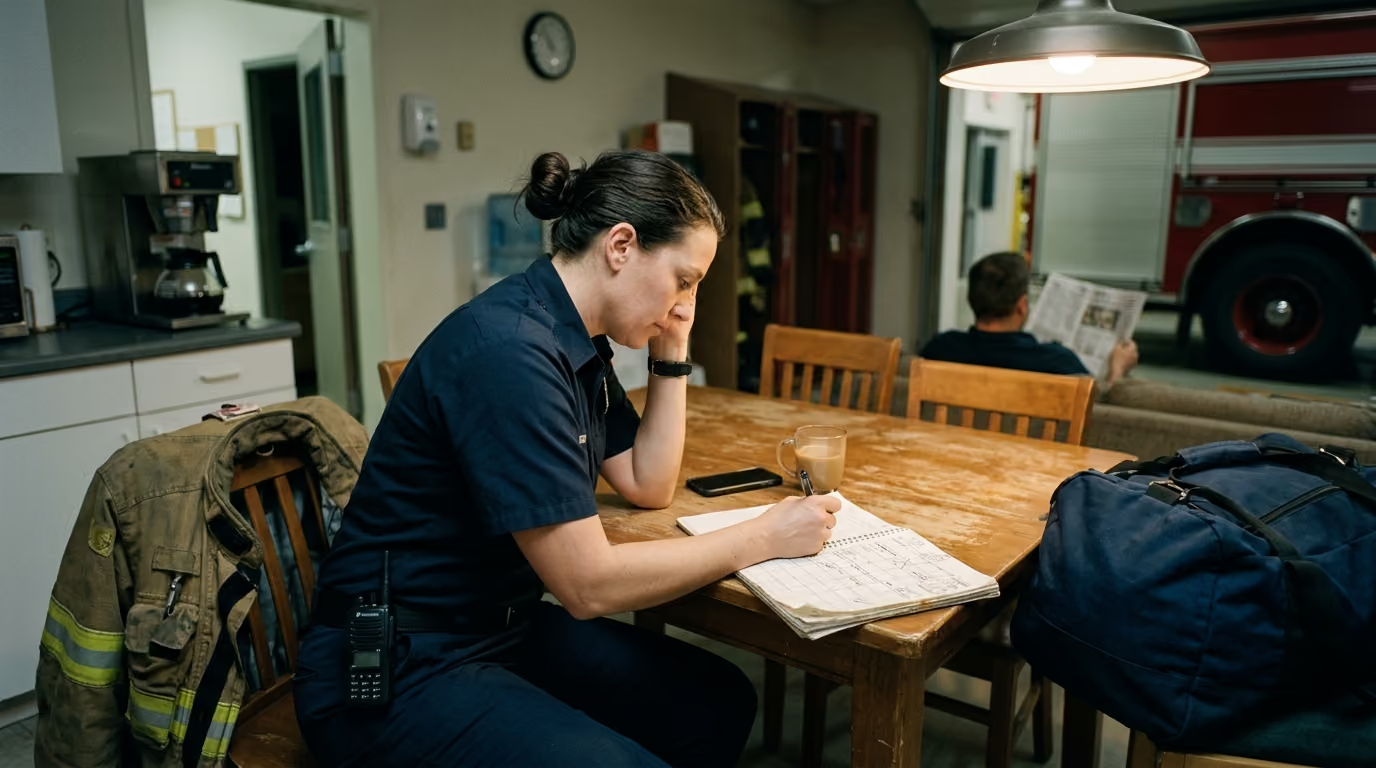

Nearly 30 percent of the workforce faces circadian disruption, making structured sleep anchors, light control, and periodized training essential for night-shift recovery.





A night-shift schedule playbook is an integrated operational plan that coordinates sleep timing, light exposure, nutrition, physical training, and family demands during overnight work. It is not a collection of lifestyle shortcuts, a generic wellness routine, or a reliance on excessive caffeine. Managing night duty requires aligning your biological constraints with the realities of emergency response.
A successful night shift relies on protecting an anchor sleep window immediately following the shift, shifting hard workouts to the pre-shift waking period, and controlling lighting and caffeine to preserve daytime sleep quality. By treating sleep, meal timing, and physical training as linked physiological systems, emergency personnel can sustain duty readiness while reducing acute safety risks and long-term health consequences.
Working during the biological night creates a direct conflict between operational demands and human circadian biology. The circadian system is the internal 24-hour timing network that regulates core body temperature, alertness, hormone secretion, and metabolic function. During normal daytime hours, this system actively promotes alertness. During the night, it lowers body temperature and initiates biological processes that promote sleep.
When emergency personnel work overnight, they must perform complex, safety-critical tasks when their circadian drive for alertness is at its lowest point. Scientific evidence examining shift work reveals several consistent patterns regarding performance, sleep architecture, and health.
The evidence confirms that daytime sleep obtained after a night shift is typically shorter, more fragmented, and less restorative than sleep obtained at night. Sleep architecture changes during daytime recovery. Workers experience reductions in slow-wave deep sleep and rapid eye movement sleep. This occurs because the circadian alerting signal rises throughout the morning, waking the individual before physiological sleep need is fully met.
Data documented by the National Institute for Occupational Safety and Health indicates the widespread scope of this challenge. Nearly 30% of the United States workforce works outside a standard daytime schedule. In occupational datasets analyzed by federal health agencies, 37.6% of workers reported short sleep duration, representing roughly 54.1 million individuals. Among night-shift personnel specifically, short sleep was reported by 61.8% of workers, compared to 35.9% among regular daytime workers.
The operational consequences of this sleep debt are measurable and significant:
Beyond immediate safety risks, long-term epidemiological evidence demonstrates substantial health impacts from prolonged shift work. Large systematic reviews and meta-analyses show that each 5-year increment in shift-work tenure is associated with a 7% higher risk of cardiovascular disease incidence. The same increment is associated with a 4% increase in cardiovascular disease mortality.
Furthermore, research comparing schedule types indicates distinct physiological burdens. Fixed night shifts show strong associations with ischemic heart disease, elevated blood pressure, and obesity. Rotating shifts show associations with metabolic dysregulation and certain adverse reproductive outcomes. You can review detailed occupational fatigue research and shift-work baselines to understand these systemic effects across emergency services.
Standard shift-work advice often assumes a predictable, seated work environment where workers can take structured rest breaks at set times. Emergency service work breaks these assumptions entirely. Paramedics, EMTs, firefighters, and police officers face operational demands that alter basic physiology and complicate sleep management.
First responders operate under unpredictable alarm patterns that trigger rapid surges in sympathetic nervous system activity. A tone dropping at 3:30 a.m. forces an immediate transition from quiet rest or low activity to maximum physical and cognitive output. This acute surge releases catecholamines, elevates blood pressure, and spikes heart rate during the deepest trough of the circadian cycle. Repeating this pattern across a shift creates cumulative cardiovascular strain and makes subsequent sleep onset significantly harder.
Physical loading and environmental extremes further amplify physical fatigue. Firefighters operate in heavy turnout gear within high-heat environments, producing fluid deficits and core temperature elevations that require prolonged physiological cooling. Law enforcement officers carry duty belts and body armor for 12 hours while alternating between vehicle confinement and sudden physical confrontations. Paramedics and EMTs routinely lift bariatric patients down narrow stairwells under difficult conditions. These physical demands create structural muscular damage and central nervous system fatigue that cannot be restored simply by lying down in an ambulance bay.
Mental load and emotional stress also affect recovery. Responding to pediatric arrests, severe roadway trauma, or volatile public encounters produces prolonged psychological activation. This nervous system arousal directly interferes with daytime sleep initiation once the shift concludes. When combined with irregular station nutrition and sudden overtime extensions, standard sleep advice quickly proves inadequate without an operationally tailored framework.
A structured recovery plan requires establishing a dedicated anchor sleep window combined with planned naps. The objective is to secure a non-negotiable block of rest that protects recovery across a run of night duties.
The anchor sleep principle designates a consistent 6 to 7-hour daytime sleep period immediately following the shift and commute. For a standard 7:00 p.m. to 7:00 a.m. shift, the anchor sleep block typically runs from 8:30 a.m. to 3:30 p.m. Keeping this window consistent across consecutive night shifts allows the circadian system to partially stabilize its sleep-wake cues. Consistency also allows family members and household contacts to plan around protected quiet hours.
When operational or personal obligations prevent a full 7-hour block, a split-sleep protocol provides a reliable alternative. Split sleep divides the daily rest into two distinct phases:
A 90-minute pre-shift nap allows the brain to complete a full sleep cycle, incorporating both slow-wave and REM sleep, without waking from deep slow-wave slumber. Shorter naps of 15 to 30 minutes taken during approved downtime on shift can temporarily restore alertness. However, brief micro-naps during work should supplement rather than replace the primary daytime sleep block.
Sleep inertia is a critical operational consideration when planning any nap strategy. Sleep inertia refers to the transient period of grogginess, impaired motor coordination, and reduced cognitive speed that occurs immediately upon waking. This impairment can persist for 15 to 30 minutes, particularly if a person is awakened abruptly from deep slow-wave sleep.
Emergency responders should avoid placing safety-critical tasks immediately after waking from a nap. A structured wake-up protocol involving cold water face washing, physical movement, bright light exposure, and hydration should precede vehicle operation, medical calculations, or weapons handling. Managing these transitions is a core component of comprehensive protocols for shift work sleep and recovery.
Optimizing the daytime sleep environment requires strict control over three primary environmental variables: light, sound, and temperature.
Morning sunlight hitting the retina suppresses natural melatonin production and signals wakefulness to the central circadian pacemaker. Responders should wear dark, polarized sunglasses during the post-shift morning commute to minimize retinal light exposure. The bedroom must be darkened using blackout curtains or high-grade eye masks to prevent daytime light intrusion from disrupting sleep architecture.
Daytime domestic and neighborhood noise regularly fragments sleep cycles. High-density silicone earplugs or dedicated white noise machines help mask ambient traffic, lawnmowers, and household activity. Responders should set phones to emergency-only bypass lists and disconnect home doorbells during protected sleep windows.
Core body temperature must drop by roughly 1 to 2 degrees Fahrenheit to initiate and sustain deep sleep stages. Daytime ambient temperatures often work against this physiological requirement. The sleep environment should be maintained between 65 and 68 degrees Fahrenheit using air conditioning, fans, or breathable bedding to facilitate this natural temperature decline.
Physical training maintains operational capability, but poorly timed workouts can compromise recovery and elevate injury risk. Training must support duty performance without competing with the primary sleep opportunity.
The default training window for most overnight personnel is the pre-shift period, roughly 60 to 180 minutes before reporting for duty. Training after waking from daytime sleep offers several distinct physiological advantages:
Training immediately after an overnight shift is generally inadvisable for safety-sensitive personnel. Post-shift workouts occur when central nervous system fatigue is high, reaction times are delayed, and spinal loading tolerance may be compromised from sitting in vehicles or carrying gear. Working out hard at 8:00 a.m. raises core temperature and elevates cortisol, making subsequent daytime sleep onset significantly more difficult.
Adapting training volume and intensity across consecutive shifts is necessary to prevent overreaching and injury. Personnel should utilize structured shift-work training decision models to modify workouts based on accumulated fatigue:
When entering the first night well rested, responders can complete standard strength, power, or higher-intensity conditioning sessions. Neural readiness is high, and accumulated fatigue remains minimal.
Following the first night, training volume should be reduced by 20% to 30%. Focus on moderate-load compound movements, basic hypertrophy, and controlled movement quality while avoiding training to muscular failure.
By the third consecutive night, cumulative sleep debt and circadian strain peak. Heavy spinal loading and high-intensity interval conditioning should be replaced with aerobic zone 2 work, joint mobility, unloaded sled work, and soft tissue care.
If a shift involved heavy fireground operations, complex multi-casualty incidents, or extreme sleep disruption, scheduled workouts should be cancelled entirely. The physiological priority shifts entirely to rehydration, nutrition, and protected sleep.
Integrating these volume modifications allows responders to maintain their first responder duty fitness without accelerating career burnout.
Metabolic physiology follows a circadian rhythm. The human body processes glucose and lipids far more effectively during daylight hours than during the biological night. Insulin sensitivity drops significantly between midnight and 6:00 a.m. Eating large, heavy meals overnight frequently leads to gastrointestinal distress, metabolic strain, and sudden alertness crashes.
A structured night-shift nutritional strategy relies on intentional meal timing:
Understanding the circadian timing of meals during shift work helps mitigate the long-term metabolic risks associated with irregular hours.
Caffeine is an effective tool for sustaining operational alertness when applied strategically. However, mismanaged caffeine is a primary driver of chronic sleep debt in emergency services.
Caffeine works by blocking adenosine receptors in the brain, masking the sensation of sleep pressure without actually clearing cellular fatigue. The elimination half-life of caffeine averages 5 to 6 hours in healthy adults, and its biological clearance can extend up to 8 to 10 hours depending on individual liver metabolism. A large energy drink consumed at 4:30 a.m. to survive the end of a shift will still be actively circulating at noon, fragmenting daytime slow-wave sleep.
To optimize caffeine use without harming recovery sleep, apply these operational guidelines:
The following operational templates illustrate how sleep, light, nutrition, and training integrate into real-world schedules.
A 24-hour firehouse tour cannot be managed like a fixed night shift due to unpredictable emergency dispatches. The daily structure must adapt dynamically between a quiet tour and an operationally intense tour:
Managing a multi-day block of overnight duties requires progressive pacing across the sequence:
Planning your training across these multi-day rotations is simplified by following structured frameworks for structuring workouts around emergency shifts.
Operational capability must never override fundamental physical safety. Recognizing the limits of human physiology is essential for avoiding catastrophic errors and preserving career longevity.
The morning commute represents one of the most hazardous periods for emergency responders. Driving while severely fatigued mirrors the cognitive and psychomotor impairments of alcohol intoxication. Personnel must recognize critical red flags while driving home:
If these symptoms manifest, pull over immediately in a safe location to take a 20-minute nap or arrange alternate transportation. Dark sunglasses and rolled-down windows cannot compensate for acute micro-sleeps.
Schedule design also establishes safety boundaries. NIOSH occupational scheduling guidance outlines several key benchmarks:
When managing physical exercise, responders must establish firm safety thresholds. Never perform heavy spinal loading, maximal strength testing, or high-risk technical gymnastics when operating under severe sleep deprivation. Fatigue degrades motor unit recruitment and stabilization, significantly increasing the probability of acute disc herniations, tendon tears, and joint injuries.
It is normal to experience temporary fatigue when adjusting to a run of night duties. However, persistent inability to sleep or severe daytime impairment may indicate a diagnosable medical condition that requires licensed clinical support.
Shift Work Disorder is a recognized circadian rhythm sleep disorder characterized by chronic insomnia during sleep opportunities, excessive sleepiness during waking working hours, and impaired social or occupational functioning. The condition is directly linked to a recurring work schedule that overlaps the normal sleep period. Diagnosis typically involves clinical evaluations, detailed sleep logs maintained over several weeks, and objective actigraphy monitoring.
Responders should seek evaluation from a qualified sleep specialist or physician when experiencing the following symptoms:
Clinical evaluation is vital because symptoms attributed entirely to shift work often mask underlying medical conditions. Obstructive sleep apnea is highly prevalent among first responder populations due to neck circumference, physical load, and occupational stress. Leaving apnea untreated while continuing to work night shifts creates compound cardiovascular and metabolic risks.
Therapeutic interventions should always be managed under direct medical supervision. While the American Academy of Sleep Medicine notes that appropriately timed melatonin can assist in phase-shifting circadian rhythms, doses and timing must be customized to avoid morning grogginess. Prescription wakefulness agents or sleep medications require careful medical oversight to prevent operational impairment and substance dependence.
Protecting daytime sleep requires clear household communication and firm boundaries. Establish a visual signal on the bedroom door indicating that protected sleep is underway. Coordinate childcare duties so that the working responder is completely off-duty during the designated 6 to 7-hour anchor sleep window. Non-urgent phone calls, domestic chores, and household repairs should be scheduled strictly outside these protected hours.
When an unexpected mandatory holdover extends a 12-hour night shift into a 16-hour tour, cancel all scheduled physical training immediately. Focus on securing a safe commute home, utilizing a 20-minute station nap or rideshare if fatigue is severe. Upon arriving home, eat a light snack, darken the room, and prioritize an extended anchor sleep block of 7 to 9 hours before attempting any household tasks.
On the morning following your final night shift, use a split-sleep transition strategy. Sleep for only 3.5 to 4 hours, waking around noon or 1:00 p.m. Immediately get 20 minutes of bright outdoor light exposure, hydrate, and engage in light physical activity such as walking. Stay awake throughout the afternoon and go to bed at a standard evening hour (between 10:00 p.m. and 11:00 p.m.) to reset your rhythm for your off-duty days.
Melatonin can serve as an effective tool for signalling biological darkness to the brain during daytime hours. However, it should be treated as a precise timing aid rather than a conventional sedative. Low doses taken 30 to 60 minutes before your planned daytime sleep window are generally most effective. Consult with a qualified physician or sleep specialist to determine appropriate dosing, safety, and timing for your specific medical profile.
A disciplined night-shift schedule protects operational readiness while safeguarding your health over a long career. By deliberately coordinating anchor sleep, lighting, meal timing, and physical training, emergency responders can maintain high operational capability on duty and fully recover when the shift is done.
Stay connected for research-led guidance on duty fitness, shift-work sleep, injury recovery, stress, nutrition and career longevity. Practical ideas for first responders who want to stay capable on the job, recover well and protect their health for the long run.



Read practical guidance on first responder fitness, recovery, sleep, nutrition and resilience for demanding work and a long, active career.
read the blog



