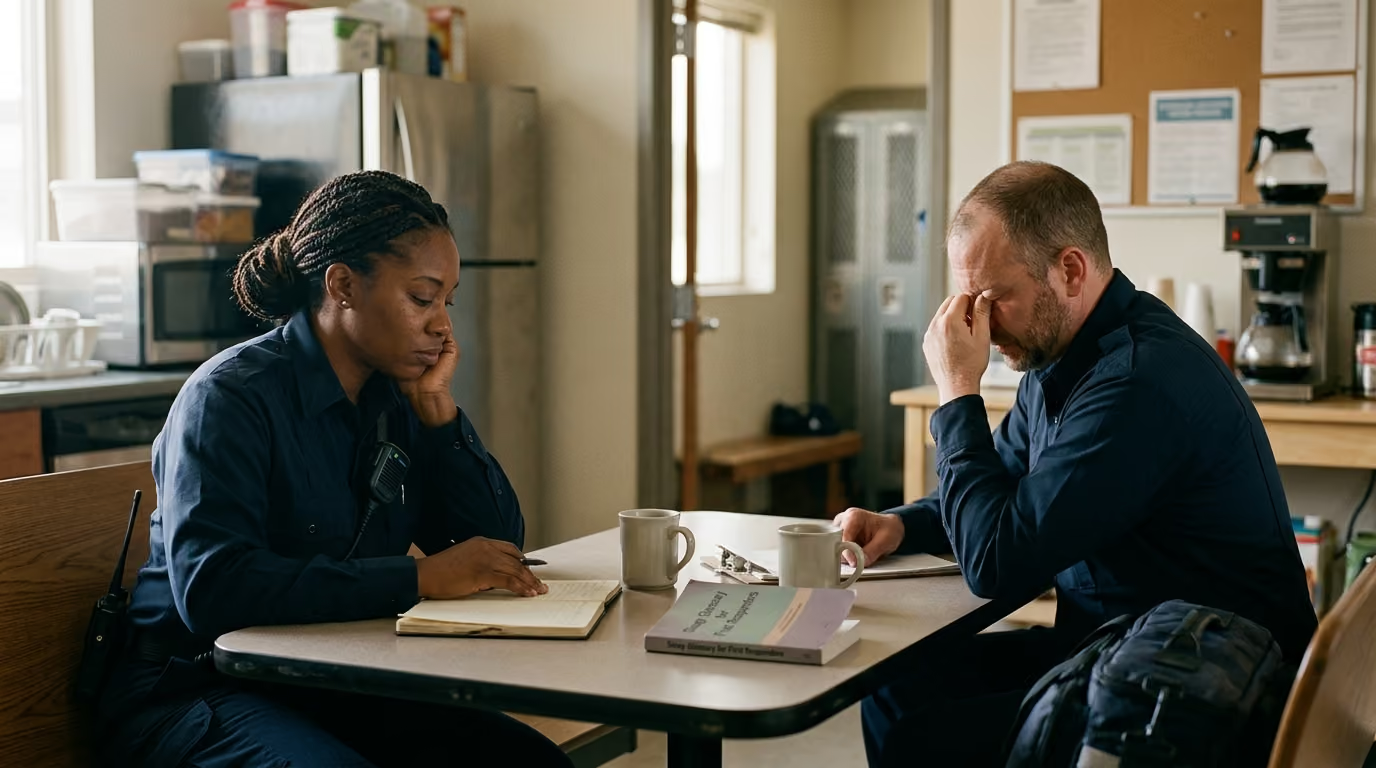

First responders often blame fatigue on total hours awake instead of the biological timing systems and sleep debts that truly govern shift readiness.





Most emergency personnel assume that shift fatigue is simply a matter of not getting enough hours of sleep. In reality, an eight-hour block of daytime rest can leave an officer or medic completely exhausted, while a shorter sleep episode at night leaves them refreshed. Total sleep duration is only one piece of a complex biological puzzle. Circadian timing, homeostatic pressure, and post-awakening impairment dictate operational capability far more than simple clock hours.
Operating safely on nonstandard schedules requires a clear understanding of the science of human fatigue. Academic research uses precise terms like circadian phase, sleep inertia, Process S, and social jet lag to explain why performance breaks down during late tours. Translating these technical concepts into plain language helps firefighters, police officers, and emergency medical personnel protect their performance, health, and career longevity.
Emergency service work forces human biology to operate against its design. When crews understand the physiological mechanisms behind their exhaustion, they can make better decisions regarding nap timing, light exposure, caffeine use, and off-duty recovery.
Human wakefulness and operational readiness depend on an interaction among three primary biological systems. NASA and fatigue researchers describe performance during night shifts through an expanded version of the classic two-process model of sleep regulation. This model combines sleep pressure, the biological clock, and post-awakening grogginess.
The first system is Process S, known as homeostatic sleep pressure. Sleep pressure represents the biological drive for rest that builds continuously while awake. The longer an individual remains awake, the heavier this pressure becomes. Once sleep begins, Process S dissipates until the biological debt is cleared.
The second system is Process C, known as circadian timing. Generated by the central clock in the brain, Process C creates a roughly 24-hour oscillation of alertness and sleep propensity. It dictates when the brain wants to be awake and when it wants to sleep, regardless of how long someone has been awake.
The third system is sleep inertia. Sleep inertia is the period of grogginess, disorientation, and cognitive impairment experienced immediately after waking. When an alarm sounds at 03:00, sleep inertia compounds existing homeostatic pressure and circadian lows.
The central question on any shift is not just how many hours a responder slept earlier. The real issue is how much sleep pressure, circadian misalignment, and sleep inertia are colliding at the moment of an emergency call. Evaluating readiness requires assessing shift duration, sleep opportunity, biological timing, and the exact interval since waking.
The circadian system is an internal biological timing network driven by the suprachiasmatic nuclei within the hypothalamus. This master pacemaker coordinates daily cycles across body temperature, hormone production, digestion, cardiovascular tone, and alertness. It prepares the central nervous system for high output during the biological day and promotes recovery during the biological night.
For first responders, this means physiological capacity changes across the 24-hour cycle. A crew member can be awake and functioning well at 14:00 after ten hours on duty. That same crew member will experience a steep drop in vigilance at 04:00, even if their total time awake is identical. Night operations introduce a biological timing obstacle on top of any sleep debt.
Circadian phase describes the exact position of an individual biological clock within its 24-hour cycle. Scientists track circadian phase by monitoring markers like core body temperature fluctuations and the release of the hormone melatonin. Behavioral markers include sleep logs, wrist actigraphy, and formal chronotype assessments.
One standard research metric is dim-light melatonin onset, often abbreviated as DLMO. In normal conditions, melatonin levels begin to rise in dim light several hours before natural sleep begins. This rise marks the opening of the biological sleep gate.
Actual clock time and internal biological time frequently conflict. A paramedic starting a 12-hour night rotation at 19:00 may feel reasonably sharp because their body is in a daytime phase. By 06:00, their core body temperature has dropped to its lowest point. The biological clock is actively signaling the brain to sleep, regardless of daylight, dispatch tones, or emergency driving requirements.
Circadian alignment occurs when daily activities like working, eating, sleeping, and light exposure match internal biological rhythms. Circadian misalignment occurs when work requirements force a person to stay active during internal sleep windows and rest during internal wake windows.
Night shifts cause acute circadian misalignment. Responders must remain alert when core temperature and metabolic activity drop, then attempt daytime sleep when the brain promotes wakefulness. Environmental daylight, traffic noise, and home responsibilities further disrupt this daytime sleep window. Research on cardiovascular strain from night light exposure highlights how this internal desynchronization stresses the entire body over time.
Chronotype represents a genetic preference toward morning or evening activity. Morning types wake early and achieve peak alertness early in the day. Evening types find early awakenings difficult, hit peak performance later, and prefer sleeping late.
Evening chronotypes often handle night duty with less acute distress than morning types. Morning chronotypes usually adapt better to early-morning shift starts. Chronotype also affects sleep inertia, with evening types often experiencing longer grogginess upon waking. Chronotype is not an excuse for poor performance, but understanding personal circadian tendencies helps crews plan sleep schedules more effectively.
Sleep opportunity is the designated window of time a person has available for rest. Sleep obtained is the actual amount of restorative sleep achieved during that window. These two numbers are rarely identical in emergency services.
A schedule may provide a 12-hour gap between consecutive shifts. Commuting, decompressing, preparing meals, family obligations, and station noise consume a large portion of that block. A 12-hour off-duty period often yields only five or six hours of actual sleep. Documenting true sleep duration rather than scheduled time off provides a more accurate picture of readiness.
The American Academy of Sleep Medicine and the Sleep Research Society recommend that adults regularly obtain seven or more hours of sleep per night. Sleeping less than seven hours on a routine basis increases the risk of accidents, metabolic disorders, cardiovascular disease, and cognitive lapses.
Data from the National Institute for Occupational Safety and Health (NIOSH) indicates that 37.6% of surveyed workers experience short sleep. Among night-shift workers, that prevalence jumps to 61.8%, compared with 35.9% for day workers. Seven hours serves as a population baseline, but personal sleep requirements vary based on training volume, health, and cumulative shift demands.
Sleep debt is the cumulative difference between the amount of sleep an individual needs and the amount they actually get. Losing two hours of required sleep each night across a four-day tour creates an eight-hour sleep debt.
Sleep debt accumulates across successive tours and slow recovery days. As this deficit grows, reaction times slow, vigilance degrades, and emotional regulation suffers. A single recovery night rarely erases several shifts of accumulated sleep debt.
Fatigue debt is an operational concept describing the overall physical and mental toll of shift work. While sleep debt refers strictly to missed hours of sleep, fatigue debt includes physical exertion, thermal strain, mental load, emotional stress, and disrupted recovery windows.
A firefighter may eliminate their numerical sleep debt with a long night of sleep after a major fire. They may still carry significant fatigue debt from muscle damage, dehydration, heat exposure, and elevated stress hormones. Both sleep loss and physical strain must be resolved to restore full operational capability.
Fatigue and sleepiness are distinct physiological states that require different solutions. Sleepiness is the biological drive to fall asleep, characterized by heavy eyelids, nodding off, and microsleeps. Fatigue is a broader state of physical exhaustion and degraded mental performance.
A paramedic can be physically fatigued after moving patients without feeling particularly sleepy. A rested police officer on a quiet night patrol can experience intense sleepiness without physical fatigue. Confusing these two states leads to ineffective countermeasure choices. Physical fatigue requires metabolic rest and tissue repair, while sleepiness requires sleep.
Excessive sleepiness is an inability to stay awake during scheduled wake periods, creating major risks during driving, apparatus operation, or critical care. NIOSH survey data reveals that 22.3% of night-shift personnel report excessive daytime sleepiness, compared to 16.2% of daytime workers. When sleepiness becomes chronic and overwhelming, it suggests severe sleep deprivation, circadian disruption, or an underlying sleep disorder.
NIOSH defines shift work as any work schedule occurring outside regular daytime hours, roughly outside the window of 07:00 to 18:00. This encompasses permanent night duty, rotating tours, split shifts, early morning starts, and extended assignments.
Early morning starts that require waking at 04:00 cause sleep disruption comparable to evening shifts. Shifting wake times earlier cuts off late-stage rapid eye movement (REM) sleep, elevating fatigue levels before the work day begins.
An extended shift is any duty period exceeding standard eight-hour parameters, including 12-hour, 16-hour, and 24-hour schedules. The American Academy of Sleep Medicine associates extended work hours with higher accident rates, slower cognitive processing, and long-term health strain.
Extended assignments create high homeostatic sleep pressure. Staying awake for 18 to 24 consecutive hours causes cognitive impairments equivalent to a blood alcohol concentration of 0.08% to 0.10%. The emergency medical services guidelines from the AASM explicitly recommend designing shifts shorter than 24 hours to reduce fatigue-related safety incidents. Further analysis of shift duration and circadian strain confirms that extended wakefulness severely degrades fine motor control and tactical judgment.
A quick return occurs when the break between consecutive shifts is brief, often eight to eleven hours. These short turnarounds leave little time for commuting, family needs, meals, and adequate rest.
Quick returns prevent workers from clearing their daily sleep debt. Two consecutive 12-hour shifts separated by an eight-hour break practically guarantee short, fragmented sleep. Over multiple tours, these truncated recovery windows create dangerous levels of systemic fatigue.
Rotating schedules change work hours across days or weeks. Clockwise rotation moves forward in time, transitioning from day shifts to evening shifts to night shifts. Counterclockwise rotation moves backward, transitioning from night shifts to evening shifts to day shifts.
The human circadian clock naturally runs slightly longer than 24 hours, making it easier to adjust to later sleep times than earlier ones. Clockwise rotation works with this biological tendency, giving the body more time to adapt between schedule changes. Counterclockwise rotation forces sleep windows earlier, compressing rest intervals and worsening fatigue.
Sleep inertia is the temporary state of grogginess, slowed thinking, and reduced motor skills that occurs immediately upon waking. Brain scans show that while sensory areas activate quickly upon waking, the prefrontal cortex takes much longer to come fully online.
The most severe cognitive impairment happens during the first 10 to 30 minutes after waking. Sleep inertia is worse when awakening occurs during the biological night, after deep slow-wave sleep, or on a backdrop of chronic sleep deprivation.
For first responders, sleep inertia creates significant operational risks. A crew dispatched within two minutes of an alarm may be driving an apparatus, managing communications, or assessing patients
while their brain is still in a transitional state.
Stations should use staged lighting to avoid intense initial shock, and crews can use verbal read-backs to double-check dispatch details, medication calculations, and route planning. Whenever possible, crew members who have been awake longer should handle initial emergency vehicle operations.
Social jet lag is the mismatch between an individual biological sleep schedule and the schedule required by work or social obligations. It is calculated by measuring the difference between the midpoint of sleep on workdays and the midpoint of sleep on free days.
Consider a paramedic who works night tours and sleeps from 08:30 to 15:30, placing their sleep midpoint at 12:00. On off-duty days, they sleep from 23:30 to 07:30 to spend time with family, shifting their sleep midpoint to 03:30.
This 8.5-hour difference creates biological disruption equivalent to flying across eight time zones every week. Even when total sleep hours appear sufficient on paper, weekly shifts in sleep timing cause persistent metabolic, cognitive, and cardiovascular stress.
Flipping completely to a daytime schedule on off-duty days resets circadian phase markers, making the return to night duty difficult. Establishing an anchored sleep plan for rotating shifts helps stabilize these timing shifts. Using compromise schedules, maintaining consistent light routines, and anchoring sleep within stable windows reduces weekly circadian strain.
Planned naps are scheduled rest periods designed to lower homeostatic sleep pressure and maintain operational vigilance. Research shows that naps improve reaction time, situational awareness, and mood on long duty tours.
Prophylactic naps taken in the afternoon before a night shift help reduce the sleep debt carried into the tour. Short naps of 20 to 30 minutes taken during quiet periods on shift restore alertness while minimizing the risk of waking from deep sleep. If a longer 90-minute nap is taken, crews should allow a 20-minute buffer to clear sleep inertia before performing safety-sensitive tasks.
Light is the primary environmental signal that sets the human circadian clock. Bright light entering the eyes suppresses melatonin production and promotes physiological alertness.
Exposing workers to bright light during the first half of a night shift helps maintain alertness and shifts the circadian phase later. In the morning, responders should minimize bright light exposure during the drive home by wearing sunglasses. Blocking morning sunlight prevents the biological clock from resetting toward daytime wakefulness, making it easier to fall asleep at home.
Caffeine works by binding to adenosine receptors in the central nervous system, temporarily blocking signals that communicate sleep pressure. It improves reaction time and vigilance during critical work windows.
Using tactical caffeine on night duty requires careful timing. Consuming 100 to 200 milligrams early in the shift boosts alertness when operations begin. Consuming caffeine during the final four to six hours of a shift interferes with post-shift daytime sleep quality. Caffeine masks subjective feelings of sleepiness, but it does not clear underlying sleep debt or restore degraded physical capacity.
Melatonin taken in supplemental form acts as a chronobiotic agent to adjust the timing of the circadian clock. When taken in low doses before daytime sleep, it can help night-shift workers fall asleep faster and improve daytime rest quality.
Melatonin should be treated as a timing signal rather than a heavy sedative. Taking melatonin close to a potential emergency response window can worsen grogginess if sudden calls occur. Supplemental use should follow agency policies and medical consultation to confirm proper dosing and timing.
Managing shift work fatigue requires systemic organizational support rather than relying solely on individual willpower. A Fatigue Risk Management System (FRMS) is an operational framework designed to identify, monitor, and mitigate fatigue hazards across an agency.
The AASM guidelines for emergency medical services outline several organizational controls:
Reviewing national public safety fatigue reports shows that progressive departments are adopting structured fatigue monitoring. Replacing punitive cultures with open fatigue-reporting systems helps leadership detect dangerous schedules, manage overtime distribution, and prevent fatigue-related accidents.
Personal countermeasures like naps, light management, and caffeine cannot completely overcome extreme sleep deprivation. When an individual has been awake for more than 20 to 24 hours, cognitive performance drops significantly.
Operating apparatus, handling weapons, calculating drug dosages, and managing incident command while severely sleep-deprived creates extreme hazards. Recognizing when an individual is too impaired to perform safety-critical tasks is an essential operational safety standard.
Responders experiencing these warning signs should immediately notify their partner or supervisor. When acute fatigue makes driving home dangerous, resting in the station bunkroom or arranging alternative transportation protects both the responder and the public.
Not all sleep problems in emergency services stem directly from bad schedules. Chronic shift work can worsen underlying clinical sleep disorders that require professional evaluation and treatment.
Shift Work Disorder (SWD) is a clinical condition characterized by chronic insomnia or excessive sleepiness tied directly to work hours that overlap normal sleep windows. It affects an estimated 10% to 40% of night and rotating workers, causing severe distress and operational impairment. Diagnosing Shift Work Disorder requires a formal evaluation of work schedules, sleep logs, actigraphy data, and medical history.
First responders experiencing persistent sleep disruption should consult a licensed healthcare provider or board-certified sleep specialist. Effective treatments including targeted light therapy, behavioral adjustments, positive airway pressure (PAP) therapy, and medical management can restore restorative sleep.
Managing the physiological realities of shift work protects operational performance on duty and preserves physical and cognitive health throughout a long career in emergency services.
Stay connected for research-led guidance on duty fitness, shift-work sleep, injury recovery, stress, nutrition and career longevity. Practical ideas for first responders who want to stay capable on the job, recover well and protect their health for the long run.



Read practical guidance on first responder fitness, recovery, sleep, nutrition and resilience for demanding work and a long, active career.
read the blog



