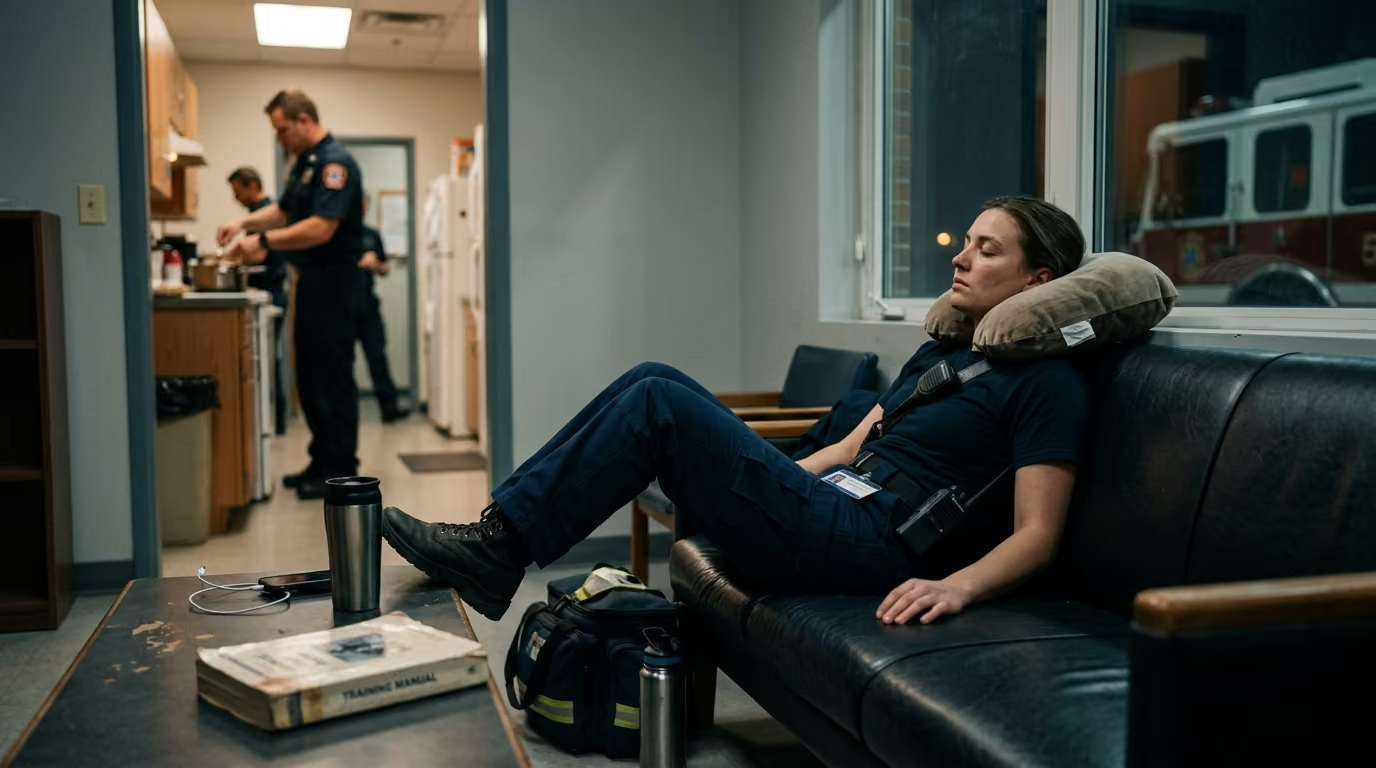

Arriving at a distant emergency deployment demands practical recovery strategies to reset internal body clocks, optimise field quarters, and protect operational safety.





You step off a transport flight or pull an apparatus into a staging area at 02:00 after fourteen hours on the road. Your briefing starts at 06:00 in an unfamiliar jurisdiction. Your bunk is a shared cot in a high school gymnasium or a standard hotel room next to an active highway.
This scenario is common across the emergency services. First responders routinely travel for major incident deployments, multi-agency mutual aid, technical rescue mobilizations, out-of-state wildland fire details, and specialized training conferences.
Travel introduces a severe compound stressor to an already demanding career. Responders face altered circadian timing, noisy temporary quarters, prolonged transit, and erratic operational tempos.
Protecting sleep during travel and deployment is not a comfort measure. It is a vital operational control that protects cognitive function, situational awareness, physical safety, and long-term health.
To maintain readiness during travel or deployment, separate sleep opportunity from actual sleep obtained. Protect a minimum off-duty window of ten consecutive hours to allow for seven to eight hours of true biological sleep.
For short assignments lasting two days or less across time zones, keep your daily sleep and wake schedule anchored to your home time zone whenever possible. For longer deployments, shift your circadian rhythm progressively using strategically timed light exposure and light avoidance.
Never treat passive transportation or hotel staging as automatic recovery time
. When severe acute fatigue or accumulated sleep debt appears, use planned naps, peer buddy monitoring, and task reassignment to prevent serious errors.
Occupational health research shows that shift work and extended duty hours degrade sleep quantity, sleep architecture, and metabolic regulation. In emergency services, fatigue is not an individual character flaw. It is a predictable physiological response to biological disruption.
The evidence base distinguishes between four interrelated physiological problems:
Understanding these distinctions helps emergency personnel choose the correct operational strategy rather than applying a single flawed solution.
Research across public-safety populations indicates that baseline sleep disruption is extraordinarily high even before travel occurs.
A review of public-safety workers identified that 59 percent of firefighters reported regular sleep deprivation, while 23 percent met criteria for insomnia symptoms. The same analysis reported poor overall sleep quality in 64 percent of emergency medical services personnel and 51 percent of law-enforcement officers.
A systematic meta-analysis of first responders calculated pooled prevalence rates across major sleep disorders:
Individual study estimates for insomnia varied widely, from 3.4 percent to 74.1 percent. This variation reflects differences in screening questionnaires, shift structures, department call volumes, and regional differences.
When a responder with preexisting, unrecognized sleep apnea or shift work disorder travels across time zones, baseline impairments multiply rapidly.
The consequences of restricted sleep extend directly to operational safety and personal health. In a nationwide study of structural firefighters, averaging six hours or less of sleep during overnight shifts was associated with more than double the odds of professional burnout (adjusted odds ratio of 2.52, with a 95 percent confidence interval of 1.88 to 3.37).
In occupational safety analyses, firefighters who reported insufficient sleep were 62 percent more likely to suffer an on-duty injury during the previous six to twelve months compared to well-rested peers (odds ratio of 1.62, with a 95 percent confidence interval of 1.21 to 2.16).
Research examining emergency responders found that personnel obtained an average of 6.2 hours of sleep before a shift, but only 3.4 hours during extended shift duty. The sharpest drops in alertness and concentration consistently occurred during 24-hour rotations between 03:00 and 04:00.
Among firefighters working overnight duty, 48.8 percent obtained six hours or less of total sleep in the preceding 24 hours. Furthermore, 31.5 percent continued to experience short sleep in the 24 hours immediately following overnight duty.
Deployment studies reinforce these concerns. Following Hurricane Katrina, approximately one-third of deployed disaster response personnel reported obtaining five hours or less of sleep per night. Occupational health researchers noted that this severe restriction was associated with roughly three times the risk of depression, slips, trips, falls, acute muscle strains, and clinical dehydration.
Reviewing the data on how circadian timing and shift duration affect fatigue confirms that sleep loss is an operational hazard rather than an unavoidable badge of dedication.
Travel strips away the small routines that help first responders protect their recovery at home. When you are deployed or traveling for mandatory training, you face a unique set of operational challenges that compromise biological rest.
The National Institute for Occupational Safety and Health (NIOSH) recommends providing at least ten consecutive hours off duty between shifts. This standard is designed to allow a realistic opportunity to obtain seven to eight hours of biological sleep.
In a deployment setting, an agency may designate ten hours as off-duty on paper. However, that schedule often fails to provide true restorative rest. The non-sleep operational demands of deployment quickly erode that time window.
When tracking deployment schedules, operational planners and individual responders must account for every phase of the off-duty interval:
When transit and administrative friction consume three to four hours, a ten-hour administrative release yields less than six hours of sleep opportunity.
Deployments often involve unfamiliar environmental burdens. Personnel operate in high heat, freezing cold, elevated humidity, or high altitudes while wearing heavy protective ensembles.
Carrying personal protective equipment, body armor, self-contained breathing apparatus, or heavy packs accelerates physical exhaustion. Thermal stress forces the cardiovascular system to work harder to cool or warm core body tissues.
Additionally, responders frequently remain in a state of high sympathetic arousal. The brain remains wired to respond to radio traffic, dispatch tones, sirens, or abrupt scene threats.
This state of sustained vigilance makes it difficult to fall asleep quickly. It also prevents normal progression into slow-wave physical recovery sleep and rapid-eye-movement (REM) cognitive processing stages.
Crossing two or more time zones disrupts your internal circadian pacemaker. The master circadian clock, located in the suprachiasmatic nucleus of the brain, coordinates body temperature, alertness, digestive enzymes, and hormone rhythms.
When external clock time abruptly changes, your internal biological clock remains tied to your origin point. Adapting fully takes time, typically progressing at a rate of approximately one to one and a half time zones per day.
One of the most practical rules for temporary travel is deciding whether to adapt to the new time zone at all. American Academy of Sleep Medicine (AASM) practice parameters note that for short assignments lasting two days or less, maintaining home-based sleep hours is often preferable.
If you travel across two time zones for a two-day training symposium or equipment acceptance inspection, forcing your internal clock to adjust to local time creates double fatigue. You suffer jet lag on arrival, begin adapting slightly, and then immediately force your circadian rhythm back upon returning home.
For short trips:
For deployments lasting three days or longer, progressively adapting to local operational time becomes necessary.
Human circadian rhythms naturally run slightly longer than 24 hours. Because of this, delaying your biological rhythm (traveling west) is generally easier than advancing it (traveling east).
Using structured sleep planning for changing shifts helps establish a stable biological rhythm before deployment travel begins.
Light is the most powerful environmental signal for synchronizing the circadian system. Photoreceptors in the eye transmit signals directly to the circadian clock, altering melatonin release and core body temperature cycles.
Circadian rhythm research demonstrates that exposure to bright light ranging from 1,000 to 10,000 lux can substantially accelerate circadian adjustment and promote alertness. Outdoor sunlight easily provides 10,000 to 100,000 lux, while standard indoor hotel or station lighting provides only 100 to 500 lux.
To advance your clock when traveling east or preparing for early operational shifts:
To delay your clock when working late deployment shifts or traveling west:
Unfamiliar environments present substantial barriers to sleep quality. Responders may be placed in roadside motels, training facility dormitories, command post trailers, emergency shelters, or temporary tents near continuous generator noise.
Every first responder packing for travel or deployment should assemble a dedicated sleep kit. Relying on host lodging to provide optimal conditions is a common mistake.
When checking into a hotel or selecting a cot in a temporary staging base, make conscious choices to protect your sleep space:
Responders often leave phones on maximum volume near their heads, bracing for sudden middle-of-the-night emergency mobilizations. This practice keeps the brain in a light, fragmented sleep state.
To preserve restorative sleep while remaining operationally available:
Field performance depends on managing alertness dynamically during operational windows while protecting your ability to sleep when off duty.
The American Academy of Sleep Medicine practice parameters support planned naps before or during extended night duty as a standard intervention to improve alertness, motor precision, and cognitive performance.
Napping is a risk-mitigation tool, not an indicator of low dedication. Responders should understand how to deploy different nap lengths depending on available operational time:
Sleep inertia is the groggy, disoriented feeling experienced immediately upon waking from deep slow-wave sleep. If awakened abruptly from a 45-minute nap, cognitive processing speed can remain impaired for 10 to 30 minutes.
If you must return to driving, incident command, or technical operations immediately, limit short tactical naps to 20 minutes maximum, or ensure you have a structured 15-minute wake-up buffer before assuming safety-sensitive duties.
Caffeine is an effective alertness aid during overnight shifts and long highway transits, but it cannot replace restorative sleep. When overused, caffeine masks severe neurological fatigue while ruining your next sleep opportunity.
Reviewing strategies for managing caffeine on night shifts helps prevent stimulant overuse during multi-day travel details.
Melatonin is a hormone naturally synthesized by the pineal gland that signals biological night to the brain and peripheral tissues. In occupational and travel medicine, exogenous melatonin is used primarily as a circadian phase-shifting tool rather than a conventional hypnotic sedative.
AASM practice parameters indicate that appropriately timed melatonin can reduce jet-lag symptoms and improve sleep consolidation when crossing multiple time zones. Clinical research reviews show that doses ranging from 0.5 mg to 5 mg, taken close to the target bedtime at your destination for two to four days, help advance or delay the circadian clock.
Immediate-release formulations are generally more effective for circadian phase shifting than extended-release preparations.
Melatonin is not a substitute for proper sleep hygiene or fatigue controls. It must be timed correctly relative to the target sleep period. Taking melatonin at the wrong biological time can shift your internal clock in an unintended direction, worsening daytime sleepiness.
Personnel should consult a physician or clinical pharmacist before using melatonin, particularly if they take prescription medications, operate emergency vehicles, or perform safety-sensitive tasks.
The digestive system has its own internal circadian clocks that sync with food intake. Eating large, heavy, carbohydrate-dense meals in the middle of the biological night causes gastrointestinal distress, insulin resistance, and profound daytime lethargy.
Following protocols for night-shift eating and circadian timing preserves metabolic stability while traveling across extended shift cycles.
The journey back to lodging or home station after an extended operational deployment is one of the highest-risk phases for public-safety personnel.
Driving while severely fatigued mimics the cognitive and motor impairments of legal alcohol intoxication. Prolonged wakefulness impairs visual tracking, slows brake reaction times, degrades lane positioning, and induces involuntary microsleeps lasting from two to ten seconds.
Emergency personnel returning from long deployments or multi-day mutual-aid assignments often experience a dangerous convergence of fatigue factors:
Responders often rely on rolling down windows, turning up radio volume, or blasting cold air to stay awake. Research consistently shows these measures are ineffective at preventing microsleeps and cognitive lapses.
NIOSH guidelines recommend that when an emergency responder displays major fatigue symptoms, the individual should be removed from safety-sensitive activities, provided a recovery area or hotel room to sleep, and replaced by an alert responder.
Agency leadership and deployment strike-team leaders should implement structured administrative controls:
Understanding NIOSH and CDC occupational fatigue frameworks provides agencies with solid baselines for designing shift lengths and mandatory off-duty recovery periods.
Stepping off deployment duty does not mean recovery is instantly complete. The return trip itself involves physical transit, gear unloading, administrative debriefings, and emotional decompression, which extend acute wakefulness.
Biological and operational recovery requires a comprehensive approach across five distinct physiological and behavioral domains:
NIOSH guidance recommends that workers be provided one or two full days of rest after working five consecutive eight-hour shifts or four consecutive ten-hour shifts.
Following intense deployments involving high emotional stress, severe weather exposure, multi-day night operations, or long-distance travel, this baseline should be expanded. Two full nights of natural, unforced sleep are frequently required to clear significant sleep debt, restore cognitive reaction times, and normalize endocrine function.
Do not fill post-deployment recovery days with heavy yard work, intensive home construction projects, or dense social obligations. Treat the first 48 hours post-deployment as an active physiological restoration window.
Not every deployment follows a predictable operational rhythm. Responders frequently encounter complex scenarios that require customized tactical adjustments.
In sudden-onset disasters such as major wildland fires, severe urban flooding, or structural collapse events, personnel are mobilized with zero advance notice. Pre-trip circadian shifting or scheduled sleep banking is impossible.
In these urgent mobilizations:
Traveling several time zones east while preparing to work immediate overnight operations creates conflicting circadian pressures. Eastward travel naturally pushes the body to sleep earlier, while night shifts demand prolonged wakefulness throughout the night.
To handle this scenario:
During extended mutual-aid deployments, strike teams may move between multiple base camps, staging facilities, and regional hotels every 24 to 48 hours.
When your sleeping environment changes constantly:
Individual willpower cannot override basic human neurobiology. Recognizing when fatigue has transitioned from a manageable operational challenge into a serious safety hazard is a core leadership responsibility.
Fatigued personnel consistently underestimate their level of cognitive impairment. As sleep debt accumulates across a multi-day assignment, subjective ratings of sleepiness tend to plateau. Responders report feeling "fine" or "used to it," even while objective laboratory tests show reaction times, working memory, and vigilance continue to degrade.
Because self-assessment is unreliable under severe sleep debt, agencies and crews must rely on objective controls:
A common pitfall during long deployments is relying on a cycle of high-dose stimulants to remain awake followed by sedatives or alcohol to force sleep.
If sleep difficulties, severe daytime sleepiness, or physical exhaustion persist after returning home and completing adequate rest days, seek formal evaluation from a qualified healthcare professional or board-certified sleep specialist.
Clinical evaluation is strongly recommended when you experience:
A professional sleep study (polysomnography or home sleep apnea testing) can accurately identify underlying sleep disorders. Addressing obstructive sleep apnea or chronic insomnia through established medical therapies restores operational readiness, protects cardiovascular health, and extends career longevity.
Review this guide before mobilizing for out-of-state wildland deployments, major mutual-aid details, multi-day technical training conferences, or extended overnight disaster responses. Revisit these checklists whenever your team identifies increasing near-miss incidents, driving close calls, or lingering post-shift exhaustion.
Preserving sleep during travel and deployment is a vital operational control that protects tactical capability, crew safety, and long-term health across an entire emergency services career.
Stay connected for research-led guidance on duty fitness, shift-work sleep, injury recovery, stress, nutrition and career longevity. Practical ideas for first responders who want to stay capable on the job, recover well and protect their health for the long run.



Read practical guidance on first responder fitness, recovery, sleep, nutrition and resilience for demanding work and a long, active career.
read the blog



