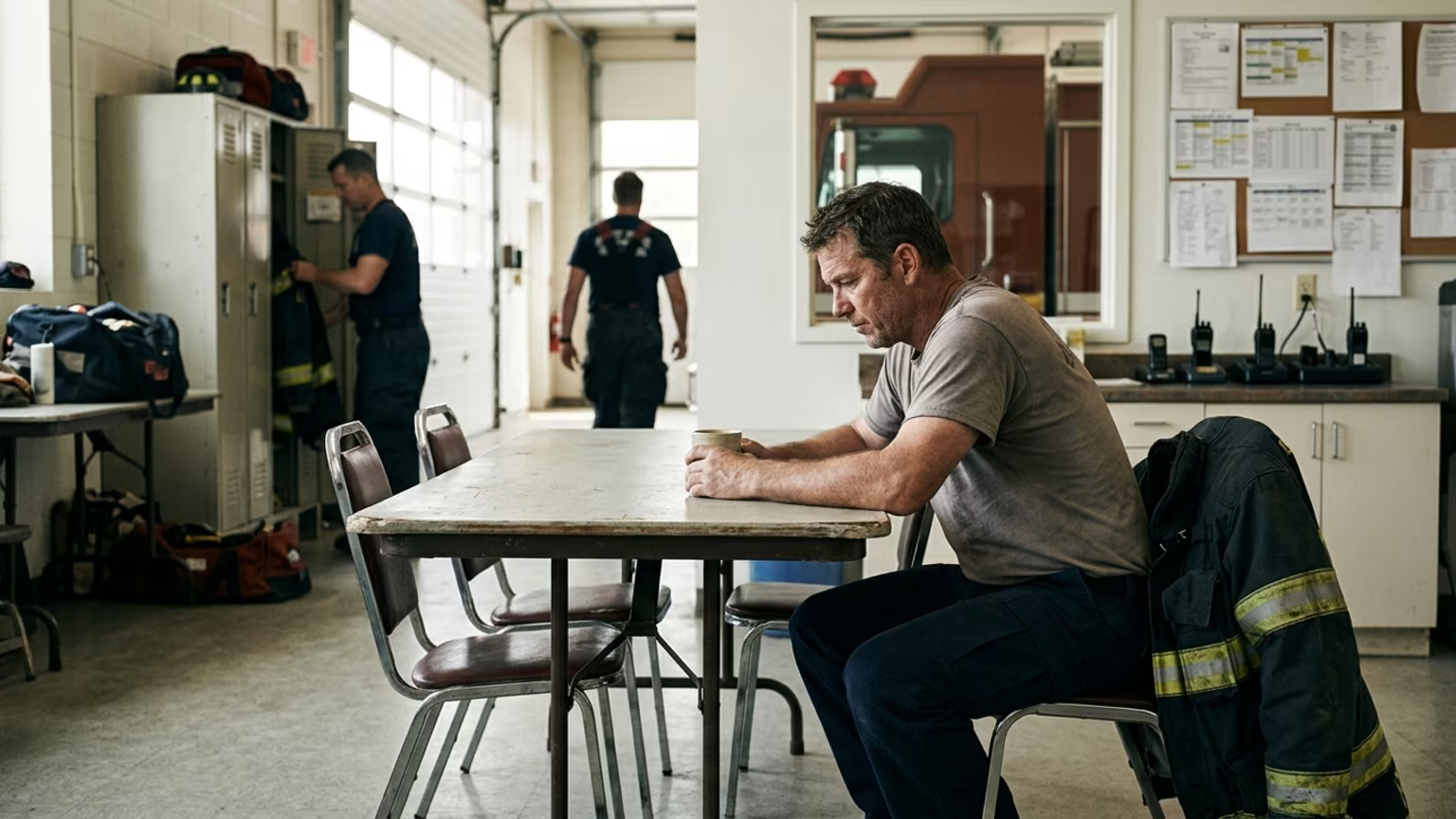

The NZPFU’s FENZ survey summary reports lower psychological safety and manager burnout risk, raising questions about workload, support and recovery.





In its 2026-10-14 release, the New Zealand Professional Firefighters Union (NZPFU) reported findings from the 2026 Whanaungatanga Wellbeing Survey of Fire and Emergency New Zealand (FENZ) personnel. Its summary describes lower psychological safety than in earlier surveys and substantial burnout-risk concerns among uniformed managers and commanders.
The release says 1,811 personnel participated and 77% of uniformed staff took part. Participants included firefighters and dispatchers as well as trainers, managers and other staff.
For first responders, the central issue is how work demands and organisational support fit together. The findings put workload and the ability to switch off after work into the same discussion, rather than treating recovery as a matter of personal effort alone.
According to the NZPFU’s summary, the share reporting high psychological safety rose from 29% in 2023 to 37% in 2024. It then fell to 14% in 2026.
The release also reports high psychological-contract-violation scores for 74% of respondents. High organisational cynicism was reported for 70%, while 49% had high intentions to leave. These are separate measures of respondents’ experiences and attitudes toward the organisation.
The open-text findings add context to those scores. In the NZPFU’s account of nearly 1,450 open-ended responses, frequent concerns included staffing shortages and workload pressure. Distrust in senior leadership also featured alongside dissatisfaction with pay and recognition.
Many participants reportedly described feeling unsupported, unheard and disconnected from management. That account concerns participants’ reported experiences rather than an independently established description of every FENZ workplace.
The NZPFU characterises the results as evidence of organisational decline and argues that leadership should act. That is the union’s assessment. The survey findings themselves describe reported conditions and concerns that warrant examination.
There was also a clear counterpoint: the release says perceived co-worker support remained strong at 86%. The contrast between colleague relationships and organisation-focused scores is central to understanding the report.
According to the NZPFU’s summary, 81% of uniformed managers and commanders were assessed as at risk of burnout. This was the second-highest rate among role groups, not a workforce-wide burnout estimate.
The same group reported a distinct combination of workload and recovery concerns. It was significantly less likely than other groups to feel there was enough time to complete its work. It also reported the greatest difficulty psychologically switching off from work at home.
The summary describes high emotional job demands and work-family conflict within this group. Together, these findings make the demands placed on managers and commanders a specific subject for organisational review.
For a recovery discussion, the useful question is not simply whether someone has left the workplace. It is whether work demands continue to occupy their time and attention at home. The report gives leaders a reason to ask that question alongside questions about workload and competing responsibilities.
The detailed findings available here come through the NZPFU’s release summarising the report. The release does not provide the full survey instrument or sampling procedures. It also lacks role-level respondent counts, confidence intervals and complete statistical tables.
Year-to-year comparisons need particular care. The release says the survey was extended to all staff in 2026, rather than being limited to the cohort that participated in 2023. The reported changes therefore should not be treated as a precise measurement of change in an unchanged group.
The 2026 report also introduced new benchmarks, including psychological contract violation. That measure should not be presented as a trend extending across earlier survey years. An intention-to-leave score is also different from an observed departure count.
The burnout-risk finding is a survey assessment rather than a clinical diagnosis. The survey does not establish which workplace conditions caused particular outcomes or test whether a wellness programme or decompression routine prevents burnout.
These boundaries define the appropriate use of the findings: identifying reported risks and questions for review. They do not erase the concerns raised by respondents, but they do rule out treating the announcement as proof of a particular intervention’s success or failure.
The report recommends identifying and actively addressing risks relating to staffing and workload. Its recommendations also cover infrastructure and employee involvement, alongside competing role expectations and organisational change.
That scope matters. A response focused only on individual coping would leave several of the report’s stated concerns outside the discussion. The practical implication is to examine how work is organised as well as how personnel are supported.
For leaders, this means asking whether the demands attached to a role fit the time available to carry them out. It also means separating concerns that a local supervisor can address from those requiring decisions elsewhere in the organisation. The report specifically recommends assigning responsibility when a risk falls outside the Whanaungatanga programme’s authority or resources.
Infrastructure has also been the subject of a separate official acknowledgement. In its 2026-09-16 statement, Fire and Emergency New Zealand accepted fleet inquiry findings and apologised for shortcomings. That statement concerns a separate organisational matter and should not be treated as an explanation for the wellbeing survey results.
For wellbeing decisions, the report’s recommendations point toward named responsibility rather than a general instruction to become more resilient. A concern about staffing needs an organisational response pathway, even when supportive conversations are also available.
This is also where conditions for raising workplace concerns become relevant. The practical question is whether a concern can reach someone with the authority to address it.
The co-worker-support finding deserves attention without being asked to carry more meaning than the report provides. Respondents described a relative strength in their relationships with colleagues while reporting weaker results on several organisation-focused measures.
Those findings can sit alongside each other. A responder may value the people they work with while remaining concerned about workload or management support. Treating colleague relationships as a substitute for organisational action would miss that distinction.
The editorial takeaway is to keep both dimensions visible. Peer relationships belong in the wellbeing picture, but questions about staffing and role demands still require their own answers.
This distinction also matters when considering work-related strain in EMS. A discussion about personal support should not become the only place where an organisational concern is heard.
For supervisors reviewing the FENZ findings, the useful approach is to ask separately about support from colleagues and support from the organisation. Combining them into a single impression of morale could obscure the contrast reported in the survey summary.
For individual responders, a measured response is to notice whether work is repeatedly following them home. The purpose is not to create another personal performance score. It is to make a recurring concern specific enough to discuss through a trusted workplace or professional-support channel.
The research supports questions such as:
These are discussion prompts, not a tested recovery protocol. They follow the report’s focus on workload and support while keeping the responsibility for organisational risks visible.
The same distinction is useful when reading about recovery around irregular shifts. A personal routine and a review of work demands address different questions. Neither should be presented as evidence that the other is unnecessary.
Where concerns involve a person’s health or ability to function, individual decisions belong with qualified care. A workforce survey is a reason to take concerns seriously, not a basis for self-diagnosis.
The NZPFU release described this as the first report from the 2026 survey. It said a further technical report with more longitudinal analysis was expected to follow. That was an anticipated follow-up, not a completed finding established by the release.
The central evidence questions concern how the reported patterns look across comparable groups and how workload relates to difficulty switching off. Further detail could also clarify differences between roles without treating one group’s results as a description of the whole workforce.
The organisational questions are more immediate: which risks will receive an assigned owner, and how will personnel know their concerns have been considered? The report’s recommendation to allocate responsibility provides a clear basis for asking those questions.
For responders and supervisors, the useful next discussion is about the demands that need attention and who has the authority to act. The FENZ summary places workload and recovery together while showing that strong colleague support does not settle every organisational concern.
Turning the FENZ findings into a call for tougher personal coping would sideline the workload and support concerns in the report, a framing Rescuris avoids through its evidence-first editorial focus. Rescuris publishes research-led coverage of stress resilience and recovery that respects the realities of irregular emergency-service work.
Rescuris publishes evidence-aware guidance for firefighters, police officers, paramedics and other first responders on fitness, recovery, sleep, nutrition, stress resilience and long-term capability.





Read practical guidance on first responder fitness, recovery, sleep, nutrition and resilience for demanding work and a long, active career.
read the blog
