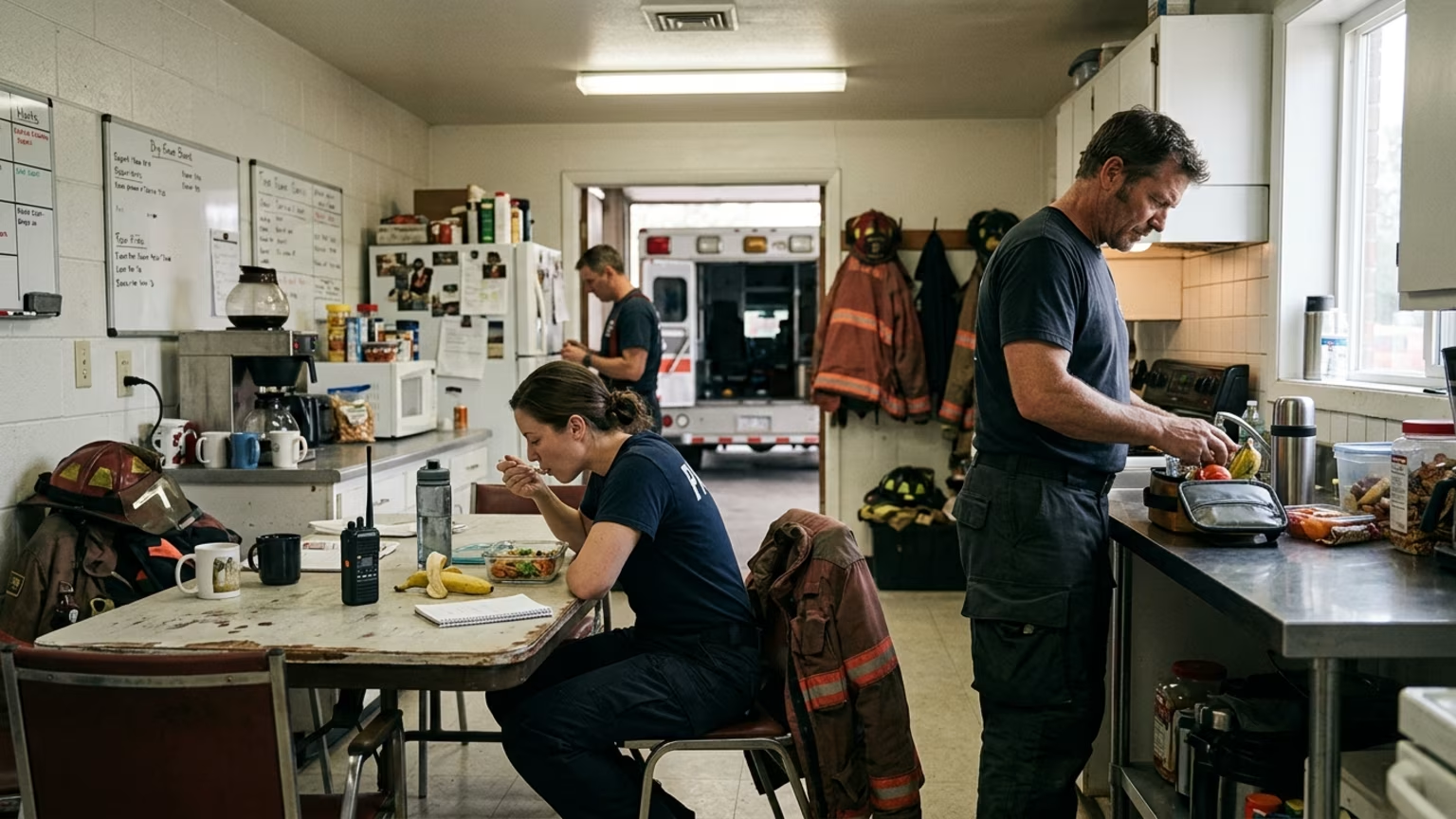

A flexible meal, snack and backup framework for unpredictable shifts, with practical food examples and clear limits on meal-timing evidence.





Use a flexible plan with a meal for a workable break, a compact snack for a short pause and a shelf-stable backup when calls interrupt eating.
The reason for flexibility is operational. A systematic review in the Journal of Human Nutrition and Dietetics identifies unpredictable callouts, limited control over breaks and constrained food access as barriers to fixed eating plans. Rotating nights and prolonged operational demands add further complications. A plan built around a guaranteed lunch break may depend on an opportunity that never arrives.
The scientific distinction is between changing an eating pattern and making food accessible. The review examined interventions involving meal timing and macronutrient distribution, including time-restricted eating. Those approaches study whether changing when or what people eat affects health and function. Packing different options addresses a separate question: what remains practical when work interrupts the schedule?
The review found a small and varied evidence base that prevented a meta-analysis, with first responders underrepresented. Its authors could not set definitive shift-worker dietary guidelines and reported inconsistent findings on cognition and occupational performance. The examples below are planning suggestions, not a tested snack protocol or missed-break intervention. Their effect on health after retirement has not been established.
Pack for different eating opportunities rather than relying on a single meal break. Give the planned meal, short-pause snack and backup distinct roles.
This is not a requirement to eat every item packed. It is a way to avoid making the entire plan depend on one uninterrupted window. The choices should reflect food that can actually be carried and stored within workplace constraints.
The meal is for an opportunity that allows enough time to eat something more substantial. A filled wrap or a grain-and-protein meal are adaptable examples from this framework. Neither is a required food or a combination validated by the first-responder studies.
Choose between options by asking practical questions:
These questions focus on feasibility rather than an ideal menu. A meal that depends on returning to a particular location has a different role from food that can stay accessible during the shift. The review's account of constrained food access makes that distinction relevant.
There is no need to turn this into a complicated menu system. Start with the meal you intended to bring, then identify which parts of the plan depend on having time and access. The snack and backup cover different circumstances rather than competing with that meal.
The snack is for an opportunity that is real but too limited for the planned meal. Fruit with nuts or a protein-containing snack are examples. Select something that fits the actual pause rather than assuming a short break can accommodate the entire meal.
The distinction is about opportunity, not a prescribed calorie target. A snack can be the available choice during one pause while the meal remains an option for later. There is no need to assign the same food or snack size to every responder.
It also helps to keep the snack's role clear when packing. If it is the only food available, it is no longer a backup to a meal plan. Recognising that difference keeps the planning question honest: what food remains available if the main opportunity disappears?
The backup is food that remains usable under the storage and access conditions of the shift. Crackers or a shelf-stable food in a sealed pouch are examples. A sealed package alone does not define its role; choose an item that suits the storage actually available.
Think of this as a contingency rather than a judgment about the quality of the day. The purpose is to have another option when the intended meal cannot happen as planned. It does not need to resemble the meal it replaces temporarily.
For the preparation side of this approach, consider organising food around interruptions rather than a perfect weekly schedule. Keep the focus on what can be brought and accessed under real working conditions.
Plan around the next realistic opportunity to eat rather than treating a particular clock time as guaranteed. When the planned break disappears, use the available option at a safe opportunity and return to the usual meal pattern when circumstances allow.
That is a practical response to the constraints identified in the systematic review. It does not require turning every pause into an eating occasion. It means the plan has somewhere to go when its original timing stops being possible.
A simple sequence keeps the decision focused:
A cancelled break changes the plan's execution. It does not need to become a reason to abandon the rest of the shift's food planning. The practical question is what remains possible now, not whether the original schedule was followed exactly.
The firefighter trial is useful context for this question. ScienceDaily's account of a 2022 randomized trial describes firefighters working 24-hour shifts who tested a 10-hour eating window over 12 weeks. The research reported selected cardiometabolic changes, including reduced VLDL particle size and improvements in HbA1c and diastolic blood pressure among participants with higher cardiometabolic risk at baseline.
That intervention studied a defined eating window. A meal-and-snack contingency plan addresses food access when breaks change. Keep those decisions separate rather than importing an eating window into duty planning simply because it appeared in a firefighter study.
A disrupted meal break should not automatically become an intentional fasting period. The planning approach here is to retain usable food options. Decisions about a personally appropriate restrictive eating schedule belong with a qualified healthcare professional when medical considerations are involved.
For rotating shifts, it may be more useful to identify likely opportunities than to copy yesterday's clock times. Those opportunities can include a workable meal break or a shorter pause. Review the plan when the shift pattern changes rather than assuming the same arrangement fits every tour.
For a related approach, read about keeping eating plans flexible across changing duty schedules. The central editorial principle is to organise around realistic access without making a rigid schedule the measure of success.
For retirement planning, treat flexibility as a way to organise food across changing circumstances rather than as a promise of better health outcomes.
The useful question is which parts of the system remain practical as work changes. A portable meal may still suit a busy day. A shelf-stable backup may remain useful when food access is uncertain. A contingency developed for overnight duty may become less relevant once that duty ends.
There is no reason to preserve a shift-specific rule solely because it was part of working life. Reassess the problem the rule was meant to solve. If the schedule no longer creates the same constraint, the plan can change too.
The firefighter trial's cardiometabolic findings belong in a health discussion, not a retirement forecast. Individual questions about blood pressure or blood-sugar findings call for qualified care rather than a portable-food formula. The editorial aim is to keep practical planning separate from medical claims.
For responders approaching retirement, a useful review is straightforward: which eating opportunities are still unpredictable, and which now allow more choice? Keep the options that address a real constraint. Reconsider the ones carried forward only from habit.
The next related topic is how food planning sits alongside caffeine decisions and intended sleep on night duty. These are connected scheduling questions, but they should not be collapsed into a single rule about eating overnight.
Start with planning caffeine use around night work and the next sleep opportunity. Then consider where a meal or compact snack realistically fits within that schedule. The aim is a workable plan for food and recovery, not another rigid timetable that depends on a quiet shift.
Choosing food for the next available break brings meal planning into the same discussion as shift-work sleep, where Rescuris supplies research-led editorial guidance. For emergency-service professionals managing disrupted sleep from nights or unpredictable calls, its coverage connects nutrition with recovery and helps readers assess advice against the realities of irregular duty.
Rescuris publishes evidence-aware guidance for firefighters, police officers, paramedics and other first responders on fitness, recovery, sleep, nutrition, stress resilience and long-term capability.





Read practical guidance on first responder fitness, recovery, sleep, nutrition and resilience for demanding work and a long, active career.
read the blog
