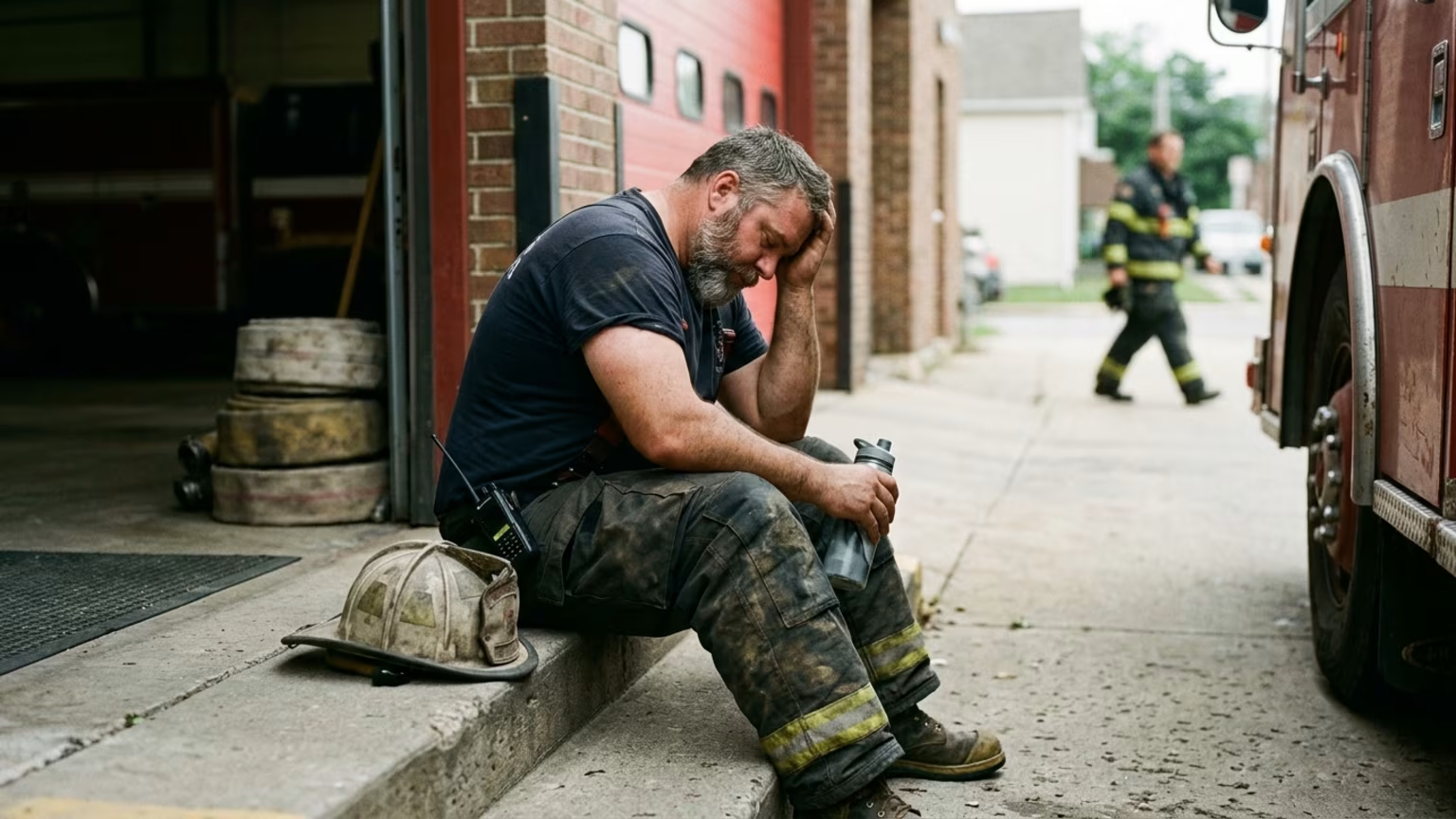

Malaysian authorities report a surge in complex peat blazes, prompting extended shifts. Review how extreme heat and sleep loss reshape fatigue protocols.





By the end of August 2026, Malaysia’s Fire and Rescue Department recorded 20,927 open fires nationwide, prompting extended shifts and a renewed focus on fatigue management as crews battled complex peat blazes.
The sharp surge in open fires creates an immediate operational challenge for emergency personnel across the country. The department reported an average of 87 such fires per day through the first eight months of the year. This represents a significant escalation compared with 8,147 total cases in 2025 and 14,821 cases in 2024. Authorities identified 183 open-burning hotspots nationwide, and approximately 63 were considered capable of developing into fires covering more than 25 hectares.
The geographic spread of these incidents required sustained readiness and rapid deployments across multiple regions. The department’s hotspot-monitoring report found the largest concentrations in Sarawak with 30 locations, followed by Penang with 21, and Perak and Pahang with 20 each. The Malaysian Borneo region accounted for 45 of the identified locations. Authorities in Sabah recorded 1,551 fires between March 1 and September 13 of 2026, while Pahang recorded 1,003 open-burning cases covering approximately 2,721.88 hectares by the end of August.
The department cited prolonged dry weather and low humidity alongside strong winds as major drivers. Open burning, rubbish disposal and vegetation clearing were also identified as primary causes. Bush and grassland fires represented 84.2 percent of all open fires in the department’s first-seven-month analysis. However, the operational problem extends far beyond highly visible surface flames.
Peat fires present a distinct and demanding hazard because they continue burning beneath the surface and remain difficult to detect. In Pengerang, Johor, firefighters battled peat fires across 11 hectares for more than a week. Hot weather and strong winds complicated these extended operations. Firefighters also faced soft ground, narrow access routes and highly limited water supplies. Fire and Rescue Department director-general Datuk Seri Nor Hisham Mohammad noted that peat-fire operations expose firefighters to prolonged heat, dense smoke, and fine particulate matter.
Managing these severe environmental conditions requires massive investments of time and personnel. Cloud seeding cannot simply replace ground operations in difficult peat environments. Nor Hisham explained that cloud seeding does not guarantee direct rainfall over the affected areas and remains insufficient by itself to extinguish fires burning below ground. Departments must therefore rely on flooding peat areas and creating firebreaks, which requires sustained ground operations and extended working hours.
Treating heat stress and sleep loss as independent problems fails to capture the true occupational burden placed on emergency responders. A 2025 field study cited in recent operational coverage found that wildland firefighters averaged 13.8-hour shifts on active fire days. The same personnel averaged approximately 6.7 hours of sleep during these multiday deployments. While this specific data reflects a different operating environment, the underlying biological reality of combined stress remains consistent across fire services.
Longer shifts and restricted sleep predictably reduce cognitive performance and slow physical recovery. Recognizing how operational fatigue and sleep deprivation compromise safety is essential for managing any major operational campaign. Extended work hours in hot environments compound the strain on the cardiovascular system and the central nervous system. Agencies must prioritize meaningful cooling opportunities and restorative rest to maintain baseline field readiness.
When body temperature rises significantly during extended shifts, blood flow is redirected away from the brain to the skin for cooling purposes. This physiological shift degrades executive function and slows reaction times in operational environments. Field personnel operating under severe thermal strain cannot accurately gauge their own impairment levels during complex tasks. A structured approach to fatigue management removes the burden of self-assessment from exhausted firefighters.
The Malaysian department addresses this operational strain through planned personnel rotations and close health monitoring. Rotations are generally scheduled at three-to-five-day intervals during prolonged operations. This structured framework includes designated rest periods, meals, medical monitoring, and access to welfare support. Building effective shift rosters to manage responder fatigue requires treating these rotation intervals as strict exposure limits rather than just administrative scheduling updates.
The department’s operational priority focuses on early detection and aggressive initial action before a small fire develops into a larger incident. This strategic approach aims to reduce the duration and intensity of future operations. However, this same strategy requires sustained vigilance and readiness across multiple locations, which steadily increases the baseline stress on the workforce. Managing this chronic readiness burden is just as vital as managing acute fatigue during a major fire.
Relying on personal assessments of fatigue frequently leaves emergency personnel working far past their safe physical limits. Departments must establish clear and observable escalation criteria for field operations rather than depending on individual toughness. Supervisors should monitor for impaired alertness, repeated task errors, inadequate rehydration, or insufficient sleep opportunity. Implementing effective load management for first responders requires using these objective triggers to initiate crew relief before severe heat illness occurs.
A nominal break between active shifts does not automatically guarantee actual physiological recovery. If crews spend their off-duty hours traveling, cleaning heavy equipment, or attempting to rest in hot environments, their sleep debt continues to grow. Incident leaders must protect the recovery window by securing quiet, dark, and temperature-controlled rest areas for all deployed personnel. First responders can then implement a structured sleep plan for nights and extended tours to maximize the quality of their available downtime.
Operational planning must directly account for the simultaneous impact of intense heat, dense smoke, and fine particulates. A recovery strategy that focuses exclusively on drinking water will not offset severe sleep restriction or heavy respiratory strain. Personnel need structured work-rest cycles that actively lower core body temperature between demanding physical tasks. Understanding how heat strain and protective gear interact allows field managers to adjust these cooling protocols appropriately during severe weather.
The cognitive effects of prolonged heat exposure are highly dangerous and often precede obvious physical collapse. Extreme thermal strain impairs rapid thinking and fundamentally alters executive decision-making capabilities. Field managers should actively watch for sudden changes in communication, poor judgment, flawed task sequencing, or a loss of situational awareness. Any responder experiencing confusion, severe weakness, vomiting, or suspected heat illness must immediately follow departmental medical and emergency procedures.
A new three-year study by the University of Canberra is explicitly examining heat-stress risks among first responders. The comprehensive project began in July 2026 with funding support from Natural Hazards Research Australia. Professor Julien Périard noted that heat stress raises core body temperature, heavily impairs physical performance, and strains cardiovascular function. It can ultimately progress to heat exhaustion or potentially life-threatening heat stroke if left unmanaged in the field.
The research team is actively measuring ambient temperature, globe temperature, wet-bulb temperature, and wind speed in operational field settings. The researchers note that globe temperature in direct sunlight can be up to 15°C higher than ambient temperature. This specific measurement highlights the intense thermal load placed on personnel during exposed daytime operations. The ongoing study will evaluate the practical effectiveness of current risk-reduction strategies under these highly demanding environmental conditions.
The Canberra findings will eventually provide a more accurate baseline for scheduling and recovery protocols across the fire service. Tracking environmental variables like wind speed alongside wet-bulb temperature offers a clearer picture of actual physical strain on the body. Until definitive guidelines emerge from this research, operational leaders must err on the side of caution. Conservative work-rest ratios provide a necessary safety buffer when precise physiological thresholds remain unknown.
Périard emphasized that heat stress directly affects the ability of firefighters to think quickly and clearly under pressure. Errors made during split-second operational decisions can carry severe and irreversible consequences for the entire crew. The research project intends to investigate work-rest cycles, cooling opportunities, hydration practices, and possible pre-season heat training. These critical areas represent active research priorities for improving occupational health, rather than universally proven protocols that guarantee immunity to heat illness.
Relying on generic hydration advice while ignoring the combined effects of extended shifts and severe heat stress frequently leaves emergency personnel vulnerable to compounded fatigue. Sleep disruption from nights, rotating shifts, overtime and unpredictable calls heavily complicates this necessary recovery process, and Rescuris translates complex occupational evidence into practical field guidelines. Explore Resources
Rescuris publishes evidence-aware guidance for firefighters, police officers, paramedics and other first responders on fitness, recovery, sleep, nutrition, stress resilience and long-term capability.






Read practical guidance on first responder fitness, recovery, sleep, nutrition and resilience for demanding work and a long, active career.
read the blog
