
Compare fixed nights, rotating shifts and quick returns through usable sleep time, agency fatigue support and evidence limits.





Which shift schedule best protects first responder sleep? No single roster is established as best by the available evidence; the practical comparison is usable sleep opportunity and the fatigue support built around it.
Schedule design sets boundaries around when sleep is possible. It does not tell us how much sleep a responder actually gets. Time between duties may also contain commuting and family responsibilities, while overtime can shorten the intended break.
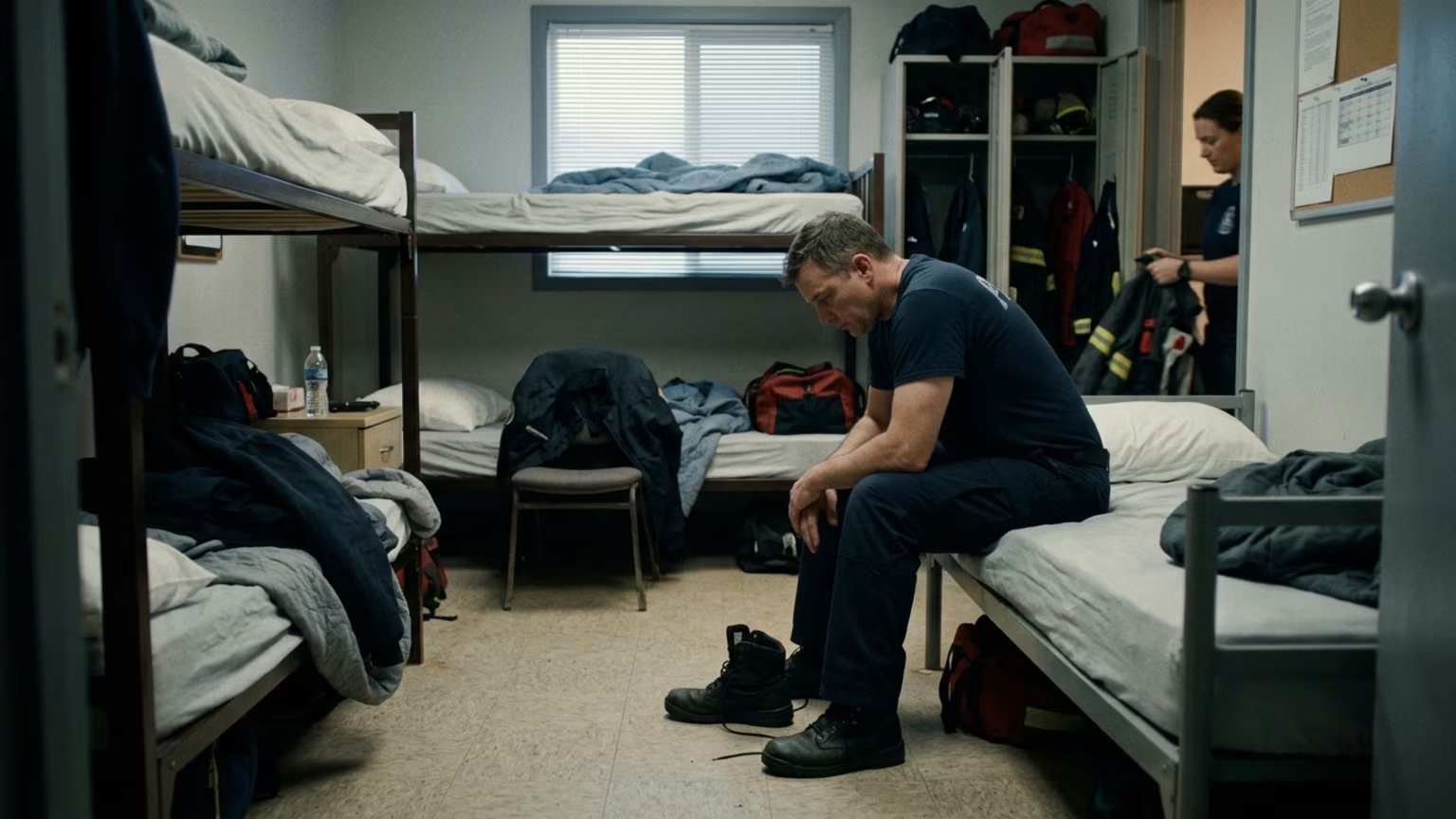
A firefighter-focused explainer describes station sleep as potentially interrupted by calls and dependent on call timing. It provides context rather than peer-reviewed outcome evidence. The useful distinction is between a period when sleep might happen and the sleep actually obtained during that period.
This is why fatigue belongs in operational planning rather than only in advice about personal habits. A JEMS article recommends fatigue assessment and mitigation at the agency level. Its recommendations are professional guidance, not proof that each measure will produce the same result in every service.
Assess the whole roster, including what happens around scheduled duty. The practical question is whether the arrangement creates realistic sleep opportunity and includes a way to identify and address fatigue.
A schedule name leaves out details that matter to its evaluation. The research brief supports examining these features together:
These are questions for evaluation, not a scoring system that identifies a winning roster. A label such as fixed nights or rotating shifts should start the discussion rather than settle it.
For example, comparing published time off without checking overtime leaves part of the schedule unexamined. Comparing overnight duty without considering call interruptions creates a different gap. Both are reasons to review the roster as worked rather than only the roster as written.
Off-duty time and sleep opportunity are related but different. A break between duties also has to accommodate life outside work. For station-based firefighters, even an overnight period with access to a bed may contain call-related interruptions.
A practical review can distinguish three things: the scheduled break, the realistic opportunity to sleep and the sleep reported afterward. Keeping those categories separate avoids treating every hour away from duty as an hour of recovery.
Responders can bring observations about interruptions and alertness into that discussion. Our guide to assessing sleep under an unpredictable schedule offers a related starting point for examining personal patterns without assuming that the roster tells the whole story.
The JEMS article recommends that EMS agencies consider fatigue assessment, shifts under 24 hours, on-duty nap opportunities and fatigue-mitigation education. Its central operational point is that agencies should measure fatigue and build mitigation into how work is organised.
For a schedule review, that means asking more than whether workers received sleep advice. Is there an agency process for assessing fatigue? Are nap opportunities addressed in policy? Does fatigue education sit alongside an examination of shift duration and recovery time?
These questions place individual habits within the conditions the organisation controls. Education and personal planning remain part of the discussion, but they should not substitute for examining the duty pattern itself.
Community Impact reports that Frisco budgeted $112,500 to study alternatives to its current 24-on/48-off firefighter schedule. Any change would follow completion of the study and a City Council vote. The funding represents an evaluation, not an adopted replacement roster or a finding that an alternative works better.
The same reporting says Plano implemented a 24-on/72-off firefighter schedule in September 2025. That provides an example of a different arrangement, but the reporting does not supply comparative sleep or safety outcomes.
The editorial lesson is to separate interest in a new schedule from evidence about its results. Frisco's funded analysis is a useful example of examining alternatives before choosing one. A neighbouring department's decision can prompt questions without supplying the answer for another service.
Look at the interval between the actual end of one duty period and the next required start. Then examine how night work and changing duty times fit around that interval, rather than judging recovery from shift length alone.
Fixed nights describe a recurring overnight duty pattern. That consistency should not be treated as proof of circadian adaptation: the available sources do not establish whether or how much first responders adapt to fixed night duty.
The application question is therefore practical. Does the roster leave a realistic opportunity for sleep after overnight work? What happens to that opportunity when overtime or responsibilities outside work enter the picture?
A consistent duty label is not a substitute for checking the recovery period attached to it. The comparison should stay focused on the sleep opportunity the arrangement actually provides.
Rotating shifts are not one uniform exposure. Rotation direction and speed are relevant features, as are consecutive nights and the length of each shift. The assembled sources do not provide first-responder-specific comparative estimates for those features.
The useful starting point is to describe the rotation clearly before discussing changes. Identify where duty timing moves and where overtime alters the intended pattern. Otherwise, two different arrangements may be discussed as though they were the same schedule.
For the personal planning side of that review, consider the distinction between a stable sleep anchor and changing transition periods. That is a separate question from whether the organisation's rotation provides adequate recovery opportunity.
A quick return raises a straightforward concern: a short interval between duties constrains the time available for sleep. The relevant interval is the one remaining after the previous duty actually ends, not simply the break printed on the roster.
These sources do not establish a first-responder-specific minimum rest interval. An exact cutoff would therefore go beyond the evidence provided here.
A defensible review can still ask whether the scheduled break remains usable once commuting and other obligations are considered. It can also examine whether overtime repeatedly shortens that break. The point is to make the compressed recovery window visible rather than assume workers can solve it through better habits.
These sources do not establish that choosing fixed nights or a particular rotation improves health after retirement. The long-term application is to include sleep and recovery in career planning without presenting a schedule change as a medical guarantee.
For an active responder, that means keeping the discussion broader than which roster feels most convenient this month. Questions about sustained physical capability and recovery deserve a place alongside questions about duty coverage. That is consistent with Rescuris's position that immediate performance should not come at the expense of long-term health.
The same distinction matters when preparing to leave service. A history of working a particular roster is not a diagnosis or a forecast of future health. Personal concerns about persistent sleep problems belong with qualified care rather than conclusions drawn from a schedule label.
For the wider planning conversation, connect roster evaluation with maintaining physical capability across a career. Sleep planning and training decisions can be considered together without claiming that one duty pattern guarantees a healthier retirement.
The next useful topic is how to compare planned recovery with lived experience across the roster. A simple record of sleep opportunity and interruptions can make that discussion more concrete. Notes about overtime and changing alertness can add context without turning the record into a diagnosis.
This is a practical observation approach, not a validated assessment protocol supplied by these sources. The related question is what information helps a responder and supervisor discuss fatigue without reducing it to a personal failing.
Start with recording the sleep and fatigue patterns that matter. Keep the purpose clear: informing a conversation about recovery conditions and organisational support, not producing a score that declares someone fit for duty.
After comparing shift patterns, the next step is fitting recovery planning to the duty cycle; Rescuris covers that work through research-led guidance on sleep and career longevity. For emergency-service professionals facing nights, rotating shifts, overtime and unpredictable calls, its coverage helps put sleep advice in the context of demanding work without treating exhaustion as a personal failure.
Rescuris publishes evidence-aware guidance for firefighters, police officers, paramedics and other first responders on fitness, recovery, sleep, nutrition, stress resilience and long-term capability.





Read practical guidance on first responder fitness, recovery, sleep, nutrition and resilience for demanding work and a long, active career.
read the blog
