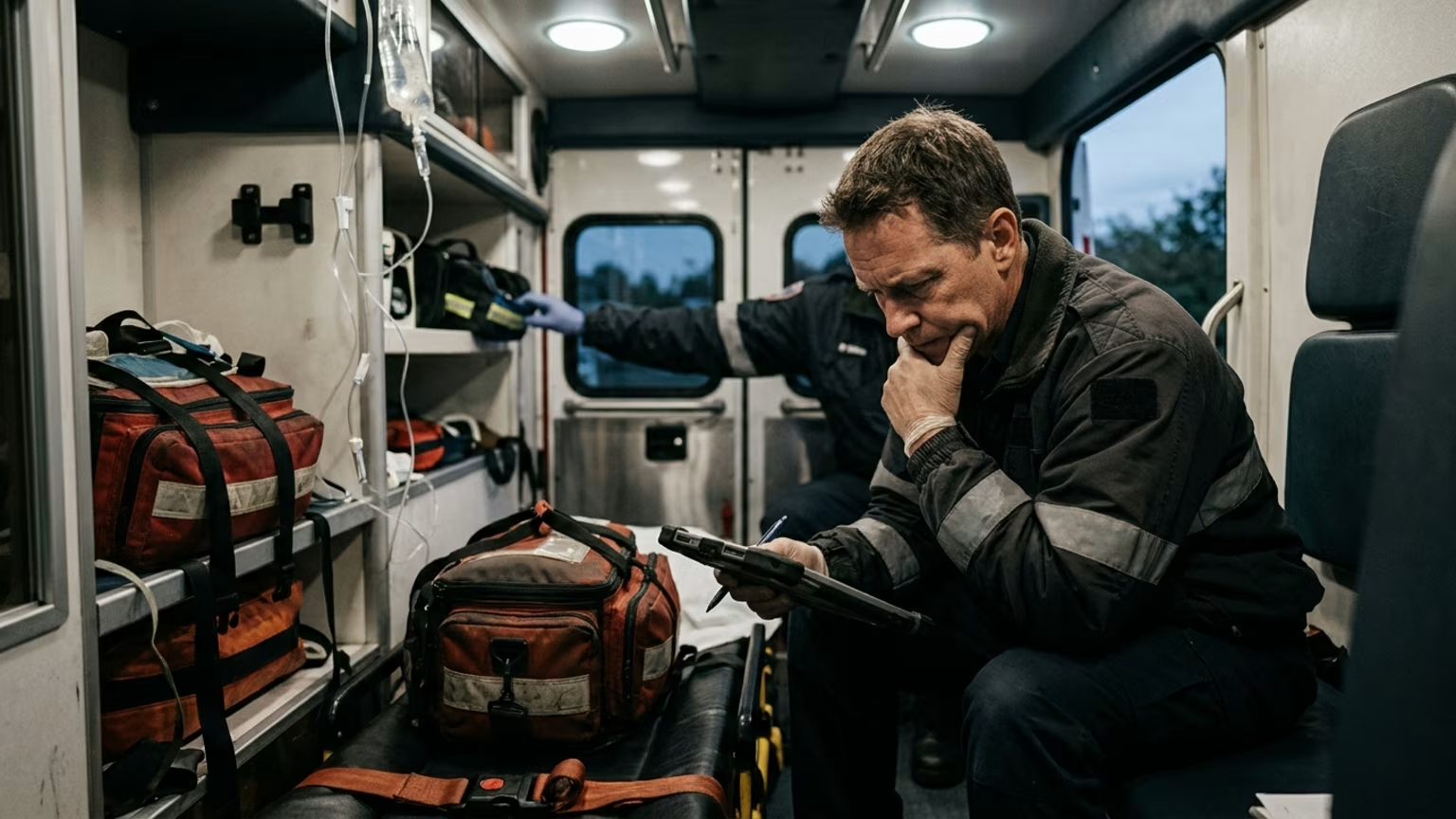

How first responders can check cues, revisit assumptions and update decisions under pressure without treating stress as a performance advantage.





A first responder’s initial read should be treated as a working hypothesis, not an interpretation that deserves loyalty.
The flawed standard is the idea that a trained responder should form a clear picture quickly and then demonstrate confidence by holding to it. In that model, reconsidering an assumption looks like hesitation. Commitment to the task becomes confused with commitment to the original explanation.
There is a legitimate place for experience-based decisions. Police1 describes recognition-primed decision-making as scanning for cues and matching a situation to prior experience. The process includes considering likely developments and workable actions. It is not simply acting on a feeling without reference to observable information.
The problem begins when the initial match becomes the final answer. A Natural Hazards Center report on California wildland-fire response identifies time pressure and heavy task load among responders’ stressors. It also describes role ambiguity and coordination problems alongside incomplete information, fatigue and changing environmental conditions. The report specifically notes the need for continual reassessment.
That is the weakness in treating certainty as the standard. An assessment made from earlier information does not automatically remain appropriate after conditions change. The editorial position here is straightforward: responders should be free to commit to necessary action without being expected to defend every assumption that first supported it.
A Fire Engineering article describes cognitive load as the mental demand of noticing and remembering information while also interpreting it. Prioritizing and communicating add further demands. Its warning is practical: under stress, people may filter information without realizing it. Important details can be delayed or misunderstood when competing inputs crowd attention.
A separate Fire Engineering training article describes possible changes in how people see and hear under stress. It also discusses effects on thinking and action, including missed radio traffic and time distortion. These are reasons to question whether relevant information is getting through rather than judging readiness from someone’s outward composure.
The failure of the confidence-first standard is therefore not just a motivation problem. A responder can remain committed to the task while the information supporting the next decision becomes incomplete. Trying harder to concentrate on the existing plan does not address an update that has been filtered out or misunderstood.
For operational purposes, the useful distinction is between activation that leaves room to update and demands that crowd decision-relevant information out of attention. The question is not simply whether someone feels calm or highly focused. It is whether the working picture still accounts for the information now available.
Widening the read means revisiting relevant cues and checking what has changed. It does not require collecting every available detail. Rescuris’s discussion of attention during demanding decisions provides related context for that distinction.
The evidence has clear boundaries. The California report describes responder experiences, while the training articles provide practitioner analysis and advice. The decision-controls approach discussed below comes through secondary reporting. These sources do not establish that stress improves judgment or that a brief routine reliably restores performance.
The alternative is to make revision part of competent action rather than treating it as an admission that the original decision was weak. Within established command procedures, the following prompts translate the sources into a practical reassessment approach.
The California report grounds this distinction in actual operational difficulties: information was incomplete and conditions changed. Its findings support examining what responders observed rather than relying only on the conclusion they reached.
In training or debriefs, useful prompts include:
The aim is not to catalog every detail. It is to distinguish a decision-relevant change from background information. That keeps reassessment tied to the work rather than turning it into a separate exercise with no clear purpose.
The report also identifies unfamiliarity with local geography and fire history as a challenge to recognition-primed decision-making. Experience remains relevant, but the check should include whether the current setting actually fits the familiar pattern.
A secondary account of UK fire-command research describes “decision controls” focused on the goal and expected outcome alongside risk-versus-benefit. That provides a useful structure for making the reasoning behind an action visible.
The practical prompts are simple:
This is a check on the connection between the situation and the proposed action. It is not an invitation to debate every available option indefinitely. The important distinction is between continuing because an action still serves the goal and continuing because it was the action already chosen.
Making that distinction explicit also gives a debrief something concrete to examine. The discussion can address the expected outcome and the information available at the time rather than reducing the decision to whether someone appeared confident.
The Fire Engineering cognitive-load article proposes “actionable awareness”: identifying and prioritizing information that can change a decision, then communicating it. It also recommends concise communication and distributing information-management tasks rather than leaving every input with one person.
That shifts the standard for an update. The useful question becomes whether the information could alter a priority or action. Length alone is not a measure of value. A concise report should still carry the detail needed to understand what changed and why it matters.
The article also places delegation within attention management. This matters to the stance of this article: protecting awareness is not solely a private concentration exercise. The way a team gathers and shares information belongs in the same discussion as the individual responder’s ability to notice it.
The Fire Engineering stress-training article recommends a short sequence: recognize stress, control breathing, reassess the situation and make the next decision. Its practical place is an available pause when conditions allow, not a demand to interrupt necessary action.
The reassessment is the essential decision step. An opportunity to settle attention should lead back to the situation: what is happening now and what follows from it? Completing a breathing exercise is not itself an update to the working picture.
This sequence belongs alongside command procedures and team communication. It does not replace fatigue management or clinical support when those are relevant. No particular breathing rate or timing is needed to explain the article’s central point: the pause is an opportunity to check the read.
For the period after an incident, Rescuris also examines clearing residual tension between calls.
Police1 argues that simulated repetitions and learning from other responders can broaden the experience base used in recognition-primed decisions. Applied to this topic, the training emphasis should include how the working picture develops rather than only which action comes first.
Useful debrief questions include:
A debrief can examine the point at which the working picture changed, not only the final choice. It can also separate what was known at the time from what became clear afterward. That makes the reasoning available for discussion without pretending that later knowledge was available earlier.
Rescuris’s coverage of assessing scenario-based practice offers related context for evaluating training. The editorial priority here is to value the recognition of changed conditions, not just a quick initial answer.
Competence should not require loyalty to an interpretation after its supporting information has changed. A responder can act decisively and remain willing to revise. Those are compatible standards, not opposing personalities.
The harder position is to defend the need for another look when confidence would be easier to display. That is the position worth taking. The first assessment deserves consideration because it organizes action. It does not deserve protection from new evidence.
Keep the read provisional. Make the next decision accountable.
Deciding whether changed conditions call for a revised assessment is the operational question; Rescuris carries that question into research-led stress-resilience coverage. For emergency-service professionals facing pressure and uncertainty, its editorial guidance separates useful approaches from motivational slogans and mental-health stigma while keeping demanding work and long-term health in view.
Rescuris publishes evidence-aware guidance for firefighters, police officers, paramedics and other first responders on fitness, recovery, sleep, nutrition, stress resilience and long-term capability.





Read practical guidance on first responder fitness, recovery, sleep, nutrition and resilience for demanding work and a long, active career.
read the blog
